
1. Applicable users and decision questions
This article is aimed at RV owners who manage their own fresh water systems, especially those who need to store their vehicle over a northern winter and recommission it in spring. Typical decisions include: how to drain thoroughly before winter arrives to avoid ice expansion cracking the pipes; after long-term disuse, when first refilling, how much flushing is needed before the water can continue to be used for washing or drinking; and what objective judgments a portable water quality test pen can provide during draining and recommissioning, and which tests it cannot replace.
A common misconception is equating "draining the fresh water tank" with "draining complete," overlooking residual water in the water heater, water pump, low points of the piping, external shower and filter cartridges. Another misconception is judging in spring that "the water is clean" based only on sight and smell; in reality, dissolved residues, trace organics and turbidity changes are difficult for the senses to catch.
2. Water samples, equipment, and scenario boundaries
The water samples discussed in this article include: water inside the RV fresh water tank, water from the faucet, water drained from the water heater, water from the fill port, and water from each branch line during flushing. When using this guide, confirm that the vehicle's fresh water system has completed mechanical draining, blow-out or antifreeze treatment; testing serves only as an auxiliary screening tool.
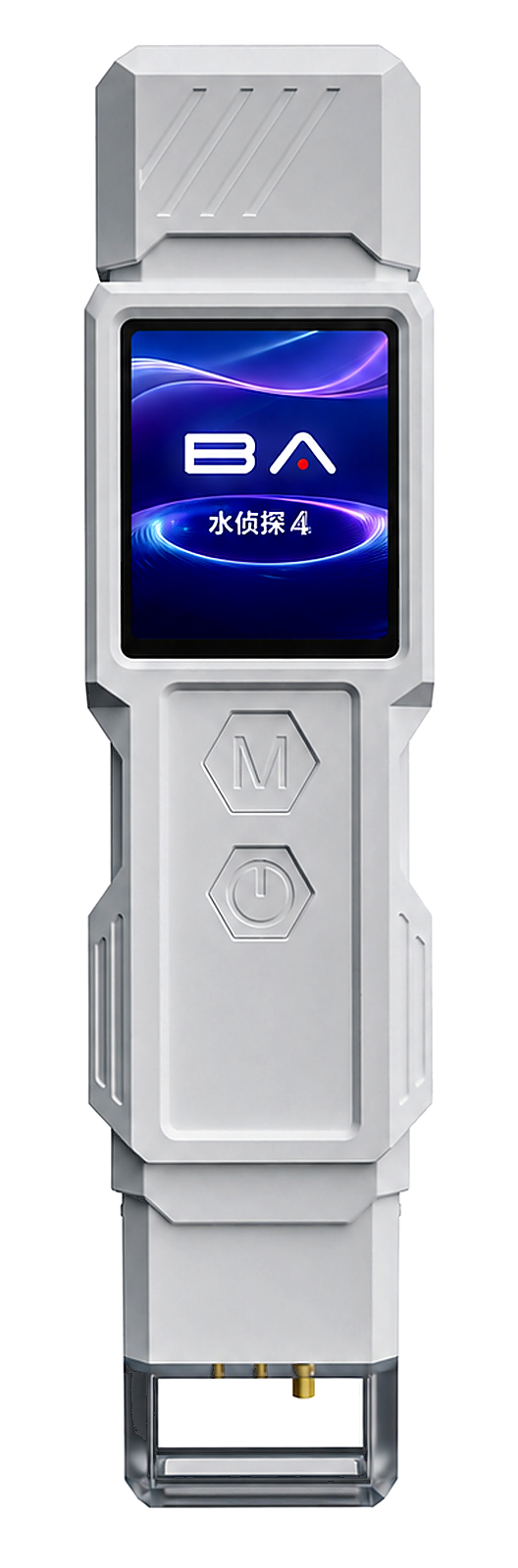
Water Detective 4 is a portable multi-parameter test pen that integrates nine indicators — TOC, COD, UV254, TDS, EC, turbidity, hardness, salinity and temperature — in one rapid-test platform, suitable for household water, on-site screening and water purification effect comparison. In this topic, it is used to record baseline values before draining, trends during flushing, and comparisons with tap water or a trusted water source after recommissioning.
It must be made clear: these indicators are for screening and trend observation, not identification of specific contaminants. The device cannot measure lead, arsenic, nitrate, pesticides, bacteria, viruses, parasites, dissolved oxygen, ammonia nitrogen, nitrite or nitrate. Therefore, normal test values do not mean the water is safe to drink; if microbial contamination, heavy metals or specific chemical contamination is suspected, a qualified laboratory must be commissioned in accordance with local authority requirements to confirm using standard methods. RV drinking water safety also involves disinfection, tank materials, residence time and water source, and conclusions cannot be drawn from a portable test pen alone.
Scope boundaries also include: this guide does not apply to industrial wastewater, municipal wastewater treatment or large centralized water supply systems; nor does it apply to drinking water directly after refilling from untreated surface water sources. For RV owners who draw water directly from streams or lakes, filtration, disinfection and laboratory testing should be carried out first.
3. Reproducible sampling and measurement procedure
3.1 Baseline record before draining
Before winter storage, while the fresh water system is still in use, complete a baseline test. Proceed as follows:
- Open the fresh water tank fill port and confirm the water level in the tank at least covers the sampling position; using a clean container, run water from the faucet for 30 seconds to drain the water standing in the lines.
- Rinse the sampling container and the test pen probe 2–3 times with the water sample to be tested.
- According to the Water Detective 4 instructions, fully immerse the probe in the water sample, gently swirl to remove air bubbles, and wait for the reading to stabilize.
- Record temperature, TDS, EC, turbidity, TOC/COD/UV254, hardness, and salinity. Also record the water source, the time of the last disinfection, and the filter usage duration.
- If conditions permit, take another bottle of water sample, seal it and refrigerate it as a control for after spring recommissioning; however, if stored for more than 24 hours, microbial and chemical changes may affect the results, so it can only serve as a rough reference.
The purpose of the baseline record is to establish the "normal fingerprint" of the vehicle's fresh water system, not to determine whether the water quality is compliant.
Key points for 3.2 winter draining
The layout of the fresh water system varies by vehicle model, but the basic principle of draining is the same: let the water in all low points, bends, and heating equipment flow out or be blown out. Recommended sequence:
- Drain the fresh water tank: open the fresh water tank drain valve and let the water flow out completely; if the drain outlet is not at the lowest point, tilt the vehicle or use manual suction to assist.
- Drain the water heater: turn off the water pump and heating power, open the water heater pressure relief valve or drain plug, and drain the inner tank. Note: some water heaters still retain a small amount of residual water after draining; compressed air can be used to briefly purge from the inlet (pressure must not exceed the value marked on the equipment).
- Drain the piping: starting from the farthest faucet, open the cold water and hot water in sequence until no water flows out; then open the external shower, toilet flush valve, etc., to confirm there is no residual water.
- Antifreeze handling: if food-grade antifreeze is used, it must be injected and drained strictly according to the product instructions, and marked "antifreeze added." It must be thoroughly flushed in spring, otherwise antifreeze residue will significantly affect readings such as TDS/EC and TOC. If compressed air purging is used instead of antifreeze, the risk of chemical residue can be reduced, but the piping must be ensured to be completely dry.
- Filter handling: remove or bypass the filter element and drain the water in the filter housing; if the filter element has reached the end of its life, replace it directly and record it in the record sheet.
Do not rely only on gravity during draining; long horizontal piping and spray hoses often retain water at low points. If conditions permit, oil-free compressed air can be used to purge, blowing out residual water in sections from the fill port or city water supply connection. The purging pressure should refer to the vehicle or equipment manufacturer's instructions to avoid damaging connectors or valves.
3.3 Spring recommissioning flushing steps
Before recommissioning in spring, flush in the following order:
- Check that all drain valves, pressure-relief valves and filter elements are back in place; confirm that antifreeze has been drained per the instructions.
- Add clean water to the fresh water tank. If the water source is municipal tap water, you may first record its TDS/EC and turbidity as a reference. If the water comes from a well or an unknown source, it should be assessed separately.
- Turn on the water pump and open the taps in order from nearest to farthest, flushing each outlet for at least 1–2 minutes, until the water is visibly clear and free of odor.
- Focus on flushing the water heater: fill it with water, then drain it from the pressure-relief valve or hot water tap, repeating 2–3 times to remove antifreeze or sediment.
- If disinfection is needed, use a disinfectant permitted for RV drinking water systems (such as a sodium hypochlorite solution diluted per the instructions), apply it at the recommended concentration and contact time, then rinse thoroughly with clean water. Disinfectant residue can be roughly trended using the TDS/EC or turbidity readings of a portable test pen: the rinse water readings should gradually fall back to near those of the clean source water added. However, falling readings must not be equated with complete removal of the disinfectant; where necessary, use residual chlorine test strips or laboratory methods.
- Finally, test a water sample from each outlet, record the data, and compare it with the pre-drainage baseline and the source water reference.
3.4 General measurement precautions
- Sampling containers: use clean food-grade or laboratory-grade containers; avoid bottles that have held beverages or detergents.
- Probe handling: before measurement, rinse the probe with purified water or the water sample to be tested, and avoid touching the optical window or electrode area with your fingers; after measurement, clean and store it dry per the instructions.
- Temperature effects: conductivity, TDS and salinity are markedly affected by temperature. The Water Detective 4 has a built-in temperature sensor for compensation, but measurements should still be taken as close to room temperature as possible, and the sample temperature should be recorded. If the water temperature is very low before winter drainage, the readings will differ from those after spring recommissioning at a different water temperature; compare trends rather than absolute values.
- Bubble interference: turbidity and optical indicators are sensitive to bubbles; after sampling, let it stand for 30–60 seconds and gently tap the container wall to release bubbles.
- Multi-point sampling: do not test only one point at the clean water tank; at minimum include the kitchen faucet, bathroom faucet and water heater outlet. If an abnormality is found at one point, check section by section.
4. Interpretation of results and common interferences
Test results should be interpreted by trend rather than by simple comparison with a fixed threshold. The recommended approach is to establish three sets of controls: the baseline before draining, a clean water source (for example municipal tap water), and different time points during flushing. Compare the readings after spring recommissioning with the baseline and the water source to see whether they gradually approach the water source values.
- TDS/EC/salinity: represents the overall contribution of dissolved inorganic salts and some organic matter in the water. If the initial readings after recommissioning are significantly higher than the water source control, it indicates that soluble residues remain in the pipes or water tank, such as antifreeze, salts or mineral deposits. If the readings decrease and approach the water source after continuous flushing, it suggests flushing is effective; if they do not decrease after multiple flushings, check for low-point standing water, filter residue or scaling on the inner walls of the tank.
- Turbidity: reflects suspended particulate matter. Dust, rust particles or biofilm fragments may be introduced during draining. Elevated turbidity is common on the first water release; if turbidity remains high after the water runs clear, check for pipe corrosion or tank contamination.
- TOC, COD and UV254: all three are related to organic matter but focus on different aspects. During draining, the inner pipe walls remain moist, and biofilm may form in warm seasons; antifreeze, disinfection by-product precursors or tank coating leaching can also contribute organic matter. If these three items remain higher than the baseline and water source control after flushing, it indicates a persistent organic contamination source; stop using the water and inspect the tank, filter and pipes.
- Hardness: reflects calcium and magnesium ions. It is usually stable; if it differs markedly from the water source, it indicates mineral dissolution from the inner pipe walls or scale in the tank being flushed out.
- Temperature: used for compensation and to judge consistency of measurement conditions; water temperature varies greatly between seasons, so take care when comparing.
Common interferences and countermeasures:
- Water sample left standing too long: microbial activity changes organic matter and turbidity; measure as soon as possible after sampling, preferably within 15 minutes.
- Container residue: inadequately cleaned containers introduce detergent, salts or organic matter, causing falsely elevated TDS and TOC. Proper rinsing reduces the risk.
- Sensor contamination: failure to clean after the previous measurement, or the probe contacting oily substances, causes reading drift. Clean and calibrate periodically according to the instructions.
- 气泡:光学窗口附着气泡会干扰浊度、UV254 等,轻轻晃动并静置。
- 温度突变:从冰箱取出的水样或极冷/极热环境会使读数不稳定,应平衡至室温附近。
- 电磁干扰:少数情况下强电场可能影响电导率测量,避开大型电机或无线电设备。
5. When to retest, stop use, or refer to a laboratory
复测时机:
- 春季首次冲洗后,所有指标与排空前基准或水源对照相差较大(例如 TDS/EC 高出 30% 以上、浊度明显升高)。
- 冲洗 10–15 分钟后,指标没有向水源值靠近的趋势。
- 某个出水点读数异常,而其他点正常,提示该支路存在局部污染。
- 加入消毒剂后,冲洗水读数未回落到可接受范围,或仍有消毒剂气味。
停止使用条件:
- 水样出现明显颜色、浑浊、异味或异嗅,且多次冲洗无改善。
- 有人饮用后出现胃肠道不适,需立即停止并送检微生物指标。
- 便携检测笔读数持续异常且无法解释原因,在未排除风险前不得用于饮用、烹饪或刷牙。
Referral to a laboratory:
- When specific contaminants such as lead, arsenic, nitrate, pesticides, bacteria, viruses or parasites need to be confirmed.
- When the water source is a well, stream or lake, or water that has been stored for a long time, and microbial contamination is suspected.
- When the fresh water tank has been affected by sewage, animal waste, a chemical spill or accidental addition of antifreeze.
- When multiple people feel unwell after refilling, or the local authorities issue a water quality warning.
When submitting samples, use the sterile or dedicated sampling bottles provided by the laboratory, and collect, store and transport the samples as instructed; do not use household containers. Explain to the laboratory the sampling point, the parking environment, the water source used for refilling and recent operations, so that targeted tests can be specified.
6. Record sheet/action checklist
It is recommended to fill in the following record table for every draining and refilling, and to compare it with data from previous years.
| Date | Operation stage | Sampling point | Water temperature (℃) | TDS | EC | Turbidity | TOC/COD/UV254 | Hardness | Salinity | Remarks |
|---|---|---|---|---|---|---|---|---|---|---|
| Example: 2025-11-01 | Baseline before draining | Kitchen faucet | 18 | Record | Record | Record | Record | Record | Record | Municipal water, filter cartridge has been used for 3 months |
| Example: 2026-04-10 | First flush after refilling with water | Kitchen faucet | 15 | Record | Record | Record | Record | Record | Record | After flushing for 5 minutes |
| Example: 2026-04-10 | Thorough flushing after refilling with water | Kitchen faucet | 15 | Record | Record | Record | Record | Record | Record | After flushing for 20 minutes |
Action checklist:
- Before draining: record the baseline, take photos for records; drain the water tank, water heater, and pipes; handle the filter cartridge; mark the antifreeze status.
- When refilling with water: first check the valves, add clean water, flush point by point, collect water samples, test and record.
- Before every long trip: quickly test the main indicators of the fresh water tank and confirm they match the previous readings.
- At least once a year: clean and disinfect the fresh water tank, and replace the filter cartridge and seals if necessary.
- If persistent abnormalities are found: stop using the relevant water outlets and contact professional repair service or send samples to a laboratory.
7. Frequently asked questions
Q: Can the Water Detective 4 detect bacteria? No. This device measures TOC, COD, UV254, turbidity, TDS, EC, salinity, hardness, and temperature, which are physical and chemical screening indicators. Bacteria, viruses, and parasites require microbiological laboratory methods. Portable devices cannot replace microbiological testing.
Q: Does low TDS mean the water is safe? No. TDS only reflects the total amount of dissolved solids. Low TDS can rule out some risks from inorganic salts, but it cannot rule out lead, arsenic, nitrate, pesticide, or microbial contamination. Drinking safety must be judged comprehensively based on water source, disinfection, and laboratory testing.
Q: Is antifreeze always required for winter draining? Not necessarily. If the fresh water system can be thoroughly blown dry, antifreeze can be omitted, reducing the risk of chemical residue in spring. If antifreeze is used, food-grade products designed for RVs must be selected, and complete flushing in spring must be ensured. Antifreeze residue will raise readings such as TDS/EC and TOC, which can serve as an indirect reference for flushing effectiveness.
Q: Why can the water still be risky in spring even when portable test pen readings are normal after flushing? Portable devices only test some physical and chemical indicators and cannot cover all contaminants. In addition, test results are affected by sampling, temperature, air bubbles, sensor condition, and so on, and can only serve as trend screening. Normal readings cannot prove that the water contains no trace heavy metals, pathogenic bacteria, or disinfection by-products; if there is any suspicion, send a sample to a laboratory.
Q: How often is it appropriate to retest? Test at least once each year when recommissioning the water system in spring, and retesting is also recommended before long trips or after changing the water source. If the vehicle is put back into service after long-term storage, the flushing and testing process should be carried out again.
8. Reference sources
- World Health Organization. Guidelines for drinking-water quality: fourth edition incorporating the first and second addenda. Geneva: WHO; 2022. https://www.who.int/publications/i/item/9789240045064
- U.S. Centers for Disease Control and Prevention. A Guide to Drinking Water Treatment and Sanitation for Backcountry and Travel Use. CDC; 2009. https://www.cdc.gov/healthywater/drinking/travel/backcountry_water_treatment.html
- U.S. Environmental Protection Agency. Emergency Disinfection of Drinking Water. EPA 816-F-15-003; 2017. https://www.epa.gov/ground-water-and-drinking-water/emergency-disinfection-drinking-water
- U.S. Geological Survey. Water Properties and Measurements. USGS Water Science School. https://www.usgs.gov/special-topics/water-science-school/science/water-properties-and-measurements
- Drinking water quality standards or RV drinking water hygiene guidelines issued by the local competent authority (please check according to the vehicle's place of registration or travel destination).
Regional applicability note: The above references are mainly international or U.S. public materials, and specific limits, disinfection requirements, and testing methods may differ by country or region. In mainland China, refer to the Standards for Drinking Water Quality (GB 5749) and local CDC requirements; in other countries or regions, please consult the local public health department. The operating recommendations in this article are general engineering logic and do not replace the vehicle manufacturer's instructions and local regulations.