
Intended users and decision questions
Keepers of home freshwater/marine aquariums, small holding tanks, planted tanks and office desktop tanks often face one confusion: after water evaporates, is topping the water back up enough to skip water changes? This checklist helps determine under what conditions "top-off only, no water change" will cause water quality to deteriorate, and how to use a handheld screening pen to assist with recording rather than replace regular water changes.
The core decision question is: can evaporation top-off replace water changes? The answer is no. Evaporation mainly loses pure water; most dissolved waste, minerals, organic matter and nitrogen-cycle products remain in the tank. Top-off only restores volume and does not export waste; a water change removes a certain proportion of tank water, flushing out accumulated dissolved substances and particulates while introducing new source water. For heavily loaded tanks, top-off alone will cause total dissolved solids (TDS), electrical conductivity (EC), hardness, salinity and dissolved organic matter (screened as TOC/COD/UV254) to rise slowly until they exceed the fish's tolerance range or trigger algae, ammonia nitrogen/nitrite problems.
Intended users include: users who top off with tap water, RO/DI water, water purifier output or bottled water; keepers who need to compare water quality before and after water changes and record trends; and aquarium equipment or consumables practitioners who need to explain to customers that "top-off ≠ water change."
Water sample/device/scenario boundaries
Water sample boundaries : This checklist applies to small closed water bodies such as home aquariums, quarantine tanks and holding tanks. Water samples should be measured after standing for 5–10 minutes with air bubbles removed; avoid sampling directly near substrate, filter media or heaters.
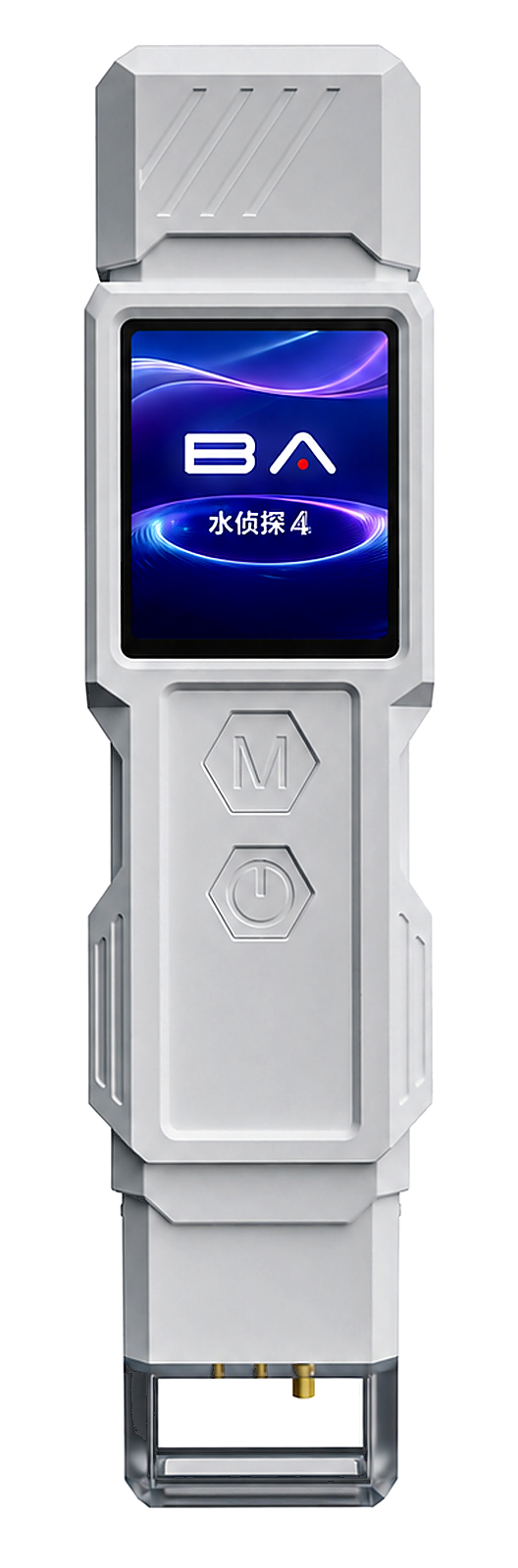
Device boundaries : The AtomBit Water Detective 4 portable multi-parameter water quality test pen is used as the screening tool. This device provides nine parameters in one platform: TOC, COD, UV254, turbidity, TDS, electrical conductivity, salinity, hardness and temperature. These parameters are used for before-and-after comparison of the same water body, comparison of top-off/water change effects, and trend observation , not for identification of specific contaminants. For example, a rise in TDS/EC only indicates an increase in total dissolved ions and cannot indicate whether it is nitrate, calcium/magnesium or other ions; a rise in TOC/COD/UV254 only suggests accumulation of dissolved organic matter and cannot distinguish feed residue, fish feces, humic substances or pesticides.
Items not measurable : This screening pen does not measure ammonia nitrogen, nitrite, nitrate, dissolved oxygen, pH, carbonate alkalinity (KH), bacteria, viruses, parasites, heavy metals (lead, arsenic, etc.) or pesticides. These items must be tested using dedicated test kits or sent to a qualified laboratory and tested according to local requirements. When fish show abnormalities, do not make judgments based solely on values such as TDS or TOC.
Scenario limitations : The portable screening pen is a spot-check operation, not continuous online monitoring; it cannot be used as the sole basis for automatic water changes, automatic dosing or aquaculture compliance. Extreme turbidity, oil films, large amounts of air bubbles, direct strong light, sudden temperature changes and probe contamination will all interfere with readings. This device is not suitable for industrial wastewater, municipal sewage, river monitoring or water treatment projects requiring compliance certification.
Reproducible sampling and measurement steps
- Fixed sampling point: Take a sample from the same location in the tank each time, for example the corner farthest from the pump outlet, 10 cm below the water surface, avoiding the substrate and the area near the tank walls.
- Container preparation: Use a clean sampling cup with no residue, and rinse it first with tank water 2–3 times.
- Water sample resting: After sampling, let the sample rest for 5–10 minutes to let air bubbles escape; if there are suspended particles, wait for them to settle naturally before measuring turbidity (record the settling time).
- Measurement order:
- Temperature: Immerse the probe completely and record the reading once it stabilizes. The water temperature should preferably be kept at around 25°C; temperature affects the compensation of conductivity/TDS.
- TDS/EC/salinity/hardness: Follow the instructions for probe immersion depth, and avoid touching the container walls and bottom; record the reading once it stabilizes, and do not shake.
- Turbidity: Gently swirl to mix evenly and read immediately, avoid direct strong light, and keep the same ambient light source.
- TOC/COD/UV254: Perform the blank/zero-point operation according to the device instructions, and ensure the water sample is free of bubbles during measurement; this reading is a relative comparison value, not a legally defined laboratory concentration.
- Time points: Measure 1 hours before a water change, 24 hours after the water change, and 24 hours after top-off, respectively; establish a baseline over 4 consecutive weeks.
- Operation log: Also record events such as the number of fish, feeding amount, filter pad cleaning/replacement, use of medications, dead fish or new fish, to avoid misjudgment.
Branch recommendations:
- If the tank always evaporates quickly (for example, the heater is often on and the environment is dry), you may top off with pure water every day, but water changes still need to be done weekly according to the load.
- If using tap water for top-off, note that tap water itself contains TDS/hardness/residual chlorine; after top-off, TDS may not drop and may even rise.
- After setting up a new tank or redoing a tank, it is recommended to test daily with ammonia nitrogen/nitrite test kits, using a portable screening pen as an auxiliary trend tool.
How to interpret results and common interferences
TDS/EC trend: In tanks that only receive top-off water without water changes, TDS/EC usually rises slowly. Assuming the water change volume is 25%, and the new water TDS is much lower than the tank water, the theoretical TDS 24 hours after the water change is approximately `old value × 0.75 + new water value × 0.25`. If the measured drop is far smaller than the theoretical value, possible causes include: substrate release, filter media leaching, high TDS in the top-off water itself, or measurement error. A continuous rise in TDS indicates that net dissolved substances are accumulating; however, it cannot determine what substances they are.
Hardness/salinity trend: In freshwater tanks, rising hardness suggests calcium and magnesium accumulation, possibly related to tap water top-off or mineral filter media; in marine tanks, salinity should remain stable at the set value ±0.5 ppt. If salinity continues to rise, it indicates insufficient top-off or salt-containing top-off water, and purified water should be used instead.
TOC/COD/UV254 trend: After a water change, these indicators should decrease somewhat; if they continue to rise, it indicates that dissolved organic matter input exceeds output. Common causes are overfeeding, accumulated feces, rotting plant leaves, or insufficient filtration. Measures can include reducing feeding, siphoning the substrate, strengthening mechanical filtration, and increasing water change frequency. However, this cannot be used to determine whether ammonia nitrogen/nitrite exceeds limits; separate testing is required.
Turbidity: A short-term increase after a water change may be due to substrate disturbance or air bubbles; if it is still cloudy 24 hours later, bacterial cloudiness, algae growth, or filter collapse may be present.
Common interferences and failure modes:
- Unstable temperature causes TDS/EC drift; measure after the water temperature has stabilized.
- Probe contamination or residual previous water sample causes cross-contamination; rinse with purified water and wipe dry.
- Strong light, direct sunlight, or direct LED light on the probe affects turbidity/optical readings.
- The sample was not left to stand before measurement, and bubbles adhered to the optical window, causing falsely high TOC/UV254 readings.
- Using tap water for top-offs without dechlorination: residual chlorine may affect some optical readings (although this device does not directly measure residual chlorine, oxidizing substances may interfere with organic-matter-related indicators).
- Treating TDS as a proxy for nitrate or "dirtiness" and over-relying on a single indicator delays water changes.
When to retest, stop using, or send to a laboratory
Retest conditions: if a single TDS/EC reading jumps by more than 30% compared with the previous day, or shows an upward trend for three consecutive days, resample and retest after 2–4 hours; also check whether water was changed, fish were fed, or equipment has malfunctioned.
Conditions for stopping the use of screening pen conclusions:
- If fish show rapid breathing, gasping at the surface, refusing food, body-surface congestion, abnormal swimming, or death, immediately test with ammonia/nitrite/nitrate test kits and perform a large water change; do not wait for portable screening results.
- When a specific contaminant is suspected (ammonia, nitrite, nitrate, heavy metals, pesticides, pathogens), a portable screening pen cannot identify it qualitatively; send a sample to a laboratory.
- When breeding, quarantine, treatment, or compliance certification is required, laboratory methods should be used; TDS/TOC readings must not be used as the basis.
Send to a laboratory or use dedicated test kits:
- Ammonia/nitrite/nitrate: use a reliable liquid test kit (such as a colorimetric method) at least once a week; once a day for a new tank or after a tank overhaul.
- Heavy metals, pesticides, microorganisms: if the water source is well water, rainwater, an unknown source, or copper-containing medications have been used, send a sample to a qualified laboratory.
- Dissolved oxygen, pH, KH: these are important for fish and nitrifying bacteria, but this device does not measure them; use dedicated test tools.
设备维护与停用:探头读数持续不稳、无法校准、显示异常或物理损坏时停用,联系厂家或更换,不要继续依赖其读数。
记录表/行动清单
| Indicator | 正常趋势 | 警示信号 | 建议行动 |
|---|---|---|---|
| Temperature | 日波动 ≤2°C | 骤变 >3°C | 检查加热/降温设备 |
| TDS/EC | 换水后下降,随后缓慢上升 | 单周上升 >20% 或换水后不降 | 增加换水频率,检查补水来源 |
| 盐度(海水) | Stable at the set value ±0.5 ppt | Continuous drift | Top up with pure water and check the salinity meter |
| Hardness | Close to the water source or rising slowly | Sharp short-term increase | Check the filter media and the top-up water source |
| Turbidity | Clear after water change | Still turbid after 24 hours | Check filtration, feeding and algae |
| TOC/COD/UV254 | Decreases after water change | Keeps rising | Reduce feeding, substrate siphoning, water changes |
Weekly action checklist:
- [ ] Measure and record a set of data before the water change
- [ ] Test the three nitrogen cycle parameters with ammonia/nitrite/nitrate test kits
- [ ] Perform the planned water change 10–25% (can be increased appropriately for high load or small tanks)
- [ ] Retest TDS/EC and turbidity 24 hours after the water change
- [ ] Clean or replace the filter pad (do not do it on the same day as the water change, to avoid a double impact)
- [ ] Check the top-up water source: purified water/dechlorinated water; avoid large-volume top-ups directly with chlorinated tap water
FAQ
Q: I top up with RO purified water and TDS does not rise, so is a water change unnecessary? A: TDS only indicates total dissolved solids and cannot reflect ammonia nitrogen, nitrate, dissolved organic matter, pathogens, etc. Even if TDS is stable, nitrate and organic matter may still accumulate, so regular water changes are necessary to export waste.
Q: How much water is appropriate to change? A: Usually 10–25% per week, adjusted according to stocking density, filtration capacity, plants and feeding amount. For new tanks or heavily loaded tanks, the frequency can be increased, but a single water change should not exceed 50% to avoid drastic water quality changes.
Q: Can the Water Detective 4 measure ammonia nitrogen/nitrite? A: No. The device measures TOC, COD, UV254, turbidity, TDS, conductivity, salinity, hardness and temperature. Ammonia nitrogen/nitrite/nitrate, etc. require dedicated test kits or laboratory methods for confirmation.
Q: Can tap water be used for evaporation top-up? A: Tap water can be used for temporary top-up, but it introduces minerals and chlorine/chloramine, which over time will raise hardness/TDS and may harm fish gills and nitrifying bacteria. It is recommended to use dechlorinated and appropriately treated water, preferably the same source as the water change water.
References and Regional Applicability
- WHO. Guidelines for drinking-water quality: fourth edition incorporating the first addendum. Geneva: World Health Organization; 2017. https://www.who.int/publications/i/item/9789241549950. Used to explain that TDS/conductivity are sensory and operational indicators and should not be used alone as a conclusion on health or aquaculture compliance.
- USGS. Total Dissolved Solids and Water Quality. U.S. Geological Survey, Water Science School. https://www.usgs.gov/special-topics/water-science-school/science/total-dissolved-solids-and-water-quality. Used to explain the relationship between TDS and dissolved minerals.
- EPA. Indicators: Conductivity. U.S. Environmental Protection Agency. https://www.epa.gov/national-aquatic-resource-surveys/indicators-conductivity. Used to explain that conductivity reflects the total amount of ions and does not identify specific contaminants.
- University of Florida IFAS Extension. Ammonia in Aquatic Systems. Ruth Francis-Floyd et al. https://edis.ifas.ufl.edu/publication/FA031. Used to explain that nitrogen-cycle wastes require dedicated tests and cannot be replaced by TDS.
Regional applicability: Tap water TDS, hardness, residual chlorine and regulations vary considerably between regions; this list provides general household husbandry recommendations and does not constitute a laboratory compliance report. For specific limits and test methods, please consult your local water utility, public health authority or veterinary authority.