
Many aquarium hobbyists, upon seeing the water level drop, first think of adding water back to the original mark. Clear water makes people assume that "the water level is restored, so the water quality is restored too." But from a water-quality management perspective, top-off water and a water change are not the same thing; top-off water can only restore volume, not discharge dissolved wastes. This article addresses this common misconception and provides reproducible methods for observation, measurement and decision-making.
I. Intended users and decision questions
Intended audience: routine maintainers of household freshwater/marine aquariums, small fish tanks, planted tanks, shrimp tanks, turtle tanks, etc.; also product managers and embedded engineers designing top-off/water-change reminders for smart aquarium devices.
Core decision questions:
- After evaporation, is topping off water alone enough to maintain water quality?
- When should you switch from "top-off water" to "water change"?
- Which screening parameters can help with the judgment, and which parameters must be confirmed by dedicated tests or a laboratory?
Evaporation mainly removes pure water while leaving most dissolved inorganic salts, organic matter and metabolic wastes in the original water. Topping off only dilutes the concentrated "original broth" back; the total amount of waste is not reduced. Fish respiration, excretion and decomposition of leftover food continuously input nitrogenous wastes and organic matter into the water. Therefore, even if the short-term TDS/EC values appear to return to normal, long-term water quality will still deteriorate. In actual observations, aquarium TDS often rises slowly, and the cause lies more in bioload and feeding than in evaporation itself; topping off with purified water only masks the rise in concentration and does not solve the problem.
A common incorrect statement needs correcting: "evaporation makes TDS rise higher and higher, so water changes are mandatory." This statement is incomplete. If evaporation is compensated only with RO/DI pure water, TDS usually falls back to near its original level; but newly produced dissolved wastes will still cause TDS to rise slowly. More importantly, toxic substances such as ammonia and nitrite contribute very little to TDS at low concentrations, so looking at TDS alone cannot tell whether the nitrogen cycle is safe.
II. Boundaries of water samples/equipment/scenarios
What the 2.1 portable multi-parameter screening device can do
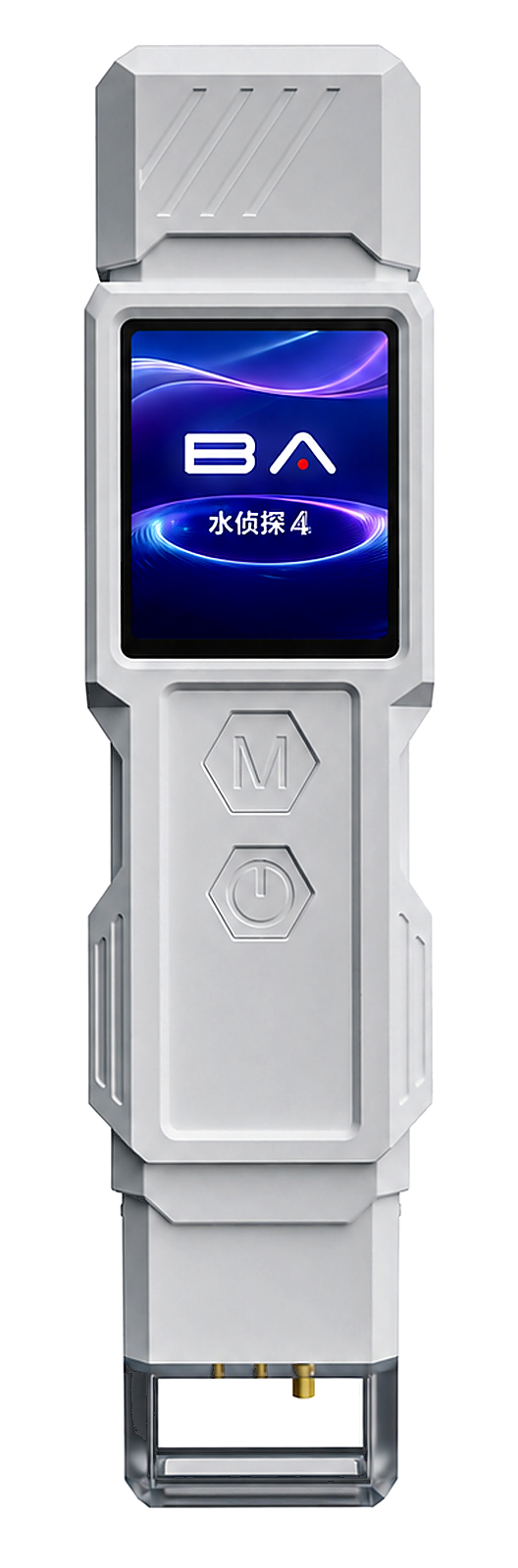
Take the AtomBit Water Detective 4 as an example: it integrates nine screening parameters — TOC, COD, UV254, turbidity, TDS, electrical conductivity (EC), salinity, hardness and temperature — in one rapid-testing platform, suitable for rapid comparison of household water, on-site screening and aquaculture water bodies. For aquariums, these parameters can help observe:
- Ion concentration fluctuations caused by evaporation (EC/TDS/salinity/hardness)
- Changes in particulates and transparency (turbidity)
- General trends of dissolved organic matter (UV254/TOC/COD screening signal)
However, this cannot be used to judge whether ammonia nitrogen, nitrite, nitrate, dissolved oxygen, pH, pathogens, parasites, heavy metals or specific pesticides exceed limits.
2.2 What this device does not do
Water Detective 4 is not a laboratory analyzer, nor does it contain specific sensors for ammonia nitrogen, nitrite, nitrate, dissolved oxygen, pH, bacteria/viruses/parasites. Any basis for treating these readings as "the water is safe" or "the fish will not get sick" is invalid. For specific pollutants or biological indicators, confirmation must be carried out using appropriate laboratory/dedicated methods in accordance with local requirements.
2.3 Applicable scenario boundaries
- Freshwater tanks: focus on observing TDS, EC, hardness, turbidity, UV254/TOC/COD (as an organic load trend).
- Marine/brackish water tanks: salinity is key; evaporation causes salinity to rise, and after topping up with water salinity falls back, but only water changes can replenish trace elements and dilute nitrate, etc.
- Newly set up tanks/cycling period: the nitrogen cycle is not yet stable, so ammonia/nitrite/nitrate test kits or laboratory monitoring are needed; portable devices cannot replace them.
- Planted tanks: plants absorb some nitrogen and phosphorus, but metabolic by-products still need to be removed via water changes.
- Topping up with tap water: tap water itself brings minerals and may cause TDS/hardness to keep rising; topping up with RO/DI water does not introduce new minerals, but it also cannot remove nitrogen compounds.
III. Reproducible sampling and measurement steps
3.1 Preparation before sampling
- Prepare a clean sampling container (such as the supplied sample bottle or a disposable PP centrifuge tube), and rinse 3 times with the water sample to be tested.
- Do not clean with dish soap; residual surfactants will interfere with optical and conductivity measurements.
- Keep sampling time fixed: for example, 2 hours after each feeding or at the same time every day; avoid measuring immediately after feeding or right after a water change.
3.2 Sampling location
- Sample in the middle layer of the aquarium, away from the filter outlet and air stone, to avoid drawing in surface oil film and bottom sediment.
- If using a pipette, draw the sample slowly to avoid disturbing the substrate.
3.3 Measurement steps (using Water Detective 4 as an example)
- Power on and confirm battery level; clean the probe/optical window.
- Insert the test pen into the water sample, ensuring the sensor area is fully submerged with no visible bubbles.
- Let it stand until the reading stabilizes, then record; repeat 3 times with the same water sample and take the median/average.
- Record the water sample temperature; if the device displays temperature, record that as well.
- After measurement, rinse the probe with distilled water/RO water and gently blot dry with a lint-free cloth.
- If using optical parameters, avoid taking readings under direct strong light, and use a light-shielding cover or a dark place where possible.
3.4 Establish a baseline
- Complete one standard water change (e.g., 25%) and wait 30 minutes before measuring, as the baseline.
- After that, measure once daily or once every 2 days at the same time, recording continuously for at least 1–2 weeks to observe the trend.
- When any parameter among TDS/EC/hardness/turbidity/UV254 keeps rising and exceeds normal daily fluctuation, it indicates accumulation of waste load and water change should be scheduled.
IV. How to interpret results and common interferences
Basic interpretation of 4.1 parameter changes
- EC/TDS/salinity: reflects the total amount of dissolved ions. Measuring immediately after evaporation gives a high reading; it falls back after adding pure water. If it keeps rising after topping up, new ions are being introduced (tap water, feed, mineral additives, fish medication, etc.).
- Hardness: represents multivalent ions such as calcium and magnesium; tap water and mineral conditioners change it; evaporation does not change the total hardness, but the concentration first rises and then falls.
- Turbidity: reflects suspended particles, bubbles and plankton. High turbidity makes optical parameters (UV254/TOC/COD) unreliable; it is recommended to let the sample settle or filter it before measuring, and to record the turbidity value as a correction reference.
- UV254/TOC/COD: screens dissolved organic matter and some particulate organic matter. In fish tanks, leftover feed, feces, plant debris and humic acids all raise it. A higher reading indicates increased organic load, but cannot distinguish humic substances from toxic substances.
Common interferences with 4.2
- Bubbles: bubbles attached to the electrode or in the optical path cause low or fluctuating TDS/EC readings; tap or stir to remove them.
- Temperature: conductivity varies with temperature; use readings with temperature compensation or refer to the product manual; comparisons at different temperatures are meaningless.
- Organic film: If a biofilm or oil film is present on the probe surface, it will cause response drift; clean regularly and calibrate according to the manual.
- Strong light/ambient light: Optical measurements are affected by stray light; shield from light or operate according to the device instructions.
- Color/tannins: Tannic acid released by certain woods and Indian almond leaves can significantly affect UV254/TOC/COD; in this case these parameters can be used as relative trends, not for absolute concentrations.
- Delay after sampling: Leaving a water sample for too long allows microbial activity, gas exchange and settling to change the readings; measure as soon as possible after sampling.
4.3 Important reminder: Ammonia/nitrite/nitrate cannot be inferred from screening parameters
Even if TDS, EC and TOC are all normal, ammonia nitrogen or nitrite can still reach harmful concentrations within a short time; and vice versa. Ammonia nitrogen/nitrite/nitrate, dissolved oxygen and pH must be measured using dedicated test kits or laboratory methods. Aquarium health decisions must not rely on a single portable device alone.
V. When to retest, stop use, or refer to a laboratory
5.1 Situations where increased retesting frequency is recommended
- After new fish are added to the tank, feeding amount changes, medication, power outage, or filter system failure.
- TDS/EC deviates significantly from baseline for consecutive 3 days and cannot be explained by top-off/water-change operations.
- Abnormal water color or odor; fish gasping at the surface, rubbing against tank surfaces, refusing food, or dying.
5.2 Situations where reliance on the device should be stopped and laboratory testing used instead
- When it is necessary to confirm whether ammonia nitrogen, nitrite, nitrate, dissolved oxygen, pH, pathogenic microorganisms, heavy metals or pesticides are compliant/safe.
- If the fish tank shows a mass disease outbreak or unexplained deaths, send a water sample to a qualified aquaculture/environmental laboratory.
- Equipment readings clearly contradict independent test results, or the equipment is faulty/damaged/cannot be calibrated.
5.3 Sampling precautions for sending to the laboratory
- Use a sterile/clean container provided by the laboratory, and refrigerate, protect from light, and fix the transport time as required.
- At the same time, record the on-site temperature, pH (measured on site), observed symptoms, and appearance of the water sample.
- Explain the purpose of testing to the laboratory: aquaculture water quality monitoring, disease investigation, or screening for specific contaminants.
6. Record sheet / action checklist
6.1 Suggested record fields
| Date | Time | Water temperature | TDS | EC | Turbidity | Topping up/water change operations | Observation notes |
|---|---|---|---|---|---|---|---|
6.2 Action Checklist
- Change at least 10–25% of the water once a week (adjust according to stocking density and filtration; there is no uniform standard).
- For evaporation top-up, use only water suitable for the species (for freshwater, use RO/DI or dechlorinated tap water; for seawater, use RO/DI mixed with salt).
- Establish a new baseline after each water change.
- If TDS/EC/turbidity/UV254 rise continuously without an operational explanation, add a dedicated nitrogen-cycle test or send a sample to a lab.
- Do not send portable readings to customers/users as a "safety certificate"; when used for trend alerts, the App/interface must label them as "screening values, not laboratory results."
Seven, brief FAQ
Q: After evaporation, I top up with RO water — will TDS keep rising? A: TDS/EC rises temporarily during evaporation; after topping up with RO/DI water it usually returns to the original level. But if feed residue, fish waste, etc. keep entering the water, TDS will still rise over time. Therefore, TDS not rising does not mean a water change is unnecessary.
Q: Can Water Detective 4 measure ammonia nitrogen or nitrite? A: No. It measures TOC/COD/UV254/turbidity/TDS/EC/salinity/hardness/temperature, which are screening and trend indicators. Ammonia nitrogen, nitrite, nitrate, dissolved oxygen and pH must be measured with dedicated test kits or laboratory methods.
Q: How often should I change the water? A: There is no single answer. For common household ornamental fish tanks, a reference is changing 10–25% every 1–2 weeks, but this must be adjusted according to stocking density, filtration, feeding, plants and species. Consult a local aquatic veterinarian or professional references, and combine with actual measurement trends.
Q: Can UV254/TOC/COD be measured when turbidity is high? A: Turbidity interferes with optical measurement, causing high or unstable results. It is recommended to record turbidity first, let the sample settle or filter it if necessary before measuring, and treat optical parameters as semi-quantitative trends.
Q: Can Water Detective 4 readings be used for automatic water-change/top-up control of smart aquarium equipment? A: They can be used for trend triggering, but should not be the sole safety judgment. When integrating the device, clearly label screening values in the firmware/App and combine with dedicated nitrogen-cycle sensors or regular laboratory calibration.
References
- World Health Organization. (2017). Guidelines for drinking-water quality: fourth edition incorporating the first addendum. Geneva: WHO. https://www.who.int/publications/i/item/9789241549950
- U.S. Geological Survey. (2018). Evaporation and the Water Cycle. https://www.usgs.gov/special-topics/water-science-school/science/evaporation-and-water-cycle
- U.S. Geological Survey. (2018). Hardness of Water. https://www.usgs.gov/special-topics/water-science-school/science/hardness-water
- Francis-Floyd, R., Watson, C., Petty, D., & Pouder, D. B. (2009). Ammonia in Aquatic Systems. University of Florida IFAS Extension. https://edis.ifas.ufl.edu/fa031
- Hargreaves, J. A., & Tucker, C. S. (2004). Managing Ammonia in Fish Ponds. Southern Regional Aquaculture Center Publication No. 4603. https://srac.tamu.edu/fact-sheets/serve/105
Regional applicability: the above materials take a mainly international perspective; for specific water-change volumes, limits and compliance requirements, please consult your local authority or a professional laboratory.