
Many families, when preparing formula or complementary foods for infants and young children, first take out a TDS pen to test their water purifier or tap water. The reading is only 20–40 mg/L, and the screen shows "Excellent" or "low TDS," so parents may think the water is already clean enough. This judgment ignores the fundamental difference between what a TDS pen measures and lead risk: TDS/conductivity reflects the total amount of dissolved ions in water, in milligrams per liter; whereas the health reference limit for lead is usually on the order of micrograms per liter (μg/L, i.e., ppb). TDS cannot rule out lead, and a low TDS does not prove the absence of lead.
1. Applicable users and decision questions
This article is mainly written for the following readers: household users who need to prepare drinking water or mix formula for pregnant women and infants and young children; consumers who are using or considering purchasing water purifiers, water dispensers, or smart cups; and brands, product managers, and embedded engineers who plan to integrate portable multi-parameter screening functionality into small household appliances for maternal and infant scenarios.
The most central decision-making question is: can a TDS pen or a portable device with TDS/conductivity functionality be used to determine "lead risk"? The answer is clearly no. TDS/conductivity can only indicate the level of total dissolved ions in water; lead is a heavy metal, and even at concentrations requiring attention, it makes almost no recognizable contribution to conductivity. Therefore, a low TDS reading does not mean lead-free, and a high TDS reading does not mean higher lead.
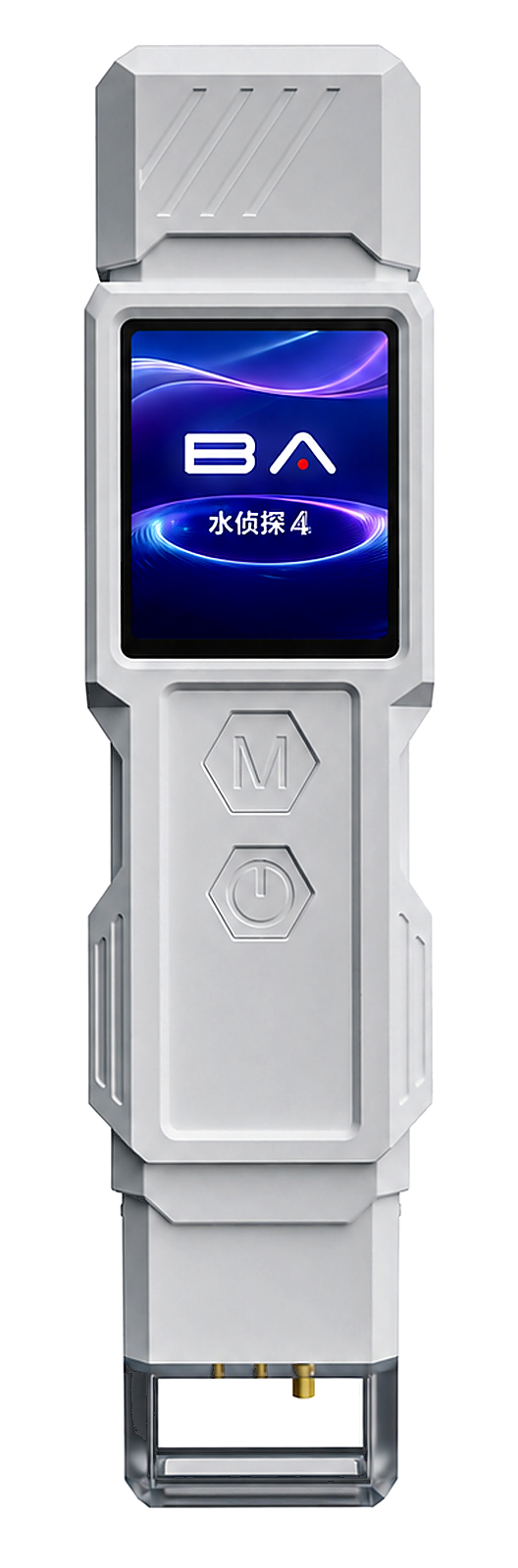
If a household needs to make a judgment about "whether this cup of water is suitable for infant drinking," two types of information must be distinguished: first, portable parameters used for screening, comparison, and trend observation; second, laboratory testing used to identify the presence or absence of lead and its specific concentration. Water Detective 4 belongs to the former and cannot replace the latter.
2. Water samples, equipment, and scenario boundaries
The common pathway for lead to enter drinking water is pipes, solder, brass faucets, or old pipe networks in the water distribution system, not whether the water source itself "looks clean." This is also why boiling water cannot remove lead: lead does not disappear through boiling, and may instead become slightly concentrated through evaporation. Some water purifiers can remove lead, but they must use a certified lead-removal filter cartridge and be maintained and replaced according to the manufacturer's requirements; not all water purifiers have lead-removal capability.
The principle of a TDS pen is to measure the conductivity of water and then convert it to TDS using an empirical coefficient. Conductivity is mainly contributed by common ions such as calcium, magnesium, sodium, bicarbonate, and chloride, whose content in water is usually measured in milligrams per liter. The level of concern for lead in drinking water, however, is commonly expressed in micrograms per liter, a difference of about 1000 times. In other words, even if lead in water has reached near the health reference value, its contribution to the TDS reading is far below the instrument's resolution and will not appear on the screen.
The nine indicators of Water Detective 4—TOC, COD, UV254, turbidity, TDS, EC, salinity, hardness, and temperature—are likewise screening and trend-observation indicators. TOC, COD, and UV254 mainly reflect organic matter; turbidity reflects particulate matter; TDS/EC/salinity/hardness reflect dissolved inorganic matter and overall ionic status; temperature is a measurement condition. None of these parameters has lead as a target analyte, nor can lead concentration be derived through conversion or combination. Therefore, any report or interface using such portable devices should not display wording such as "lead-free," "safe," or "compliant."
| Item | TDS pen/conductivity pen | Water Detective 4 multi-parameter screening | Laboratory lead testing |
|---|---|---|---|
| Measurement essence | Total dissolved ions (estimated as TDS/EC) | TOC/COD/UV254/turbidity/TDS/EC/salinity/hardness/temperature | Lead concentration |
| Can lead be detected | No | No; the metrics have no conversion relationship with lead | Yes, using an accredited method |
| Use | Filter desalination trend, rough comparison of hardness and taste | Water quality change screening, multi-parameter trends, device integration | Compliance determination, health risk confirmation |
| Interpretation of results | Low TDS ≠ lead-free; high TDS ≠ lead-containing | Parameter changes suggest a check is needed, but cannot identify contaminants | Must be judged against local limits |
3. Reproducible sampling and measurement procedure
If you still wish to use a TDS pen or the Water Detective 4 for routine screening, it is recommended to follow the steps below to obtain comparable, traceable records. But remember: these steps cannot replace laboratory lead testing.
- Prepare containers: Use clean, lead-free, sealable sampling bottles. If conditions permit, use acid-washed bottles provided by the laboratory or new food-grade plastic bottles; do not blow the inside of the bottle dry with your mouth, and do not touch the inner wall of the bottle mouth with your hands.
- Choose the sampling point and time: Prefer the kitchen cold-water tap; hot-water taps are not recommended because hot water can leach more lead from the pipes. To assess the worst case after water has stood in the pipes, you can take a "first liter" sample in the early morning or after the water has not been used for more than 6 hours. Then let the water run for 30 seconds and take a "flushed sample" for comparison.
- Water purifier sampling: If testing the water purifier outlet, first rinse the purifier according to the manufacturer's instructions (for example, drain the initial output of an RO system), then take the sample. Record the number of days the filter cartridge has been in use or the volume of water treated.
- Measure and record: Use the same TDS pen or the same Water Detective 4, and measure at or near room temperature. Record the water temperature, TDS/EC, turbidity, and on-screen readings such as UV254/TOC/COD. Temperature affects conductivity measurement, so keep the sample temperature as consistent as possible each time or use the device's temperature compensation function.
- Retain samples for laboratory submission: If the purpose of this screening is to investigate lead risk, a parallel water sample should also be taken at the same time using dedicated sampling bottles recognized by the laboratory, with preservatives added as required by the laboratory, the date marked, and the sample submitted as soon as possible. Do not use ordinary mineral water bottles for long-term storage of water samples.
4. How to interpret results and common interferences
When interpreting readings from portable devices, each parameter must be confined to its true indicative range.
- Low TDS/EC: This only indicates that the total amount of common dissolved ions is low. RO product water TDS can be as low as below 10 mg/L, but if the downstream RO tubing or the tap contains lead, lead can still be introduced. Therefore, low TDS is not evidence of being lead-free.
- TDS/EC high: indicates relatively high levels of calcium, magnesium, sodium, chloride ions, etc.; it cannot be concluded from this that lead is also high. The sources and dissolution mechanisms of lead differ from those of these common ions.
- Turbidity: high turbidity suggests more particulate matter or colloids in the water, which may affect taste and may also carry particulate lead; however, lead can also exist in dissolved form, and lead may still be present when turbidity is low. Turbidity cannot distinguish lead from other particles.
- UV254, TOC, COD: mainly reflect organic matter, such as humic substances and organic matter not removed by some water purifiers. Lead is an inorganic substance and will not cause these parameters to rise or fall.
- Hardness, salinity: mainly reflect calcium and magnesium and total salt content, and have no conversion relationship with lead. Some less corrosive water may leach fewer metals, but corrosiveness is affected by multiple factors such as pH, alkalinity, hardness and temperature, so lead risk cannot be judged by hardness alone.
- Temperature: is a measurement condition and sample state parameter, and is not itself a pollutant indicator.
Common interferences include: electrode contamination or drying, bubble attachment, unstable sample temperature, inconsistent calibration between different devices, residual detergent or minerals in containers, fingers touching the electrode or bottle mouth, and insufficient rinsing before testing. Small fluctuations in portable device readings within a day usually do not indicate a change in safety status, but if the method is consistent and a clear trend change appears, the filter cartridge, piping or sampling operation should be checked.
5. When to retest, stop use, or refer to a laboratory
The purpose of retesting is to observe trends, not to prove safety. Retesting is only meaningful for comparison when the sampling method, equipment, temperature and filter cartridge status can be replicated. It is recommended to record once a month or quarter at a fixed sampling point and time as a reference for water quality changes or filter cartridge degradation.
If any of the following situations occurs, it is not recommended to continue relying on portable devices for judgment; instead, contact a qualified laboratory for lead testing as soon as possible:
- The housing or piping has been in use for a long time, especially if there are old metal pipes, lead solder or brass faucets;
- A water outage, pipe repair or water meter replacement has just occurred;
- The tap water has color, is turbid, or has an odor or metallic taste;
- There are pregnant women, breastfeeding women or children under 6 years old in the household;
- The water purifier has no clear lead-removal certification, or the filter has reached the end of its service life and it is uncertain whether it can continue to remove lead;
- Test results are needed to explain to doctors, schools, property management or regulators whether the water is suitable for drinking.
Laboratory testing usually uses recognized methods such as graphite furnace atomic absorption and ICP-MS; the specific method, sampling bottles and limits are determined by local public health or regulatory authorities. If the report shows that the lead concentration exceeds the local limit, immediately stop using that water for infant drinking or formula preparation, switch to a reliable alternative water source, and investigate the piping or replace it with a certified lead-removal filter. Note that the 15 ppb in the US EPA Lead and Copper Rule is the 90 percentile action level for public water systems, not a "safety threshold" for individual household water samples; the WHO provisional guideline value for lead in drinking water is 10 μg/L (about 10 ppb), and actual health risk assessment should still be discussed with local health authorities.
6. Record sheet/action checklist
| Step | Portable screening can record | Must be confirmed by a laboratory |
|---|---|---|
| Sampling point and time | Kitchen cold water, water purifier outlet; standing time, volume flushed | Use laboratory sampling bottles and preserve according to the method |
| On-site parameters | TDS/EC, turbidity, TOC/COD, UV254, temperature, salinity, hardness | Lead concentration |
| Device status | Filter days, instrument model, calibration status | Instrument metrology and standard methods |
| Purpose of results | Same-point trend or filter degradation reference | Drinking safety judgment, compliance or health risk |
Households with children or elderly family members can print or save a checklist like this:
- Confirm water source and household plumbing risks, especially old pipes, restoration after a water outage, and faucet replacement.
- Standardize sampling: cold water, standing first liter, flushed sample, and purifier flushed according to instructions.
- Use a TDS pen or Water Detective 4 to record on-site parameters, but only for trend comparison.
- When lead risk factors exist or a drinking safety judgment is needed, send samples to a locally certified laboratory for lead testing.
- After receiving the laboratory report, decide whether to continue use, stop use or replace treatment equipment according to local limits.
- Keep records and retest periodically; if filters or plumbing are replaced, resample and resubmit for testing.
7. Integration notes for product and R&D teams
If a brand is preparing to integrate multi-parameter screening capabilities such as Water Detective 4 into water purifiers, water dispensers, smart cups or pet water fountains, it is recommended to clearly state the following in the interface and instructions:
- The TOC, COD, UV254, turbidity, TDS, EC, salinity, hardness and temperature given by the device are only for screening, comparison and trend observation;
- Must not display conclusions such as “lead-free”, “safe” or “suitable for infants and young children to drink”;
- The lifespan management of lead-removal filter cartridges should be based on the test standards of a third-party certification body, rather than reading TDS or other optical parameters to infer it;
- For maternal and infant scenarios, it may be suggested in the App or on the screen to “periodically send samples for lead testing according to local regulations”, rather than using readings as a substitute.
This way, the value of portable devices in filter cartridge management, water quality change reminders and user experience can be brought into play, while also avoiding misleading users into treating screening readings as compliance or health proof.
8. Frequently asked questions
Q1: A TDS pen shows 10 ppm; does that mean there is no lead?
No. 10 ppm equals 10 mg/L, while the lead level of concern is usually on the order of 10 μg/L (10 ppb), a difference of 1000 times. Even if the lead in water reaches a concentration that requires attention, a TDS pen cannot read it. Low TDS only means there are few common dissolved ions; it does not mean there is no lead.
Q2: Can the UV254/TOC/COD of Water Detective 4 indirectly reflect lead?
No. UV254/TOC/COD are mainly related to organic matter. Lead is an inorganic heavy metal and will not cause these parameters to rise. No parameter in a portable device can be converted to obtain the lead concentration.
Q3: Can boiling water remove lead?
No. Boiling cannot remove lead; instead, evaporation may cause the lead concentration to rise slightly. Lead removal requires a certified filtration or treatment device.
Q4:什么时候必须做实验室铅检测?
存在老旧金属管道、停水维修、水质异常、家中有孕妇或婴幼儿、需要安全证明等情况下,应联系当地认证实验室进行铅检测。检测方法、采样瓶和限值以当地要求为准。
Q5:便携设备读数波动或突然升高要不要担心?
先检查取样方法、温度、电极状态和滤芯情况。如果方法一致且变化明显,可以提示检查管路或滤芯,但不能据此判断铅是否超标。涉及铅风险仍需实验室确认。
References
- World Health Organization. Guidelines for drinking-water quality: fourth edition incorporating the first addendum. Geneva: World Health Organization; 2017. https://www.who.int/publications/i/item/9789241549950
- U.S. Environmental Protection Agency. Lead and Copper Rule. https://www.epa.gov/dwreginfo/lead-and-copper-rule
- U.S. Centers for Disease Control and Prevention. Lead in Drinking Water. https://www.cdc.gov/nceh/lead/prevention/sources/water.htm
- U.S. Geological Survey. Lead in Drinking Water. https://www.usgs.gov/special-topics/water-science-school/science/lead-drinking-water
地域适用性说明:铅的健康参考值、检测方法、管道风险因素和处置要求因国家和地区而异。上述 WHO 及美国资料用于说明技术原理和公共供水监管框架,不替代当地供水、卫生或市场监管机构的要求。在中国或其他地区使用时,请以当地饮用水标准、疾控或认证实验室指引为准。
本文的目的不是提供医学或法律建议。需要饮用安全结论时,必须依据当地主管部门认可的实验室检测报告。