
Intended users and decision questions
When fish in the tank show abnormalities — such as suddenly refusing food, rapid breathing, or white spots or lesions on the body surface — many aquarists first think of testing the water. However, household portable water-testing devices (such as the AtomBit Water Detective 4) mainly provide "screening" and "trend observation" capability, not diagnosis of fish disease. This article is intended to help you use such tools sensibly during fish illness, clarify what they can and cannot do, and avoid delaying treatment because of misinterpreted data.
The intended users include: routine water-quality monitoring of household freshwater ornamental fish tanks (such as goldfish, tropical fish, and small cichlids), small culture tanks, and quarantine tanks. The decision questions include: When fish are sick, which parameters should I test first? Does an abnormal measurement result necessarily mean there is a water-quality problem? Can the "organic matter" indicator measured by the device represent harmful ammonia nitrogen or pathogens? How can data be used to support judgment before and after water changes, salt addition, and medication?
Water sample/device/scenario boundaries
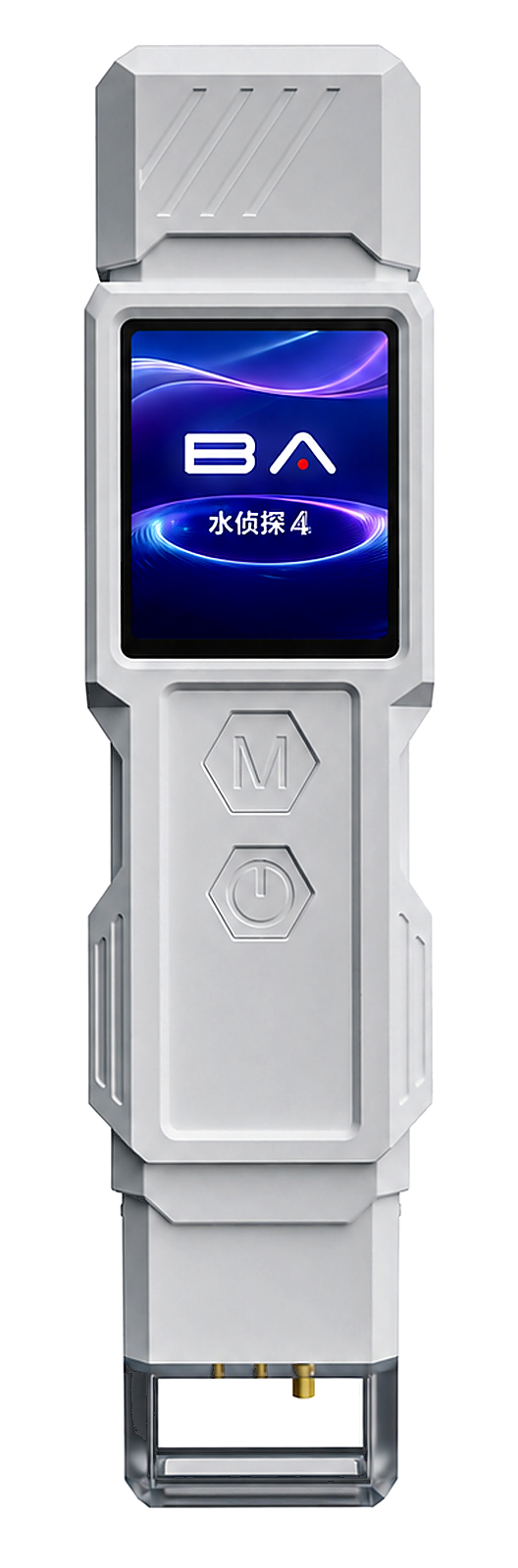
Using the AtomBit Water Detective 4 as an example, it provides nine indicators in a single rapid measurement: TOC (total organic carbon), COD (chemical oxygen demand), UV254 (254 nm absorbance), turbidity, TDS (total dissolved solids), EC (electrical conductivity), salinity, hardness, and temperature. These nine indicators are "comprehensive water-quality screening" parameters, used to compare changes in the same water body over time and to detect sudden shifts, but they are not equivalent to quantitative detection of a single pollutant.
Indicators that clearly cannot be measured: ammonia nitrogen (NH₃/NH₄⁺), nitrite (NO₂⁻), nitrate (NO₃⁻), dissolved oxygen (DO), pH, residual chlorine, heavy metals (such as lead, arsenic, copper), pesticides, bacteria, viruses, and parasites. These indicators are highly relevant to fish disease — especially the acute toxicity of ammonia nitrogen and nitrite to fish — and must be analyzed with dedicated test kits (such as liquid colorimetric reagent kits) or sent to a qualified laboratory. Never interpret the readings of the Water Detective 4 as "water quality is safe" or "fish disease is not a concern."
Applicable scenarios: mainly used for routine screening of freshwater tanks and trend tracking during fish illness. For marine tanks, because salinity is higher (usually 30–35 ppt), salinity/TDS/EC can be measured if the device's range covers it, but some optical parameters (such as UV254 and turbidity) may be subject to interference from high ionic strength or color and should be interpreted with caution. Before use, refer to the range and applicable water types in the product manual.
Reproducible sampling and measurement steps
To ensure data comparability during fish illness, it is recommended to keep the sampling location, time, and method fixed.
Preliminary preparations:
- Rinse the sampling container and probe with distilled or purified water to avoid residue from the previous sample.
- Read the device manual to see whether calibration is required. If calibration is supported, perform it according to the instructions.
- Before measuring, let the water sample stand for 10–15 minutes to allow bubbles to dissipate and large particles to settle (but do not let it stand too long, to avoid changes in dissolved gases or resuspension of sediment).
取样:
- 选择鱼缸中部、水流循环良好的位置,避开进水口和出水口直接冲击区域。
- 使用干净容器舀取水样,深度约在水面下 10–15 cm,避免表层油膜和底部残渣。
- 取样量根据设备要求,通常需浸没探头感应区。
测量步骤(建议顺序):
- 先用温度计或设备测量水温,记录。
- 测量浊度:轻轻摇匀水样,立即测量,避免静置后颗粒沉降。
- 测量 TDS/EC/盐度:将探头完全浸入,等待读数稳定。温度会影响测量,设备若有自动温度补偿则按说明书操作。
- 测量硬度:根据设备方法,可能需要特定试剂或模式。
- 测量 TOC/COD/UV254:确保水样无气泡,探头窗口清洁,按设备提示操作。
- 每次测量后,用蒸馏水冲洗探头并擦干,再进行下一个样本或收纳。
关键注意事项:
- Do not repeatedly measure the same water sample multiple times, as this can cause temperature changes.
- Do not stir the water sample with the probe or let it touch the tank wall.
- If medication or salt has just been added to the fish tank, wait for it to circulate evenly before measuring (usually 30 minutes to 1 hours).
- Record all measurement values and note information such as feeding, water changes, medication, and fish status.
How to interpret results and common interferences
During fish illness, we focus more on whether water quality parameters show "sudden changes" or "persistent abnormalities" rather than single absolute values. The following interpretation framework is for reference:
- Temperature: Fish are sensitive to sudden temperature changes; a change exceeding 2–3°C within a short time may trigger stress. Temperature should be kept stable during fish illness.
- Turbidity: A significant increase within a short time may indicate an increase in suspended bacteria or organic debris in the water, or reduced filtration system efficiency. If the fish body surface has ulcers, shed tissue can also increase turbidity.
- TDS/EC/Salinity: These three items are often positively correlated. A large increase within a short time may be due to evaporative concentration, salt addition, medication (inorganic salt components), or external contamination. A sudden decrease may be due to a large water change or mixing in RO water. For fish that require stable osmotic pressure, drastic fluctuations are harmful.
- Hardness: Total hardness affects fish osmoregulation and gill function. If the fish come from a soft-water environment, a sudden increase in hardness will aggravate stress.
- TOC/COD/UV254: Reflects the total organic matter load or the load of specific aromatic organic matter in the water. During fish illness, fish secretions, dead cells, residual feed, and dissolved medication can all raise these indicators. Trends are more meaningful than single values: if they rise continuously, it indicates an increased organic load, and consideration should be given to strengthening filtration or doing a partial water change.
Common interference factors:
- Tiny air bubbles in the water sample: cause a high turbidity reading; UV254 may be affected by scattering. Be sure to let it stand to eliminate bubbles.
- Probe contamination: The probe was not cleaned thoroughly after the last measurement of a high-concentration water sample, causing cross-contamination.
- Unstable temperature: This affects EC/TDS readings; always wait for the temperature reading to stabilize.
- Color interference: If the water sample is noticeably discolored by medications (such as methylene blue or yellow powder), optical parameter measurements will be affected, and readings may be inaccurate.
- High salinity: In seawater or salted tanks, the formula used to convert TDS/EC to salinity must match; if the value exceeds the device range, the display may saturate.
Important reminder: None of the above parameters can directly diagnose fish disease. For example, elevated ammonia nitrogen can poison fish, but the Water Detective 4 cannot measure ammonia nitrogen. If you observe symptoms such as fish gasping at the surface, rapid breathing or flared gill covers, you must immediately use a dedicated ammonia nitrogen/nitrite test kit or send a sample to a laboratory for testing, even if the device readings are normal.
When to retest, stop using, or send to a laboratory
Retest frequency:
- Acute phase of fish disease: Measure once at a fixed time each day (for example, before morning feeding) and record continuously.
- Stable or recovery phase: Once every 2–3 days.
- Routine maintenance: Once a week.
When to stop using the device and inspect it:
- Readings remain abnormal continuously (for example, TDS is 0 or exceeds the range), which may indicate a probe fault or battery problem.
- The optical window is scratched or contaminated and cannot be cleaned.
- Equipment water ingress, display screen damaged.
Indications that must be referred to laboratory testing (including but not limited to):
- Fish show typical ammonia nitrogen/nitrite poisoning symptoms (rapid breathing, purplish-red gills, frantic swimming at the water surface or listlessness), while household equipment cannot measure these two items.
- Suspected insufficient dissolved oxygen (fish gasping at the surface, gathering at the outlet), requiring a dissolved oxygen meter or laboratory measurement.
- Multiple fish die within a short period, suspected pathogen infection, requiring laboratory bacterial culture, virus testing or parasite microscopy.
- Self-treatment 3 days ineffective, and water quality screening indicators show abnormal trends.
- Need to use professional medication, but uncertain about the drug concentration or residues in the water.
When referring to the laboratory, please provide a detailed record sheet and state the sampling time, fish symptoms, and recent operations (water change, medication, adding new fish).
记录表/行动清单
Daily record sheet template
| Date | Time | Water temperature (°C) | Turbidity (NTU) | TDS (ppm) | EC (µS/cm) | Salinity (ppt) | Hardness (ppm) | TOC (ppm) | COD (ppm) | UV254(1/cm) | Fish status/notes |
|---|---|---|---|---|---|---|---|---|---|---|---|
| 2025-04-01 | 08:30 | 25.2 | 1.8 | 210 | 420 | 0.2 | 120 | 1.2 | 2.0 | 0.035 | Decreased appetite, 1 white spots on tail |
Note: Actual values vary depending on the device and fish tank; this table is only a format example.
Action checklist (perform after each measurement)
- Check whether the device needs cleaning or calibration.
- Check the magnitude of change in this reading compared with the previous one.
- If an indicator changes drastically (e.g., TDS changes by more than 30% in a single day), first confirm whether it is an operational error (bubbles, dirty probe); after ruling that out, consider a water change of 20–30%.
- Consider fish behavior: if there is no obvious improvement or if it worsens, start dedicated ammonia nitrogen/nitrite testing.
- If device readings exceed the normal operating range, handle according to the manual or contact the manufacturer.
- Organize the data into a trend chart to make it easier to judge.
FAQ (Frequently Asked Questions)
Q: Can Water Detective 4 measure ammonia nitrogen or nitrite? A: No. Water Detective 4 provides only nine screening indicators: TOC, COD, UV254, turbidity, TDS, EC, salinity, hardness, and temperature. Ammonia nitrogen and nitrite are common causes of acute fish poisoning and require dedicated colorimetric test kits or laboratory measurement.
Q: When a fish is sick, if this device measures TOC and COD as normal, does that mean the water quality is fine? A: No. TOC/COD reflect the total organic load and have no direct conversion relationship with inorganic nitrogen pollutants such as ammonia nitrogen and nitrite. Pathogens (bacteria, viruses, parasites) are also not directly reflected in these optical indicators. Fish disease may be caused by multiple factors, and water quality is only one part of it.
Q: Can Water Detective 4 be used for a seawater tank? A: Please check the salinity range in the product manual. Seawater salinity is usually 30–35 ppt. If the device's salinity sensor covers this range, it can measure salinity/conductivity/TDS. However, optical parameters may deviate due to the high-salinity background and color, so it is recommended to use them only for trend comparison, not as precise values.
Q: Why does the reading always jump when measuring turbidity? A: It may be due to tiny bubbles in the water sample or dirt on the probe window. First let the water sample stand for more than 10 minutes to eliminate bubbles, and clean the optical window with a soft cloth. Avoid shaking the container during measurement.
Q: Is it necessary to measure hardness every day? A: Hardness is usually stable in a fish tank over the short term unless there is a large water change or a hardness adjuster is added. During fish illness, it can be measured once every 3 days, with emphasis on recording indicators that change relatively quickly, such as temperature, TDS/EC, turbidity, and TOC/COD.
References
- World Health Organization. Guidelines for drinking-water quality: fourth edition incorporating the first addendum. Geneva: WHO; 2017. Link: https://www.who.int/publications/i/item/9789241549950 (for understanding the health significance of water quality parameters, but note that drinking water standards ≠ aquatic safety standards)
- U.S. Environmental Protection Agency. Aquatic Life Criteria – Ammonia. For the latest version, see the EPA official website series of documents (https://www.epa.gov/wqc/aquatic-life-criteria-ammonia)。用于说明氨对鱼类的毒性,需实验室或专用方法检测。
- University of Florida IFAS Extension. Water Quality for Aquarium Fish (authors: Ruth Francis-Floyd, etc.). An outreach publication on water quality management for ornamental fish, covering key parameters such as ammonia, nitrite and pH and their effects on fish. Stable link provided: https://edis.ifas.ufl.edu/publication/FA027(请以最新版本为准)。
- Water quality testing requirements issued by local public health or aquaculture authorities (subject to the user's region; this article does not replace local regulations).
Regional applicability note: this article is based on general freshwater ornamental fish keeping scenarios; specific water quality parameter limits and testing submission requirements may vary by regional regulations and fish species. For disease diagnosis or treatment, please consult a licensed veterinarian or aquaculture technician.