
What TDS readings can and cannot answer
Why is TDS always treated as a "water quality score"?
Many product pages for water purifiers, water dispensers and smart water bottles put TDS in a prominent position, using a low reading to prove that "the water is very clean". But TDS does not directly equal the total amount of contaminants, and even less does it equal health risk. TDS (Total Dissolved Solids) represents the total amount of dissolved inorganic salts and a small amount of organic matter in water, and is usually converted from electrical conductivity (EC). It is more like a "concentration estimate of dissolved salts" than a "hazardous substance test report".
For household drinking water and smart small-appliance scenarios, the real value of TDS lies at three levels:
- Comparison and trend observation: Under the same water source, same device and same temperature conditions, TDS changes before and after filtration, at different filter stages and at different time points can reflect the ability to remove dissolved salts or signs of membrane/resin breakthrough.
- Preliminary screening of taste and scale risk: A higher TDS usually means more minerals, which may affect taste or cause scale; an extremely low TDS tastes rather "flat". However, taste is affected by the specific ion species, and TDS alone cannot be used to judge it.
- Input quantity for device integration logic: For hardware with water quality display and filter life reminders, TDS can serve as one feature in a multivariable model, but cannot be the sole basis.
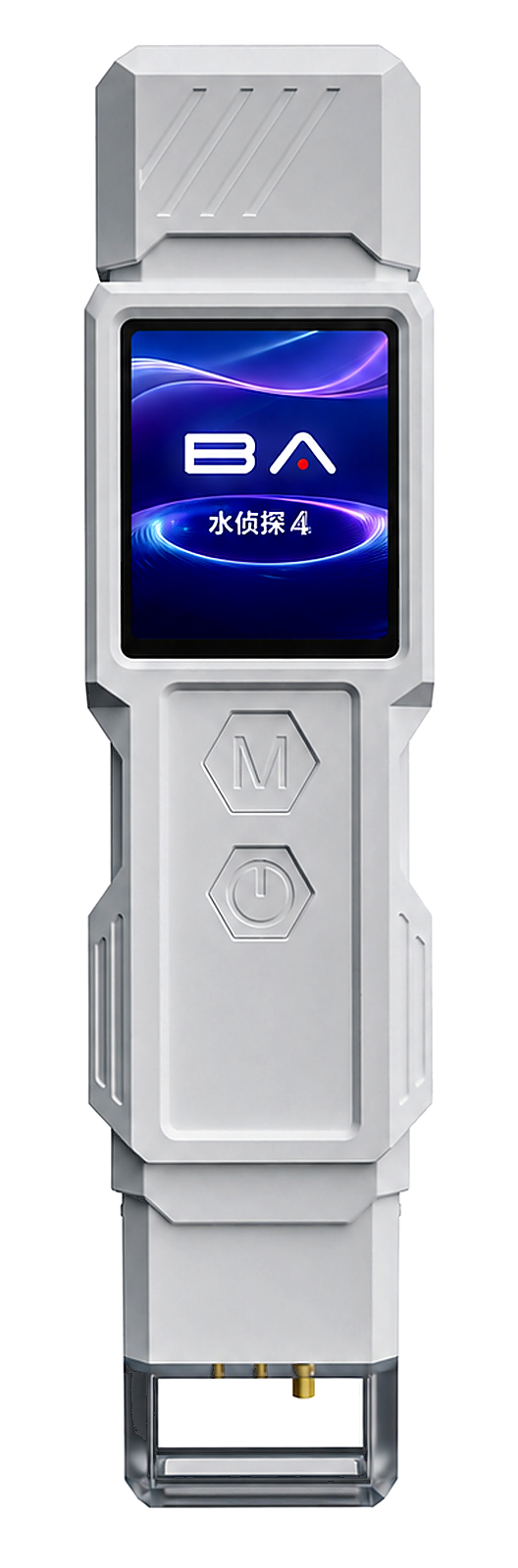
AtomBit Water Detective4 (Water Detective 4) integrates nine indicators—TDS, EC, temperature, turbidity, UV254, TOC, COD, hardness and salinity—into a single portable test pen. Its positioning is rapid screening in homes, by service personnel and on site, not a laboratory analytical instrument. This point must remain clear in all subsequent explanations.
Target users and decision questions: what can TDS answer?
In household drinking water and water purification equipment scenarios, the questions TDS can answer include:
| Decision question | TDS answering capability | Usage conditions |
|---|---|---|
| Is the reverse osmosis/nanofiltration membrane working? | The TDS difference between feedwater and permeate can be observed; normal RO permeate TDS should be significantly lower than feedwater | Samples must be taken at the same time, at the same temperature, and under the same container conditions; if the membrane is breached or the seal fails, permeate TDS may rise abnormally |
| Do non-desalinating filters such as activated carbon/ultrafiltration remove TDS? | Generally no; activated carbon, ultrafiltration, and PP cotton mainly remove particles, residual chlorine, and some organic matter, with limited removal of dissolved salts, so TDS changes are not obvious | Avoid expecting TDS to decrease, otherwise filter failure may be misjudged |
| Does the taste change noticeably during use? | It can provide trend clues, such as a sudden TDS increase accompanied by a salty/bitter taste; however, taste differences may also come from trace organic matter or residual chlorine | It is necessary to combine turbidity, UV254, TOC and other indicators for comprehensive judgment |
| Does the RO membrane need to be replaced or the seal checked? | This can be indicated, for example when the outlet TDS continuously rises above the initial value by more than a certain percentage (the specific threshold must be combined with product data and local water quality). | A fixed universal threshold cannot be given; the equipment manufacturer must verify it based on membrane specifications, inlet water quality, water temperature and flow rate. |
| Is the risk of scale buildup increased? | There is some indication, because calcium, magnesium and other ions contribute to TDS and hardness; however, TDS is not equal to hardness. | Hardness testing or calculation is more direct; high TDS does not necessarily mean high hardness, as it may be dominated by sodium salts. |
The questions TDS cannot answer are even more critical:
- Does the water contain lead, arsenic, nitrate, pesticides, bacteria, viruses or parasites? TDS should not be used for such determinations. The Water Detective4's TOC, COD, UV254, turbidity and other indicators can only screen the overall level of organic matter/particulate matter or perform trend comparisons; they cannot identify specific pollutants, let alone prove microbiological safety.
- Does this glass of water meet the national drinking water hygiene standards? Compliance evaluation requires testing all specified indicators, and household instruments cannot replace this.
- Is it suitable for pet health, aquaculture compliance or medical use? These scenarios must be confirmed by professional laboratories and corresponding regulatory methods.
When designing copy, user guidance and filter management algorithms, the product team must clearly distinguish between "screening/trend" and "compliance/health certification". It is recommended that the App or manual always include the sentence: "The readings of this device are for observing trends in domestic water only and are not a basis for water quality safety compliance."
Water samples, equipment and scenario boundaries
Water sample type
Water Detective 4 and general TDS/EC test pens are suitable for:
- Household tap water, water purifier output (RO, ultrafiltration, microfiltration, etc.)
- Bottled water, barreled water, community direct drinking water
- Output water or inner-tank water of water dispensers, coffee machines, smart water bottles, and pet water fountains
- On-site service comparative testing
Scenarios that are not applicable or require caution:
- Highly polluted industrial wastewater, strong acids and alkalis, high-salinity brine: may exceed the measuring range or damage the electrode/optical window.
- Water containing oil, large amounts of suspended solids, or mud: will contaminate the electrode and optical surfaces, making readings unstable.
- Ultrapure water with extremely low conductivity: places extremely high demands on the probe, container, and operational cleanliness; readings from conventional portable devices fluctuate noticeably.
- Temperature too high/too low (e.g., >40°C or close to freezing point) or sample volume extremely small: temperature compensation and probe immersion conditions are not met.
Device boundaries
Water Detective 4 integrates TOC, COD, UV254, TDS, EC, turbidity, hardness, salinity, and temperature. Among these, TDS is usually estimated from EC combined with temperature compensation rather than by the gravimetric method; EC is electrical conductivity, reflecting the ability of ions in water to conduct electricity. Parameters such as hardness and salinity also usually rely on ion activity/conductivity conversion or colorimetric/optical estimation, and are not laboratory methods such as ion chromatography. Therefore, all readings are "screening values," and caution is needed when comparing them directly across devices and brands, because different compensation models, ranges, and calibrations can cause differences.
For smart hardware product design, when choosing a conductivity/TDS measurement solution, consider:
- Temperature compensation: Water conductivity changes significantly with temperature, so the compensation algorithm must be accurate; it is recommended to use a built-in NTC or digital temperature sensor and to calibrate the compensation coefficients. Water Detective4 provides temperature readings as a basis for compensation and user display.
- Probe constant and measurement range: Household drinking water EC is typically in the 50–1500 µS/cm range, corresponding to a TDS of about 25–750 mg/L (roughly estimated using the 0.5 conversion factor). Wider ranges may be needed for RO concentrate and tank water.
- Excitation frequency and polarization: Electrode polarization in water causes measurement errors that vary with excitation frequency. Multi-frequency excitation or pulse techniques can improve the stability of low-conductivity measurements.
- Anti-fouling and maintenance: Household devices may be immersed for long periods or used for intermittent measurement, and electrode scaling, drying and oil residue can all cause drift. An automatic cleaning design or a user-maintainable structure is needed, and drift detection should be built into the algorithm.
Reproducible sampling and measurement steps
Whether TDS measurement is reliable depends largely on consistency in sampling and operation. The steps below are suitable for households, service personnel and product testers.
Preparation
- Use a clean container with no residue. Rinsing three times with the water sample to be tested is recommended to avoid contamination by ions or detergent on the container walls.
- Check whether the probe is clean and moist. If it has not been used for a long time, first rinse it with deionized water or purified water, then shake it dry or gently wipe it with lint-free paper.
- If the device supports calibration, calibrate or verify it with a known conductivity standard solution according to the instructions. Portable test pens usually do not need calibration every time, but verifying once a week or month can increase confidence.
- Record the ambient temperature and the approximate temperature of the water sample, and avoid measuring in direct sunlight or near cold or heat sources.
Sampling
- Let the tap or device outlet run for at least 10–20 seconds to flush out stagnant water in the pipe.
- Collect approximately 100 mL of water sample in a container; be careful not to touch the inner wall of the container.
- Collect the water samples to be compared (e.g., before and after filtration) at the same location, same flow rate and same temperature to facilitate paired comparison.
Measurement
- Immerse the probe completely in the water sample and make sure no air bubbles adhere to the vent hole or the electrode tip. Gently swirl or stir for a few seconds, then let it stand until the reading stabilizes.
- Record TDS, EC, temperature and other optional Water Detective 4 indicators (turbidity, UV254, TOC, COD, hardness, salinity).
- If the reading keeps drifting for more than 10–20 seconds, check for air bubbles, suspended solids or probe contamination; if necessary, resample or clean the probe.
- Repeat each sample at least 2–3 times, take the median or average value, and record the reading range.
Record
- Fill in the date, time, sample source, device number, filter cartridge usage time/flow rate, ambient temperature, readings and other information in the record sheet. The product team can turn these fields into an electronic form or App guidance.
Common failure modes
- Container contamination: use glass or food-grade PP containers and avoid metal containers; do not measure directly in bottled water—it is best to pour it out, rinse, and then measure.
- Air bubble adhesion: air bubbles reduce the effective contact area of the electrode, causing low EC/TDS readings. Gently tap the container wall or stir slowly to release the air bubbles.
- Temperature not stabilized : Water just taken from the refrigerator or freshly heated water requires time for temperature compensation to establish; wait until the water sample is close to room temperature (around 25°C) before measuring, or let the device remain continuously immersed in the water sample for more than 30 seconds.
- Probe dry or contaminated : A dry electrode surface needs activation after being re-wetted; calcium scale, oil film and biofilm can be treated with dilute acetic acid or a dedicated cleaning solution, but must be rinsed thoroughly to avoid residue affecting readings.
- Cross-contamination : Measuring a low-concentration sample directly after a high-concentration sample will cause the next sample's reading to be too high. Rinse the probe with deionized water first, then rinse with the next sample.
How to interpret results and common interferences
Relationship between TDS and EC
TDS (mg/L) is usually obtained by multiplying electrical conductivity (µS/cm) by an empirical coefficient. The common coefficient ranges between 0.5 and 0.7, and depends on the ionic composition of the water. For example, water dominated by sodium salts/chloride salts has a coefficient of about 0.5; water dominated by calcium-magnesium bicarbonate may have a slightly higher coefficient. Water Detective 4 or general test pens internally fix a coefficient or make an approximation based on temperature/salts, so TDS is an "estimated value", not a weighed value. If users see both TDS and EC, they can cross-check whether the coefficient is reasonable; if the coefficient is abnormal, it indicates that the ion types in the water are special and should be interpreted with caution.
Common interference factors
- Temperature : Electrical conductivity increases as temperature rises; insufficient compensation will cause falsely high TDS in summer or hot water samples, and low readings in winter or cold water samples. The temperature compensation algorithm should cover 0–40°C or a wider range.
- Bubbles and suspended solids : Bubbles reduce the effective contact area and make readings low; suspended solids can increase turbidity and light scattering and may also affect optical indicators, but do not necessarily change EC.
- Electrode polarization and contamination : When measuring high-concentration samples, concentration polarization may occur on the electrode surface, and long-term measurement causes reading drift; calcium and magnesium scaling will cover the electrode and cause the EC reading to drop.
- Sample inhomogeneity : If the water contains undissolved salt particles, fine bubbles or stratification, the reading fluctuates; stir thoroughly and let it stand before measuring.
- Electromagnetic interference : Measuring in strong electromagnetic fields or near motors and chargers may introduce noise; the impact is generally small in a home environment, but product design must consider shielding and filtering.
- Stains on the optical window : The turbidity, UV254, TOC and COD of Water Detective 4 rely on optical measurement; stains or scratches on the window will interfere with these parameters and thereby affect the user's judgment of the overall result.
Multi-parameter combined interpretation
A single TDS change is hard to attribute directly to a problem. Combining it with other metrics from the Water Detective 4 allows for more reasonable screening:
- TDS and EC rise together, and turbidity also rises: Possible deterioration of feed water quality or failure of filter seals, with particulate matter and dissolved salts both passing through.
- TDS rises but turbidity is normal: Possible decline in RO membrane salt rejection, abnormal concentrate recirculation, or a rise in feed water TDS itself; the membrane and feed water conditions should be checked.
- TDS remains basically unchanged but UV254/TOC rises: Possible organic contamination, such as activated carbon failure or organic matter leaching from piping; this should be judged together with odor and color.
- Hardness and TDS rise together: Increased scaling risk, which may affect equipment such as coffee machines and humidifiers.
When to retest, stop using, or send to a laboratory
In the following situations, retest first to rule out operational error:
- A single reading deviates abnormally from the previous trend, but other metrics show no change.
- The probe was used immediately after exposure to extreme temperatures, drying, or contamination.
- The sample has obvious bubbles or turbidity, or the temperature has not stabilized.
- The two cups of comparison samples were sampled in a different order or in different containers.
When retesting, thoroughly clean the probe, use a new container, run the tap for a longer time, and then repeat the standard procedure three times. If the retest results return to normal, record them and continue using the device; if the abnormality persists, proceed to the next step.
Situations that require you to stop using the product or contact product support/the original manufacturer:
- Physical damage to the probe, cracked optical window, seal failure, or water ingress.
- Hardware faults such as continuous reading drift, freezing, or garbled display output.
- Still out of tolerance after calibration, and the device is within the warranty period.
- When used for product development validation, if the TDS deviation of the same batch of samples exceeds the product specification (you must verify this yourself), pause mass-production evaluation and investigate the sensor, temperature and algorithm.
Situations that require method confirmation by a local laboratory or competent authority:
- Suspected contamination of drinking water with specific pollutants such as lead, arsenic, nitrate, bacteria, viruses or parasites.
- Need to prove that the output water meets local drinking water standards, food-contact safety or pet health requirements.
- Screening indicators such as TDS, turbidity, UV254 and TOC remain abnormal and cannot be explained by filter maintenance or changes in the water source.
- Use by special populations (infants, pregnant women, immunocompromised individuals), or use in scenarios such as medical care, aquaculture or laboratories.
When referring a sample to a laboratory, collect a representative water sample, use a sterile container provided by the laboratory or a sterilized glass bottle, record the sampling time, water temperature and water source information, and submit it for testing as soon as possible. Do not make a decision that "drinking water is unsafe" based solely on household instrument readings, and do not ignore sensory abnormalities (such as odor, color or foam) because the readings are low.
Record sheets and action checklist
Below is a simplified record table, suitable for use by household users and product teams.
| Date | Sample source | Filter element usage days/flow rate | Temperature (°C) | TDS (mg/L) | EC (µS/cm) | Turbidity (NTU) | UV254/TOC | Hardness/salinity | Judgment | Action |
|---|---|---|---|---|---|---|---|---|---|---|
| 2025-06-01 | RO outlet water | 30d / 200L | 24 | 15 | 30 | 0.2 | Normal | Low | Consistent with last time | Continue using |
| 2025-06-01 | Tap water | - | 23 | 180 | 360 | 0.5 | Normal | 中 | Compare with the inlet water | Record |
Action checklist (in order of priority):
- Retest: clean the container and probe, let water run, then take a new sample and measure three times in a row to confirm whether the anomaly recurs.
- Compare: measure inlet water, outlet water and bottled water as a control at the same time to see whether it is a change in the water source or an equipment failure.
- Check the equipment: check filter life, tubing connections, seals and probe cleanliness.
- Consult product support: if the data trend matches the filter-life algorithm but the device alarms, calibration or a firmware update may be needed.
- Refer to a laboratory: when specific contaminants, compliance or health issues are involved, stop using the device readings as a basis and contact a qualified testing organization.
Integration and selection recommendations (brands/engineers)
For teams planning to integrate TDS/EC sensors into water purifiers, water dispensers, coffee machines, smart cups or pet water fountains, the following points can help avoid common design errors:
- Do not rely on a single TDS reading to decide filter replacement: A decline in RO membrane salt rejection can be judged by the percentage change of outlet TDS relative to inlet water, but it must be combined with cumulative flow, time, inlet water quality, temperature, and usage habits. It is recommended to build a multivariate model and treat TDS as a trend input rather than a trigger threshold.
- Temperature compensation must be calibrated to the specific water sample: The ionic composition of water varies greatly across regions, and a fixed 2%/℃ compensation is not suitable for all scenarios. Local water sample calibration can be performed during production verification or on-site installation, or a user-adjustable compensation coefficient can be provided (advanced settings need to be hidden).
- Electrode materials and excitation design: Parts in contact with drinking water should use food-grade, corrosion-resistant materials; the excitation frequency should avoid overlapping with power supply noise, and low-pass filtering and depolarization logic should be added. It is recommended to conduct immersion life, dry-wet cycling, and accelerated scaling tests.
- Fault detection and self-calibration: By performing a power-on self-test with built-in known resistors/standard conductance, or comparing dual-electrode differential signals, probe contamination or damage can be detected early.
- User interface and alarm language: When displaying TDS, always include the note "for trend observation only, not safety compliance"; in alarms, do not write "water quality non-compliant" but write "filter may need replacement/please check the pipeline" to avoid misleading.
- Mass production verification: Use at least three known conductivity standard solutions (e.g., 84 µS/cm, 1413 µS/cm, 12.88 mS/cm, select as needed) to verify linearity and repeatability; and test conversion coefficients at different temperature points and for water samples with different ion types (e.g., NaCl, CaCl2, NaHCO3 simulations).
FAQ
Q: Does TDS below 50 mg/L mean the water is very safe? A: No. Low TDS only means fewer dissolved inorganic salts; it does not mean bacteria, viruses, heavy metals, or pesticides are absent. Drinking water safety requires testing all indicators according to local standards.
Q: Can Water Detective4 measure lead, arsenic, or bacteria? A: No. The TOC, COD, UV254, turbidity, TDS, EC, hardness, salinity, and temperature of Water Detective4 are for screening, comparison, and trend observation, and cannot identify specific pollutants or microorganisms. If such risks are suspected, samples must be sent to a qualified local laboratory.
Q: Why do two TDS readings of the same cup of water differ so much? A: Common causes are bubbles, unstable temperature, probe contamination, container residue, or insufficient mixing of the water sample. Please re-measure following the sampling steps in this article, and if necessary clean the probe and replace the container.
Q: The purifier outlet TDS suddenly rises, but the water taste has not changed. Should the filter be replaced immediately? A: First re-measure and compare the inlet TDS. If the inlet TDS also rises, it may be a change in the water source; if only the outlet rises, check the RO membrane seal and filter life. Specific actions should refer to the product manual and manufacturer recommendations; do not replace the filter based on a single reading alone.
Q: What is the difference between TDS and EC? A: EC is electrical conductivity, in µS/cm; TDS is an estimated value obtained by multiplying EC by an empirical coefficient, in mg/L. Both reflect the total amount of ions in water, but TDS is not a direct weighing result.
References and Regional Applicability
- World Health Organization. Guidelines for drinking-water quality: fourth edition incorporating the first and second addenda. Geneva: WHO; 2022. https://www.who.int/publications/i/item/9789240045064 (TDS has no health-based guideline value and mainly affects taste and acceptability)
- U.S. Environmental Protection Agency. Secondary Drinking Water Standards: Guidance for Nuisance Chemicals. https://www.epa.gov/sdwa/secondary-drinking-water-standards-guidance-nuisance-chemicals (the TDS secondary standard of 500 mg/L is an aesthetic/organoleptic recommendation, not a mandatory health standard)
- U.S. Geological Survey. Total dissolved solids and water quality. USGS Water Science School. https://www.usgs.gov/special-topics/water-science-school/science/total-dissolved-solids-and-water-quality (relationship between TDS and conductivity and variations in natural water bodies)
The screening products and integration methods discussed in this article apply to general household drinking water scenarios; drinking water standards, water quality backgrounds and regulatory requirements differ across countries and regions. For product compliance, health claims or water quality determinations, please refer to local authorities or qualified laboratories.