
1. Applicable users and decision questions
This article is intended for users of rural private wells, large-diameter wells, hand pumps and small electric wells, and also serves as a reference for water purifier brands, product managers, embedded engineers and OEM/ODM integrators evaluating household well water screening equipment. The core question is: how to use a portable multi-parameter water quality test pen to quickly detect signs of wellhead seal failure or surface runoff ingress, while avoiding misreading screening readings as conclusions about specific contaminants.
The engineering issues to be addressed include:
- Inspection of the wellhead sealing structure: whether the well cover, casing, sealing ring/packing, well platform/well skirt, drainage ditch, etc. are damaged, aged, loose or have design defects;
- Judging surface runoff paths: whether the wellhead is located in a low-lying area, whether the surrounding ground slope tilts toward the wellhead, and whether roof rainwater, livestock areas, septic tanks or agricultural chemical storage sites form runoff sources;
- Usage boundaries of portable equipment: the Water Detective 4 can measure TOC, COD, UV254, turbidity, TDS, conductivity, salinity, hardness and temperature. These indicators are used for screening, comparison and trend observation, and cannot identify lead, arsenic, nitrate, pesticides, bacteria, viruses, parasites or other specific contaminants.
2. Water sample/device/scenario boundaries
What the 2.1 device can do
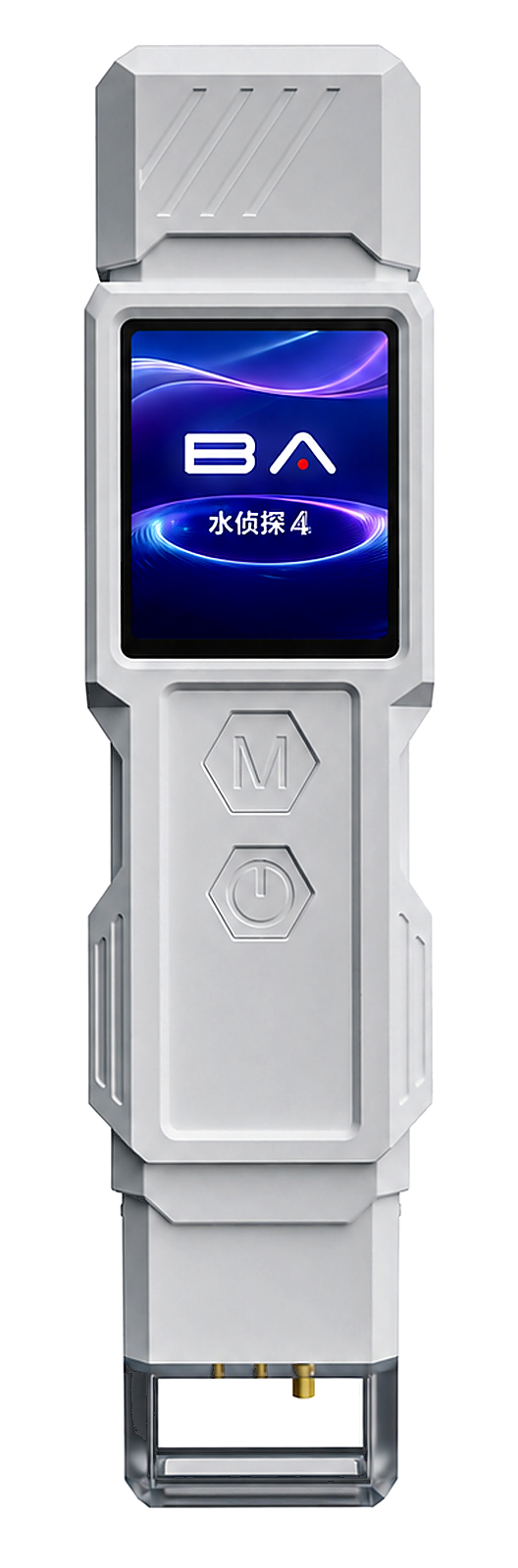
The AtomBit Water Detective 4 is a portable multi-parameter water quality tester for household water use, on-site screening and water purification service scenarios. It can measure nine indicators in a single test pen: TOC, COD, UV254, TDS, EC, turbidity, hardness, salinity and temperature. These parameters are used to answer questions such as "has the water sample changed noticeably", "is it different before and after rain" and "is there a removal trend before and after the water purifier", rather than "what bacteria are in the water" or "is arsenic above the limit".
For specific measurement ranges, accuracy, calibration requirements and operating details, refer to the official AtomBit specifications and product manual. This article does not cite any unverified numerical limits.
What the 2.2 device cannot do
The Water Detective 4 cannot measure lead, arsenic, nitrate, pesticides, bacteria, viruses, parasites, dissolved oxygen, ammonia nitrogen, nitrite or nitrate. Where these risks are involved, it must be stated that confirmation is required using appropriate laboratory/dedicated methods in accordance with local requirements. Portable pen readings cannot serve as proof of drinking water safety, pet health or aquaculture compliance.
2.3 Typical application scenarios
- Verify whether there are obvious abnormalities after wellhead repairs;
- After rainy seasons, snowmelt or floods, check whether surface runoff affects the well water;
- Quick screening after noticing changes in water taste, color or turbidity;
- Trend comparison before installing a household water purifier and during filter replacement cycles;
- Routine seasonal baseline monitoring of rural private wells.
3. Reproducible sampling and measurement procedure
3.1 Preparation before measurement
Prepare tools: Water Detective 4, a clean sampling bottle, disposable gloves, distilled/deionized water for rinsing, and a record sheet. It is recommended to first perform a blank test: test with distilled or deionized water, confirm that the device reading is close to the expected range in the manual, and record the blank value as a reference for the day.
Check the device: the sensor window is clean, free of scratches and fogging; the battery level is sufficient; the device is within its normal operating temperature range; if calibration is required by the manual, complete it according to the steps.
3.2 Wellhead and surrounding inspection steps
Inspect the site first, then collect the water sample:
- Observe the terrain at the wellhead: whether it is in a low-lying area, and whether there is standing water, livestock manure, stored agricultural chemicals, septic tanks, garbage piles, etc. nearby. Consult the local public health department for the safe distance; at least 15~30 meters is usually recommended, but local requirements shall prevail.
- Inspect the well cover/well casing seal: check for cracks, rust, looseness, damage, or aged or detached sealant.
- Inspect the well platform slope: the ground around the wellhead should slope away from the wellhead to prevent surface runoff from flowing back into the well.
- Check drainage: verify that roof rainwater and surface runoff are directed away from the wellhead and that drainage channels are unobstructed.
- Post-rain inspection: after heavy rain or continuous rainfall, observe within 24 hours whether there is standing water, erosion marks, animal activity or abnormal color around the wellhead.
3.3 Water sample collection
Sampling point: preferably take the sample from the pump outlet or a tap; if conditions permit, sample directly at the wellhead. Whichever sampling point is used, first run the water for 3~5 minutes or according to local guidelines until the water temperature is stable and stagnant water in the pipe has been flushed out. If the well pump has just started, pump continuously for enough time to ensure the sample is aquifer water rather than stagnant water in the well casing or at the bottom of the well.
Sampling bottle: use a clean container with no odor and no residue, and rinse it 2~3 times with the water sample to be tested before sampling. Do not touch the inside of the bottle mouth with your hands, and do not smoke, use chemicals or move items that could contaminate the water sample nearby.
Sample labeling: record the date, time, weather, time and amount of the most recent rainfall, sampling location, pumping duration, and any abnormalities observed on site.
3.4 Measurement using Water Detective 4
Turn on the device and complete the self-check according to the instructions. Immerse the detection probe in the water sample, ensure the sensor window is fully submerged, remove air bubbles, and avoid direct strong light. Wait for the reading to stabilize before recording. It is recommended to measure the same water sample 2~3 times, take the stable value or median, and record the ambient temperature and water temperature.
After measurement, rinse the probe with distilled water, wipe it dry and store it. If measuring multiple water samples consecutively, rinse with distilled water between samples to avoid cross-contamination.
3.5 Data recording and comparison
Establish a household water-sample baseline: use readings from consecutive 3–5 days without rainfall as the reference. Record rainfall events, rainfall amount, time since last rainfall, and water accumulation at the wellhead. Compare readings 24–48 hours after rain with the baseline readings, and observe whether turbidity, TDS/EC, and TOC/UV254 are significantly elevated.
4. How to interpret results and common interferences
Meaning of each parameter and explanation of changes for 4.1
- TDS/EC/salinity: reflects the total amount of dissolved ions. An increase after rain may indicate dissolved substances entering from the surface, such as road salt and fertilizer ions, but it cannot determine specific pollutants; it may also simply be natural mineral dissolution.
- Turbidity: particulate matter. Increased turbidity after rain may be due to sediment and organic particles entering with runoff, or to sediment within the well being disturbed.
- TOC/COD/UV254: organic-matter-related optical indicators. An increase may indicate the entry of organic matter such as humic substances, plant debris, and animal feces, but it is not a direct measurement of bacteria or viruses, nor an identification of pesticides or nitrate.
- Hardness: calcium and magnesium ions. An increase may indicate a change in the contact time between groundwater and minerals, or mixing in of a different water source.
- Temperature: when surface water mixes in, shallow-layer temperature may change with season or rainfall; a rapid drop or a value close to surface water temperature warrants attention.
4.2 Common interferences and failure modes
- Air bubbles: bubbles attached to the probe window can cause low or fluctuating readings; tap gently or tilt to remove bubbles.
- Temperature: optical and conductivity measurements are affected by temperature, and devices usually have temperature compensation, but rapid water temperature changes may cause instability; recording water temperature is important.
- Sunlight/ambient light: for optical measurements such as UV254 and TOC, avoid direct strong light; measure in shade or use a light shield.
- Turbidity particle interference: high turbidity may affect optical readings; record turbidity before interpreting results.
- Sensor contamination: oil films, biofilms, and similar deposits in the water adhering to the window can cause deviations; clean before and after use.
- Water sample storage: test as soon as possible after collection; do not leave samples standing for long periods, especially where organics and temperature changes are involved.
- Improper sampling location: water from stagnant pools or water retained in pipes does not represent the groundwater; the sampling point must be flushed thoroughly.
- Effect of well pump start/stop: right after the pump starts, sediment from the bottom of the well may be drawn in, causing an abnormal rise in turbidity.
4.3 How to determine whether it is related to wellhead sealing/surface runoff
If turbidity, TDS/EC, TOC/UV254 and multiple other indicators rise at the same time after rain, and there are signs of runoff entering around the wellhead, the risk is elevated. If only one indicator fluctuates while the others are stable, it may be instrument drift, air bubbles or local interference. Combine this with an on-site inspection; if there is obvious seal damage, standing water or animal activity, more attention is needed.
5. When to retest, stop use, or refer to a laboratory
5.1 Retest
If readings rise after rain, retest once after 24 hours, then retest again after 48 hours, to observe whether the trend falls back or persists. If it keeps rising without falling back, it is recommended to stop drinking the water and seek a professional inspection. If readings return to baseline, it is still recommended to repeat monitoring after the next rainfall.
5.2 Stop use/send to laboratory
If any of the following occurs, stop using the water for drinking/domestic purposes and send a water sample to a qualified laboratory:
- After the rainy season, turbidity, TDS/EC, TOC/UV254 are significantly higher than baseline and do not fall back;
- Sewage, animal feces, septic tank overflow, oil film or pesticide spills are visibly present near the wellhead;
- The water has an unusual odor, off-taste, abnormal color, foam or oily sheen;
- Family members or livestock develop symptoms that may be related to drinking water, such as diarrhea, vomiting, or rash;
- The area is known to have groundwater contaminants such as nitrate, arsenic, lead, pesticides, or pathogens, but the well water has never undergone comprehensive testing;
- Portable device readings are abnormal and cannot be explained, requiring laboratory confirmation of specific contaminants.
Laboratory testing items should be selected based on local risks: microorganisms (total coliforms, E. coli), nitrate/nitrite, arsenic, lead, pesticides, volatile organic compounds, etc. Specific items must follow local public health department requirements. Do not draw conclusions based on portable pen readings.
5.3 Re-verification after repair
If wellhead seal damage is found, a professional well contractor should be engaged for repair, replacing seals/packing, repairing the well pad, and improving drainage. After repair, disinfection is recommended according to local guidelines, then continuous monitoring of device readings to confirm return to baseline, and laboratory bacterial testing at an appropriate time.
6. Record sheet/action checklist
6.1 Field record sheet
| Date/time | Recent rainfall | Wellhead seal inspection | Sampling point/pumping duration | Temperature | TDS | EC | Turbidity | TOC/COD/UV254 | Hardness/salinity | Compared with baseline | Action |
|---|---|---|---|---|---|---|---|---|---|---|---|
| Example | Heavy rain the previous day 20 mm | Micro-crack in the seal ring | Pump outlet, discharge 5 min | 16.5°C | 180 mg/L | 360 µS/cm | 1.2 NTU | 1.5 mg/L / 0.8 mg/L / 0.03 cm⁻¹ | 60 mg/L / 0.1‰ | Slightly above baseline | Retest after 24 |
Note: The example rows are for illustrating the record format only and do not represent actual measurement values or safety limits. Refer to the official AtomBit specifications and device display for specific parameter units.
6.2 Action Checklist
- Establish a non-rainfall baseline for 3~5 days.
- Check the wellhead and sample 24 hours after rain.
- Use Water Detective 4 to measure and record all parameters.
- Compare with the baseline and observe whether multiple indicators rise simultaneously.
- If significantly elevated, retest after 48 hours.
- If levels continue to rise or on-site abnormalities are present, stop using the water and send samples to a laboratory.
- After completing wellhead repairs, re-establish the baseline and verify.
FAQ
Q1: Can Water Detective 4 detect bacteria or pesticides? No. It measures TOC, COD, UV254, turbidity, TDS, EC, etc. These are water quality screening indicators and do not identify specific pathogens, pesticides, heavy metals, or nitrates. If there are related risks, samples must be sent to a qualified laboratory.
Q2: After rain, TDS rose from 200 to 350 mg/L. Does this indicate the well water is contaminated? Not necessarily. An increase may suggest surface runoff mixing in or mineral dissolution, but TDS alone cannot determine the type of contamination. It is necessary to consider whether turbidity and TOC/UV254 rise simultaneously, as well as the results of the wellhead inspection. If abnormalities persist or there is a pollution source on site, stop drinking the water and have it tested in a laboratory.
Q3: Why are my turbidity readings sometimes high and sometimes low? This may be caused by bubbles, settling of suspended particles, probe position, standing time, etc. It is recommended to mix the same water sample thoroughly and measure immediately, take 2~3 readings and record the stable value. Large particles settling in high-turbidity samples can affect readings.
Q4: How often should I measure with the portable pen? At least after establishing a baseline, measure after rainfall/snowmelt, after wellhead maintenance, and when you perceive a change in water quality. If used for filter management, such as comparing before/after a water purifier, you can monitor according to the filter replacement cycle, but this cannot replace filter life judgment.
Q5: How high do these parameters need to be before I should worry? There is no fixed limit applicable to all regions, because background water quality varies greatly. The key is relative change and trend. If a certain indicator is significantly higher than the local drinking water standard or background value and is accompanied by on-site abnormalities, you should pay attention and seek professional testing. Background values need to be confirmed through laboratory testing.
References and Regional Applicability
- World Health Organization. Guidelines for drinking-water quality: fourth edition incorporating the first and second addenda. Geneva: WHO; 2017. https://www.who.int/publications/i/item/9789241549950 (used to explain the principles of comprehensive drinking-water quality assessment; does not involve specific product performance)
- United States Environmental Protection Agency. Private Drinking Water Wells. https://www.epa.gov/privatewells (used for general recommendations on wellhead protection, sampling and potential contaminants; specific wellhead distances and testing items are subject to local requirements)
- Centers for Disease Control and Prevention. Private Ground Water Wells. https://www.cdc.gov/healthywater/drinking/private/wells/index.html (used for private well sanitation and testing recommendations)
- AtomBit. Water Detective 4 product information (internal database). Used to describe product function boundaries: nine-indicator screening, not a replacement for laboratory analysis of specific contaminants.
Regional applicability: The general sanitation principles in the above references can be used in most rural private well scenarios, but specific safety distances, testing items and regulatory limits must comply with the requirements of local drinking water regulators, health departments or water authorities. The measurement values of this product are only for screening, comparison and trend observation.