
Intended users and decision questions
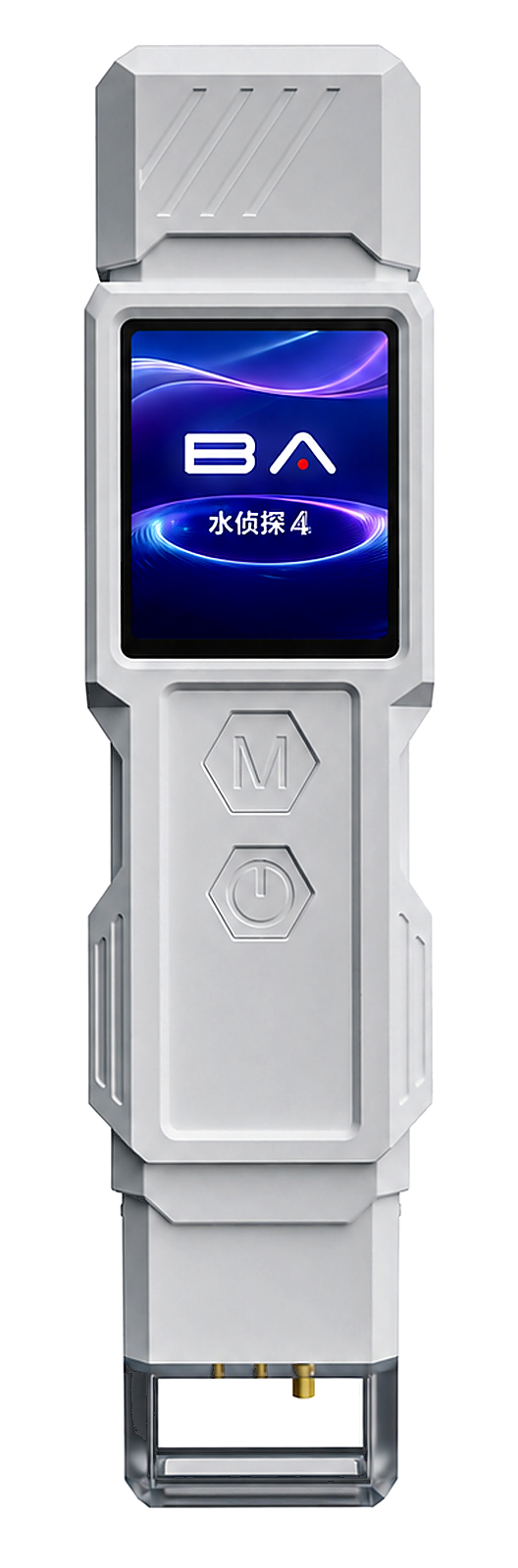
Rural private-well users, township water-treatment service personnel, and brands/integrators developing water-treatment equipment or detection terminals for rural scenarios often face three decisions: whether wellhead sealing needs repair, whether water is safe after rainfall, and whether on-site screening can replace laboratory testing. This article focuses on contamination risks caused by wellhead sealing and surface runoff, using the portable multi-parameter test pen Water Detective 4 as a screening tool to explain "what it can do and what it cannot do."
Common misconceptions include: equating a fully sealed wellhead with long-term safety; assuming water is safe to drink directly because TDS is low; acting only after seeing turbidity; treating a measurement taken immediately after rain stops as representative of water quality; and using screening readings to judge whether bacteria, heavy metals or pesticides are present. These misconceptions may delay repairs or lead to misjudging safety. The purpose of this article is to provide a reproducible on-site screening method and decision path, not to replace drinking-water compliance testing.
Water samples, equipment and scenario boundaries
Applicable water samples are domestic water from rural private wells, mountain-stream diversions, shallow hand-pump wells, etc. The applicable device is Water Detective 4, whose database explicitly lists parameters including: TOC, COD, UV254, turbidity, TDS, electrical conductivity (EC), salinity, hardness and temperature. These parameters are used for on-site screening, trend observation and comparison, for example before and after sealing repairs, before and after rainfall, and before and after filter replacement. This article does not cite specific ranges or accuracy; refer to the documentation supplied with the device and local calibration requirements.
A key boundary is that Water Detective 4 cannot identify or quantify specific contaminants such as lead, arsenic, nitrate, nitrite, pesticides, bacteria, viruses, parasites, dissolved oxygen or ammonia nitrogen. If the well water has an odor, is discolored, is near septic tanks/livestock pens/farmland fertilization/waste piles, or household members experience gastrointestinal discomfort, contact the local CDC or a qualified laboratory directly and collect samples according to standard methods. Screening instruments can only provide a signal that "further investigation may be needed"; they cannot issue safety or compliance certification.
Reproducible sampling and measurement steps
Establish a dry-weather baseline
It is recommended to measure at least 72 hours after no significant rainfall, for 3~5 consecutive measurements (for example, every other day), recording each parameter. The baseline is used to identify individual fluctuations. Do not make judgments based on a single reading.
Sampling containers and sampling points
Use clean containers free of organic residue, preferably rinsed 3 times with the sample water. When sampling from a fresh wellhead tap, first run the water for 3~5 minutes to flush out water standing in the pipe. If sampling from a storage tank or faucet, note "not taken directly from the wellhead," because storage tanks may cause secondary contamination or changes during standing.
Measurement steps
- Turn on Water Detective 4, wait for self-test to complete, and confirm the probe is clean and free of bubbles.
- Rinse the probe gently with sample water, avoiding vigorous agitation.
- Immerse the probe in the sample, ensuring the sensor window is fully submerged, and let it stand until the reading stabilizes.
- Record each parameter 3 times, take the median or mean, and record the temperature.
- Immediately after measurement, record the time, weather, rainfall in the previous 24 hours, and the appearance of the wellhead.
Failure modes: bubbles on the probe surface can cause abnormal turbidity or optical readings; sample temperature that is too low or too high may affect conductivity compensation; leaving a water sample for a long time before measurement may allow microbial activity to change TOC/COD, so measure as soon as possible after sampling; direct strong light may interfere with optical measurements.
Comparative measurement after rainfall
Rainfall affects shallow well water through surface runoff and soil infiltration. It is recommended to measure once each at 2~6 hours, 24 hours, and 48 hours after the rain stops, and compare with the dry-weather baseline. Do not measure only the sample taken "right after the rain stops," because contaminant transport takes time, and the initial pumping may only reflect water stored in the well casing.
Interpretation of results and common interferences
Parameter meanings and screening logic
- TDS/EC: reflects the total amount of dissolved ions; changes may indicate salts, fertilizer ions, or road de-icing salt carried in by surface runoff. However, TDS does not distinguish beneficial ions from harmful ions.
- Hardness, salinity: related to calcium, magnesium, and salt content; a sudden increase may indicate the entry of saline surface water or changes in the aquifer.
- Turbidity: indicates suspended particulate matter, such as sediment, colloids, and microbial aggregates. Increased turbidity does not necessarily mean pathogenic bacteria are present, but it may mean surface water is entering directly and warrants attention.
- TOC, COD, UV254: the three reflect organic load. UV254 leans toward aromatic/unsaturated organics and can help indicate whether organic matter of surface origin is present. Elevated values may come from humic substances, agricultural runoff, domestic sewage, etc., but the specific type cannot be determined, and it does not mean pesticides or bacteria are present.
Common interferences
- Temperature: conductivity and TDS are affected by temperature; the device has temperature compensation, but interpretation must be cautious at extreme temperatures.
- Turbidity: high turbidity may interfere with optical parameters; it is suggested to let the sample stand or filter before measurement? But filtration changes dissolved indicators and cannot be used for TOC/COD? Note: turbidity interferes with optical measurement, but filtration may remove particulate organic matter and cause results to deviate from the original water sample. Therefore, filtration is not recommended on site; the high-turbidity state should be recorded.
- Bubbles and probe contamination: rinse the probe after each measurement, and clean it regularly using the manufacturer-recommended method.
- Sample aging: prolonged standing allows microbial activity to change TOC/COD; it is recommended to measure within 15 minutes after sampling.
- Static water in the well casing: if water has not been pumped for a long time, drain it first and then sample.
Examples of misjudgment
- Low TDS ≠ no microbial contamination. Rainwater may dilute TDS but introduce bacteria or viruses.
- High turbidity ≠ pathogenic. Silt may be harmless but may mask other pollutants, requiring further testing.
- Elevated UV254 ≠ pesticide contamination. It may be natural organic matter.
When to retest, suspend use, or refer to a laboratory
Retest conditions
- After wellhead repair or re-sealing, retest within 1 weeks to confirm no contaminants were introduced during the work.
- After a rainfall event, if screening indicators are abnormal compared with baseline, retest continuously for 3~5 days to observe whether they fall back.
- Retesting is also recommended after replacing water purification filter cartridges or disinfecting the well.
Suspend use/use with caution signal
If any of the following occurs, it is recommended to suspend direct drinking, switch to boiling water or purchased bottled water, and conduct laboratory testing as soon as possible:
- Turbidity suddenly rises significantly and the water has color or odor.
- TOC/COD/UV254 rises substantially compared with baseline and does not fall back for 48 hours.
- After a septic tank leak, livestock wastewater overflow, or heavy fertilization or pesticide spraying on farmland nearby.
- Family members or livestock develop discomfort such as diarrhea or vomiting.
Note: these are screening indications, not diagnoses. Only laboratory microbiological and chemical testing can determine safety.
Test items to refer to the laboratory
Suspected microbial contamination: total coliforms, thermotolerant coliforms/E. coli. Suspected agricultural contamination: nitrate/nitrite, pesticides (according to local usage). Suspected industrial/geological contamination: heavy metals such as lead, arsenic, mercury and cadmium. If an oil film or odor is found: volatile organic compounds, petroleum hydrocarbons. Specific sampling and preservation requirements must be confirmed with the laboratory in advance, using dedicated containers, preservatives and cold-chain transport.
Operational pitfalls in wellhead sealing and surface runoff
Pitfall 1: Once the wellhead is sealed with cement, it is done once and for all
Cement/mortar seals age and crack, and settlement between the well casing and the soil layer may form gaps. Inspect at least once a year to check whether the well cover is damaged, whether there is standing water within 1~3 meters around the wellhead, whether the ground slopes away from the well, whether the casing is corroded, and whether cable/pipe entries are sealed. If cracks are found, repair them promptly with non-toxic sealing material, but do not block the vent hole (if present).
Pitfall 2: If the wellhead is above ground, no runoff can enter
Surface runoff can enter the well through the annular space outside the well wall, damaged casing joints, unsealed pipeline entries, or even along the pump cable. This is especially true for shallow wells, where lateral runoff has a greater effect. Simply raising the wellhead cannot completely block it; ground grading, drainage ditches and casing sealing are also needed.
Pitfall 3: Normal instrument readings mean the wellhead seal is fine
Instruments can only reflect certain physical and chemical characteristics of the current water sample; they cannot detect structural defects in the well. Even if all screening indicators are normal, intermittent contamination risk may still exist. Structural inspection should rely on visual inspection, professional well inspection and repair, or geological/water resources personnel.
Pitfall 4: Runoff is only a concern during the rainy season
Snowmelt, irrigation return water, surface cleaning, septic tank leakage and livestock activity can all produce runoff or infiltration. Even in the dry season, if there are pollution sources nearby, pay attention to changes in screening results.
Pitfall 5: As long as one laboratory test has been done, it is safe forever
Water quality is dynamic and affected by seasons, rainfall, surface activities and well aging. Regular testing is recommended according to local guidelines, especially before and after the rainy season or after changes in the surrounding environment.
Checklist
- Is the well cover intact, free of cracks and depressions?
- Is there an outward slope around the wellhead of 1~3 meters to ensure rainwater drains away quickly?
- Does the casing extend at least 30 centimeters above ground (subject to local regulations), and is the backfill soil around it compacted?
- Are the cable/water pipe entries sealed with waterproof seals?
- Within 15~30 meters nearby, are there any septic tanks, sewage ditches, livestock pens, garbage piles or pesticide storage sites?
- When pumping, is there any air, sediment or odor?
Record sheets and action checklist
It is recommended to record the following table for each measurement:
| Date and time | Weather | Rainfall in the previous 24h/mm | Wellhead status | Temperature/℃ | TDS | EC | Salinity | Turbidity | TOC | COD | UV254 | Hardness | Assessment/Action | | --- | --- | --- | --- | --- | --- | --- | --- | --- | --- | --- | --- | --- | --- | | Example | Sunny | 0 | Intact | 15 | 120 | 240 | 0.1 | 1.2 | 1.5 | 2.0 | 0.05 | 80 | Consistent with baseline, continue monitoring |
Note: The example values are only for demonstrating the form format and do not represent any standard or product readings.
Action checklist:
- Establish a dry-weather baseline, at least 3 times.
- Before rain, check the wellhead seal and drainage.
- Retest after rain at 2~6 hours, 24 hours, and 48 hours.
- If any screening indicator fluctuates abnormally, suspend direct drinking and contact the laboratory.
- Retest within 1 week(s) after repair.
- Keep records for at least 1 year(s) for trend analysis.
Notes from a device-integration and OEM perspective
If the brand plans to embed portable screening capability into rural water-purification equipment or smart terminals, the following should be given priority: sampling points should avoid stagnant-water sections; probes need regular automatic cleaning or manual maintenance; temperature compensation and conductivity calibration strategy; data upload and warning thresholds should be based on local baselines rather than generic fixed values; any on-screen display or App prompt must state "screening value, not compliance testing." Water Detective 4 is suitable as a household screening tool but cannot replace a report from an accredited laboratory.
Frequently asked questions (FAQ)
Q: Can Water Detective 4 detect bacteria?A: No. It cannot detect bacteria, viruses or parasites. Elevated parameters such as turbidity and TOC can only indicate a possible contamination risk and must be confirmed by a laboratory using culture or molecular methods.
Q: What TDS level is considered safe?A: TDS itself is not a health-safety limit. WHO has recommendations for the taste of TDS, but background values differ by region. It is recommended to compare with the local dry-weather baseline and to take local health department guidance into account.
Q: Can I test well water immediately after it rains?A: Not recommended. Right after rain, the well casing and pipes may contain mixed water that does not reflect the true condition of the aquifer. Measure separately at 2~6 hours, 24 hours, and 48 hours after the rain stops, and compare with the baseline.
Q: Is testing still needed after the wellhead is sealed?A: Yes. Sealing is a preventive measure; it cannot completely prevent contaminants from entering, nor can it guarantee water quality. Regular screening and laboratory testing are still necessary.
Q: Does an elevated UV254 definitely mean pesticide contamination?A: Not necessarily. UV254 reflects some organic matter; elevated levels may come from natural humic substances, agricultural runoff or domestic sewage, but the instrument cannot determine the specific type. If pesticides are suspected, laboratory testing for specific pesticides is required.
Q: If the screening indicators are normal, does that mean well water is safe to drink directly? A: No, you cannot judge based on screening indicators alone. Screening instruments do not cover key contaminants such as microorganisms, heavy metals and nitrate. A safety conclusion can only be reached through laboratory testing as required by local regulations.
References and Regional Applicability
- World Health Organization. Guidelines for drinking-water quality: fourth edition incorporating the first and second addenda. Geneva: WHO; 2022. https://www.who.int/publications/i/item/9789240045064(用于饮用水健康目标、水质管理和检测原则;具体限值以当地监管机构为准)
- U.S. Environmental Protection Agency. Private Drinking Water Wells. https://www.epa.gov/privatewells(井主维护、检测建议和污染预防)
- Centers for Disease Control and Prevention. Well Testing. https://www.cdc.gov/healthywater/drinking/private/wells/testing.html(私人水井检测项目与频率建议)
- U.S. Geological Survey. Groundwater Quality. https://www.usgs.gov/special-topics/water-science-school/science/groundwater-quality(地下水质量与污染来源科普)
Regional applicability: The official materials above come mainly from international or U.S. contexts and cannot be used directly as a compliance basis for well water in rural China. Chinese users should follow the sampling and testing requirements of their local Centers for Disease Control and Prevention, health department or water authority. The operating steps in this article are general screening recommendations and do not constitute legal or health advice.