
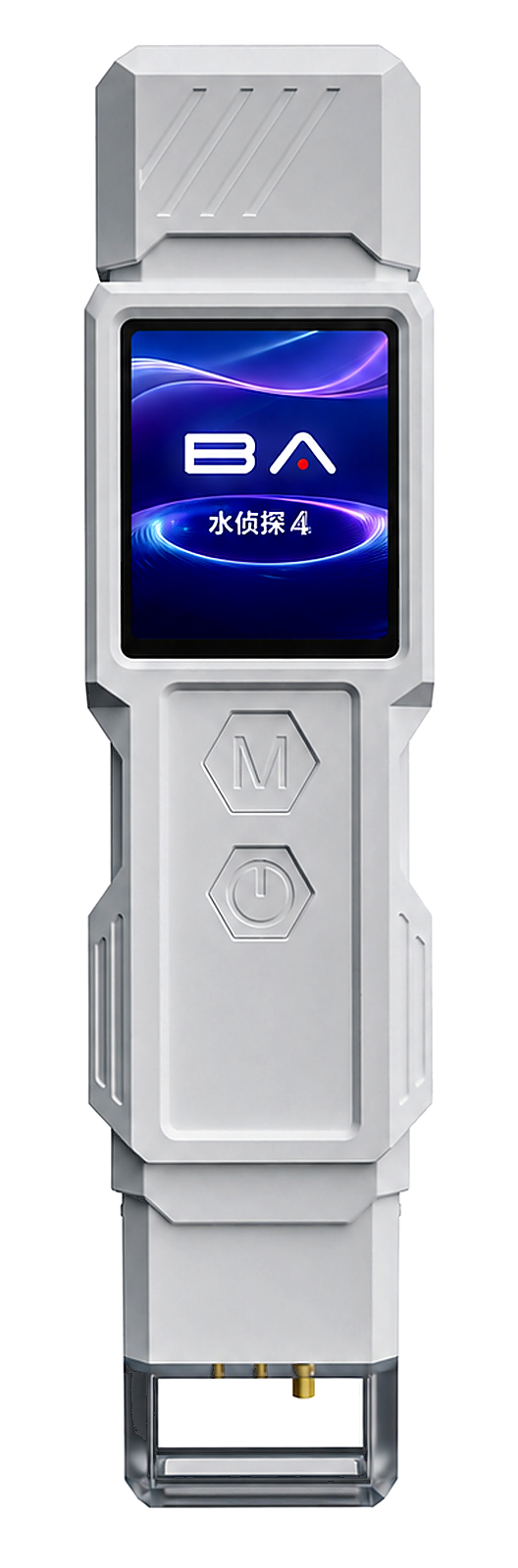
Well water near agricultural fertilized areas may be affected by nitrate, pesticides, microorganisms and more. On-site rapid screening cannot replace laboratory analysis, but it can help households and grassroots personnel detect water-quality trends and promptly re-test, stop use or send samples for testing. This article focuses on the screening functions of Water Detective 4 (Water Detective 4) and provides an actionable checklist.
I. Intended users and decision questions
This checklist applies to the following groups:
- Households with private wells in rural areas;
- Village-level water managers or drinking-water safety officers;
- Personnel who install, maintain or provide on-site screening services for water purifiers;
- Staff of grassroots public health and water resources departments.
Decision questions to answer:
- Does the well water change noticeably before and after the fertilization season?
- After consecutive rainfall, does the well water become turbid or develop odors?
- Does the installed water purifier effectively reduce certain screening indicators?
- In which cases is retesting sufficient, and in which cases must drinking be stopped and samples sent to a laboratory?
None of these issues can be judged "safe" or "unsafe" by a single portable test pen alone, but it can be used to establish a baseline, compare trends and flag anomalies.
II. What the device can do: clarify the screening boundaries first
Water Detective 4 (Water Detective 4) can report the following indicators: TOC, COD, UV254, TDS, conductivity, turbidity, hardness, salinity and temperature. These indicators provide rapid screening of total organic matter, dissolved substances, particulate matter and basic physical parameters.
Important: these indicators cannot be used to directly indicate whether water contains nitrate, nitrite, ammonia nitrogen, pesticides, lead, arsenic, bacteria, viruses or parasites. A portable test pen is not a dedicated analyzer, and its readings should not be treated as proof of drinking safety, pet health or aquaculture compliance.
If nitrate, pesticide or microbial contamination is suspected in an agricultural fertilized area, water samples must be collected and sent to a qualified laboratory for testing using the corresponding standard methods, in accordance with the requirements of the local health or environmental authority. Readings from portable instruments can only serve as supporting clues for decision-making.
The following table lists the difference between screening indicators and items requiring laboratory confirmation (this is only to illustrate the boundaries and does not indicate that testing capability covers them):
| Screening/trend indicators (Water Detective 4) | Items requiring laboratory or dedicated-method confirmation |
|---|---|
| TOC, COD, UV254 | Specific organic substances such as pesticides, herbicides, petroleum products and disinfection by-products |
| Turbidity | Microorganisms such as bacteria, viruses and parasites |
| TDS, conductivity, salinity | Specific ions such as nitrate, nitrite, ammonia nitrogen, chloride and sulfate |
| Hardness, temperature | Heavy metals such as lead, arsenic, cadmium and mercury |
Note: An increase in TDS/conductivity may reflect an increase in dissolved salts, but it cannot distinguish whether these are nitrates, chloride salts or other salts; an increase in turbidity may indicate a higher risk from particles and microorganisms, but it cannot directly determine the presence of pathogenic bacteria.
III. Boundaries of Water Samples, Equipment, and Scenarios
Applicable scenarios: rapid initial screening and trend comparison for the same well or the same type of water source; comparison before and after water purifier installation; observation of changes after rain or fertilization. Not applicable: replacing official water quality test reports; determining legal compliance; determining whether water is safe to drink directly; determining the concentration of specific pollutants.
Before using the device, please read the product manual and clean, calibrate (if calibration steps are provided) and store it according to the instructions. The specific measurement range, accuracy, battery life, operating temperature and storage conditions are subject to the device label and manual. If the device provides self-check or blank verification prompts, follow the prompts.
Sampling container: Use a clean polyethylene or glass bottle with no residue; it is recommended to rinse it first with the water sample 2~3 times. For well water, it is best to let the water flow continuously at the sampling point for 2~5 minutes before sampling, to reduce the influence of water retained in the pipe and pump. Record the sampling method (directly from the wellhead, from the pump outlet, or from a storage tank), because a storage tank may change water temperature, turbidity and residual chlorine, etc.
IV. Reproducible Sampling and Measurement Steps
The following steps are for on-site personnel to establish comparable records:
- Preparation
- Confirm that the device battery or status is normal;
- Prepare a record sheet, pen, clean containers and pure water/distilled water (for rinsing);
- Wash hands or wear disposable gloves to avoid fingers touching the inner wall of the bottle mouth and the probe.
- On-site information
- Record the date, time, location, well depth or water sampling point;
- Record the weather, recent rainfall, whether nearby farmland is currently being fertilized, the type of fertilizer and the approximate timing;
- If possible, record changes in water level or the color and odor of the water.
- Rinsing and blank
- Rinse the probe with pure water, then rinse it with the water sample;
- Use pure water as a blank sample and take one measurement, and record the blank reading to confirm that the device is not contaminated;
- If the blank reading is abnormal, clean the probe first before continuing.
- Sampling and measurement
- According to the device instructions, immerse the probe in the water sample to an appropriate depth, avoiding touching the walls or the bottom;
- Wait for the reading to stabilize; it is recommended to repeat the measurement 2~3 times for each water sample, and take the median or average value;
- For the same water source during the same period, keep the water temperature as close as possible, or at least record the temperature;
- Recommended measurement order: temperature→conductivity/TDS/salinity→turbidity→TOC/COD/UV254→hardness. If the device automatically completes all indicators, operate according to the prompts.
- Records
- Record each reading, environmental information and operator in the record sheet;
- If laboratory samples are also collected at the same time, they must be separately aliquoted, refrigerated, preserved (if required) and submitted for testing within the specified time according to laboratory requirements.
V. Interpretation of results and common interference
A single reading from a portable device has limited meaning; focus on the baseline and trends. It is recommended to establish a "baseline" for this well during the dry or non-fertilization season, and then compare before fertilization, after fertilization, and after rain.
- TOC, COD, UV254: Reflect the overall level of oxidizable organic matter or aromatic organic matter in the water. If it is significantly higher than the baseline after fertilization, it may indicate increased input of organic matter, possibly from fertilizer carriers, soil organic matter or pesticide adjuvants, but the specific pesticide type cannot be determined.
- Turbidity: An increase may mean an increase in particulate matter, which can be caused by rainfall infiltration, well wall disturbance or microbial activity. High turbidity can interfere with UV254 and optical measurements and may also be associated with the risk of pathogenic microorganisms, so increased vigilance is needed.
- TDS, conductivity, salinity: An increase after fertilization may mean an increase in dissolved ions, possibly including salts in fertilizers, but nitrate, chloride salts or other ions cannot be distinguished. Laboratory confirmation of the specific ion composition is needed.
- Hardness: Mainly related to geological background; short-term changes from fertilization are usually not obvious, and it is more used to determine whether a water purifier is softening or whether abnormal mineral dissolution occurs.
- Temperature: Used to compensate conductivity and other indicators; an abnormal increase may indicate geothermal heat, surface water mixing or equipment problems.
Common interferences:
- Bubbles adhere to the optical window or electrode, causing readings to jump;
- The probe is not cleaned, with residual water sample or standard solution from the previous time;
- Container or hand contamination;
- Water temperature changes rapidly and has not reached stability;
- After sampling, leaving the sample for a long time allows biological activity and gas exchange to alter the indicators;
- After rain, the sample taken is surface ponding or near-surface seepage, which does not represent normal well water;
- Different devices were not operated using the same method, making results non-comparable.
VI. When to retest, stop using, or send to a laboratory
Retest recommendations:
- Fertilization season: measure once before fertilization, 1~2 days after fertilization, 7 days after fertilization, and 24 hours after rain;
- Non-fertilization season: at least once per month to establish a routine trend;
- Installing or replacing a water purifier: measure once before installation, immediately after, and one week after use;
- If a suspected contamination event occurs nearby (such as pesticide spill or septic tank overflow), measure immediately and send a sample to the laboratory.
If any of the following conditions occurs, it is recommended to suspend use of this well water as drinking water, use an alternative water source, and contact the local health/environmental department or laboratory:
- Visible turbidity, discoloration, or odor, especially if it suddenly appears after fertilization or rain;
- Turbidity is significantly higher than baseline, or exceeds the turbidity limit recommended by the local health department;
- TOC, COD or UV254 increases several-fold above baseline and cannot be explained by normal seasonal variation;
- TDS/conductivity/salinity rises substantially above baseline and there is nearby fertilization or a contamination event;
- Family members or livestock show unexplained gastrointestinal symptoms;
- There is a record of nearby pesticide or fertilizer spills or heavy application;
- Historical laboratory data already show nitrate, pesticide or microbial indicators at or above limits.
The specific items that need to be sent to a laboratory for testing should include at least:
- Nitrate and nitrite (it is recommended to judge against local drinking water standards);
- Pesticide/herbicide screening (based on locally commonly used types);
- Microbiological indicators such as total coliforms and Escherichia coli;
- Heavy metals such as arsenic and lead (based on local geological background or historical data);
- Ammonia nitrogen, chloride, etc. (if TDS/conductivity rises abnormally).
Laboratory test methods, limits and pass/fail determinations must be based on local drinking water hygiene standards or the requirements of the competent authority. For example, the World Health Organization Guidelines for Drinking-water Quality give guideline values for nitrate and others, but these cannot be directly applied as local enforcement basis; the U.S. EPA National Primary Drinking Water Regulations also list maximum contaminant levels for nitrate and others, but they apply only to regulated public water systems in the United States. Management of rural private well water may differ by country and region, so local authorities should be consulted.
Seven, branch examples under different conditions
To help on-site personnel make quick judgments, here are several common branches:
- Situation A: After fertilization, TDS/conductivity increases, but turbidity and TOC/COD change little. This indicates that dissolved salts may have increased; send samples to a laboratory as soon as possible to test for nitrate, chloride salts, etc., while observing the fertilizer type and application rate.
- Situation B: After rain, turbidity and TOC/UV254 increase, while TDS changes little. This may be surface infiltration carrying soil organic matter or microorganisms; it is recommended to suspend drinking and conduct microbiological testing; if the water purifier has filtration, pre- and post-filtration turbidity can be compared, but the microbiological risk remains.
- Situation C: All screening indicators remain stable within the baseline range. This indicates that the current screening parameters show no obvious abnormality, but it cannot rule out risks from nitrate, pesticides, or bacteria. Samples should still be sent to a laboratory for testing at the frequency recommended by the local health department.
- Situation D: After installing a water purifier, TDS and hardness decrease significantly. This indicates that the device has removed or converted some dissolved substances or hardness, but it does not mean it can remove nitrate, pesticides, or microorganisms; the specific effect depends on the water purifier type and test report and must be verified by a laboratory.
Eight, record form and action checklist
It is recommended to use the following fields for paper or electronic records to facilitate trend analysis:
- Date, time, location/well number
- Water withdrawal method (direct from wellhead, pump outlet, storage bucket)
- Weather, rainfall (if available)
- Nearby agricultural activities: fertilizer type, application date, irrigation conditions
- Water sample appearance: color, odor, turbidity
- Device ID, blank reading
- Temperature, TOC, COD, UV254, turbidity, TDS, conductivity, salinity, hardness
- Operator, remarks
Action checklist:
- Establish a baseline for this well: during a stable period with no fertilization and no recent rainfall, measure continuously for 3~5 days and take the typical range.
- Determine the "level of concern" for this well: based on the baseline fluctuation range, set a multiple or difference that constitutes a "significant change"; if unsure, consult your local health department.
- Set the retest frequency: more frequent during fertilization season and rainy season, monthly during non-fertilization season.
- Retest immediately when an anomaly is found: use a freshly collected water sample to reduce interference; if it is still abnormal, stop drinking the water and send a sample to a laboratory.
- Keep records for at least one year to make it easier to review seasonal patterns.
9. Frequently Asked Questions (FAQ)
Q: Can the Water Detective 4 detect nitrate or pesticides? A: No. It reports screening indicators such as TOC, COD, UV254, turbidity, TDS, conductivity, salinity, hardness and temperature, and cannot qualitatively or quantitatively determine nitrate, pesticides, lead, arsenic or microorganisms. These items must be sent to a qualified laboratory.
Q: Does a high TOC or TDS reading mean the water is unsafe? A: Not necessarily. A high reading indicates that certain aggregate indicators in the water are elevated, which may come from geological background, humic substances, fertilizer salts or other sources. A conclusion about health risk can only be drawn by combining the baseline, weather and agricultural activity and confirming the specific contaminants through a laboratory.
Q: If the portable device readings are normal, does that prove the well water is safe to drink? A: No. Portable screening does not detect all risks such as nitrate, pesticides, bacteria and viruses, nor can it replace microbiological and chemical analysis. Even if the screening indicators are within their usual range, it is still recommended to send samples for testing at the frequency recommended by your local health department.
Q: How often should testing be done during the fertilization season? A: It is recommended to test once before fertilization, once 1~2 days after fertilization, and once on day 7, with additional testing after rain. This is only an on-site screening recommendation; the specific frequency and submission requirements must follow local water source protection regulations.
Q: How should the probe be cleaned and maintained? A: Follow the product manual; generally rinse with purified water and avoid strongly acidic or alkaline or mechanically abrasive cleaners. Rinse before and after measurement and store dry. If the device supports calibration, use the supplied calibration solution and keep records.
References and Regional Applicability
- World Health Organization. Guidelines for drinking-water quality: fourth edition incorporating the first addendum. Geneva: WHO; 2017. https://www.who.int/publications/i/item/9789241549950
- US EPA. National Primary Drinking Water Regulations. https://www.epa.gov/ground-water-and-drinking-water/national-primary-drinking-water-regulations (Note: These regulations apply to US public water systems and have limited reference value for rural private wells.)
- USGS. Groundwater Quality. https://www.usgs.gov/special-topics/water-science-school/science/groundwater-quality
- CDC. Private Well Testing. https://www.cdc.gov/healthywater/drinking/private/wells/testing.html
Regional applicability: This article provides a general framework for risk communication and on-site screening. When specific limits, laboratory qualifications, submission procedures and decisions to stop using water are involved, local drinking water sanitation standards, agricultural non-point source pollution management requirements and the opinions of the competent authorities must be followed. Different regions may have different regulatory requirements and standards for rural private well water, and regulatory limits from other countries cannot be directly applied.