
1. Applicable users and decision questions
For brands, product managers, embedded engineers, hardware R&D and OEM customers of pet water fountains, water purification cups, smart water bowls and similar products, a typical question arises when end users provide well water from their own wells to cats, dogs or birds: can the readings of a portable water quality test pen (especially the Water Detective 4) be treated as a "laboratory replacement report"? The answer is no, but when used correctly this pen can serve as a good front-end screening tool.
Three types of decisions need to be clarified:
- Can the product side integrate or recommend the Water Detective 4 for daily trend observation?
- When screening parameters are abnormal, how should users be guided to stop using the water or send it to a laboratory?
- How can screening values be prevented from being written as health conclusions such as "safe/qualified" in the App, user manual or interface?
This article focuses on the scenario of well water as pet drinking water and provides an actionable verification checklist.
2. Water sample/device/scenario boundaries
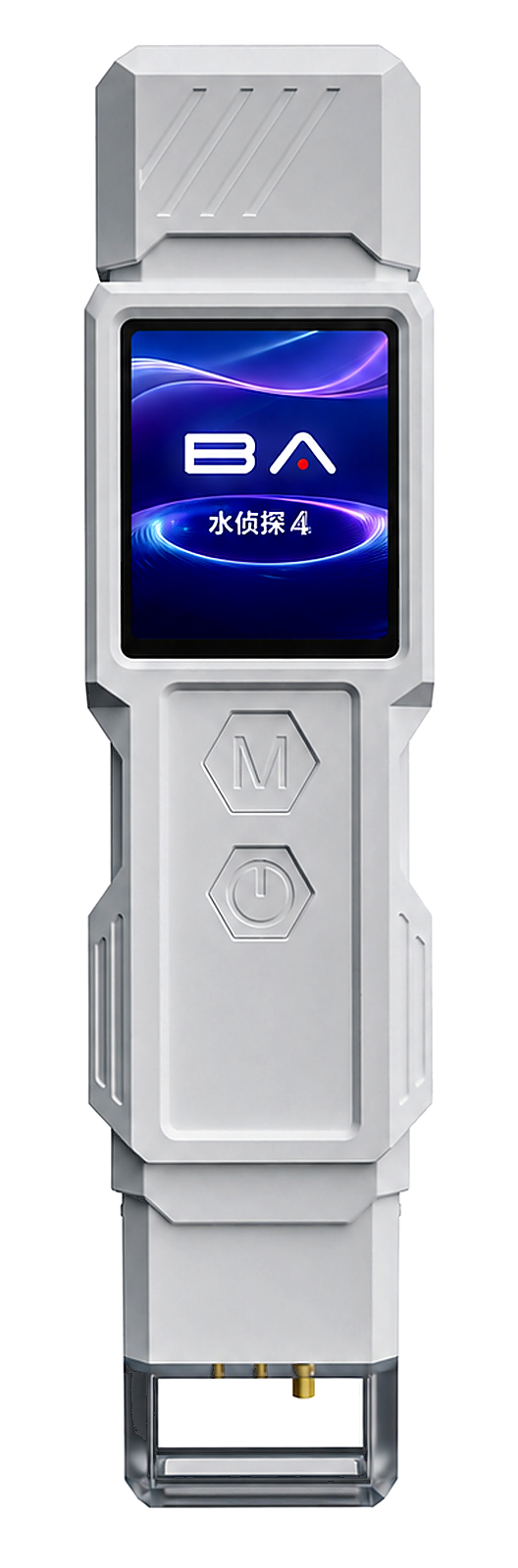
The Water Detective 4 can provide nine readings: TOC (total organic carbon), COD (chemical oxygen demand), UV254, turbidity, TDS (total dissolved solids), EC (electrical conductivity), hardness, salinity and temperature. Most of these parameters are "aggregate indicators" or "optical surrogate indicators" used for rapid screening and trend comparison; they cannot be used alone to identify a specific contaminant.
When well water is given to pets for drinking, the significance and limitations of these readings are as follows:
| Indicator | On-site screening can indicate | Laboratory items that cannot be replaced | Important note |
|---|---|---|---|
| TOC / COD / UV254 | Trends in total organic matter, humus and some dissolved organic matter | Specific organic compounds such as pesticides, veterinary drugs, polycyclic aromatic hydrocarbons and disinfection by-products | A high value only indicates elevated total organic matter; it cannot determine whether the water is toxic |
| Turbidity | Particulates, sediment and colloids | Bacteria, viruses, Cryptosporidium and Giardia | Low turbidity does not mean sterile |
| TDS / EC / salinity | Trends in total dissolved solids, ionic strength and saltiness | Specific ions such as lead, arsenic, nitrate, fluoride and sodium | High TDS may affect taste and pet acceptance, but it is not a health criterion |
| Hardness | Scaling trends such as calcium and magnesium | Accurate calcium and magnesium concentrations and water softener performance | High hardness mainly causes scale and taste issues |
| Temperature | Reading correction, seasonal trends | Not applicable | Temperature anomalies should be recorded, but are not themselves contaminants |
Conclusion: The readings from Water Detective 4 are intended for "screening, comparison, and trend observation." Any risk involving lead, arsenic, nitrate, pesticides, bacteria, viruses, parasites, dissolved oxygen, ammonia nitrogen, nitrite or nitrate must be confirmed using appropriate laboratory or dedicated methods in accordance with local requirements.
3. Reproducible sampling and measurement procedure
3.1 Sampling preparation
- Use clean PET or HDPE containers free of detergent residue; before sampling, rinse the container 3 times with the water sample to be tested.
- Before sampling well water, open the tap and let it run for 2–5 minutes until the water temperature stabilizes, to flush out water retained in the pipe.
- Avoid sampling immediately after a pet water fountain has just had its filter replaced; record the number of days the filter has been in use.
- Record environmental information: date, weather, whether there has been heavy rain recently, whether there is nearby fertilization, septic tank maintenance, road de-icing salt, etc.
- If possible, record well depth, well age, and well type (shallow well/deep well).
3.2 Measurement procedure
- Turn on Water Detective 4 and check whether the battery level and temperature reading are close to ambient temperature.
- Immerse the probe in the water sample to the recommended depth, without touching the container wall or bottom.
- Gently agitate the probe or let it stand still to dislodge attached air bubbles.
- Wait for the reading to stabilize, especially for temperature compensation, before reading TDS/EC/salinity.
- Repeat 2–3 times at each sampling point and record the median.
- The measurement order should go from clean to contaminated: raw water → filtered water → pet water dispenser tank.
- After measuring each point, rinse the probe with clean deionized or distilled water and blot it dry with a lint-free cloth to avoid cross-contamination.
3.3 Device calibration and limitations
- Calibrate or verify the probe periodically according to the instructions, especially the temperature and EC/TDS channels.
- Do not store the test pen soaked in liquid for long periods; storage requirements for different models are subject to the instructions.
- Do not use the test pen as a long-term submersible inline probe unless an original waterproof housing and firmware support are available.
- Each record should include the device serial number, firmware version, operator and operation time for traceability.
- For brand owners of integrated products, it is recommended to automatically record the above metadata in the App or device UI.
4. How to interpret results and common interferences
On-site screening must be strictly distinguished from laboratory reports. When interpreting, prioritize looking at "differences from the historical baseline" rather than an isolated single reading.
- Stable baseline: If TDS/EC/turbidity/TOC are basically consistent with previously recorded values, daily observation can continue.
- Sudden increase in TDS/EC: May indicate falling well water level, seawater intrusion (in coastal areas), septic tank influence, road de-icing salt, or surface water mixing in. Laboratory confirmation of ion species is needed.
- Sudden increase in TOC/UV254: May indicate organic contamination, such as humic substances or organic matter carried by surface runoff. A laboratory scan for specific organic compounds is needed.
- Sudden increase in turbidity: May indicate damage to the well structure, rainfall runoff, or filter cartridge failure. It is recommended to suspend direct drinking and submit a sample for testing.
- High but stable hardness: Mainly affects scale and taste, and does not necessarily constitute a health risk, but a pet veterinarian should be consulted regarding calcium and phosphorus effects on birds.
Common interfering factors:
- Temperature not compensated: EC/TDS vary with temperature, so it is essential to ensure that firmware or manual compensation settings are consistent.
- Air bubbles: Can interfere with the optical path, causing drift in turbidity and UV254 readings.
- Cross-contamination: Failure to rinse thoroughly after measuring a high-concentration water sample.
- Container residue: Containers previously holding beverages or sugary liquids may contaminate the water sample.
- Strong chroma water (e.g., high humic acid) interferes with optical estimation; readings can only be used as trend reference.
- The conversion between salinity and EC depends on ionic composition, and deviations may be large for well water in different regions.
- High turbidity may affect UV254 and TOC estimation; the device's original algorithm and instructions shall prevail.
5. When to retest, stop use, or refer to a laboratory
Suggested decision path:
| Scenario | Action | Retest frequency |
|---|---|---|
| New well commissioning or long-term untested | First perform a complete laboratory test and use Water Detective 4 to establish a baseline | Retest monthly for the first 3 months |
| Routinely stable | Retest weekly or biweekly with the test pen and record the trend | After stabilization, every 1–4 weeks |
| After heavy rain/flooding/septic tank maintenance | Suspend use; screen with the test pen after flow resumes; if abnormal, send immediately to a laboratory | Daily during the abnormal period |
| A parameter suddenly exceeds the historical baseline 50% (internal engineering prompt, not a regulatory limit) | Retest once; if still high, stop giving directly to pets and send to a laboratory | Until laboratory results are available |
| Odor, discoloration, animals refusing to drink, diarrhea, vomiting | Stop use immediately, take to a veterinarian and collect water samples for testing | No need to wait for retest |
If any of the following occurs, stop use immediately and refer to a laboratory:
- Water is visibly turbid, colored, or has an abnormal odor or taste.
- Pets show drinking-water-related digestive symptoms or behavioral changes.
- There are septic tanks, farmland, industrial facilities, landfills or other potential pollution sources nearby.
- Local well water has previously been found to exceed limits for nitrate, arsenic, lead or E. coli.
- The test pen shows turbidity, TDS/EC, TOC, etc. consistently higher than the historical baseline, and this cannot be explained by flushing or filter replacement.
It should be emphasized: boiling can reduce the risk of bacteria/viruses, but it cannot remove chemical contaminants such as lead, nitrate and pesticides. Do not use boiling as a substitute for laboratory testing.
When referring to a laboratory, the testing should at minimum include: total coliforms/Escherichia coli, nitrate, nitrite, arsenic, lead, fluoride, pH, hardness and TDS. If local agricultural activity is intensive or there has been prior contamination, additionally test for volatile organic compounds, pesticides, veterinary drug residues and parasites. Specific requirements are subject to the local public health department, veterinarian or accredited laboratory.
6. Record sheet/action checklist
The following is a simplified screening record table, which can be adjusted according to the actual product:
| Date | Sampling point | TDS (ppm) | EC (µS/cm) | Turbidity (NTU) | TOC (ppb) | Temperature (℃) | Compared with baseline | Operator | Action |
|---|---|---|---|---|---|---|---|---|---|
| Example | Raw water at wellhead | 350 | 700 | 1.2 | 2.5 | 18 | Stable | Zhang San | Continue to observe |
| Example | Filtered water | 180 | 360 | 0.5 | 1.8 | 18 | Declining | Zhang San | Filter element normal |
| Example | 宠物水碗 | 190 | 380 | 0.6 | 2.0 | 20 | 略升 | 李四 | 清洗水碗后复测 |
注意:上表数值仅为演示,不可作为合规限值。实际记录时必须填写真实读数和操作判断。
Action checklist:
- 建立每口井的基线,至少连续测量 3–5 次取平均。
- 设置内部预警线:仅用于提示复测和趋势,不得在 UI 显示为“不安全/超标”。
- 明确实验室转介话术和当地实验室联系方式。
- For pet birds, be more conservative than for cats and dogs: for any abnormality, first switch to bottled water or a treated water source.
- Keep all records for at least 2 years to facilitate tracing seasonal changes.
7. Engineering reminders when integrating with smart small appliances
For brands integrating Water Detective 4 data or similar TDS/EC chips into pet water dispensers, smart water bowls, or apps, here are several engineering recommendations:
- In the device UI, all field parameters must be labeled "screening value, not a laboratory report"; do not use green check marks to imply "safe".
- Trend charts should display uncertainty, or at least avoid misleading smoothing.
- Filter replacement reminders can be based on TDS/turbidity trends, but must not be written as "pesticides/bacteria removed"; if the product claims to remove specific contaminants, third-party test reports compliant with local regulations are required.
- The temperature compensation algorithm must match the sensor chip/probe; compensation coefficients differ between manufacturers; lock the compensation curve in the PCBA firmware to prevent users from changing it arbitrarily.
- If a conductivity/TDS interface ASIC is adopted as a cost-optimization solution for the product, confirm with AtomBit the range, accuracy, flush time, polarization suppression, temperature compensation, and calibration process to ensure mass-production consistency.
- For optical TOC/COD/UV254 modules, pay attention to optical window contamination, bubble removal, flow cell design, and regular automatic cleaning; otherwise, drift will occur during long-term use.
8. FAQ
Q: Can Water Detective 4 detect bacteria, viruses, or parasites? A: No. Low turbidity does not mean the absence of pathogens. Water samples must be sent to a qualified laboratory for microbiological testing.
Q: Does a high TDS reading mean the water is toxic? A: Not necessarily. High TDS may simply mean more minerals, which affects taste and pet acceptance; however, it cannot answer whether lead, arsenic, or nitrate exceed limits. Laboratory confirmation is required.
Q: Is it OK to boil well water before giving it to pets? A: Boiling can reduce some bacterial and viral risks, but it cannot remove chemical contaminants such as lead, nitrate and pesticides. If chemical indicators are abnormal, boiling alone is not recommended.
Q: Are birds more sensitive to water quality? A: Birds are small and have fast metabolism, so they may be more sensitive to certain contaminants and changes in water quality. More conservative screening thresholds are recommended, and an avian veterinarian should be consulted.
Q: Our pet water fountain has a built-in TDS chip; can it automatically determine whether the water is safe? A: No. Built-in sensors can only perform trend screening and filter replacement reminders. Any "safe" or "compliant" claim requires laboratory testing and product certification that meet local regulations.
9. Reference sources and regional applicability
The following reference materials are all publicly available drinking water or well water management guidelines. They are provided for background and aesthetic reference values and do not represent regulatory recognition of Water Detective 4 readings.
- World Health Organization. Guidelines for drinking-water quality: fourth edition incorporating the first and second addenda. Geneva: WHO; 2022. https://www.who.int/publications/i/item/9789240045064
- United States Environmental Protection Agency. Secondary Drinking Water Standards: Guidance for Nuisance Chemicals. https://www.epa.gov/sdwa/secondary-drinking-water-standards-guidance-nuisance-chemicals
- United States Centers for Disease Control and Prevention. Private Wells: Testing. https://www.cdc.gov/healthywater/drinking/private/wells/testing.html
- United States Geological Survey. Total Dissolved Solids and Water Quality. https://www.usgs.gov/special-topics/water-science-school/science/total-dissolved-solids-and-water-quality
Regional applicability: The above guidelines are mainly based on U.S. federal/WHO recommendations. Pet drinking water regulations, well water standards and veterinary advice may differ by region. All judgments involving specific health conclusions, regulatory limits and pet safety must be based on the results from local authorities, veterinarians and accredited laboratories. This article does not constitute any product certification or health certificate.