
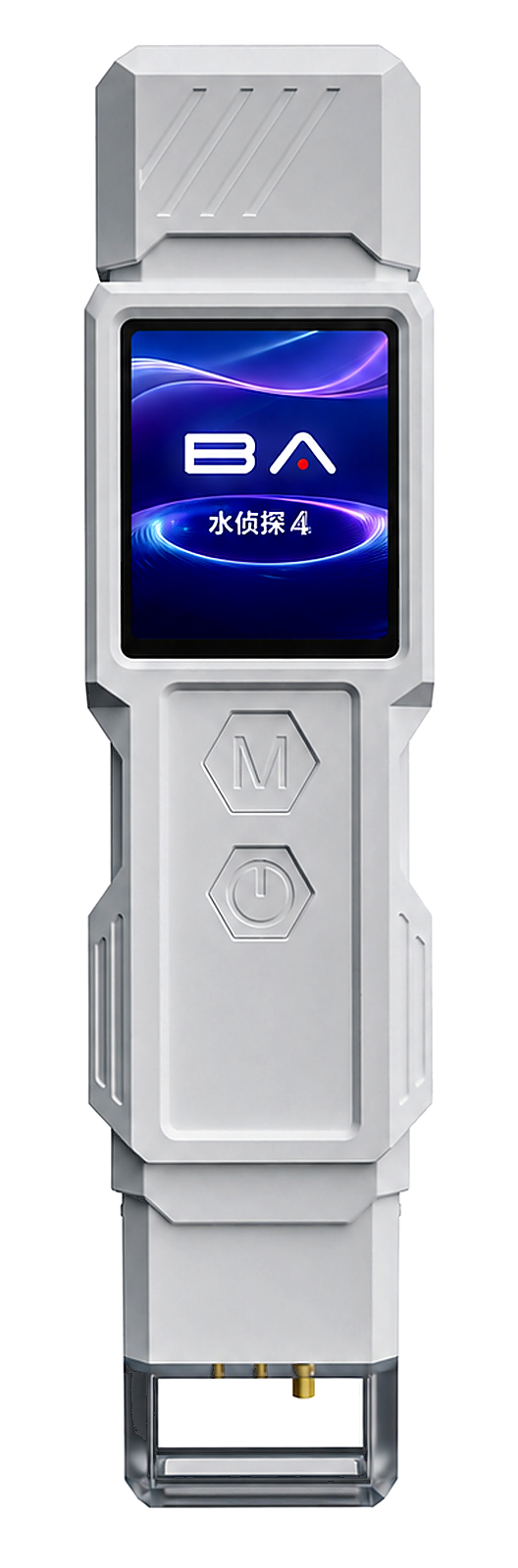
Well water lacks the continuous monitoring of a public water supply system, so a single abnormal portable test reading may result from improper sampling, instrument drift or a real change in water quality. Using a portable screening device such as Water Detective 4 as an example, this article provides an action framework covering abnormal readings, retesting, suspension of use, temporary water supply and laboratory confirmation.
1. Applicable users and decision questions
This article applies to rural dispersed well water users, village-level water managers, operators of small water plants, and technicians who provide equipment or water quality services to these users. When you use a portable test pen (such as AtomBit Water Detective 4) and obtain an abnormal well water reading, you need to answer the following decision questions:
- Is this anomaly credible? Was it a sampling/operational error, or has the water quality actually changed?
- Should drinking be stopped immediately?
- How should a temporary alternative water supply be arranged?
- Under what circumstances must a sample be sent to a laboratory for testing of specific contaminants?
A boundary must be made clear here: the nine indicators provided by Water Detective 4 — TOC, COD, UV254, turbidity, TDS, conductivity, salinity, hardness and temperature — are for screening/comparison/trend observation and do not identify specific contaminants. It cannot measure lead, arsenic, nitrate, pesticides, bacteria, viruses, parasites, dissolved oxygen, ammonia nitrogen, nitrite or nitrate. Any claim that "a high reading means some toxic substance exceeds the limit" is incorrect. Risks involving these substances must be confirmed by a laboratory or a dedicated method.
2. Water samples, equipment, and scenario boundaries
Water Detective 4 is suitable for the following scenarios:
- Routine trend recording of your own well water, for example testing once a month or once a quarter to observe changes in the same well across seasons.
- Rapid screening after events such as heavy rain, septic tank overflow or fertilization.
- Comparison of effects before and after installing a water purifier (for example, whether TDS, turbidity and TOC decrease).
- Preliminary classification of water samples during simple on-site service.
Not suitable for the following scenarios:
- Determining whether drinking water is compliant or safe;
- Detecting lead, arsenic, nitrate, pesticides, bacteria, viruses or parasites;
- Acceptance testing of industrial wastewater, municipal sewage or large-scale water treatment projects;
- Replacing a laboratory to issue any certification.
Device boundaries: readings from the Water Detective 4 are affected by sampling method, temperature, probe cleanliness and calibration status. If the probe is contaminated, the battery is low, rinsing is not performed as instructed, or the water sample sits too long, false abnormalities may appear. Before use, confirm the device is physically intact and the electrode has no deposits, perform a blank calibration as instructed (if applicable), or check the zero point with pure water.
3. Reproducible sampling and measurement procedure
To make retest results comparable, it is recommended to keep the sampling personnel and operating sequence fixed. The following procedure applies to ordinary pumped wells or driven wells and can be adjusted to suit the specific well type.
3.1 Preparation before sampling
- Prepare a clean sampling bottle or a disposable food-grade cup; avoid containers that have held beverages or dish soap.
- Prepare deionized water/pure water for rinsing the probe, and absorbent paper or a clean lint-free cloth.
- Record the sampling date, time, weather, whether it rained in the past three days, whether the well was just pumped, and whether there is nearby fertilization/pesticide spraying or septic tank maintenance.
3.2 冲洗与取样
- 打开水龙头或压水,让水持续流出至少3–5分钟(若井很深或长期未用,可延长至10–15分钟),排掉管道滞留水。
- 用待测水润洗采样容器三次。
- 取水样约200 mL,避免手指接触瓶口内壁,尽量减少气泡。
- 立即测量温度并记录。
3.3 依次测量
- 按设备说明书顺序依次测量各指标。通常建议先测温度、TDS/电导率/盐度、硬度,再测浊度、TOC、COD、UV254。
- 每测一个指标前,用去离子水润洗探头,再用吸水纸吸干;避免在强光直射、风口或温差大的地方测量。
- 每个指标重复三次,取中位数或平均值,记录在表中。
- 测量结束后清洗探头,妥善保存。
3.4 失败模式与预防
- 气泡附着:导致浊度或光学测量偏高。可轻弹探头或重新取样。
- Temperature not stable: water just drawn from a well differs in temperature from the room, so TDS/conductivity and similar readings may drift. Let the water sample stand until it is close to room temperature before measuring, or follow the device's temperature-compensation instructions.
- Container contamination: residual detergent, salt or organic matter can cause falsely high readings. Be sure to rinse.
- Probe residue: salt or organic matter from the previous water sample was not cleaned off, affecting the next measurement. Clean thoroughly before each change of water sample or parameter.
- Optical window contamination: optical measurements such as turbidity, TOC, COD and UV254 are sensitive to window cleanliness; avoid fingerprints and oil smudges.
- Low battery: may cause reading jumps; confirm battery level before measuring.
4. How to interpret results and common interferences
Portable screening readings need to be interpreted within a trend; a single absolute value has limited meaning. It is advisable to establish a "baseline" for this well: during a period when water quality is known to be normal (for example, after a new well passes acceptance inspection), measure continuously for one week and record the daily readings as a reference for later comparison.
4.1 What do changes in common parameters indicate?
- TDS/conductivity/salinity: a sudden increase may mean more dissolved solids, for example from groundwater affected by surface water infiltration, fertilizer, road de-icing salt, seawater intrusion (in coastal areas), and so on. An increase does not directly mean toxic, but it indicates that water quality may be changing and the source needs investigation.
- Turbidity: higher readings indicate more particles in the water, such as silt, rust, colloids or microorganisms. Turbidity itself is not necessarily harmful, but high turbidity reduces disinfection effectiveness and may carry bacteria and viruses. If well water becomes cloudy, even if other readings are normal, it is advisable to boil it before use and have microbiological testing done as soon as possible.
- TOC/COD/UV254: an increase indicates more organic matter, possibly from decaying plants, domestic sewage, pesticide carriers, landfill leachate, and so on. High organic matter may affect taste and create a risk of disinfection by-products, but it does not identify specific substances.
- Hardness: high calcium and magnesium ion concentrations mainly affect scaling and washing effectiveness and are generally not directly harmful to health. But a sudden change may indicate a change in the well water's recharge source.
- Temperature: affected by seasonal changes and well depth; usually not treated as an independent anomaly indicator, but it affects other parameters.
4.2 Combined trend interpretation
- If TDS, conductivity and salinity rise simultaneously, this indicates an increase in total dissolved solids; check whether surface water infiltration or agricultural non-point-source impacts are present.
- If turbidity rises and TOC/COD/UV254 also rise, this may be organic particulate matter or surface water infiltration, and microbial risk should be given priority.
- If only hardness changes while other indicators remain stable, the source water recharge path may have changed; health risk is usually low, but observation is needed.
4.3 Common interference scenarios
- Immediately after pumping: standing water in the well may give abnormal readings due to oxygen deficiency and leaching of metal ions. Retest after thorough flushing.
- After heavy rain: surface water may enter the well through the wellhead or damaged casing, bringing turbidity, organic matter and microorganisms. Strengthen monitoring after heavy rain and consider disinfection treatment.
- Nearby agricultural activity: during fertilization and pesticide spraying, groundwater may be affected by nitrate and other substances, but Water Detective 4 cannot measure nitrate and laboratory testing is required. Screening readings may rise due to organic matter carriers.
- Septic tank/toilet too close: microbial risk takes priority; microbiological and nitrate testing must be sent to a laboratory, and screening must not be relied upon.
- Recent repair or well cleaning: this may cause short-term turbidity and elevated metal ions; retest after thorough water discharge.
5. When to retest, stop use, or refer to a laboratory
After an abnormal reading is found, make decisions according to the following process:
5.1 Step 1: Rule out operational and instrument causes
- Test once with bottled purified water/distilled water. If the TDS is far above the expected value for purified water, the turbidity is not zero, or the TOC reading is abnormal, the instrument or probe may be contaminated or the calibration may have drifted; clean/calibrate it before measuring again.
- Resample the same well following the steps in section 3, repeating three times. If the repeat results return to the historical range, the first sampling may have been improper.
5.2 Step 2: Compare with the original well baseline
- If the reading only fluctuates slightly (for example, TDS fluctuates within ±10% and there are no sensory abnormalities), it can continue to be used, but increase the monitoring frequency to weekly or daily and observe the trend.
- If multiple indicators rise simultaneously (such as turbidity, TOC, and TDS rising at the same time), or if there is abnormal color, odor, or taste, immediately stop direct drinking and refer to a laboratory.
5.3 Step 3: Determine whether use must be stopped
If any of the following occurs, stop using the well water for drinking and cooking and arrange an alternative water supply as soon as possible:
- Turbidity is noticeably increased, the water is yellow/black/green, or there is a fishy odor or bitter taste;
- Screening readings significantly exceed the baseline for this well and cannot be explained;
- There has been a septic tank overflow, heavy fertilization, pesticide spill, or flood inundation of the well near the wellhead;
- Family members or livestock develop symptoms such as diarrhea or vomiting after drinking;
- It is known that local geological contamination risks such as arsenic, lead, and nitrate exist.
5.4 Step 4: Laboratory confirmation
Laboratory testing items should be selected based on local risks and historical data; at a minimum, it is generally recommended to include:
- Microbiological: total coliforms, thermotolerant coliforms, or Escherichia coli;
- General chemical indicators: pH, total hardness, TDS, iron, manganese;
- Health-related chemical indicators: nitrate, arsenic, lead, etc., according to local requirements;
- If there is agricultural activity nearby, pesticide indicators may be added.
Sampling and submission to the laboratory must follow local CDC or testing agency requirements, including sterile bottles, sample volume, preservation, and submission time. Never use household instrument readings in place of laboratory results.
6. Alternative water supply arrangements
Before the problem is confirmed and repaired, the following temporary water supply options may be used. Note that each option has applicable limits and cannot be relied on blindly.
| Option | Applicable situation | Limitations and precautions |
|---|---|---|
| Bottled water | Short-term emergency, all drinking and cooking water | High cost, not realistic for long-term use; when purchasing, use legitimate channels to avoid secondary contamination |
| Boiling | Kills bacteria, viruses, and parasites | Cannot remove lead, arsenic, nitrate, pesticides, TDS, hardness, or some organic compounds; after boiling, store in a clean covered container |
| Water purifier | Only effective against specific contaminants; check for third-party certification | Household water purifiers are not a universal solution; different filter cartridges have different treatment capabilities; activated carbon can adsorb some organic compounds but may harbor bacteria; RO can remove most dissolved ions but produces wastewater and requires regular filter replacement |
| Neighboring well water that has already tested as compliant | Suitable for long-term substitution, provided that the well is indeed tested regularly and passes | Need to confirm the test items and frequency for the neighbor's well; do not judge by appearance alone |
If the screening abnormality is only high hardness or a slight TDS increase, and the laboratory confirms there is no health risk, the well can continue to be used, and softening or RO treatment may be considered to improve taste; however, if the abnormality comes from turbidity, organic matter or microbial risk, the source problem must be solved, and do not merely rely on a water purifier to "filter it away."
Long-term measures include: checking well cover seals, whether the well casing is damaged, whether the drainage system is far from the wellhead, the distance between the septic tank and the well, and whether there is garbage piled nearby; establishing a quarterly or semiannual laboratory testing plan; where conditions permit, simple disinfection equipment may be installed, but the dosage must be accurately controlled.
7. Record sheet and action checklist
7.1 Recommended record sheet (one per well)
Date, weather, sampling time, flushing duration, sampler, equipment number, most recent calibration date, water temperature, TDS, conductivity, salinity, hardness, turbidity, TOC, COD, UV254, appearance/odor, remarks.
7.2 Post-abnormality action checklist
- Stop drinking the water directly; if there are sensory abnormalities or health symptoms, immediately switch to another water source.
- Check the sampling procedure, equipment cleanliness and calibration status, and verify with control water.
- Flush the pipeline again and sample, repeating three times.
- Compare with the historical baseline for this well to determine the magnitude of the abnormality.
- If the abnormality persists or involves a pathogenic risk, contact the local CDC or a qualified laboratory for testing.
- Before laboratory results are available, use bottled water, boiled water or a nearby water source that has been tested and found acceptable.
- Determine the treatment plan based on the laboratory results; after remediation, the water must be tested again and pass before drinking can resume.
- Record all steps and results to facilitate traceability.
8. Frequently Asked Questions (FAQ)
Q: Can the Water Detective 4 test for bacteria? A: No. The screening indicators of the Water Detective 4 do not include microorganisms. Bacteria, viruses, and parasites must be tested by laboratory culture or molecular methods.
Q: A high TDS reading—does that mean the water is toxic? A: Not necessarily. TDS is total dissolved solids, which may be beneficial minerals such as calcium, magnesium, and potassium, or may be contaminants. Laboratory analysis is needed to determine the specific composition. High TDS is not necessarily harmful to health, but it may affect taste or indicate a change in the water source.
Q: After heavy rain, the well water became turbid, but the portable tester's readings are normal—is it safe to drink? A: Direct drinking is not recommended. Turbidity may carry pathogenic microorganisms, and portable devices do not test for microorganisms. It should at least be boiled before use, and microbiological testing should be done as soon as possible.
Q: Can a household water purifier replace laboratory testing? A: No. A water purifier can only remove some contaminants, and its effectiveness depends on the filter element, maintenance, and water quality. A water purifier also cannot provide proof of water quality compliance, let alone identify all risks. Laboratory testing remains irreplaceable.
Q: The test value is only slightly elevated—do I need to stop using the water immediately? A: First retest as described in Section 5 of this article. If the retest is stable, there are no sensory abnormalities, and the value is still within the historical fluctuation range, you may continue using the water and strengthen monitoring; if any risk factor is present, safety comes first—stop using the water and send it for testing.
Q: The screening reading is abnormal, but the laboratory test passes—which should be authoritative? A: The laboratory test should be authoritative. Portable devices are for screening and are affected by sampling, temperature, and probe condition; laboratory methods have strict quality control and are the basis for determination. In this case, the portable device's operation and calibration should be checked.
References and Regional Applicability
- World Health Organization. Guidelines for drinking-water quality: fourth edition incorporating the first and second addenda. Geneva: World Health Organization; 2022. https://www.who.int/publications/i/item/9789240045064
- U.S. Environmental Protection Agency. Private Drinking Water Wells. https://www.epa.gov/privatewells
- Centers for Disease Control and Prevention. Private Ground Water Wells. https://www.cdc.gov/healthywater/drinking/private/wells/index.html
- U.S. Geological Survey. Groundwater Quality. https://www.usgs.gov/special-topics/water-science-school/science/groundwater-quality
- State Administration for Market Regulation of China, Standardization Administration of China. Standards for Drinking Water Quality GB 5749-2022. Beijing: Standards Press of China, 2022.
Regional applicability: The action framework in this article is generally applicable, but specific limits, test items, sampling specifications and legal requirements vary by region. Users in China should follow the well water testing requirements of the local CDC or health authorities; users in the United States should refer to the EPA and state/local health departments; users in other regions are advised to consult local water or public health agencies. Specific limits are not listed in this article to avoid misuse; all parameter interpretations are intended only for screening and trends and do not represent a compliance determination.