
Introduction: The Real-World Need for Home Water Quality Screening
In recent years, home users' attention to drinking water safety has continued to rise. The proliferation of water purifiers, under-sink water filtration systems, smart water bottles, and other devices has made "what is the water quality, really?" a frequent question. While traditional laboratory testing is accurate, sample collection and delivery cycles are long and costs are high, making it difficult to meet the needs of daily rapid assessment and trend monitoring. Portable multiparameter water quality testers have therefore become practical tools for home users, water purifier service personnel, and on-site screening.
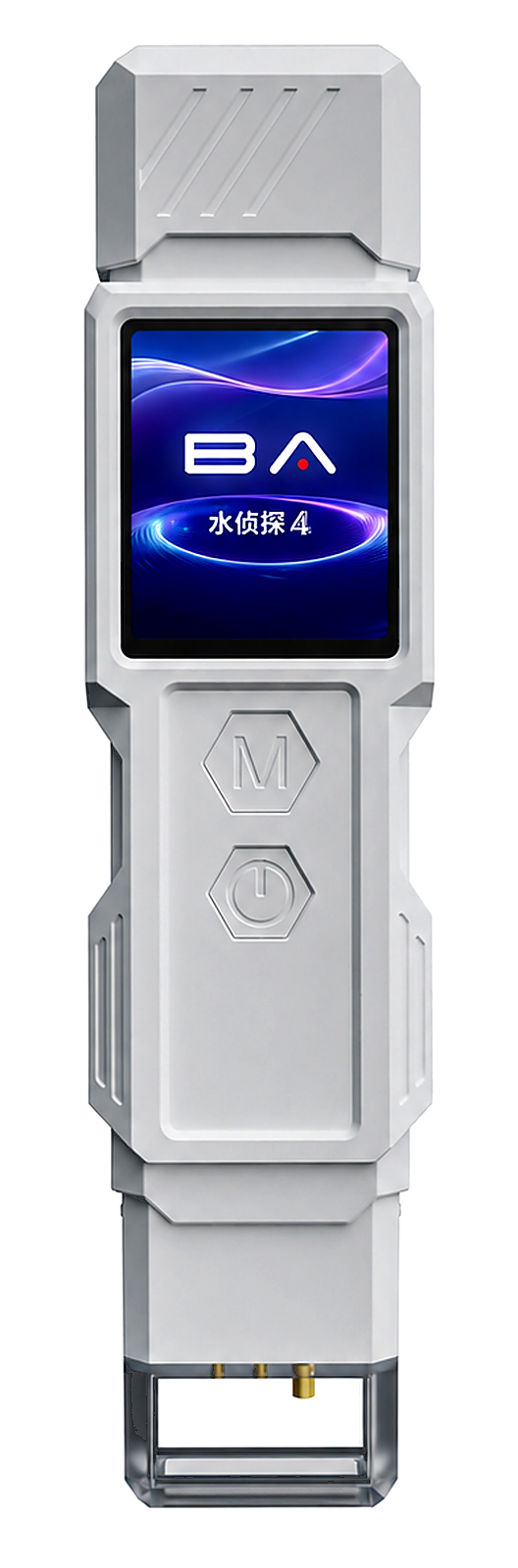
The Water Detective 4 personal/home portable water quality pen launched by AtomBit is designed precisely for this scenario. It integrates nine organic and inorganic indicators into one rapid testing platform, including TOC, COD, UV254, TDS, EC, turbidity, hardness, salinity, and temperature, and can be operated without large laboratory equipment. This article explains the device's usage workflow, result interpretation, repeat measurement methods, and application boundaries from the perspective of engineers, system integrators, and technical procurement specialists, helping readers use it reasonably and avoid misjudgment.
Technical Foundation and Product Positioning of the Water Detective 4
The Water Detective 4 belongs to the category of portable multispectral water quality testing products. Its core measurement principle is based on smart micro-optoelectronic sensing: light sources of different wavelengths illuminate the water sample, and transmitted or scattered light signals are detected to infer parameters such as organic pollutants and turbidity. Indicators such as conductivity, TDS, salinity, and hardness are typically measured using electrode methods and compensated with temperature sensors. All sensor signals are conditioned, amplified, and digitized through a water quality sensor interface ASIC, ensuring consistency and stability across batches of devices. The probe features an integrated design, allowing it to be immersed in the water sample for quick readings.
For home users, this means no reagents or complex sample preparation are required—simply insert the probe into the water sample to obtain multiparameter results. For OEM/ODM customers, AtomBit can provide corresponding sensor interface ASICs and probe solutions for integration into devices such as water purifiers, water dispensers, and smart water bottles, enabling filter status display and water quality trend recording. However, this article focuses on the portable standalone use case; integration details are discussed separately later.
It should be emphasized that the Water Detective 4 is a screening tool, not a certified laboratory analytical instrument. All readings reflect the physicochemical characteristics of the water sample at the moment of measurement and cannot be directly equated with statutory water quality determinations, nor should they be used as a basis for health diagnosis.
Workflow: Engineering Steps from Sampling to Reading
Correct operation is a prerequisite for obtaining reliable data. The following steps are based on general engineering practice; for specific operations, please refer to the product user manual.
Step 1: Probe Preparation and Rinsing
Check whether the probe is clean and free of residue before use. Rinse the probe and container 2 to 3 times with the water sample to be tested to avoid contamination from the previous measurement or container. If the device supports calibration, confirm that the calibration is within its valid period.
Step 2: Representative Sampling
Home water samples should represent the actual water usage condition as much as possible. For tap water, it is recommended to open the tap and let the water run for 1–2 minutes before sampling. For water purifier output, samples should be taken after the device has been running stably. The sampling container should be clean and dry, and avoid plastic containers that may release ions.
Step 3: Immersion and Measurement
Immerse the probe fully into the water sample, gently shake it to remove any attached air bubbles, and then start the measurement. Keep the probe stationary, and allow the instrument to indicate stability before recording the reading. Water temperature may affect certain parameters, so it is recommended to wait for the temperature reading to stabilize before recording other indicators.
Step 4: Repeat Measurements and Data Recording
To reduce random errors, it is recommended to take 3–5 consecutive measurements on the same water sample. After each measurement, remove the probe, rinse it with the water sample to be tested, and re-immerse it. Record all readings and calculate the average or median. If a particular reading deviates significantly, check whether the probe has air bubbles, contamination, or operational issues, and consider excluding outliers.
Step 5: Cleaning and Storage
After measurement, rinse the probe with clean water. If necessary, clean it according to the instruction manual, and store it properly after drying. For long periods of inactivity, periodically check the probe condition.
Result Interpretation: Relevance of Nine Indicators to Home Scenarios
The nine indicators provided by the Water Detective 4 cover organic substances and general inorganic parameters. Understanding the meaning of each indicator helps home users assess water quality trends, but it should be noted that these readings are rapid screening values and may deviate from laboratory standard methods; they should not be used directly for compliance determinations.
| Indicator | Home Scenario Relevance | Screening Significance |
|---|---|---|
| TOC (Total Organic Carbon) | Reflects the total carbon content of all organic substances in water, which may come from pipeline aging, storage tank contamination, or organics in raw water | Rapidly assesses organic contamination trends; abnormal increases indicate a need for further analysis |
| COD (Chemical Oxygen Demand) | Indicates substances in water that can be oxidized by strong oxidants, including organic matter and some reducing inorganic substances | When values are elevated, organic pollution or reducing substances may be present and require attention |
| UV254 | Ultraviolet absorbance at a 254 nm wavelength, sensitive to aromatic organic matter and natural organic matter | Aids in assessing the level of disinfection byproduct precursors; a commonly used surrogate parameter in water treatment |
| TDS (Total Dissolved Solids) | Total amount of dissolved salts and minerals, affecting taste and scale-forming tendency | The most commonly used indicator for comparing water purifier performance; directly reflects differences before and after reverse osmosis/ultrafiltration |
| EC (Electrical Conductivity) | Capacity of ions in water to conduct electricity; positively correlated with TDS | Provides a quick understanding of ionic strength and assesses the degree of water mineralization |
| Turbidity | Degree of light scattering caused by suspended particles, affecting transparency and the risk of microorganism attachment | Provides a direct visual assessment of water clarity; high turbidity may indicate particles or biological growth |
| Hardness | Mainly reflects calcium and magnesium ion concentrations, causing scale formation and reduced cleaning efficiency | An important parameter for evaluating the performance of household water softeners and scale-inhibiting filter cartridges |
| Salinity | Content of dissolved salts, usually calculated from conductivity | Screening for special water sources (e.g., coastal areas, groundwater); aids in assessing potential seawater intrusion |
| Temperature | Temperature of the water sample, affecting other parameter readings and drinking taste | Aids in interpreting data changes; for example, rising temperatures may promote microbial activity |
It should be specifically noted that water quality baselines differ across regions, and judgments of "abnormality" should be based on historical data from the local tap water or source water. For instance, a sudden rise in TDS may indicate pipe contamination or water purifier failure; persistently high hardness may suggest that a softener needs regeneration. It is recommended that users establish a home water quality baseline, measure regularly, and record trends rather than drawing conclusions based on a single reading.
Repeat Measurements and Quality Control: Engineering Reliability Assurance
Readings from portable devices are affected by multiple factors, including probe surface condition, sample uniformity, temperature fluctuations, electromagnetic interference, and operating habits. To ensure that data can be used for decision-making, the following quality control measures are recommended:
- Multiple measurements and averaging: Take at least 3 measurements for each water sample and use the average or median. If the standard deviation is too large (e.g., exceeding 10%–15% of the mean, depending on the indicator), check the operation or device status.
- Regular calibration: Perform calibration verification using TDS/EC standard solutions. It is recommended to conduct this monthly or quarterly, depending on usage frequency and environment; calibration confirmations should be documented.
- Comparison with laboratory results: Before key decisions, the same sample can be sent to a laboratory for testing and compared with Water Detective 4 readings to establish a local correction relationship. Note that differences in method principles mean results should not be forced to match exactly.
- Environmental control: Avoid measurements under strong light, high temperature, or strong electromagnetic interference; keep the temperature of the probe and container consistent during measurement.
- Probe maintenance: Clean the probe regularly to avoid oil, scale, or biofilm buildup. For multispectral probes, cleaning the optical window is particularly important.
Application Boundaries: When Professional Laboratory Testing Is Required
Although the Water Detective 4 provides nine indicators, its use is limited to screening, trend monitoring, and rapid comparison. In the following situations, samples must be submitted to a qualified laboratory:
- Results approach or exceed national/local standard limits: For example, the limits specified in GB 5749-2022, "Standards for Drinking Water Quality." When screening readings are abnormal, laboratory confirmation using standard methods is required.
- Microbiological indicators involved: Microbiological indicators such as total coliforms, thermotolerant coliforms, and total colony count cannot be detected via multispectral or conductivity methods; culture-based or molecular biology methods must be used.
- Specific heavy metals, pesticides, disinfection byproducts, and radioactive indicators: These require specialized instrumentation and sample preparation that portable devices cannot cover.
- Legal disputes, product acceptance, and compliance reporting: Any determination with legal effect must be issued by an accredited laboratory with a formal report.
- Health-related decisions: If there are infants, immunocompromised individuals, or suspicion of specific source water contamination, samples should be sent directly for testing and not rely on screening results.
In short, the role of the Water Detective 4 is to act as a "first-line screener," helping users detect abnormalities and decide whether further action is needed, rather than serving as a final decision-making tool.
Technical Considerations for Integration with Smart Devices and OEM/ODM Applications
For engineers and system integrators planning to integrate water quality detection into their products, the technology platform behind the Water Detective 4 offers an avenue for reference. AtomBit's core capabilities include smart micro-optoelectronic sensing, water quality sensor interface ASICs, multispectral sensing, probe design, and OEM/ODM solutions.
When integrating water quality detection into appliances such as water purifiers, water dispensers, and smart water bottles, key considerations include:
- Sampling point design: The detection probe should be installed at a representative position in the flow path, avoiding dead zones or air bubble accumulation; for static water bottles, stirring or wait times need to be considered.
- Temperature compensation algorithms: Parameters such as conductivity and TDS are temperature-sensitive; integrated solutions need a reliable temperature sensor and compensation algorithm, or alternatively, directly use a probe module with built-in temperature compensation.
- Calibration strategy: Factory calibration, field calibration, and long-term drift compensation need to balance cost and reliability. Single-point or dual-point calibration is recommended, with calibration parameters recorded in firmware.
- Data protocols and power consumption: Communication with smart devices typically uses UART, I2C, or Bluetooth, etc.; data formats, error checking, and low-power strategies need to be defined. For battery-powered products, measurement cycles and standby current are key metrics.
- Long-term stability validation: Before integration, continuous operation testing for at least several weeks should be conducted to observe probe scaling, drift, and cross-sensitivity, especially for parameters like hardness and turbidity that are prone to scale formation.
As an OEM/ODM supplier, AtomBit can provide sensor interface ASICs and customized probes to help customers shorten development cycles. However, specific integration solutions need to be evaluated in the context of the actual product structure, flow path, and expected lifespan; it is recommended to communicate directly with AtomBit's technical support team.
FAQ: Frequently Asked Questions
Q1: Can Water Detective 4 detect bacteria or viruses?
No. This device measures physicochemical parameters (organic matter, ions, turbidity, etc.). Microbial contamination requires professional laboratory testing through culture methods or molecular biology techniques. High turbidity or high TOC may indirectly suggest a risk of microbial growth, but it cannot be used as direct evidence.
Q2: Can the test results serve as proof of water quality compliance?
No. Water Detective 4 is a screening tool, and its readings differ methodologically from laboratory standard methods. Any compliance determination, legal use, or health claim requires a report issued by a qualified laboratory.
Q3: How often does the device need calibration?
It is recommended to calibrate periodically based on usage frequency and environmental conditions. For general household users, verifying once a month with a standard TDS/EC solution is sufficient. For frequent use or critical judgment, the calibration interval should be shortened. Specific calibration methods and intervals are subject to the product user manual.
Q4: What is the relationship between TDS and EC?
EC (electrical conductivity) measures the ability of ions in a solution to conduct electricity. TDS (total dissolved solids) is usually estimated by multiplying EC by an empirical factor. The factor varies slightly for different water qualities. The device may be preset with a general factor, so the TDS reading is an estimate and may deviate from TDS measured by the laboratory gravimetric method.
Q5: Does the hardness reading indicate total hardness or calcium hardness?
It typically indicates total hardness (expressed as calcium carbonate equivalent), but the specific definition and units are subject to the product manual. Hardness standards vary by region. Household users can refer to local water utility public data for comparison.
Q6: Does temperature affect the test results?
Yes. Parameters such as electrical conductivity, TDS, and pH change with temperature. Water Detective 4 has built-in temperature compensation, but extreme temperatures (e.g., ice water or hot water) may still affect measurement stability. It is recommended to measure water samples near room temperature and wait for the temperature reading to stabilize.
Q7: Can it detect seawater or high-salinity water?
The salinity parameter has a certain measurement range. Exceeding the range may cause reading saturation or increased error. For seawater or high-salinity samples, first confirm whether the device's salinity range covers it, and if necessary, dilute before measuring (but dilution will alter other parameters, so proceed with caution).
Q8: How to determine if the water purifier filter needs replacement?
Regularly measure the TDS, EC, and turbidity of the influent and effluent of the water purifier and record trends. When the effluent TDS significantly rises or turbidity increases, it suggests the filter may be exhausted. However, different types of water purifiers (ultrafiltration, reverse osmosis, activated carbon) have different removal mechanisms. Judgment should be based on specific parameters and combined with the manufacturer's recommended replacement cycle.
Summary
Water Detective 4 provides a fast, portable, and multi-parameter technical means for household water quality screening, especially suitable for comparing water purifier performance, daily water sample trend monitoring, and on-site preliminary screening. For engineers and technical procurement personnel, understanding its technical principles, operating specifications, and application boundaries is crucial. It cannot replace laboratory analysis, but as a first-line screening tool, it can effectively lower the detection threshold, helping users identify issues promptly and take further action.
In integrated applications, AtomBit's smart micro-optoelectronic sensing, sensor interface ASIC, and probe solutions provide an expandable technical foundation for OEM/ODM customers. It is recommended to conduct thorough reliability verification and calibration strategy design based on specific product requirements.