
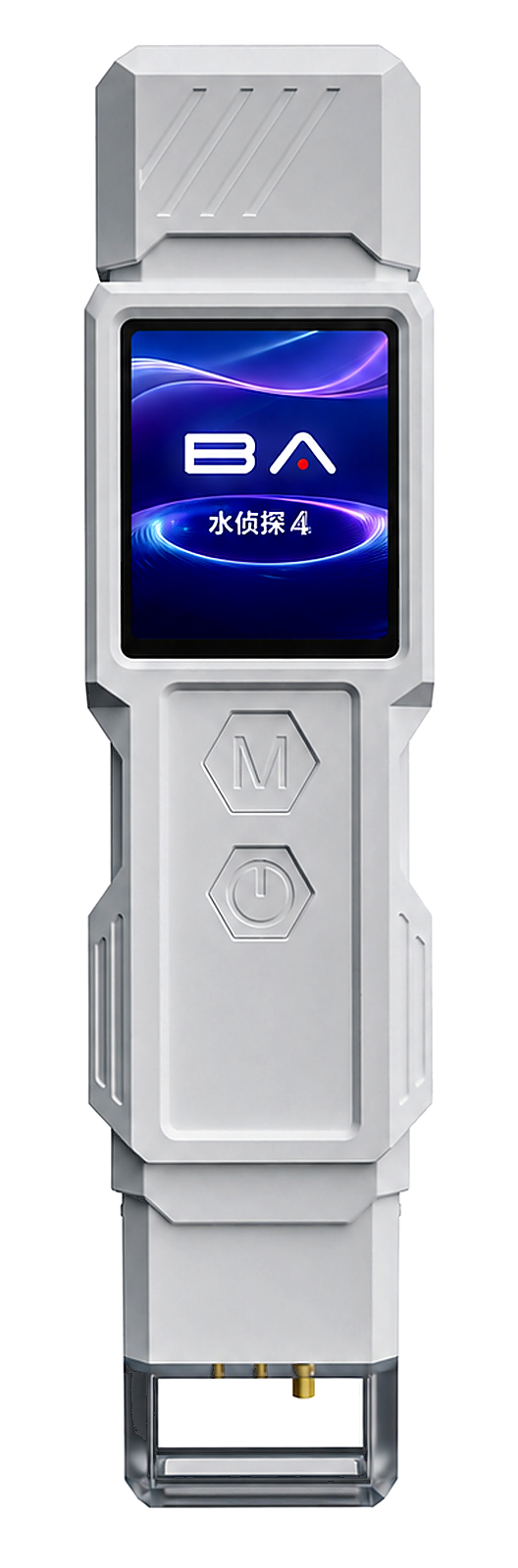
In commercial fish farming and recirculating aquaculture, water quality fluctuations often first appear as changes in organic load. UV254 (254 nm ultraviolet absorbance) is used by some portable devices as an organic matter trend signal, but it is only sensitive to specific organic matter structures, and on-site particles, bubbles, color and optical window contamination can cause serious interference. This article is not a laboratory method guide; rather, it helps farms, technicians and water quality managers use portable screening devices such as AtomBit Water Detective 4 within reasonable boundaries, and know when they must switch to laboratory or dedicated electrode/reagent methods. The measurable parameters of Water Detective 4 include TOC, COD, UV254, turbidity, TDS, conductivity, salinity, hardness and temperature; these parameters are used for screening, comparison and trend observation, and cannot be used to identify specific pollutants or prove aquaculture compliance.
1 Intended users and decision questions
1.1 Who needs this checklist
- Farm managers, on-site technicians, water quality inspectors;
- Managers of recirculating water systems (RAS), ponds, hatchery workshops and transport barrels;
- OEM/ODM teams integrating portable optical/conductivity modules into online early-warning prototypes, who need to evaluate the credibility of on-site signals.
1.2 Core decision-making questions
Before operations such as feeding, water changes, disinfection and turning on aerators, can UV254/COD/TOC readings be relied upon to determine "organic matter too high"? Answer: they can only serve as trend indicators and cannot directly trigger key management actions. They must be combined with dissolved oxygen, ammonia nitrogen, nitrite, pH, temperature and animal behavior. Because high organic load may be accompanied by oxygen consumption and ammonia nitrogen risks at the same time, but UV254 cannot measure these substances.
1.3 Parameter boundaries
The optical parameters (TOC, COD, UV254) and the conductivity/salinity/TDS/hardness/temperature parameters of Water Detective 4 are designed for rapid screening and trend comparison. It cannot detect lead, arsenic, nitrate, pesticides, bacteria, viruses, parasites, dissolved oxygen, ammonia nitrogen, nitrite or nitrate. For these risks, laboratory or dedicated methods must be used for confirmation in accordance with local aquaculture or health requirements.
2 Water samples, equipment and scenario boundaries
2.1 Water sample boundaries
UV254 is an optical signal, and particulate matter in aquaculture water scatters light and causes high readings. Therefore, turbidity must be recorded for high-turbidity samples, and comparisons must be made under uniform pre-treatment conditions:
- Settling method: use a fixed settling time (e.g., 15 minutes), but this causes some organic matter to settle or adsorb, altering the water sample.
- Filtration method: use an 0.45 µm filter membrane, but this removes particulate organic matter, so only dissolved matter is measured.
Whichever method is chosen, it must be stated in the record sheet and kept consistent over the long term at the same farm.
2.2 Device boundaries
The optical window must be kept clean, free of scratches, water droplets and biofilm. Rinse with pure water and inspect before use every day. Temperature changes cause drift in optical components and electronics. Devices usually have temperature compensation, but compensation is only effective within a specific range; do not force comparisons beyond it. Use the same device consistently to avoid batch differences between devices. If multiple devices are available, perform cross-validation on the same water sample and record the deviation.
2.3 Scenario boundaries
Different aquaculture methods have different interferences:
- Ponds: wind and waves, algae, sediment; turbidity fluctuates greatly;
- RAS: circulated water is relatively clear, but dissolved organic matter may accumulate;
- Transport tanks: small water volume, high density, drastic short-term changes; a single reading cannot be relied upon.
In addition, optical screening devices cannot replace management actions such as aeration, circulation, feeding and biosecurity; they are only auxiliary observation tools.
3 Reproducible sampling and measurement procedure
- Fixed sampling points: set at least 1–2 fixed points per culture unit (e.g., inlet, pond center, outlet), and record the depth below the water surface (e.g., 30 cm below the surface). Do not change locations arbitrarily.
- Fixed timing: sample at the same time each day, either before or after feeding; avoid periods of strong disturbance such as just after feeding, just after disinfection, or just after a water change, unless the effect of that event is what you want to observe.
- Sampling bottle preparation: use a clean polyethylene bottle and first rinse it 3 times with the water sample to be tested; if the device requires a sample cup, rinse that in the same way.
- Sampling procedure: slowly lower the sampling bottle into the water to collect the sample, avoiding vigorous stirring that would introduce air bubbles. When pouring into the measuring cup, pour slowly along the cup wall, and gently swirl to release air bubbles.
- Instrument preparation: check that the optical window is free of contamination and that the battery is sufficiently charged; perform a blank/zero check according to the manual (if supported).
- Measurement: measure each water sample 3 times and record the reading once it has stabilized; if the difference among the three measurements exceeds the normal daily fluctuation at this site, check for air bubbles and the optical window, then re-measure.
- Record at the same time: water temperature, turbidity, TDS/EC, salinity, hardness, as well as remarks on weather, feed amount, water exchange volume, animal behavior, etc.
- Cleaning and storage: after measurement, rinse the optical window and sample cup with deionized water/pure water, wipe dry with a soft cloth, and avoid direct sunlight and high temperatures.
4 Interpretation of results and common interferences
4.1 What the UV254 signal represents
EPA Method 415.3 and Standard Methods 5910 apply UV254 to the characterization of natural organic matter in source water and drinking water. UV254 responds mainly to dissolved organic matter containing aromatic rings or conjugated double bonds, such as humic substances, lignin and certain algal metabolites. It cannot fully represent total organic matter; TOC and COD are broader indicators estimated by other methods or models. The TOC/COD displayed by the device is converted based on an optical model, not the result of laboratory combustion or digestion. In aquaculture water, an increase in UV254 may come from:
- organic acids produced by the decomposition of residual feed and feces;
- algal cell rupture or secretions;
- Extraneous organic contamination.
However, an elevated value alone cannot indicate the source, nor does it indicate toxicity.
4.2 Common interferences and failure modes
- Turbidity/particle scattering: positive interference. Turbidity should be recorded and pre-treatment kept consistent.
- Bubbles: adhering to the optical window or in the light path will cause reading fluctuations.
- Color: algal pigments or dissolved organic color in aquaculture water absorb light, causing overestimation.
- Optical window contamination: feed dust, grease and biofilm form a low-transmittance layer, causing baseline drift.
- Temperature: a temperature mismatch between sample and instrument causes reading drift; wait until the sample temperature is stable before measuring.
- Sample preservation: measure immediately after collecting water to avoid microbial consumption of organic matter; do not clean sampling bottles with chlorine-containing disinfectants.
- Calibration: failure to calibrate the optical module over a long period may produce systematic deviation. Do not modify calibration parameters yourself; contact the manufacturer.
4.3 Interpretation rules
- Establish a baseline: measure at a fixed time each day for consecutive 7–14 days, and calculate the daily mean and fluctuation range.
- Relative change: observe single-day/multi-day trends rather than absolute thresholds. An anomaly is usually defined as exceeding the baseline mean ±2 standard deviations (derived from this site's data).
- Combine with turbidity: if UV254 is high and turbidity is also high, first consider the contribution of suspended solids; if turbidity is low but UV254 is high, this suggests an increase in dissolved organic matter.
- Readings alone cannot be used to judge fish or shrimp health or water quality safety, nor can they be used as proof of discharge compliance.
5 When to retest, stop using, or send to a laboratory
5.1 Retest first if the following occurs
- Readings suddenly rise or fall beyond this site's normal fluctuation;
- Large differences across 3 consecutive measurements;
- The device indicates a calibration error or low battery;
- Bubbles, contamination on the optical window, or a sudden temperature change occurs during sampling.
Retest method: clean the optical window, resample, let stand until the temperature is stable, perform a blank check with deionized water, then measure 3 times.
5.2 Situations in which to stop using the device and contact the supplier
- The optical window is scratched, cracked, or water has entered;
- The device cannot complete the zero/calibration procedure;
- Readings drift irregularly and still fail to stabilize after cleaning or replacing the sample;
- The device was dropped or stored for a long time without maintenance as instructed.
At this point, its readings should no longer be used for any management decision.
5.3 Cases that must be referred to a laboratory or a dedicated method
- Ammonia nitrogen, nitrite, nitrate, dissolved oxygen, pH, alkalinity, heavy metals, pesticides, algal toxins or pathogens need to be determined;
- Animals show gasping at the surface, staying at the edge, death or reduced appetite, and the cause needs to be diagnosed;
- Testing before water intake or discharge, medication, withdrawal period or sale;
- Local regulations require testing for discharge, certification or insurance assessment.
For laboratory sample collection, consult the local aquaculture extension department and use the containers, preservatives and transport times they specify.
6 Record sheet and action checklist
6.1 record sheet template
| Date and time | Sampling point | Water temperature (°C) | Turbidity (NTU) | TDS/EC | UV254 (device unit) | TOC/COD (device unit) | Salinity/Hardness | Operator | Remarks |
|---|---|---|---|---|---|---|---|---|---|
| 2025-01-01 08:00 | 1 pool inlet | 28.5 | 3.2 | 450 ppm / 900 µS/cm | 0.152 | 3.1 mg/L TOC | 0.1 ppt / 120 mg/L | Zhang San | None |
| 2025-01-01 08:05 | 1 pool center | 28.6 | 4.0 | 455 ppm / 910 µS/cm | 0.160 | 3.3 mg/L TOC | 0.1 ppt / 122 mg/L | Zhang San | Before feeding |
Note: The values in the table are format examples only and do not constitute any reference limits.
6.2 Action Checklist
- [ ] Establish a baseline with a fixed sampling point, time and personnel for each pond.
- [ ] Before measurement, check the optical window, remove air bubbles and rinse the sample cup.
- [ ] Measure each water sample 3 times, take the median and record it.
- [ ] If the reading on that day exceeds the baseline fluctuation range → re-measure and clean.
- [ ] Retest still abnormal → record the abnormal condition, check management actions, and collect laboratory samples.
- [ ] Device cannot stabilize or calibration fails → stop using it for decisions and contact supplier/OEM technical support.
- [ ] Any judgment involving animal health, sales, or emission compliance shall be based on laboratory reports and local regulations.
FAQ
Q: Can Water Detective 4 tell me whether ammonia nitrogen or nitrite exceeds the limit? A: No. It cannot measure ammonia nitrogen, nitrite, nitrate, dissolved oxygen, pathogens, heavy metals, or pesticides. These require dedicated test kits, electrodes, or laboratory methods.
Q: Does a decrease in UV254 reading indicate that water quality is improving? A: Not necessarily. UV254 reflects only specific organic fractions, and other risks may still be present. For example, ammonia nitrogen may be converted to nitrate through nitrification, to which UV254 does not respond; pathogens may also be present.
Q: The water color in my pond is very intense and UV254 remains high. Can I use this to judge that organic matter is too high and water must be exchanged? A: High color/turbidity interferes with UV254. First record turbidity and retest using a consistent pretreatment; if it remains high, it can serve as a trend signal of rising organic load, but the decision to exchange water should also consider dissolved oxygen, ammonia nitrogen, nitrite, feeding, and weather. If necessary, send samples to a laboratory for COD/BOD and nutrient testing.
Q: Can the optical module of Water Detective 4 be installed on RAS piping for online trend warning? A: Portable devices and online systems differ in optical window cleaning, sampling representativeness, temperature compensation, and data algorithms. If OEM/ODM integration is being considered, the installation location, automatic cleaning, calibration cycle, data interface, and alarm logic should be evaluated, and AtomBit technical support should be contacted for custom verification.
References and Regional Applicability
- US EPA. Method 415.3: Determination of Total Organic Carbon and Specific Ultraviolet Absorbance at 254 nm in Source Water and Drinking Water. Washington, DC: U.S. Environmental Protection Agency; 2005. Stable link: https://www.epa.gov/sites/default/files/2015-06/documents/m_415_3.pdf
- APHA, AWWA, WEF. 5910 UV-Absorbing Organic Constituents. In: Standard Methods for the Examination of Water and Wastewater. 24th ed. Washington, DC: APHA Press; 2023.
- Boyd, C.E., Tucker, C.S. Pond Aquaculture Water Quality Management. Springer; 1998. Provides principles for managing organic matter, dissolved oxygen, ammonia nitrogen, and nitrite in aquaculture water.
- WHO. Guidelines for drinking-water quality: fourth edition incorporating the first addendum. Geneva: World Health Organization; 2017. The chapters on turbidity, organic pollutants, and disinfection by-product precursors explain that optical surrogate parameters cannot determine safety alone.
- Aquaculture water quality monitoring specifications issued by local aquaculture extension departments or veterinary/fisheries authorities should be used as the priority basis; consult a local laboratory for compliance limits and testing methods.
Regional applicability note: This checklist is a general technical method and does not provide farming discharge limits, certification requirements or health conclusions for any country or region. In actual use, sampling and interpretation rules must be adjusted according to local water temperature, farmed species, water source characteristics and regulatory requirements. Commercial farms should use this document as a supplementary on-site screening aid, not as a replacement for official guidance.