
# Stop-Drinking Signals for Abnormal Water Quality in the Field: A Step-by-Step Guide
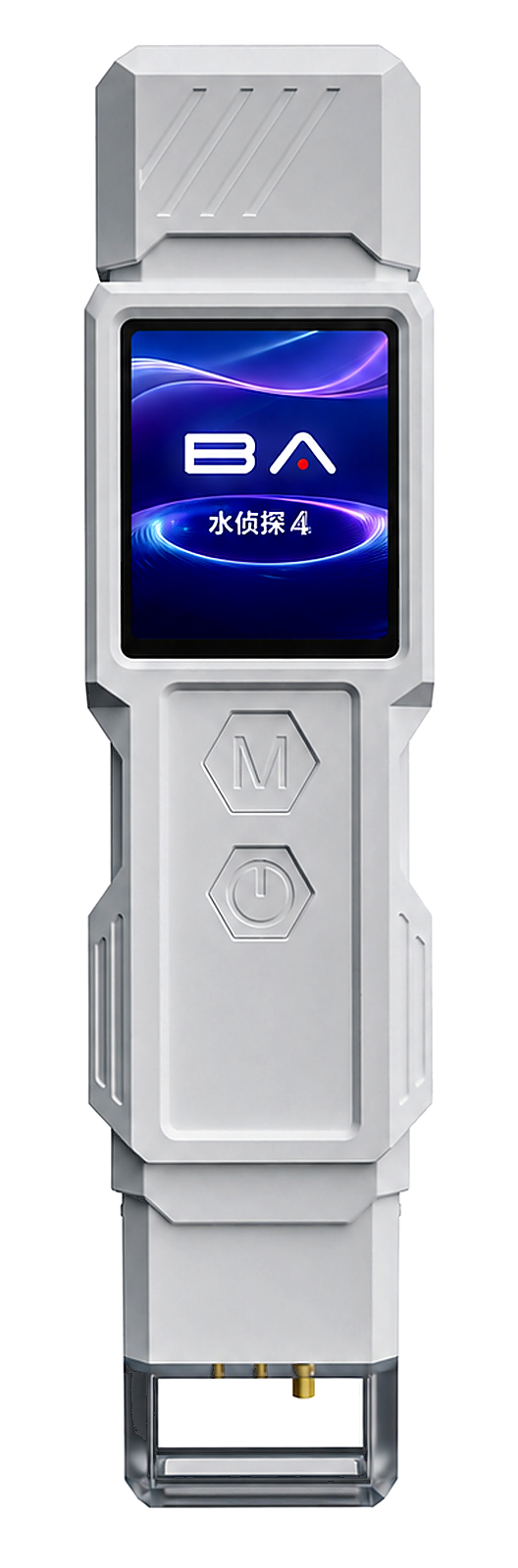
In outdoor adventure, safe drinking water is the top priority. Portable water quality test pens (such as the AtomBit Water Detective 4) can quickly provide multiple screening indicators, helping hikers, campers and field workers make a preliminary judgment of "whether to continue using this water source" far from a laboratory. But it must be emphasized: such devices are intended for screening, comparison and trend observation, and cannot replace laboratory analysis of specific contaminants. This article provides a reproducible step-by-step operating procedure to help you identify "stop drinking" signals.
I. Intended users and decision questions
Intended users: backpackers, wilderness hikers, campsite managers, long-distance cycling enthusiasts, field rescue personnel, field scientific expedition personnel, and anyone who needs to temporarily collect water where there is no municipal water supply.
Core decision questions: Facing an unknown water source, can it be drunk directly? Does it need treatment? After treatment, has the water clearly improved? Under what circumstances should you immediately stop using it and look for an alternative water source or seek professional testing?
The Water Detective 4 provides nine rapid screening indicators: TOC (total organic carbon), COD (chemical oxygen demand), UV254 (UV absorbance), turbidity, TDS (total dissolved solids), electrical conductivity (EC), salinity, hardness and temperature. These parameters can reflect the overall pollution level and basic physicochemical characteristics of the water body, but they are not directly equivalent to "bacteria exceeding limits", "heavy metals exceeding limits" or "pesticide residues". Therefore, the workflow in this article focuses on "screening—judgment—action", not "identification—compliance".
II. Water samples, equipment and scenario boundaries
Device boundaries
The Water Detective 4 is a portable multi-spectral water quality test pen, suitable for rapid on-site screening. It integrates optical and electrochemical sensors and can read multiple indicators without reagents. However, its readings are affected by environmental conditions, water sample status and probe cleanliness; results are for trend comparison and anomaly screening and cannot serve as a statutory test report.
Scenario boundaries
- Applicable scenarios: Relatively clear field water sources (streams, springs, surface layers of alpine lakes, rainwater collection, etc.), used for quickly judging whether water quality is abnormal and comparing different water sources or the effectiveness of water purifiers.
- Not applicable scenarios: Severely turbid water bodies containing large amounts of sediment or algae; near industrial discharge outlets; areas obviously affected by chemical pollution; occasions requiring quantitative detection of specific pathogens or contaminants.
Water sample boundaries
Before sampling, observe the appearance of the water sample. If the water sample has obvious color, an oil film, foam, or an unusual odor, remain highly vigilant even if the readings are normal. For water samples with a large amount of suspended solids, the supernatant can be taken after standing, but the standing process may change indicators such as turbidity, so this must be noted in the record.
III. Reproducible sampling and measurement steps
To ensure comparability of results, the same operating procedure must be followed for each measurement.
Step 1: Preparation and inspection
- Check whether the probe of the test pen is clean and free of scratches or residue. If necessary, rinse with distilled water or purified water and dry with a soft cloth.
- Confirm that the battery power is sufficient and the instrument is working properly.
- Prepare a clean sampling container (disposable plastic containers or plastic containers that have been disinfected by boiling are recommended).
Step 2: Sampling
- Choose a location where the water flow is relatively slow and that is away from the bank and obvious pollution sources.
- Immerse the container to about 10–15 centimeters below the water surface, avoiding disturbance of bottom sediment.
- Measure as soon as possible after sampling to reduce prolonged contact between the water sample and air (which may affect dissolved gases and temperature).
Step 3: Rinsing and equilibration
- Rinse the probe of the test pen with the water sample to be tested 2–3 times to remove residue from the previous measurement.
- Fully immerse the test pen probe in the water sample and gently swirl to dislodge air bubbles.
- Wait 1–2 minutes to let the sensor temperature equilibrate with the water sample.
Step 4: Measurement and recording
- Press the measurement button and record each parameter once the reading stabilizes. It is usually recommended to wait at least 30 seconds, or until the value no longer fluctuates noticeably.
- Repeat the measurement 3 times, take the average or median, and record each reading to assess repeatability.
- Also record environmental information: date and time, GPS coordinates, altitude, weather, water temperature, water source type (stream, lake, spring, etc.), surrounding land use (whether there are farmlands, pastures, mining areas), signs of animal activity, appearance of the water sample (color, turbidity, odor), etc.
Step 5: Cleaning and storage
- After measurement, rinse the probe with clean water, wipe dry and store it to avoid scaling or contamination on the probe surface.
IV. How to interpret results and common interferences
General interpretation framework for screening indicators
| Indicator | Information reflected | Abnormality indication | Precautions |
|---|---|---|---|
| Turbidity | Suspended particulate matter in water | Elevated levels may indicate increased risk from sediment, algae or microorganisms | Susceptible to sampling disturbance; compare with local baseline |
| TDS / conductivity / salinity / hardness | Total dissolved solids and ionic strength | Anomalous increases may indicate geological or anthropogenic contamination | Natural background varies greatly between regions; a local baseline must be established |
| TOC / COD / UV254 | Total organic matter and specific absorbance | Anomalous increases may come from humic substances, algae or agricultural runoff | Cannot distinguish specific organic compound types; requires on-site judgment |
| Temperature | Affects other parameters and microbial activity | Abnormally high temperatures may promote microbial proliferation | The instrument should be allowed to fully equilibrate with the water sample |
Common interferences and failure modes
- bubble attachment: If bubbles are present on the probe surface, they can cause abnormal optical and conductivity readings. The probe should be gently shaken before measurement to remove bubbles.
- temperature not equilibrated: conductivity and optical measurements are affected by temperature; if there is a large difference between water temperature and air temperature, wait long enough for equilibration.
- probe contamination: residual high-salinity or organic matter from the previous measurement can contaminate the current water sample, so the probe must be rinsed thoroughly.
- strong light interference: optical sensors may produce deviations under direct strong light; measure in shade where possible.
- turbid water sample interference: high turbidity scatters light and affects the accuracy of UV254 and the turbidity reading itself; consider allowing the sample to settle or filtering it before measurement, but this must be noted.
- container contamination: using an unclean container may introduce additional dissolved substances or particles, causing falsely high TDS and turbidity.
Decision-making principles
- A slight exceedance of a single indicator is not necessarily a danger signal; judgment should be based on all indicators together with on-site observations and historical baselines.
- If multiple indicators are abnormal at the same time, or if one indicator is far higher than historical records for safe water sources in the same area, caution should be increased.
- No measurement result can prove that water is "safe"; it can only indicate "no obvious abnormality found" or "there is an abnormality that warrants attention."
V. When to retest, stop use, or refer to a laboratory
Signals to stop drinking immediately
If any of the following conditions occurs, it is recommended to immediately stop drinking the water source and to find an alternative water source or carry out adequate treatment (such as boiling, filtration, chemical disinfection, etc.):
- The turbidity reading is significantly higher than that of nearby known safe water sources, and the water sample is visually turbid.
- The TDS or conductivity reading is far above the normal background value for the area (for example, more than 2 times higher), which may indicate dissolved contaminants.
- The TOC, COD or UV254 reading shows an abnormal spike that cannot be explained by natural humic substances or algae.
- The water sample has an odor, color or oil film, even if the instrument readings are normal.
- During measurement, abnormal deposits are found on the probe surface or the color of the water sample changes rapidly.
Situations requiring retesting
- The reading is unstable or close to a preset warning threshold.
- Runoff flows in after rainfall, and water quality may temporarily deteriorate.
- Sampling results from different locations differ greatly, so the uniformity of the water source needs to be confirmed.
- The instrument has been exposed to extreme temperature or humidity, and sensor drift is suspected.
Retest method: wait at least 30 minutes, then resample at a different location or depth. If the retest result is still abnormal, treat the water as not for drinking.
Indications for referral to a laboratory
An abnormal screening indicator only indicates that 'a problem may exist' and cannot confirm the specific contaminant. If the following situations occur, water samples should be collected according to local requirements and sent to a qualified laboratory:
- Suspected presence of specific pathogens (bacteria, viruses, parasites), heavy metals (lead, arsenic, etc.), pesticides, nitrates, etc.
- The water source is located in a known contaminated area (such as downstream of a mining area, an area with intensive farmland, or near an industrial area).
- Discomfort symptoms appear after multiple people drink the water.
- An official or legally recognized water quality report is required.
When submitting samples, record the sampling time, location, water sample characteristics, on-site measurement values, sampling method, etc., and follow the laboratory's sampling container and preservation requirements.
Relationship with drinking water treatment
Portable test pens can be used to compare water quality change trends before and after treatment. For example, measure turbidity, TDS, etc. before and after treatment with a filter or water purification tablets; if the indicators improve significantly after treatment, this can help assess the treatment effect. However, treatment effectiveness cannot be confirmed by screening indicators alone; in particular, microbial removal effectiveness requires dedicated methods for verification.
VI. Record sheet and action checklist
Field water quality screening record sheet (example)
| Field | Record Content |
|---|---|
| Date and time | 2025-05-20 14:30 |
| Location (GPS/description) | 39.1234°N, 106.5678°E, upstream of the stream |
| Water Source Type | Mountain stream |
| Weather/air temperature | Clear, 18°C |
| Water sample appearance/odor | Clear, odorless |
| Temperature (°C) | 12.5 |
| Turbidity (NTU or instrument units) | 2.1 |
| TDS (ppm) | 85 |
| Conductivity (µS/cm) | 170 |
| Salinity (ppt/‰) | 0.1 |
| Hardness (mg/L or instrument units) | 40 |
| TOC (mg/L or instrument units) | 1.2 |
| COD (mg/L or instrument units) | 3.5 |
| UV254 (abs/cm or instrument units) | 0.015 |
| Overall assessment | Indicators within local baseline; treat before drinking is recommended |
| Action | Drink after boiling |
(Note: The example values are for format demonstration only and do not represent the product's measurement range or safety thresholds.)
Action checklist
- Familiarize yourself with instrument operation and cleaning methods before departure.
- Carry spare batteries, clean sampling containers, a notebook or a phone.
- Upon reaching the water source, first observe appearance, odor and the surrounding environment.
- Strictly follow the steps for sampling, measurement and recording.
- Compare measurement results with the local safe water baseline (a personal baseline can be established through daily use).
- When a stop-drinking signal appears, immediately adopt an alternative or take treatment measures.
- If necessary, collect parallel water samples and send them to a laboratory.
FAQ (Frequently Asked Questions)
Q: Can the Water Detective 4 detect bacteria or viruses? A: No. It measures screening indicators such as total organic carbon, chemical oxygen demand, UV absorbance, turbidity and total dissolved solids. These indicators may indirectly suggest increases in organic matter or particulate matter, but they cannot identify specific microorganism species. Bacteria, viruses, parasites, etc. require laboratory culture or molecular biology methods for confirmation.
Q: If all instrument readings are normal, does that mean the water can be drunk directly? A: No. Normal screening indicators only indicate that no obvious abnormalities were found and cannot rule out all pathogenic risks. For drinking water in the field, treatment such as boiling, filtration or chemical disinfection is always recommended unless the water source has been confirmed safe by local authorities.
Q: How do I establish my own baseline? A: Over multiple camping or hiking trips, measure and record different water sources in the same area (including known safe sources) using the same method. Once you have accumulated data, you can compare against it to judge whether something is abnormal. Note that baselines change with the seasons.
Q: Do high altitude or low temperatures affect measurements? A: Yes. Temperature affects conductivity and optical signals, so let the instrument fully equilibrate with the water sample. At high altitude the boiling point is lower, so if boiling for disinfection, extend the boiling time.
Q: Above what reading is considered abnormal? A: There is no universal value, because natural background levels vary greatly between water sources. Refer to the recommended values in guidelines published by your local health authority or the World Health Organization, and compare with local safe water sources. This device does not provide compliance determinations.
References
- World Health Organization (WHO), Guidelines for Drinking-water Quality, Fourth Edition, 2017.
- United States Geological Survey (USGS), Water Science School: Water Quality, https://www.usgs.gov/special-topics/water-science-school/science/water-quality
- United States Environmental Protection Agency (EPA), Drinking Water Standards and Regulations, https://www.epa.gov/dwstandardsregulations
- United States Centers for Disease Control and Prevention (CDC), Drinking Water Treatment and Sanitation for Backcountry and Travel Use, https://www.cdc.gov/healthywater/drinking/travel/backcountry_water_treatment.html
Regional applicability note: the above guidelines provide general principles; specific thresholds and regulations vary by region. In China, refer to the Standards for Drinking Water Quality (GB 5749-2022) and the recommendations of local environmental monitoring authorities. Before outdoor activities, check the destination's water source information and local public health warnings.