
Ornamental shrimp are far more sensitive to water fluctuations—especially rapid changes in minerals and osmotic pressure—than most freshwater fish. Improper top-off causing shrimp stress, failed molting and even mass mortality is one of the most common failure causes in home shrimp tanks. This article provides a reproducible screening workflow using the AtomBit Water Detective 4 portable water-quality test pen to compare source water, tank water and reconstituted water, helping keepers establish trend baselines and reduce blind operations.
1. Applicable users and decision questions
This guide is aimed primarily at home freshwater ornamental shrimp keepers, especially varieties sensitive to total dissolved solids (TDS), general hardness (GH) and carbonate hardness (KH), such as crystal shrimp, Neocaridina and Sulawesi shrimp. Applicable scenarios include:
- Routine top-off: determine whether the top-off water source is suitable, avoiding direct addition of high-TDS tap water that causes mineral accumulation.
- Water changes and reconstitution: compare differences between old and new water, and assess whether target values after mixing pure water with mineral additives remain stable.
- Troubleshooting: when shrimp show sluggish movement, abnormal molting or reduced berried-female rates, perform screening first, then decide whether specialized laboratory testing is needed.
- Equipment verification: check whether RO/distilled water unit output still maintains low conductivity, or whether mineral additives raise TDS/EC as expected.
The core decision question is not "whether a certain reading is safe," but "whether the change in water-sample parameters before and after top-off is within an acceptable range." The nine metrics provided by Water Detective 4—TOC, COD, UV254, TDS, conductivity (EC), turbidity, hardness, salinity and temperature—are intended for comparison and trend observation and cannot replace species-specific precise water adjustment.
2. Water samples, equipment, and scenario boundaries
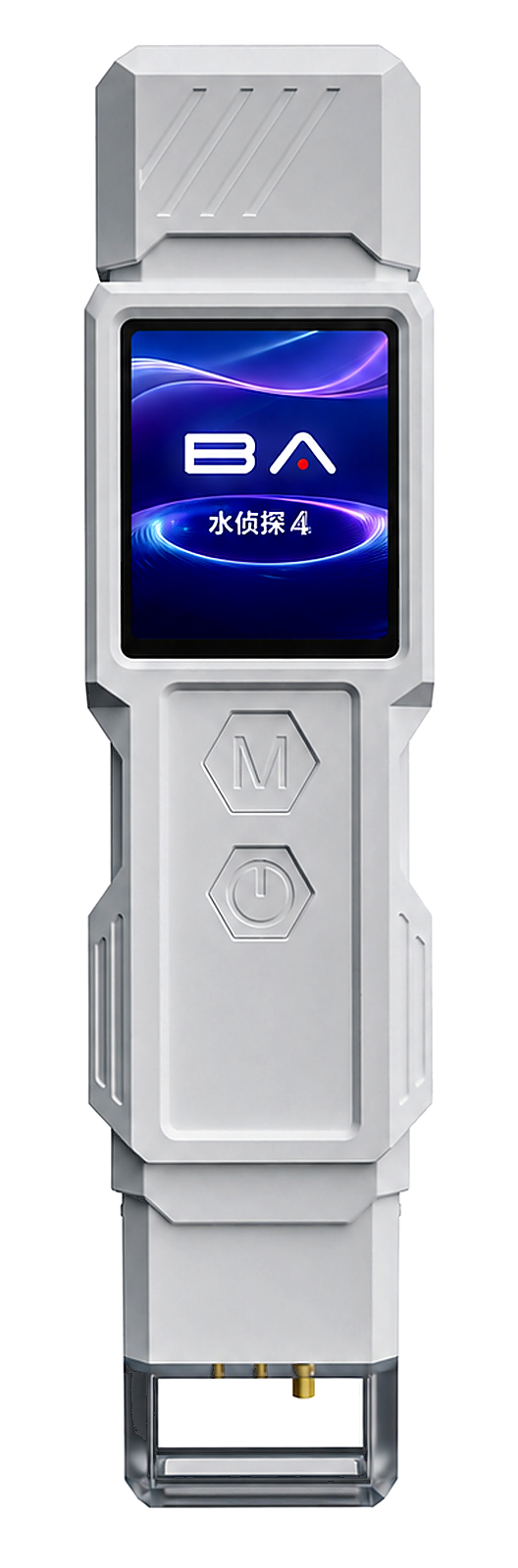
Water Detective 4 is a portable multi-parameter tester for home and on-site screening that provides combined organic and inorganic indicators within tens of seconds. However, the following boundaries must be clearly understood:
- Screening, not identification: TOC, COD and UV254 reflect the total amount of organic contamination and cannot indicate specific organic compound types; TDS, EC, salinity and hardness give total ion amounts or related estimates and cannot distinguish individual ions such as calcium, magnesium, sodium or chloride.
- Cannot measure specific contaminants: The device cannot detect ammonia nitrogen, nitrite, nitrate, dissolved oxygen, heavy metals (such as lead or arsenic), pesticide residues, bacteria, viruses or parasites. If ammonia or nitrite poisoning signs, unexplained deaths or reproductive disorders occur in the shrimp tank, dedicated test kits must be used or samples sent to a qualified laboratory for confirmation according to local methods.
- No compliance certification: No reading can serve as proof of drinking-water safety, pet health or aquaculture compliance. The device is also not suitable for industrial wastewater, municipal sewage or environmental monitoring scenarios.
- Unit and principle differences: Instruments based on different detection principles may define "hardness" and "TDS" differently. The hardness reading of Water Detective 4 is intended for relative comparison and is not equivalent to total hardness (CaCO₃ mg/L) measured by EDTA titration, nor does it distinguish GH from KH.
Summary of applicable boundaries: This device is suitable for routine trend management of home shrimp tanks, rapid source-water screening and before/after water-change comparison; it is not suitable as a substitute for quantitative laboratory analysis or regulatory compliance testing.
3. Reproducible sampling and measurement procedure
To obtain comparable data, sampling and operation must be standardized. The following workflow is recommended before and after each top-off/water change and should be kept consistent.
3.1 Preparation
- Clean the device probe: rinse with deionized or RO water, then rinse 2–3 times with the water sample to be tested.
- Prepare 3 clean containers: glass or food-grade plastic beakers; avoid containers that have previously held chemicals or detergents.
- Record environmental information: indoor temperature, tank water temperature, and the time of the most recent feeding/water change.
- If the device supports automatic temperature compensation, confirm it is enabled; if recording manually, try to bring the sample temperature close to the actual tank temperature before measuring.
3.2 Sampling points and order
Take at least three types of water samples for each measurement:
- Tank water: Slowly draw from the middle of the tank, away from the substrate and filter outlet, to avoid disturbing sediment.
- Make-up water source: the raw water about to be added to the tank, such as tap water, RO water or pre-mixed mineral water.
- Mixed water sample (optional): mix the source water with the tank water according to the planned make-up volume to simulate actual changes and observe parameter drift.
Measure each type of water sample 2–3 times and record the average. Before each measurement, rinse the probe with that water sample to avoid cross-contamination.
3.3 Measurement and recording
Fully immerse the probe in the water sample, gently swirl to release air bubbles, and after the reading stabilizes record the following fields: temperature, TDS, EC, salinity, hardness, turbidity, UV254, TOC, COD. When recording, note the water sample type, sampling time, tank water level and most recent operation.
Recommended recording format:
| Date and time | Water sample type | Temperature (°C) | TDS (ppm) | EC (µS/cm) | Hardness | Turbidity | UV254 | TOC/COD | Operation/Notes |
|---|---|---|---|---|---|---|---|---|---|
| 2025-01-01 09:00 | Tank water | 24.5 | 145 | 290 | 5.2 | 0.8 | 0.052 | 1.2/3.1 | Before water change |
| 2025-01-01 09:10 | RO water | 23.0 | 8 | 16 | 0.3 | 0.1 | 0.010 | 0.4/1.0 | Top-up water source |
| 2025-01-01 09:20 | After mixing | 24.0 | 130 | 260 | 4.8 | 0.7 | 0.047 | 1.1/2.9 | Simulated after top-up |
3.4 Branching under different conditions
- Direct tap water top-up: In some areas, tap water has high TDS (>200 ppm). Long-term direct top-up will cause minerals to accumulate in the tank. It is recommended to measure the TDS/EC of the tap water; if it is significantly higher than the water in the tank, switch to RO water or mixed water, and consult the local water quality report.
- Pure water unit output: The RO membrane condition affects the output TDS. If the RO water TDS is significantly higher than the baseline when the membrane was new (for example, rising from 5 ppm to 30 ppm), this indicates that the pre-treatment or RO membrane needs replacement; refer to the equipment manual for specifics.
- Mineral additive formulation: First measure out pure water, add mineral salts according to the product instructions, stir thoroughly, then measure TDS/EC. If the target value is not reached, record the amount added and build your own "added amount—reading" curve for future reference.
- New tank setup or rescaping: The substrate and filter media may release or adsorb ions, causing readings to drift. It is recommended to measure 2–3 times per week for the first 4 weeks until readings stabilize.
4. Result interpretation and common interferences
4.1 Interpretation of key indicators
- TDS and EC: The two are highly correlated; EC is the more fundamental conductivity parameter, and TDS is usually converted from EC using an empirical coefficient. Different ion compositions affect the conversion coefficient, so do not directly derive one from a fixed coefficient when water sample types differ greatly. Record both and observe whether trends are consistent.
- Hardness: The hardness reading of Water Detective 4 can be used for quick comparison. According to the United States Geological Survey (USGS) classification, total hardness as calcium carbonate is divided into soft water (0–60 mg/L), moderately hard water (61–120 mg/L), hard water (121–180 mg/L) and very hard water (>180 mg/L) (USGS, n.d.). However, the suitable range for shrimp tanks must refer to the breeding guide for the specific species and cannot be judged by hardness value alone.
- Turbidity: A sudden increase may result from substrate disturbance, microbial growth, feed residue or reduced filtration efficiency. Persistently high turbidity usually indicates the need for physical filtration maintenance or reduced feeding.
- UV254 / TOC / COD: Reflect the total amount of organic matter in the water. In shrimp tanks, organic matter mainly comes from feed, feces and plant debris. A slow rise is normal, but a sharp climb within a short time indicates an increased organic load; perform water changes and check the filtration system.
4.2 Common interferences and failure modes
- Bubble attachment: Bubbles on the probe surface can cause low or fluctuating readings; gently shake to dislodge them before measurement.
- Temperature effect: Conductivity changes with temperature; if the device has no automatic compensation, the water sample temperature must be close to the recorded temperature, otherwise TDS/EC will show significant deviation.
- Container contamination: Containers with dish soap residue introduce surfactants that interfere with TOC/COD and turbidity. It is recommended to rinse thoroughly with pure water.
- Inconsistent sampling: Sometimes sampling from the water surface and sometimes from near the substrate yields different readings. A fixed sampling point is important.
- Ignoring the baseline: Without in-tank baseline data, a single measurement cannot identify anomalies. Record continuously for at least 1 week to establish a fluctuation range.
- Mistaking screening values for absolute values: For example, using TDS to estimate calcium and magnesium ion concentrations and adding minerals accordingly may cause an ion ratio imbalance. TDS can only indicate the total amount and cannot reflect the calcium-to-magnesium ratio.
4.3 Reading anomaly troubleshooting table
| Indicator trend | Common possible causes | Recommended action |
|---|---|---|
| TDS/EC slowly rising | Water evaporation and concentration, or minerals introduced by direct tap water top-up | Switch to RO water for top-up; increase water change frequency |
| TDS/EC suddenly dropping | Large water change with low-TDS water, or RO membrane failure | Check the water change ratio; re-measure the water source |
| Sudden rise in turbidity | Substrate disturbance, filter clogging, microbial bloom | Check filter flow; pause feeding for 1–2 days; retest |
| Rapid increase in UV254/TOC/COD | Organic matter accumulation, such as leftover feed or decomposing dead shrimp | Immediately remove leftover feed and dead shrimp; change 20%–30% of the water |
| Hardness readings fluctuate erratically | Inconsistent sampling or contaminated probe | Use a fixed sampling point; clean the probe and retest |
5. When to retest, stop use, or refer to a laboratory
5.1 Retest frequency
- Stable shrimp tank: test the tank water at least once per week, and test the source water before each top-up.
- After setting up a new tank, rescaping, adding new shrimp, or a large water change: test once per day for 1 consecutive week until parameters stabilize.
- If abnormalities occur (shrimp death, abnormal behavior, molting failure): measure and record immediately, and prepare dedicated test reagents.
5.2 Situations in which to stop using the device
- The device displays an error, buttons do not respond, the probe is visibly damaged, or lens contamination cannot be removed.
- Readings drift continuously and do not improve after cleaning and calibration.
- After the device has been dropped, exposed to water, or exposed to extreme temperatures.
- In these cases, stop on-site screening and contact the supplier or manufacturer's after-sales service; do not continue making decisions based on unreliable readings.
5.3 Situations requiring referral to a laboratory
If any of the following occurs, do not rely on Water Detective 4 readings; instead use dedicated test reagents or send samples to a qualified laboratory:
- Mass shrimp mortality, or typical symptoms of ammonia/nitrite poisoning (such as rapid swimming, reddened gills, lying on their side).
- Suspected contamination by heavy metals, pesticide residues, or unknown chemicals.
- Precise adjustment of GH, KH, or the calcium-to-magnesium ratio is required, or strict water quality requirements apply during breeding.
- Unexplained severe fluctuations in readings persist after sampling and device factors have been ruled out.
The U.S. EPA National Primary Drinking Water Regulations set the maximum contaminant level for nitrate (as nitrogen) at 10 mg/L and for nitrite at 1 mg/L (EPA, n.d.). The safe thresholds for ammonia and nitrite in shrimp tanks are far below these drinking water limits, and must be monitored frequently using dedicated test kits (such as titration or colorimetric methods). Water Detective 4 cannot measure ammonia nitrogen, nitrite, nitrate, dissolved oxygen or pathogens, so these risks must be confirmed through other methods.
6. Record sheet and action checklist
6.1 Paper or electronic record sheet template
It is recommended to create the following fields in a phone memo or spreadsheet software, and fill them in after each measurement:
- Date and time
- Tank water temperature and room temperature
- Water sample type (in-tank, source water, after mixing)
- TDS, EC, hardness, turbidity, UV254, TOC, COD
- Top-up/water change volume and source water type
- Shrimp status (normal, minor deaths, abnormal molting, etc.)
- Operation notes (whether the filter was cleaned, minerals added, feeding, etc.)
After 3~4 weeks of continuous recording, the normal fluctuation range of each parameter can be calculated. When a reading exceeds this range by more than 20%, retest and investigate the cause.
6.2 Top-up and water change action checklist
- Measure the tank water and record the baseline.
- Measure the source water to be added.
- If using pure water plus mineral additives, measure the target TDS/EC after mixing and compare with the tank water.
- Calculate the top-up volume (usually replacing evaporation, about 1%~2% of tank volume per day, depending on the environment), and add slowly to avoid shock.
- During water changes, keep the temperature difference between old and new water within 2°C, and the TDS/EC difference between new water and tank water should preferably not exceed 10%~20%.
- Retest the tank water 1 hour after the operation is complete to confirm that parameters have not shifted dramatically.
- If TDS/EC is found to fluctuate excessively daily or to rise continuously, stop top-ups and investigate the water source and filtration system.
7. Frequently Asked Questions (FAQ)
Q: Can Water Detective 4 measure ammonia nitrogen or nitrite? A: No. The device measures TOC, COD, UV254, turbidity, TDS, conductivity, salinity, hardness and temperature, which are composite indicators. Ammonia nitrogen, nitrite, nitrate, dissolved oxygen, heavy metals, pesticides and pathogens need to be confirmed with dedicated test kits or by sending samples to a laboratory.
Q: What TDS is suitable for a shrimp tank? A: It varies greatly among shrimp species. Crystal shrimp usually require lower TDS and soft water, Neocaridina shrimp have a wider tolerance range, and Sulawesi shrimp may need higher hardness and TDS. Do not rely on the TDS value alone; combine it with GH, KH and the species' requirements. It is recommended to consult breeding guides for the specific species or ask a local aquarium professional.
Q: Can TDS be used to estimate hardness? A: It can only provide a rough trend and cannot replace a hardness test. TDS includes all dissolved ions, while hardness is mainly contributed by calcium and magnesium ions. When water composition differs, the relationship between TDS and hardness changes, so it is not recommended to use TDS to precisely calculate calcium and magnesium additions.
Q: What should I do if device readings do not match laboratory results? A: Different detection principles, units and pretreatment methods can cause numerical differences. For example, laboratory total hardness is usually determined by EDTA titration, while portable devices may estimate based on conductivity. Laboratory results should be used as the quantitative basis, and portable device readings for trends and comparisons. When the difference between the two is obvious, check sampling, device status and unit conversion.
Q: How can I keep minerals stable in a shrimp tank? A: It is recommended to use pure water (RO/distilled water) with dedicated mineral additives, measure TDS/EC after each preparation, and record the correspondence between the amount added and the reading. Avoid using high-TDS tap water for long-term top-ups, otherwise evaporative concentration will cause minerals to accumulate continuously. During water changes, keep the old and new water parameters as close as possible to reduce fluctuations.
Q: Can Water Detective 4 be used to determine whether water quality is "safe" or "suitable for shrimp survival"? A: No. The device provides screening-level trend data and cannot prove that water quality is safe or compliant with any aquaculture standard. Shrimp health is affected by many factors, including ammonia nitrogen, nitrite, dissolved oxygen, pathogens, and others, which require other methods to monitor.
References and Regional Applicability
- World Health Organization. (2017). Guidelines for drinking-water quality: Fourth edition incorporating the first addendum. Geneva: WHO. https://www.who.int/publications/i/item/9789241549950
- U.S. Geological Survey. (n.d.). Hardness of Water. USGS Water Science School. https://www.usgs.gov/special-topics/water-science-school/science/hardness-water
- United States Environmental Protection Agency. (n.d.). National Primary Drinking Water Regulations. EPA. https://www.epa.gov/ground-water-and-drinking-water/national-primary-drinking-water-regulations
Regional applicability note: The WHO guidelines and USGS hardness classification cited in this article are international or U.S. general references and do not replace local drinking water standards or aquarium aquaculture regulations. Tap water quality, shrimp species requirements, and laboratory standards may differ by region; for specific practices, follow the recommendations of local authorities or professional veterinarians/aquaculture extension agencies. All conclusions involving health, compliance, or species-specific thresholds must be confirmed by a qualified local laboratory.