
Introduction
In the two mobile living scenarios of marine vessels and RVs, water storage systems differ markedly in design, operating environment and maintenance logic. The same portable water quality test pen requires different sampling and interpretation strategies in different scenarios. This article uses the AtomBit Water Detective 4 as a screening tool and provides a reproducible step-by-step operating guide for water quality self-testing needs in RV road trips and liveaboard marine life. The article does not replace laboratory testing and does not constitute proof of drinking water safety compliance; all readings are for screening, comparison and trend observation only.
1. Applicable users and decision questions
This article applies to the following groups:
- RV owners, boat owners and crew who want to quickly determine whether stored water is still suitable for continued use;
- Product managers and hardware engineers at brands of water purifiers, water dispensers, smart cups, pet water fountains and similar devices, who need to understand how mobile water storage scenarios affect sensor integration and algorithms;
- OEM/ODM customers evaluating the feasibility of embedding portable water quality testing functionality into RV or marine water systems.
The core decision questions include:
- Has the water in the storage tank shown abnormal changes that require treatment or replacement?
- Are the existing water purification devices (such as activated carbon filters and ultrafiltration membranes) still effective?
- Does the boat's or RV's water system need cleaning and disinfection?
- When switching between different water sources (marina fill-ups, campsite tap water, river water), how can water quality differences be compared quickly?
The nine indicators provided by Water Detective 4 — TOC, COD, UV254, TDS, EC, turbidity, hardness, salinity and temperature — are all screening parameters. They can reflect physicochemical characteristics such as total dissolved solids, organic matter absorbance and particulate scattering in the water, but cannot measure specific contaminants such as lead, arsenic, nitrate, pesticides, bacteria, viruses, parasites, dissolved oxygen, ammonia nitrogen or nitrite. Where these risks are involved, confirmation must be carried out by a qualified laboratory using standard methods.
2. Water samples, equipment, and scenario boundaries
2.1 Characteristics of marine water storage systems
Marine freshwater tanks are typically large in capacity (from several hundred liters to several tons), and are mostly made of stainless steel, fiberglass-reinforced plastic, or food-grade polyethylene. Continuous swaying during navigation causes sediment at the bottom of the tank to become periodically resuspended; the high humidity and heavy salt spray of the marine environment may cause cross-contamination through vents or deck wash water; some vessels are equipped with seawater desalination units, but mixing desalinated water with shore-based water changes the TDS and conductivity baseline. Marine water systems have complex piping with multiple dead zones, and water age may reach weeks or even months.
2.2 Features of RV water storage systems
RV fresh water tanks have a smaller capacity (typically 50–200 liters), are mostly made of polyethylene or ABS plastic, and are difficult to inspect internally. Vehicle vibration during travel makes it hard for suspended solids to settle, but stratification may occur after parking. RVs usually use municipal tap water, campground water supply, or wild water sources, and the TDS, hardness, and residual chlorine of different sources vary considerably. If the tank is not drained for long periods or is not disinfected regularly, biofilm may form on the inner walls, causing turbidity and organic matter indicators to rise slowly.
2.3 Positioning and limitations of the Water Detective 4
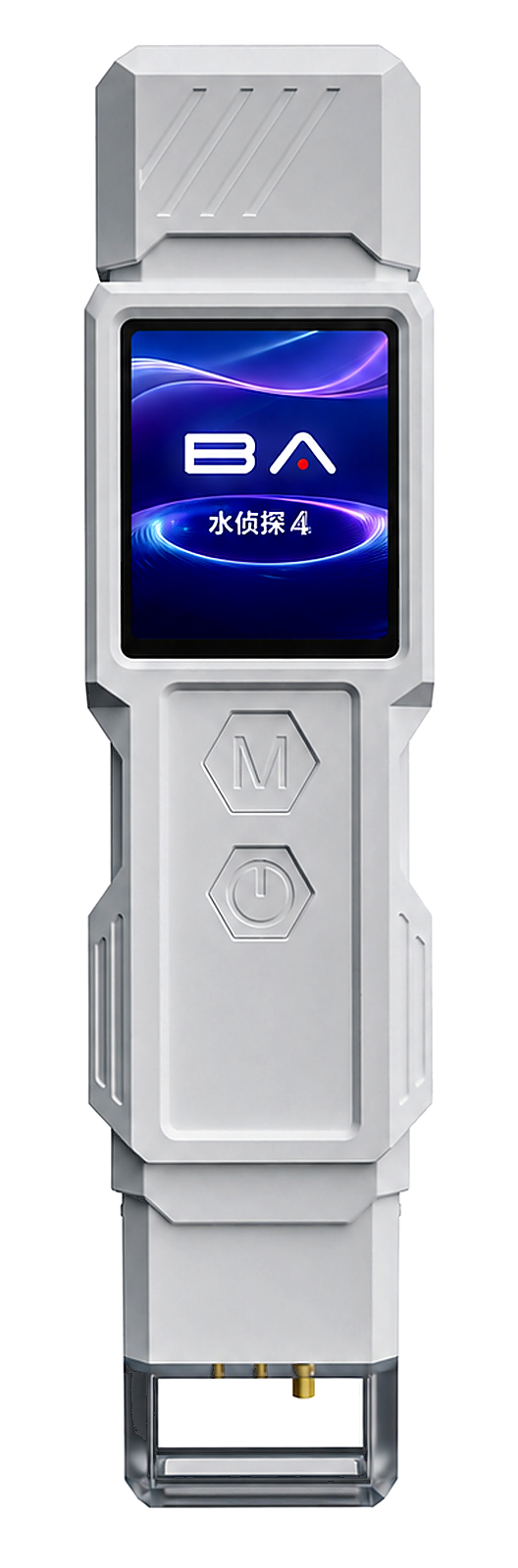
AtomBit Water Detective 4 is a personal/household portable multi-parameter water quality test pen that integrates nine indicators: TOC, COD, UV254, TDS, EC, turbidity, hardness, salinity, and temperature. It performs automatic compensation via a built-in temperature sensor; conductivity/TDS measurement is based on the electrode principle, and the optical channel measures UV254 absorbance and turbidity scattering. The device is suitable for rapid on-site screening, comparison of water purifier performance, and daily trend observation, without the need for large laboratory equipment.
However, it must be clearly stated:
- This device is not a laboratory analytical instrument, and its readings are not equivalent to a compliance testing report.
- It cannot identify the specific type of pollutant or its health risk.
- Measurement results are affected by sample temperature, bubbles, particulate matter, electrode contamination, and calibration status.
- For determining drinking water safety, local drinking water hygiene standards must be taken into account, and microbiological and chemical indicator testing must be completed by a qualified laboratory.
3. Reproducible sampling and measurement procedure
The following steps are designed separately for marine and RV scenarios; the core principles are: sample representativeness, avoidance of human interference, and maintenance of consistent conditions .
3.1 Preparation before sampling
- Rinse the sampling container (a clean polyethylene or glass bottle is recommended) three times with the water sample to be tested, to avoid container residue affecting the reading.
- Check whether the Water Detective 4 probe is clean and that there is no crystallization or staining on the electrode surface; if there is staining, gently wipe it with a soft cloth moistened with a small amount of clean water, then rinse with the water to be tested.
- Confirm that the device has sufficient battery power and that the temperature compensation function is working properly (the displayed temperature is close to the ambient temperature).
- Prepare a record form (see section 6) and record background information such as sampling time, location, weather, and water source type.
3.2 Step-by-step procedure for vessel water samples
- Select the sampling point: Preferentially take the sample from the kitchen faucet or a drinking water outlet. If the vessel has multiple freshwater tanks, label each separately.
- Flush the line: Open the faucet and let the water run for at least 30 seconds to clear stagnant water from the line, until the water temperature changes noticeably or the flow becomes steady.
- Let stand to degas: Pour the water sample into the sampling container and let it stand for about 1 minutes so that air bubbles introduced by shaking or the line can dissipate naturally. Bubbles significantly interfere with optical turbidity and UV254 readings.
- Measurement order: First fully immerse the Water Detective 4 probe in the water sample, avoiding contact with the container walls and bottom. Wait for the reading to stabilize (usually a few seconds to a dozen or so seconds), then record the nine parameters.
- Watch for seawater interference: If the vessel has a seawater flushing or ballast system, make sure before sampling that the freshwater system has not been contaminated by seawater backflow. If seawater intrusion is suspected, first measure salinity or EC; if it is abnormally elevated, stop using the water and inspect the system.
- Repeated measurements: Measure the same water sample repeatedly 2 to 3 times, take the median or average, and record the degree of dispersion. If the difference among the three readings exceeds a reasonable range (for example, TDS fluctuation greater than 10%), check the probe or resample.
3.3 Step-by-step procedure for RV water samples
- Choose the sampling timing: Avoid sampling immediately after adding water; it is recommended to wait at least 1 hours so the new water fully mixes with the residual water in the tank.
- Rinse the faucet: Open the faucet and let it run for 10–15 seconds to drain the water standing in the lines. If using it for the first time after a long period of disuse, it is recommended to first drain 5%–10% of the tank's total capacity to carry away sediment at the bottom.
- Temperature stabilization: The ambient temperature in an RV varies greatly; if you have just come in from a cold or hot environment, the water sample temperature may deviate from the compensation range. Let the water sample stand until it is close to room temperature (20–25℃) before measuring, or ensure the instrument's temperature compensation has stabilized.
- Measurement operation: Immerse the probe in the water sample, avoiding direct sunlight or strong wind to prevent evaporation and temperature fluctuations. Record the nine parameters.
- Comparison of multiple water sources: If the RV is filled with water at different locations, it is recommended to record a baseline for each water source separately. For example: campground tap water, wild stream water, municipal fire hydrant water, etc.
- Watch out for plastic-odor interference: New water tanks or new lines may release trace amounts of organic matter, causing temporarily high UV254 or TOC readings. In this case, thoroughly rinse the tank and ventilate for several days, then establish a baseline once the readings are stable.
3.4 Interference control during measurement
- Air bubbles: Letting the sample stand after collection can greatly reduce air bubbles; if the turbidity or UV254 readings are abnormally high and unstable, try slowly pouring the water sample along the cup wall into another container to remove air bubbles.
- Temperature: All electrochemical and optical measurements are affected by temperature. Water Detective 4 has built-in temperature compensation, but the error may increase at extreme temperatures (<5℃ or >40℃). Measure within the range of 15–30℃ whenever possible.
- Cross-contamination: Do not measure water samples from different sources consecutively in the same container without cleaning. After each measurement, rinse the probe with distilled or deionized water, then rinse it with the water to be tested.
- Electrode contamination: Water samples with high hardness or high TDS may form scale on the electrode surface, causing drift in subsequent measurements. Periodically soak the probe in dilute acetic acid (1%–2%) for 10 minutes, then rinse with clean water to restore response.
4. How to interpret results and common interferences
4.1 Meaning and interpretation of the nine screening indicators
| Indicator | Screening Significance | Ship scenario note | RV scenario note |
|---|---|---|---|
| TDS (Total Dissolved Solids) | Indicates the total amount of dissolved inorganic salts and a small amount of organic matter in water, in mg/L | Seawater ingress or evaporative concentration causes TDS to rise rapidly | TDS varies greatly between different water sources and can indicate a change of water source |
| EC (Electrical Conductivity) | Positively correlated with TDS; reflects the ion concentration in water, in µS/cm | EC rises sharply during seawater intrusion | EC rises after freezing or evaporation |
| Hardness | Mainly reflects calcium and magnesium ion content | Without long-term water changes, hardness may increase due to evaporation | In hard-water areas, hardness rises noticeably after water is added |
| Salinity | Indicates the salt content in the water, which is especially important for vessels | Can be used to detect seawater ingress | The salinity of fresh water in a typical RV is extremely low |
| Turbidity | The intensity of light scattered by suspended particles in water, in NTU | Agitation causes sediment to become suspended, raising turbidity in the short term | Turbidity increases when biofilm detaches from the tank walls |
| UV254 | 254nm UV absorbance, reflecting organic matter containing conjugated double bonds (such as humic substances) | Can indicate organic matter accumulation, but does not distinguish between types | New plastic piping may release organic matter |
| TOC (total organic carbon) | The total amount of organic carbon in the water, partly correlated with UV254 | Long-term failure to clean the water tank may cause TOC to rise slowly | Field water sources may naturally have higher organic matter |
| COD (chemical oxygen demand) | Reflects the amount of organic matter that can be oxidized by chemical oxidants | Used together with TOC for trend observation | An abnormally high value suggests possible contamination |
| Temperature | Measurement baseline and compensation basis | When the temperature inside the ship's cabin is high, pay attention to instrument compensation | Winter antifreeze protection is needed for RVs |
Important note: None of the above indicators can directly determine whether water is safe to drink. For example, high TDS may only indicate abundant minerals and is not necessarily harmful; an increase in UV254 may come from natural humic substances or from synthetic organic matter. It must be combined with the water source history, sensory judgment, and laboratory testing.
4.2 Common interference factors and their elimination
- Interference of turbidity with optical indicators: Particulate matter in water scatters and absorbs ultraviolet light, causing falsely high UV254 and TOC readings. If turbidity is high (>5 NTU, example only), it is recommended to first filter the water sample (using a 0.45 µm filter membrane) before measuring optical parameters, but filtration will change the sample properties and must be recorded.
- Chlorine disinfectant interference: Residual chlorine in municipal water may interfere with COD measurement, causing readings to be too high. If the RV uses municipal water, let it stand for 24 hours to allow the residual chlorine to volatilize before measuring, or note it as a "chlorination day" for clarification.
- Temperature compensation error: The instrument's automatic compensation is based on the default temperature coefficient. If the water sample temperature differs too much from the calibration temperature, TDS/EC may drift. Measure at 20~25°C whenever possible.
- Electrode memory effect: When continuously measuring high-concentration and low-concentration water samples, ions may remain on the electrode. It is recommended to rinse with deionized water after each measurement.
- Optical window contamination: Fingerprints, grease or scale adhering to the optical window will increase turbidity and UV254 readings. Wipe regularly with a soft cloth moistened with alcohol.
4.3 Data trends are more valuable than single readings
A single measurement only provides an instantaneous snapshot. Users are advised to establish an baseline profile: when the water system is confirmed clean and the water source reliable, measure continuously for 3~5 days and record the average value and fluctuation range of each parameter. Compare subsequent measurements with this baseline, focusing on:
- TDS/EC/salinity suddenly rising more than 30% above baseline (example, needs to be combined with the local water source baseline): may indicate seawater intrusion, evaporative concentration or external contamination.
- Turbidity or UV254 continuously rising: indicates particle accumulation or biofilm formation.
- Significant change in hardness: water source switching or mineral deposition in the tank.
5. When to retest, stop use, or refer to a laboratory
5.1 Retest trigger conditions
In the following situations, repeat measurements at different time points (e.g., at intervals of 1 hours, 24 hours) to confirm whether the change persists:
- Any screening indicator changes by more than 30% from baseline (example threshold, users can adjust according to their own water source fluctuations);
- After the boat has experienced rough sea conditions, or the RV has passed through dusty roads;
- After replacing the water source or installing a new water purification filter;
- After the water system has been disinfected or cleaned.
5.2 Signs suggesting that use should be stopped
Stop using this stored water immediately and investigate the cause in the following situations:
- The water sample has an obvious off-odor (such as a sulfide, musty or oily smell);
- Abnormal color (yellowish, greenish, turbid and opaque);
- The turbidity reading continues to rise abnormally and does not decrease after standing;
- EC or salinity suddenly rises sharply, and seawater intrusion is suspected;
- Occupants or pets show gastrointestinal discomfort symptoms that are related in time to drinking the water.
After stopping use, the storage tank should be drained, thoroughly cleaned and disinfected, and then refilled. Until the cause is found, do not continue to drink the water or use it for food processing.
5.3 Situations requiring laboratory confirmation
In the following situations, water samples must be collected and sent to a qualified laboratory for testing using standard methods (such as ICP-MS, ion chromatography, enzyme substrate method, etc.):
- Requires official compliance certificates (e.g., ship classification survey, RV rental sanitation permit);
- Suspected specific contaminants (lead, arsenic, nitrate, pesticides, pathogenic bacteria, etc.);
- Screening indicators remain abnormal over the long term, but the cause is unknown;
- Immunocompromised people, infants or the elderly use this water source long-term;
- Pets drinking the water develop health problems, and a veterinarian's diagnosis needs to be correlated with water quality.
For laboratory test selection, consult the local public health department or water utility; parameters of concern differ by region.
6. Record sheet and action checklist
6.1 Recommended record fields
| Field | Description |
|---|---|
| Date/Time | Accurate to the hour, facilitating trend analysis |
| Sampling point | Vessel cabin name / RV faucet location |
| Water Source Type | Municipal water / campground water / river water / desalinated seawater, etc. |
| Water age | Time elapsed since the last water fill or water change |
| Temperature | Water sample temperature, used for compensation verification |
| Nine readings | Record in order to avoid omissions |
| Operator | Name or code, to ensure traceability of responsibility |
| Note | Weather, sea conditions, disinfection records, filter replacement, etc. |
6.2 Simple record sheet template (example)
| Date | Sampling point | Water source | Temperature (℃) | TOC | COD | UV254 | TDS | EC | Turbidity | Hardness | Salinity | Remarks | |------|--------|------|----------|-----|-----|-------|-----|----|------|------|------|------| | 2025-04-01 09:00 | Kitchen faucet | Dock tap water | 22 | 1.2 | 1.5 | 0.03 | 180 | 360 | 0.8 | 120 | 0.1 | Baseline | | 2025-04-03 09:00 | Kitchen faucet | Same as above | 21 | 1.3 | 1.6 | 0.03 | 185 | 365 | 0.9 | 122 | 0.1 | Stable | | 2025-04-05 14:00 | Kitchen faucet | Same as above | 25 | 1.8 | 2.2 | 0.05 | 210 | 420 | 2.5 | 130 | 0.2 | Turbidity increased, retest |
(Note: The numbers in the table are for format illustration only and are not actual measured values or recommended limits.)
6.3 Action checklist
- [ ] Establish an initial baseline: measure continuously for 3 days after cleaning the water system.
- [ ] Measure once within 24 hours after each water addition, and record any water source change.
- [ ] Conduct a full screening of the storage tank once a month and check probe cleanliness.
- [ ] If any indicator changes by more than 30% from baseline, retest the same day and observe continuously for 3 days.
- [ ] If odor, color or turbidity appears, stop use immediately and drain the tank.
- [ ] Collect water samples at least once a year and send them to a laboratory for full-panel testing (consult a local institution for the test items).
- [ ] Keep records for at least 12 months to facilitate tracing the cause of anomalies.
7. Frequently Asked Questions (FAQ)
Q1: Can the readings from Water Detective 4 prove that the water is safe to drink? A: No. The device is intended for screening and trend observation and cannot replace full-panel laboratory microbiological and chemical testing. Whether the water is safe must be determined by a qualified laboratory in accordance with local drinking-water hygiene standards.
Q2: What is the biggest difference when measuring on boats and RVs? A: On boats, particular attention should be paid to sudden increases in salinity and EC to detect seawater leakage; in RVs, more attention should be paid to slow rises in turbidity and UV254, which indicate biofilm or plastic leaching. Transient turbidity increases caused by boat motion usually recover after settling, whereas in an RV, turbidity that remains high after settling warrants caution.
Q3: Do test pens need regular calibration? A: It is recommended to regularly calibrate the conductivity/TDS and turbidity channels with standard solutions according to the instructions provided by AtomBit; the optical UV254 channel is usually calibrated at the factory, but if readings drift over time, contact the manufacturer or send the device for repair. Use qualified standard materials for self-calibration.
Q4: Why do consecutive measurements of the same water sample fluctuate? A: Possible causes include: the water sample temperature has not stabilized, tiny bubbles are present, the probe surface is contaminated, residue remains on the container walls, or the instrument has not yet reached thermal equilibrium. Please follow the steps in section 3 and take the average of multiple measurements.
Q5: Does a high TDS reading mean the water is unhealthy? A: Not necessarily. TDS reflects the total amount of dissolved solids, including beneficial minerals such as calcium and magnesium. WHO does not use TDS as a health-limit indicator, only as an sensory indicator (e.g., taste). However, a sudden large change in TDS indicates an abnormality in the water source or system and requires further investigation.
8. References and regional applicability notes
The definitions of water-quality indicators and the screening logic covered in this article refer to the following publicly available materials:
- World Health Organization. Guidelines for Drinking-water Quality (Fourth Edition). 2017. https://www.who.int/publications/i/item/9789241549950
These guidelines provide a health-based risk assessment framework, but do not prescribe mandatory limits for sensory parameters such as TDS and hardness.
- United States Geological Survey (USGS). Water Science School: Water Properties. https://www.usgs.gov/special-topics/water-science-school/science/water-properties
Used to explain basic concepts and measurement principles such as TDS, electrical conductivity and temperature.
- United States Environmental Protection Agency (EPA). Secondary Drinking Water Standards: Guidance for Nuisance Chemicals. https://www.epa.gov/sdwa/secondary-drinking-water-standards-guidance-nuisance-chemicals
Provides reference ranges for non-health-related indicators such as TDS, pH and turbidity, but these are not mandatory standards.
- United States Centers for Disease Control and Prevention (CDC). Creating and Storing an Emergency Water Supply. https://www.cdc.gov/healthywater/emergency/creating-storing-emergency-water-supply.html
Used to explain general principles for storage tank management and disinfection.
Regional applicability note: Requirements for drinking water quality differ between countries and regions. The screening recommendations and threshold examples in this article (such as 30% change) are for operational reference only and do not constitute statutory limits. Users should determine action thresholds and laboratory test items suitable for their own situation based on local drinking water hygiene standards, source water characteristics and requirements of the competent authorities. When vessel classification surveys or recreational vehicle rental hygiene permits are involved, please consult the local classification society or health supervision authority.
---
Disclaimer: This article is technical operational guidance only and does not constitute medical, legal or compliance advice. Measurement results from the Water Detective 4 are for screening and trend observation only and cannot serve as proof of drinking water safety, pet health or aquaculture compliance.