
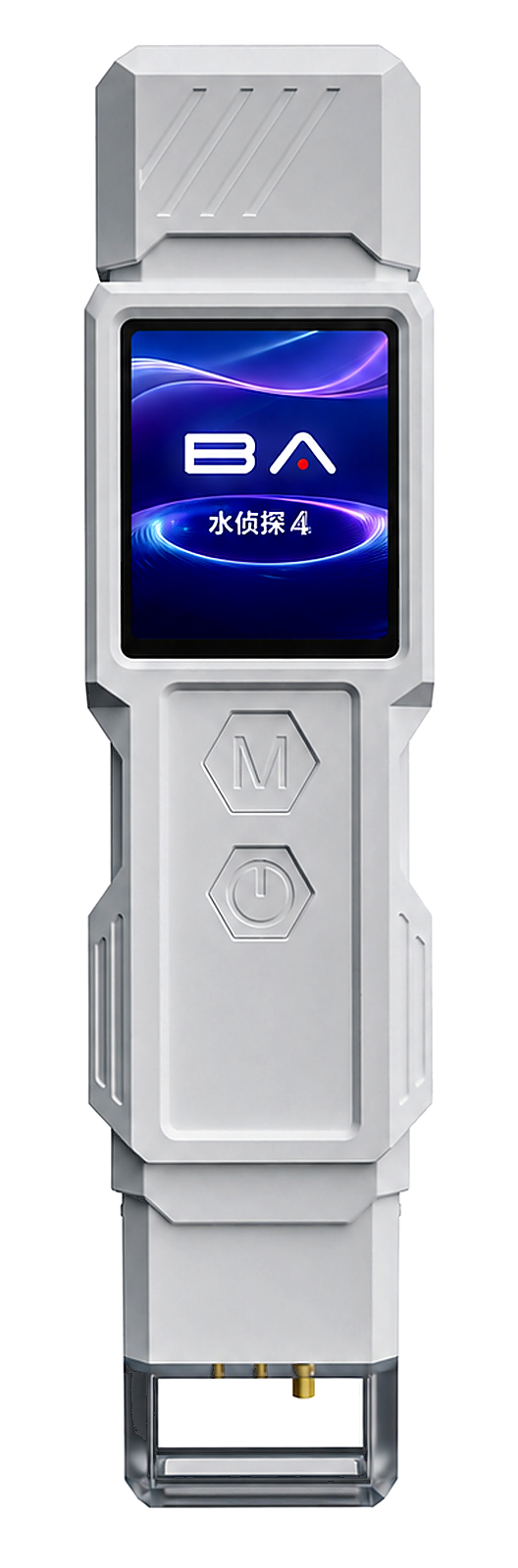
In commercial fish farming and aquaculture, equipment cleaning is routine, but post-cleaning recovery confirmation often relies on experience or waiting time. Using a portable multi-parameter water quality test pen (such as the AtomBit Water Detective 4) allows rapid on-site screening of rinse water and system water to help determine whether equipment has returned to the operational baseline. This article provides a reproducible verification procedure and clearly distinguishes between screening indicators and the identification of specific contaminants.
Intended users and decision questions
The intended audience includes personnel responsible for equipment maintenance, water quality management or production management in recirculating aquaculture systems (RAS), pond aquaculture, hatchery facilities, and aquarium and holding workshops. Typical decision questions are: After equipment cleaning and rinsing, has system water quality returned to the normal operating level from before cleaning? Can on-site multi-parameter screening reduce unnecessary waiting or avoid stocking larvae too early? Which readings or changes must be sent to a laboratory?
The nine parameters measured by the Water Detective 4 — TOC, COD, UV254, TDS, electrical conductivity (EC), turbidity, hardness, salinity and temperature — serve in post-cleaning recovery verification for trend comparison and rapid screening. They must not be used to prove "no cleaning agent residue," "drinking water safety" or "aquaculture compliance."
Water samples, equipment and scenario boundaries
This method applies to rinse water after equipment cleaning, system return water, stored water samples, and source water used as a control. Applicable equipment includes post-cleaning water samples from pipes, biofilters, pumps, aeration equipment, culture tanks and tool surfaces. Not applicable: concentrated cleaning agent stock solutions, strong acid or alkali solutions, high-temperature water samples, samples containing large amounts of oil, mud or high suspended solids, and brine or concentrated water exceeding the instrument's nominal range. Before use, confirm the range, temperature limits and probe material compatibility of the Water Detective 4 with the sample type.
Disinfectants or cleaning agents commonly used in cleaning (such as sodium hypochlorite, hydrogen peroxide, citric acid and surfactants) may interfere with optical and electrochemical readings. The instrument's readings cannot identify the type or residual amount of these chemicals; they can only show changes in overall water quality indicators. If a new chemical is used for cleaning, establish a rinse curve for that chemical before first use, i.e., measure the reading trend across different rinse volume multiples.
Reproducible sampling and measurement steps
1. Preparation
- Ensure the Water Detective 4 is charged or has sufficient battery, the probe is clean, and the optical window is free of stains.
- Perform blank, reference or calibration operations as specified in the product instructions (if applicable); do not assume the device requires no calibration.
- Use clean containers free of detergent residue for sampling (such as polypropylene or glass); avoid household cups or containers that may leave organic residue.
- Rinse the sampling container and probe with the water to be tested at least 3 times.
2. Determine the baseline
Before cleaning the equipment, first measure all nine parameters of the normally operating system water and record them as the baseline. If no pre-cleaning baseline exists, source water/influent can be used as a reference, but the explanation must be cautious because differences inherently exist between source water and system water. The baseline is key to judging the degree of recovery; it is recommended to save historical baseline data and establish the normal operating range of the equipment.
3. Sampling and time points
After cleaning is complete, drain or flush the equipment. Staged sampling is recommended:
- Early drainage stage (0–5 minutes after flushing begins): observe the initial contamination load.
- After flushing reaches 1 times the system volume: determine whether most of the residue has been flushed out.
- After flushing reaches 3 times the system volume: determine whether it is approaching the baseline.
- After the system is recirculated or left standing for 24 hours: confirm the final state after equilibration.
Take duplicate samples at each sampling point (at least 2 portions) to reduce random error.
4. Measurement procedure
Fully immerse the probe in the water sample, gently swirl to remove air bubbles, and avoid direct sunlight, strong electromagnetic interference, and operating in ventilated areas. Wait for the reading to stabilize (usually from tens of seconds to several minutes) before recording. If the water sample temperature differs greatly from room temperature before measurement, let it stand until close to room temperature; however, the temperature reading must record the actual water temperature. If the water sample has obvious particles or turbidity, do not filter it before measuring turbidity or optical parameters; record the original state and note it. If "dissolved" COD/TOC needs to be measured, it may be measured separately after filtration and clearly labeled; the two must not be mixed.
5. Common failure modes and how to avoid them
- Sample bottle cross-contamination: Rinse bottles with the same batch of water; do not clean with detergent, and avoid contact with cleaning agents.
- 探头未清洁:上次测量高浓度样品后未清洁即测低浓度样品,会导致假高或假低。每次测量后用蒸馏水/去离子水冲洗探头。
- 气泡附着:导致光学读数异常。轻敲或搅动排除气泡。
- 温度未稳定:电导率/TDS 读数随温度变化,需等待温度读数稳定。
- 高浊度干扰:UV254 和 COD 光学测量可能受颗粒散射影响,导致读数虚高;若浊度很高,可静置后取上清液测量光学参数,但这样会低估总 COD/TOC,需注明。
- 强氧化性清洗剂残留:可能影响光学测量,产生漂白或异常高值,需用实验室方法确认。
- 盐度超出量程:可能损坏探头或导致读数溢出,海水养殖需特别注意仪器标称量程。
How to interpret results and common interferences
将清洗后各时间点读数与基线比较,关注恢复到基线的程度。具体参数分组解释:
| 参数组 | 指示意义 | 恢复判断方向 |
|---|---|---|
| TDS, EC, Salinity | 可溶性离子总量,间接反映清洗剂无机成分、溶解盐残留 | 回到基线附近说明大部分离子被冲洗;高于基线提示仍有残留或冲洗水本身高盐;低于基线可能冲洗水过于低离子,需继续循环平衡 |
| TOC, COD, UV254 | Composite organic indicator, reflecting biofilm fragments, organic cleaning agents and aquaculture metabolites | Above baseline indicates organic residue has not been removed and rinsing should continue; approaching or below baseline may mean most organic contamination has been removed, but UV254 is insensitive to non-aromatic organics, and COD is a composite indicator |
| Turbidity | Particulate matter, biofilm detachment, sediment | High turbidity may affect gills and clog equipment; wait for clarification or filter |
| Hardness | Calcium and magnesium ions; acid cleaning may reduce hardness, alkaline cleaning may form precipitates | A clear change suggests cleaning agent residue or scale dissolution; interpret together with the cleaning agent type |
| Temperature | The compensation basis for all parameters | Record the actual water temperature; abnormally high temperature may come from equipment not yet cooled or from hot cleaning |
Key limitation: a single "normal" reading cannot be used to infer aquaculture safety or compliance. Water Detective 4 cannot measure lead, arsenic, nitrate, pesticides, bacteria, viruses, parasites, dissolved oxygen, ammonia nitrogen, nitrite, nitrate and other specific contaminants. If these risks are suspected after cleaning, water samples must be collected and sent to a qualified laboratory, using dedicated methods recognized by the local competent authority.
Common interferencesIn addition to the failure modes above, other interferences include: water temperature fluctuations caused by air temperature changes, direct sunlight affecting optical measurements, electromagnetic interference, and water sample color (chromaticity) affecting UV254 and similar. When interpreting data, focus on trends rather than absolute values. For example, if TOC at three consecutive time points falls from 8 mg/L to 3 mg/L and then to 2 mg/L, rinsing is effective; if readings fluctuate around 5 mg/L, check whether there is continuous leaching.
When to retest, stop using, or send to a laboratory
The following branches can support decision-making:
- Readings continue to fall and approach baseline: continue rinsing and re-test as required until the deviation between two consecutive measurements is within an acceptable range (this range should be determined from on-site historical data or dealer/laboratory recommendations; this article does not provide universal thresholds).
- reading does not return to baseline and has no obvious downward trend : increase the flushing volume and retest after 30 minutes to 1 hours. If there is still no improvement, the equipment should be stopped and restored before use.
- reading is abnormally high, fluctuates wildly, or shows extreme values : stop using immediately, check whether the probe is damaged and the sampling is contaminated; if operational issues are ruled out, a water sample should be collected and sent to the laboratory.
- involves animal health, product safety, or discharge compliance : regardless of the screening readings, laboratory testing confirmation is required. Portable devices are only for internal decision-making reference and have no legal effect.
- new chemical used in cleaning or first-time use : establish a flushing curve to confirm the flushing volume needed to reach baseline; before establishing the curve, it is not appropriate to judge recovery based on a single reading.
When sending to the laboratory, provide: sampling time, location, cleaning agent information, flushing volume multiple, on-site reading records, and suspected contamination information. Laboratory test items should be selected based on the type of cleaning agent and the farmed species, such as disinfectant residues, heavy metals, specific pesticides, pathogenic bacteria, etc. Do not use readings from the Water Detective 4 as the sole basis for deciding to send samples for testing.
Record sheets and action checklist
Record Sheet Template
| Date and Time | Sampling Point/Stage | Water Temperature | TDS | EC | Salinity | Hardness | Turbidity | TOC | COD | UV254 | Baseline Reference | Deviation Judgment | Operator | Remarks | |----------|-------------|------|-----|-----|------|------|------|-----|-----|-------|----------|----------|--------|------| | 2025-01-01 10:00 | Flush 1 times the volume | 22.5 | 320 | 640 | 0.3 | 150 | 1.2 | 1.8 | 2.0 | 0.05 | Baseline | Normal | Zhang San | Continue |
Action checklist
- Confirm the cleaning process is complete and the equipment is drained or flushed as required.
- Check that the instrument and probe are clean, and perform calibration/reference according to the manual.
- Collect a sample and record the sampling point, time, and water temperature.
- Measure all parameters and compare with the baseline.
- If readings return to the baseline range, enter the observation period; if not, continue flushing and retest.
- If the abnormality persists or a compliance certificate is required, send a sample to a laboratory.
- Keep records for at least one farming cycle to facilitate traceability and establish a baseline.
FAQ (Frequently Asked Questions)
Q1: Can Water Detective 4 measure ammonia nitrogen, nitrite or dissolved oxygen? No. The nine parameters it measures are TOC, COD, UV254, TDS, EC, turbidity, hardness, salinity and temperature; it does not include ammonia nitrogen, nitrite, nitrate or dissolved oxygen. These parameters require dedicated test kits, sensors or laboratory methods.
Q2: Once the reading returns to baseline, can fry be introduced directly? No. A reading returning to baseline only indicates that the screening parameters are close to those before cleaning; it cannot rule out disinfectant residues, heavy metals, specific organic compounds or pathogens. Before introducing fry, the necessary laboratory tests and biological assays should be performed.
Q3: Can this method be used after cleaning in marine aquaculture? First confirm the salinity range of Water Detective 4. High-salinity samples may exceed the range, resulting in invalid readings or damage to the probe. If uncertain, consult AtomBit or your local dealer, and dilute the sample or select a suitable probe.
Q4: Can cleaning agent residue be judged from TOC/COD readings? They can only serve as a trend reference; they cannot be used for qualitative or quantitative determination. Different cleaning agents contribute differently to TOC/COD and may interfere with optical measurement. The specific residue amount must be confirmed by laboratory methods.
Q5: How often should retesting be done? In the initial rinsing stage, retest every 30 minutes to 1 hours; after reaching several times the system volume, retest after 24 hours of circulation. If readings are abnormal, sample more frequently.
Reference sources (recommended for verification)
- World Health Organization (WHO), Guidelines for drinking-water quality, fourth edition, 2017. For understanding water quality indicator parameters and screening limitations.
- Food and Agriculture Organization of the United Nations (FAO), technical documents related to aquaculture water quality management. For interpreting aquaculture water quality indicators.
- United States Environmental Protection Agency (EPA), drinking water standards and health advisories. As a reference for drinking water indicators; not directly applicable to cleaning aquaculture equipment.
- United States Geological Survey (USGS), water quality monitoring methods. For precautions on field sampling and measurement.
Regional applicability statement : The screening process described in this article applies to general commercial fish farming and aquaculture scenarios, but specific regulatory limits, laboratory methods, sensitive parameters for farmed species and cleaning agent management requirements vary by region. Before implementation, consult local aquaculture authorities, veterinarians or water quality laboratories to obtain the compliance requirements applicable to your location.