
I. Intended users and decision questions
In RV road trips, hygiene management of fresh water tanks, intake hoses and quick-connect/adapter fittings is often underestimated. Many users focus only on tank capacity and convenience of refilling, while overlooking sensory changes and microbial risks that may occur after water stagnates and warms in the tank and lines. This article addresses several high-frequency decision questions:
- Before refilling from the municipal network, a campsite tap or a wild water source, how can you judge whether the water source is suitable for adding to the fresh water tank?
- After water is added to the fresh water tank and left for several hours or overnight while the vehicle interior temperature rises, can the water still be used for drinking, washing or rinsing vegetables?
- When a hose is used for the first time, taken out again after long-term storage, or replaced with a different brand, does it need to be flushed? To what extent should it be flushed?
- Can small parts such as connectors, quick-connect fittings and filter housings introduce contamination? How should they be maintained in daily use?
- After treating the tank with a disinfectant, how can you judge whether flushing is sufficient?
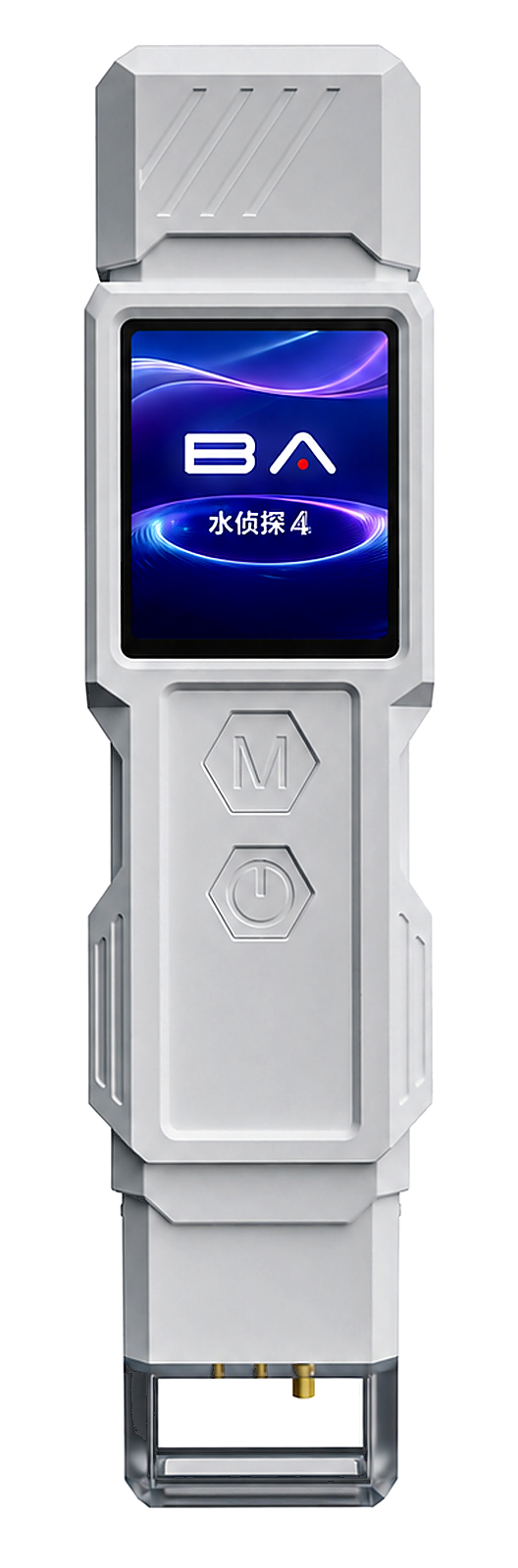
These questions cannot be judged by "looking at color and smelling odor" alone. The Water Detective 4 (Water Detective 4) portable tester can provide nine indicators in home/outdoor scenarios: TOC, COD, UV254, turbidity, TDS, conductivity, salinity, hardness and temperature, for rapid screening and trend comparison. Its role is to compare against a water source baseline, observe changes before and after flushing, and detect abnormal increases, not to replace laboratory testing.
II. Water sample/device/scenario boundaries: screening is not compliance testing
Before starting measurement, the capability boundaries of the Water Detective 4 need to be clarified. It integrates multispectral optics and electrochemical sensing and measures composite indicators:
- TOC (total organic carbon), COD (chemical oxygen demand), UV254: reflect the total amount of organic matter in water or absorption at a specific wavelength.
- Turbidity: reflects suspended particulate matter.
- TDS, conductivity, salinity, hardness: reflect dissolved salts and minerals.
- Temperature: used for display and as a compensation reference.
These indicators are suitable for screening and for comparing changes in the same water source over time or between sampling points, and can also be used to compare water purifier effectiveness and to judge flushing effectiveness. However, readings must not be interpreted as "detection of lead, arsenic, nitrate, pesticides, bacteria, viruses, parasites, dissolved oxygen, ammonia nitrogen, nitrite or nitrate" or other specific contaminants. This is because optical/conductivity methods do not perform species identification or culture, cannot distinguish pathogenic bacteria from harmless organic matter, and cannot quantify specific chemicals.
In the RV scenario, the sample and equipment boundaries involved include:
- Water samples: municipal tap water, campground centralized water supply, bottled water, mountain spring water/well water, etc. (the latter carry higher risk).
- Equipment: fresh water tank (commonly food-grade materials such as polyethylene/ABS), inlet hose (PVC, polyurethane, rubber or "drinking-water-grade" hose), connectors/quick-connect fittings/filters, water pump, faucet.
- Scenarios: refilling before departure, water use during the trip, morning water use after standing overnight, after high-temperature sun exposure, after disinfection and flushing, before storage.
Special note: if the water source is untreated well water, lake water or stream water, or if obvious biofilm, algae or sludge appears in the tank, even if the screening values of Water Detective 4 show no significant abnormality, this cannot prove microbiological safety. In such cases, samples must be sent to a laboratory for testing of total coliforms, E. coli, etc., in accordance with local requirements.
III. Reproducible sampling and measurement steps
Only by sampling and measuring according to a fixed procedure can comparable data be obtained. The following steps assume the instrument has been calibrated or has completed self-check according to the instructions.
3.1 Preparation before sampling
- Rinse a clean sampling bottle (food-grade PET/HDPE bottle, or the transparent bottle supplied with the instrument) with the water sample to be tested at least 3 times to remove residue in the bottle.
- Wipe the instrument probe dry with a lint-free cloth or paper towel to ensure the optical window is clean, free of fingerprints and free of water droplets.
- If the tank water has just been filled or has been shaken vigorously, let it stand for 5 minutes before sampling to avoid interference from air bubbles.
- Record the ambient temperature and the water temperature. If using water from the tank, the water temperature may be higher than the ambient temperature; wait until the instrument's temperature reading is stable.
3.2 Sampling point selection and flushing rules
- Tank outlet: open the clean-water tank faucet or pump, first flush for about 5 seconds to rinse out water retained in the piping, then connect the sampling bottle.
- Hose outlet: on first use or after long storage, connect the hose to the water source, open the valve, first drain all water accumulated inside the hose (you can observe the water color and air bubbles), then flush continuously for 30 seconds (or estimate based on hose length and flow rate to ensure all retained water is fully expelled), then sample.
- Outlet at the connector: after installing or replacing the connector, flush for 5–10 seconds from the faucet or outlet nearest the connector, then sample.
3.3 Measurement Procedure
Immerse the probe vertically into the water sample so that the optical window is completely covered by water, shake gently to release attached air bubbles, and record after the reading stabilizes. For the same water sample, if conditions permit, take two readings and average them. For measurement order, it is recommended to measure the source water first, then the tank outlet, then the hose outlet, and finally the water after passing through the connector, keeping the same time and temperature conditions.
3.4 Common failure modes and how to avoid them
- Sampling bottle not rinsed sufficiently: residual detergent or old water causes high TDS/TOC. Avoidance: strictly rinse 3 times or more.
- Air bubbles or a water film on the optical window: causes abnormal turbidity/UV254/TOC readings. Avoidance: tap the probe lightly to release air bubbles, wipe dry with a lint-free cloth, then measure.
- Water sample left standing too long: particles settle and turbidity decreases; microbial or chemical changes may alter organic-matter readings. Avoidance: complete the measurement within 5 minutes after sampling.
- Background differences among hoses of different brands: some PVC/rubber hoses release a small amount of organic matter, causing the TOC/UV254 baseline to rise, but this is not equivalent to biological contamination. Avoidance: rinse the hose thoroughly before measurement, and record the background value after flushing an empty hose.
- Temperature changes suddenly: conductivity varies with temperature. If the instrument compensates automatically, still wait for the temperature to stabilize; if recording manually, do not directly compare readings taken at different temperatures.
IV. How to interpret results and common interferences
When interpreting results, do not look at a single absolute value in isolation; instead, establish a differential comparison of "water source baseline → tank outlet → hose outlet."
- TDS/EC/hardness/salinity: If the tank outlet is significantly higher than the water source, possible causes include evaporative concentration of water, residual disinfectant (e.g., sodium hypochlorite increases conductivity), minerals leaching from pipes, or salt accumulation. However, elevated TDS does not directly correspond to a health risk. WHO classifies TDS as an acceptability parameter, not a health-based guideline.
- Turbidity: If the tank outlet has higher turbidity than the water source, this suggests suspended particles, biofilm detachment or sediment ingress. Even if this does not directly equate to pathogens, high turbidity reduces the efficiency of subsequent disinfection.
- TOC/COD/UV254: An increase suggests organic matter accumulation, with sources including biofilm, leaching from plastic/rubber hoses, aging of tank coatings, disinfection by-products, or the water source itself. However, these three parameters cannot distinguish the source, let alone identify bacteria, viruses or specific organic pollutants.
Common interferences include:
- Scratches or contamination on the optical window: cause baseline drift in UV254/turbidity. Inspect the window before each use.
- Air bubbles in water: scatter interference with turbidity and also affect optical readings.
- Differences in sampling time: water temperature differs between morning and afternoon, affecting conductivity; the longer the tank is left standing, the more pronounced biofilm detachment may be.
- Differences in hose materials: food-grade silicone, PE tubing and PVC hoses have different levels of organic leaching; the same hose model should be used when comparing.
- Residual disinfectant: chlorine-based disinfectants can interfere with certain optical methods or conductivity; ensure thorough rinsing.
Therefore, it is recommended to establish a household/travel water-use record: after each refill, after prolonged standing, and after disinfection and rinsing, measure and record at the same sampling point using the same method, focusing on abnormal jumps in values or a sustained upward trend.
V. When to retest, stop use, or refer to a laboratory
The following decision path is based on screening logic and is not intended as a legal or health compliance determination.
5.1 can continue to be used
- If the TDS/EC, turbidity, UV254 and TOC values of the source water, tank outlet water and hose outlet water are close, and there are no visible particles and no off-odor, it can continue to be used.
- After disinfection and flushing, the turbidity, TOC and UV254 of the tank outlet water fall back to near the source-water background level, and the residual taste disappears.
5.2 requires retesting
- If it has been left standing for more than 24 hours and the ambient temperature is above 25°C, retesting before use is recommended, and the results should be compared with the records made at the time of refilling.
- After replacing hoses, connectors or filters, it is recommended to flush for more than 5 minutes before retesting.
- After disinfection treatment, flush 2–3 times the tank volume, then retest.
5.3 Stop using it as drinking water/domestic water
- The water shows obvious off-odor, abnormal color, visible particles or an oil film.
- Screening indicators are abnormal: for example, turbidity rises significantly (doubles or more compared with the baseline), TOC/UV254 keeps rising without explanation, or TDS/EC shows an abnormal salinity increase.
- Biofilm, slimy deposits or algae are visible on the inner walls of the tank or hose.
After stopping use, drain the tank, disinfect it with a food-grade disinfectant according to the instructions, flush thoroughly, and retest; if the problem persists, replace the hose or connector, or send a sample for testing.
5.4 转实验室检测
出现以下情况,请将水样送至有资质的实验室:
- 水源来自井水、溪水、湖水等未处理地表水/地下水,且准备饮用或洗漱。
- 使用者出现胃肠道不适、皮肤刺激等可能与用水相关的症状。
- 水箱内发现明显生物膜、藻类、淤泥或昆虫。
- 怀疑特定污染物,如铅、砷、硝酸盐、农药、氨氮、亚硝酸盐等。
- 需要对房车水质做合规证明,如租赁、参加集中营地活动等。
Laboratories typically test for total coliforms, E. coli, pH, turbidity, residual chlorine, lead, arsenic, nitrate and others. Consult the laboratory about sampling containers and preservation methods; ordinary water bottles must not be used.
VI. Record sheet/action checklist
The following table can serve as a simple record template for water quality screening during the trip. The unit of instrument readings is subject to the display; keep units consistent when comparing.
| Date/time | 地点/水源类型 | Sampling point | TDS/EC | Turbidity | UV254 | TOC | Temperature (°C) | 感官观察 | Action |
|---|---|---|---|---|---|---|---|---|---|
| Example | 城市自来水 | Water source | Record | Record | Record | Record | Record | No abnormality | Add to water tank |
(The table is for record-keeping only; specific thresholds must be based on local regulations or baseline comparisons.)
Action checklist:
- Before departure: Check whether the water tank, hoses, and connectors are clean; measure the water source and record the baseline.
- When refilling: Choose a reliable water supply point and avoid using non-potable-water hoses; after refilling, measure the water outlet of the tank.
- During the trip: Before the first use of water each day, run the water for 5 seconds and observe; if there is an abnormal sensory impression or the screening value rises, stop drinking and treat the water.
- After standing/high temperature: If water has been in the vehicle for more than 24 hours, retest before deciding whether to drink it.
- After disinfection: Flush until the disinfectant odor disappears, retest turbidity/TOC/UV254, and resume use only when the values are close to the water source background.
- Before storage: Drain the water tank and hoses, air-dry them, or store them with disinfectant according to the instructions.
7. Correction of common misconceptions
Myth 1: Water with low TDS is always safe. TDS only reflects the total amount of dissolved solids; low-TDS water may still contain pathogenic microorganisms or trace hazardous chemicals. The TDS/EC of the Water Detective 4 is used to screen for changes in minerals and salinity and cannot serve as proof of safety.
Myth 2: If the hose smells of plastic, just flush it a bit longer and the water is drinkable. A plastic smell indicates leaching of organic substances; although TOC/UV254 may rise, some odorous substances may not be sensitively captured by this instrument. It is recommended to replace the hose with one that meets drinking water standards and to flush before screening again; sensory abnormalities should not be the sole basis for judgment.
Myth 3: After disinfection with bleach, the water is clean as long as no chlorine smell can be detected. The disappearance of the chlorine smell does not mean that microorganisms and disinfection by-products have been completely removed. Sufficient contact time must be achieved according to the disinfectant instructions, then the tank must be flushed with water at least 2–3 times the tank volume, and confirmation obtained by comparing turbidity/TOC/UV254 with the water source baseline.
Myth 4: If the water looks clear, there is no need to test it. Dissolved organic matter (such as certain disinfection by-products and plasticizers) does not necessarily affect clarity but will change UV254 or TOC. Being visibly clear to the naked eye is only part of screening.
Myth 5: The clean water tank does not need regular cleaning, since water is always being added anyway. Long-term standing and high temperatures can lead to biofilm formation. Even if the water looks normal, organic matter will accumulate on the tank walls and the inner walls of the pipes. It is recommended to regularly drain, clean and disinfect, and to track with screening indicators.
VIII. FAQ
Q: Can the Water Detective 4 detect E. coli, Legionella or viruses? A: No. It measures comprehensive indicators such as TOC, COD, UV254, turbidity, TDS, conductivity, salinity, hardness and temperature, and cannot identify or quantify bacteria, viruses or parasites. If microbial contamination is suspected, please send samples to a laboratory for culture or molecular testing.
Q: What reading counts as exceeding the standard? A: Standards differ by water source, regional regulations and intended use, and the Water Detective 4, as a screening tool, has no uniform "safety threshold". A more reasonable approach is to establish a water source baseline and observe the difference from the baseline. If a compliance judgment is required, please consult your local health authority or a laboratory.
Q: How long is it appropriate to flush the hose? A: It depends on the hose length, material and the amount of water retained. For first use or after long storage, it is recommended to drain all retained water from the hose, let it run continuously for at least 30 seconds to 1 minutes, and then take a water sample for measurement. If TOC/UV254 is still significantly higher than that of the water source, extend the flushing or replace the hose.
Q: After the water tank is disinfected, can the Water Detective 4 be used to judge whether it has been flushed clean? A: It can be used for trend judgment. First measure the water source background, then measure the tank outlet water after disinfection and flushing, and compare whether turbidity, TOC and UV254 are close to the water source background. However, disinfectant residues and specific by-products must be tested according to local requirements.
Q: If screening indicators rise suddenly but the water looks and smells unchanged, is it drinkable? A: Do not risk drinking it. A sudden rise in indicators suggests a change in water quality, which may be caused by biofilm detachment, pipe contamination or a water source problem. It is recommended to stop using the water, investigate the cause, flush or disinfect and then retest; if it cannot be explained, refer it to a laboratory.
References
- World Health Organization (WHO). Guidelines for drinking-water quality: fourth edition incorporating the first and second addenda. Geneva: World Health Organization; 2022. https://www.who.int/publications/i/item/9789240045064
Used to explain that TDS/turbidity and similar parameters are acceptability parameters or public health background.
- US Environmental Protection Agency (US EPA). Secondary Drinking Water Standards: Guidance for Nuisance Chemicals. https://www.epa.gov/sdwa/secondary-drinking-water-standards-guidance-nuisance-chemicals
Provides regulatory context for interpreting secondary contaminant limits such as TDS and pH; these may differ by region.
- US Centers for Disease Control and Prevention (CDC). Water Disinfection for Travelers. See CDC Yellow Book 2024. https://wwwnc.cdc.gov/travel/yellowbook/2024/preparing/water-disinfection
For general principles of drinking water disinfection for travelers; follow local requirements for specific practices.
Regional applicability: The references above and the screening methods in this article do not replace the laws and regulations of the user's location. Different countries/regions have different requirements for microbiological and chemical indicators of drinking water, disinfectant use, and flushing. In practical application, please defer to the local health authority or laboratory.