
1. Applicable users and decision questions
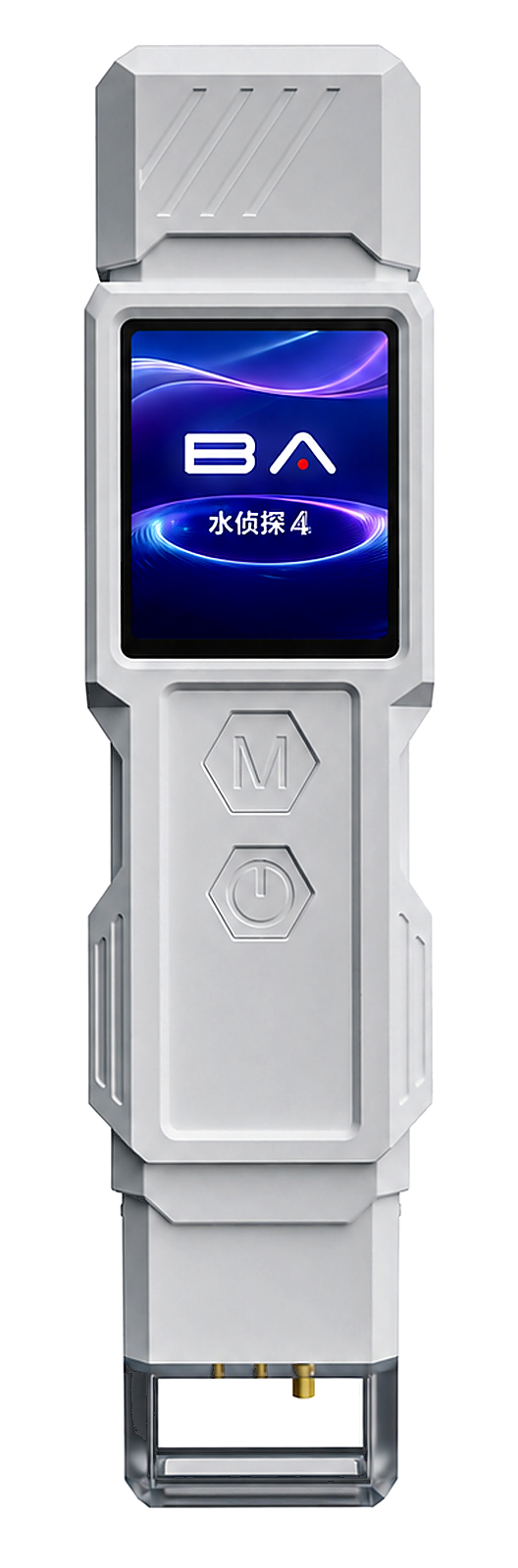
After winter or long-term storage, residual water may remain in the fresh water tank, water lines, water heater and end faucets of an RV or camper van. In a warm, dark, nutrient-rich environment, standing water can foster biofilm, promote leaching from plumbing materials, or admit dust and insects through poor seals. Before re-commissioning, users need to answer one core decision question: can this fresh water system be returned to service simply by draining old water and flushing, or must it be thoroughly disinfected, the filter replaced, or even a water sample sent to a laboratory? The Water Detective 4 portable multi-parameter test pen is suitable for rapid screening and trend comparison at this stage, but it measures nine general indicators — TOC, COD, UV254, TDS, conductivity, turbidity, hardness, salinity and temperature — and is not a tool for identifying lead, arsenic, nitrate, pesticides or microorganisms. Therefore, this article characterizes the test results as "screening evidence," not as compliance or safety proof.
This framework is intended for RV road-trip users, vehicle maintenance personnel and campsite managers. They have a portable multi-parameter test pen such as the AtomBit Water Detective 4 and want to determine, in a short time before filling, en route, or after long-term storage, whether the fresh water system needs further treatment. The framework does not replace any statutory water quality testing, nor can it prove that a water sample meets drinking water sanitation standards.
2. Water samples, equipment, and scenario boundaries
2.1 Water sample boundaries
The test object should come from inside the fresh water system, rather than directly testing the tap water or water source about to be added. Samples are recommended at the following locations:
- Near the bottom of the fresh water tank drain valve: best reflects sediment and retained water inside the tank;
- Kitchen/sink cold water faucet: representative outflow after passing through the water supply hose;
- Bathroom/wash area cold water faucet: reflects the condition of another branch line;
- If there is a water heater, sample separately at the cold water inlet and the hot water outlet to judge the influence inside the heater.
At each location, first run the water for at least 1–2 minutes (or estimate according to line length, so that fresh water pushes out the water retained in the pipes), then collect about 200–500 mL in a clean, dry container as the test sample. Do not touch the water sample directly with your mouth, do not use bottles with detergent residue, and do not touch the inner wall of the container with your hands.
2.2 Device boundaries
Water Detective 4 is a portable multi-spectral water-quality testing product that can obtain nine readings in a single process: TOC, COD, UV254, TDS, electrical conductivity (EC), turbidity, hardness, salinity and temperature. It is designed for rapid on-site screening, comparison of water-purification effects and daily trend observation, without the need for large laboratory equipment. The key boundaries are:
- TOC and COD UV254 are comprehensive organic-matter parameters, not a qualitative determination of specific pesticides, pharmaceuticals, disinfection by-products or bacteria.
- TDS, electrical conductivity, salinity and hardness reflect dissolved ions and some inorganic-salt characteristics, and cannot distinguish beneficial minerals from harmful heavy metals.
- Turbidity reflects the relative amount of particulate matter, and cannot identify whether the particles are sediment, rust or parasite eggs.
- Temperature is used for compensation and status assessment, and does not directly represent contamination.
- Therefore, for risks such as lead, arsenic, nitrate, pesticides, bacteria, viruses, parasites, dissolved oxygen, ammonia nitrogen, nitrite/nitrate, etc., this device cannot issue a conclusion, and confirmation must be carried out using appropriate laboratory or dedicated methods in accordance with local requirements.
2.3 scenario limitations
This framework addresses screening for recommissioning an RV fresh-water system after long-term storage, and is not for industrial wastewater, municipal sewage, river monitoring or large-scale water-treatment projects. RV fresh-water systems have a small water volume, large temperature variations and diverse piping materials, and their contamination patterns differ from those of centralized water-supply systems. If the vehicle has ever been used to transport non-potable water, has experienced obvious sewage backflow, or if there are immunocompromised people among the travelers, vigilance should be raised directly and submission for testing should be given priority.
3. Reproducible sampling and measurement steps
3.1 Preparation and cleaning
- Read the Water Detective 4 manual and confirm that the battery is sufficiently charged and that the optical window and electrode surface have no visible stains.
- Rinse the probe with distilled water or deionized water, then rinse it two to three times with the water sample to be tested to reduce cross-contamination.
- Prepare a clean, dry, odor-free PET or glass sampling bottle; avoid bottles that have previously contained beverages, detergents or fuel.
- Record the ambient temperature, weather, date of the most recent system maintenance and how long the vehicle has been parked.
3.2 Rinsing and flushing
First drain any old water that may be present in the fresh water tank, then add a small amount of new water (about 1/3 or more of the tank volume) and agitate to rinse, then drain it from the drain valve and all faucets. Repeat once, then fill with the normal amount of water and let it stand for 30 minutes before starting formal sampling. If the vehicle has been disinfected (for example with sodium hypochlorite), it must be thoroughly rinsed until there is no pungent odor before testing, because residual oxidant may interfere with optical parameters and cause misjudgment.
3.3 Sampling order
Using a fixed order improves comparability:
- Sensory check: observe color, turbidity and floating matter, smell the odor and record;
- Measure water temperature with the temperature function and record;
- Measure turbidity;
- Measure UV254, TOC and COD optical indicators;
- Measure TDS, conductivity, salinity and hardness;
- Take 2–3 replicate samples at each sampling point and repeat the operation.
Rinse the optical window and electrodes with deionized water after every sampling and gently wipe them dry, so that residue from the previous sample does not affect the next one. During measurement, avoid direct sunlight on the optical window and do not touch the detection area with your fingers.
3.4 Baseline establishment and re-measurement
If there are measurement records from before the vehicle was parked, use the historical readings directly as the personal baseline. If there are none, the reading after the first rinse can serve as a temporary baseline for this stage; re-measure afterwards every day or before every second refill to observe the trend of change. The purpose of a baseline is comparison, not an absolute safety line.
4. Interpretation of results and common interferences
4.1 Screening significance of each parameter in the RV fresh water system
| Parameter | Trend of change | Possible association | Device limitations |
|---|---|---|---|
| TDS/EC | Marked increase | Leaching from pipe materials, disinfectant residue, mineral concentration, ingress of external salt water | Cannot distinguish specific ions or heavy metals |
| Hardness | Increase | Changes in the water source itself, scale detachment | No direct relationship with microbial contamination |
| Salinity | Increase | Seawater, de-icing salt or cleaning agents mixed in | Cannot identify harmful anions |
| Turbidity | Increase | Pipe debris, suspended biofilm, silt, rust | Cannot identify particle source or pathogens |
| UV254 | Increase | Increase in organics containing unsaturated bonds, such as biofilm decomposition and some natural organic matter | Non-specific chemical measurement |
| TOC | Increase | Rising total organic contamination level | Cannot indicate whether live bacteria or harmless organics |
| COD | Increase | Increase in total oxidizable substances | Used with TOC for trends; cannot replace laboratory oxygen demand standards |
| Temperature | Abnormal fluctuations | Affects the compensation of other parameters and microbial activity | Is not itself a contamination indicator |
4.2 Common interferences and failure modes
- Bubbles adhering to the optical window or electrode can cause sudden jumps in readings such as turbidity and TOC;
- Water stains, fingerprints or disinfectant residue on the optical window can cause optical parameters to read high or low;
- If the sample sits too long, large particles settle, causing the turbidity reading to be lower than actual;
- Detergent residue or sugar from beverages left in the sampling container can interfere with TOC and conductivity;
- Insufficient equilibration between the water sample temperature and the instrument temperature affects conductivity and optical readings;
- Converting TDS directly from EC using a fixed factor without accounting for differences in water sample composition;
- Testing only one point, ignoring the bottom of the tank and the piping zones;
- Inserting a test pen directly into the water tank to test may damage the probe or introduce contamination;
- Ignoring repeatability differences between duplicate samples, leading to misjudgment.
4.3 解释与决策原则
不要根据单个参数绝对值下结论,优先看多个指标是否同步变化。例如,仅浊度轻微升高但 TOC 和 UV254 稳定,感官正常,可能只是冲洗不彻底;如果浊度、TOC、UV254 和 TDS 同时明显偏离基线,且冲洗后不能回落,则提示系统内部有不可忽略的污染,应停止饮用水用途并送检。所有“正常”都是相对于该车历史情况,不可作为公共供水合规证明。
5. When to retest, stop use, or refer to a laboratory
5.1 立即停止使用并转送实验室的触发条件
- 水样感官明显异常:发黑、发绿、有油膜、刺鼻化学品味、霉味、大量絮状物;
- 任一光学参数(TOC、COD、UV254)或浊度相对基线出现无法解释的、重复确认的显著升高;
- TDS/EC/盐度异常波动,且冲洗和二次测量仍持续;
- 任何家庭成员出现可能与用水相关的腹泻、呕吐或皮肤刺激,即使筛查读数正常也应停用并就医/送检;
- 计划给婴幼儿、孕妇、老人或免疫抑制人群使用,且没有可靠的实验室检测报告。
5.2 需要复测和加强冲洗的情况
- 首次冲洗后仍有轻微偏离基线;
- 各个出水点读数不一致,可能某段管路滞留严重,需对该点单独冲洗;
- 消毒处理后立即检测,需等待冲洗完全并复测;
- After replacing filter cartridges, hoses, or water tank seals;
- Re-commissioning after extreme winter/summer temperature changes.
5.3 Situations that can continue to be observed and recorded
- Sensory inspection is normal;
- Parallel sample repeatability is good;
- Both optical and electrochemical parameters are within the normal fluctuation range of the vehicle's historical baseline;
- Trend is stable or decreasing after continuous flushing and draining;
- There are no known high-risk contamination sources in the vehicle's water supply.
6. Record sheet and action checklist
It is recommended to fill in the table below for each test to facilitate trend comparison and problem tracing.
| Date | Days parked | Sampling point | Sensory inspection | Temperature (°C) | TDS (ppm) | EC (µS/cm) | Turbidity (NTU) | UV254 | TOC | COD | Hardness | Salinity | Remarks | |------|----------|--------|----------|-----------|----------|-----------|-----------|-------|-----|-----|------|------|------| | | | | | | | | | | | | | | |
Action checklist:
- Drain the old water and flush the water tank and all piping;
- Check the filters, seals, and piping connections;
- If using a disinfectant, strictly follow the product instructions for the mixing ratio and soaking time;
- Rinse thoroughly until no residue remains, then sample and test as described above;
- Compare with the historical baseline to decide whether to retest or send a sample to a laboratory;
- Record all maintenance and testing information to build a vehicle water-use file.
7. FAQ
Q: Can the Water Detective 4 detect bacteria or viruses?
A: No. It measures aggregate parameters such as total organic carbon, turbidity and conductivity, and does not provide microbial identification. When a judgment about bacteria, viruses or parasites is needed, locally accredited laboratory culture, molecular biology or immunological methods should be used.
Q: If all readings are within the normal range, does that mean the water is safe to drink directly?
A: No. Readings from a household or portable meter can only serve for screening, comparison and trend observation. A formal drinking-water judgment requires the laboratory test items specified by local health standards. This device cannot replace regulatory compliance testing.
Q: After long-term parking, if the water has a slight odor but the instrument reads normal, what should be done?
A: Immediately stop using the water for drinking, flush and disinfect, then retest. The odor may come from biofilm breakdown or plastic additives, which the instrument may not fully reflect; if necessary, send a sample to a laboratory for volatile organic compounds and microbiological indicators.
Q: How do I establish my own baseline?
A: Before each normal use of the vehicle or when the water source is stable, take one measurement at a fixed sampling point using fixed operating steps, and record the reading. Retest later under the same conditions and compare the deviation. The longer and more complete the baseline, the greater its screening value.
Q: Do I need to calibrate before measuring?
A: Perform routine cleaning and necessary calibration as required by the manual, especially the optical window and electrodes. If readings drift or parallel samples differ greatly, first clean the probe and check the battery, then recalibrate.
Q: Why do I need to measure multiple points?
A: The fresh water tank and different lines have different retention conditions. The faucet's P-trap, water heater, and hose connectors may become localized risk points. Measuring multiple points helps prevent missing an abnormality in a particular branch.
8 Reference sources and regional applicability
This framework uses a screening logic and does not introduce specific legal limits. For drinking water safety limits and acceptance of microbiological/specific chemical parameters, consult your local water supply regulator or public health authority. General references include:
- World Health Organization. Guidelines for drinking-water quality: fourth edition incorporating the first and second addenda. Geneva: WHO; 2022. https://www.who.int/publications/i/item/9789241549950
- United States Environmental Protection Agency. National Primary Drinking Water Regulations. https://www.epa.gov/ground-water-and-drinking-water/national-primary-drinking-water-regulations (access date subject to actual query)
- Centers for Disease Control and Prevention. Making Water Safe in an Emergency. https://www.cdc.gov/healthywater/emergency/making-water-safe.html
Regional applicability note: The water quality of an RV fresh water system is affected by the source water quality, local climate, storage duration, pipe material, and maintenance habits. Different countries/regions have different regulatory requirements for private water supply and travel vehicle water use. The action recommendations listed in this article are a general screening process and cannot replace mandatory testing or certification under local regulations. Specific limits, disinfectant concentrations, and lists of items to submit for testing must be based on the requirements of local authorities or accredited laboratories.