
Products such as water purifiers, water dispensers, coffee machines, smart water bottles and pet water fountains develop stagnant water in their internal water paths after express shipping and warehousing, seasonal shutdown, office holidays or user business trips. Stagnant water can cause three types of problems: filter failure or reverse leaching, increased leaching from tubing and tank materials, and microbial regrowth. On restart these problems show up as odors, turbidity and taste changes, but many risks cannot be judged by eye. The nine parameters of Water Detective 4 (TOC, COD, UV254, TDS, EC, turbidity, hardness, salinity, temperature) can be used for rapid on-site screening and trend comparison; it cannot replace laboratory identification of specific contaminants such as lead, arsenic, nitrate, pesticides, bacteria, viruses, parasites, ammonia nitrogen and nitrite. This article presents a verification process for appliance brands and hardware teams that turns "can it be used after shutdown, how should it be flushed, and when should samples be sent to a lab" into executable steps.
1. Applicable users and decision questions
The intended readers include product managers, embedded engineers, hardware R&D staff, after-sales engineers and OEM/ODM customers for products such as water purifiers, water dispensers, coffee machines, smart water bottles and pet water fountains. Typical decision scenarios include:
- After the finished unit has been in storage for 3 months, can the first batch of output water be delivered directly to users?
- A user returns home after a week-long business trip: does the water purifier or water dispenser only need flushing for 30 seconds?
- What reminder thresholds should be set for a built-in TDS/conductivity sensor?
- After a pet water fountain has been out of use, does the water show organic matter or turbidity that should not be there?
- After-sales dispute: a user complains that "the water smells after shutdown". How can data be used to determine whether the problem is the filter, the tubing or the water source?
The core decision is not "pass or fail" but "whether intervention is needed, to what extent, and whether use should stop and samples be sent to a lab". The role of Water Detective 4 is to provide a set of baseline-comparable screening values so that engineering judgments are grounded.
Technical contact : conductivity/TDS chips commonly used in appliances output conductivity, which is converted to TDS after temperature compensation; the reading is sensitive to ionic dissolved substances and is suitable for judging whether flushing is sufficient. The UV254/TOC optical module can screen for changes in organic matter, but it is not selective for specific organic compounds. Integration must consider hydrophilic/hydrophobic treatment of the probe surface, bubble removal structures and long-term drift.
2. Water samples, equipment, and scenario boundaries
Water sample type :
- First-draw water at the device outlet (stagnant water);
- Water after flushing for 30 seconds, 1 minutes, 2 minutes, 5 minutes;
- Fresh tap water from the same source or system inlet water (baseline);
- For water purifiers, take samples separately from the purified water outlet and the concentrate water outlet.
Device and scenario boundaries:
- Out-of-service time: less than 3 days, 1 weeks, 1 months, 3 months or more;
- Ambient temperature: low-temperature storage reduces microbial activity, while high temperature and high humidity increase biofilm risk;
- Water type: hard-water areas have higher scaling risk, soft-water areas may have higher corrosion risk, and different pipe materials have different leaching behavior;
- Pipe material: silicone, PE, PP, stainless steel, brass/lead-free copper, etc.; record for each scenario.
Method boundaries: Water Detective 4 is a portable multi-parameter screening instrument and does not constitute a compliance test report. It cannot measure lead, arsenic, nitrate, pesticides, bacteria, viruses, parasites, dissolved oxygen, ammonia nitrogen, nitrite or nitrate; these risks must be confirmed using appropriate laboratory/dedicated methods according to local requirements [1][2]. For example: total bacterial count requires the plate count method or membrane filtration method, Legionella requires dedicated culture or PCR, and lead/copper require ICP-MS or atomic absorption. Do not present household instrument readings as proof of drinking safety, pet health or aquaculture compliance.
3. Reproducible sampling and measurement procedure
The following steps are intended for R&D verification, after-sales troubleshooting or user guidance; all container and probe operations must avoid contamination.
Step A: Preparation and recording Use a clean sampling bottle free of residue, and first rinse it 3 times with the water sample to be tested. Record: device model, days out of service, ambient temperature, water source type (municipal tap water/well water/other), and days the filter cartridge has been used or volume of water treated. Turn on Water Detective 4, check whether the probe is clean and free of bubbles, and calibrate it according to the instructions if necessary.
Step B: Baseline measurement Draw fresh water from the water source, measure immediately and record temperature, TDS, EC, turbidity, UV254, TOC, hardness, and salinity. Temperature must be recorded at the same time because EC/TDS depends on temperature; the temperature compensation of the Water Detective 4 should be used after the reading stabilizes. The baseline is used for subsequent comparison, not as a safety limit.
Step C: Stagnant water sampling Do not flush a large volume of water. Collect the first 50–100 mL from the device outlet as the "stagnant water" sample and label it T0. If the device has a water tank, sample the tank surface water and bottom water separately; if localized dead water is suspected, sample in segments (front, middle, and end of the line). When sampling repeatedly from the same device, avoid cross-contamination.
Step D: Segmented flushing and measurement Follow the device design or recommended flushing procedure, or use the following engineering stages: first flush for 30 seconds and collect a water sample labeled T30; then continue flushing to 1 minutes, 2 minutes, and 5 minutes, collecting samples at each point. Gently swirl each sample before measurement to mix it, avoiding vigorous shaking that generates bubbles. Record all nine indicators.
Step E: Data recording and trend observation Fill the data into the record sheet (see Section 6), focusing on relative changes from the baseline rather than individual absolute values.
Common failure modes:
- The container was not rinsed, and residual ions interfered;
- Bubbles or stains on the probe surface, causing turbidity/UV254 jumps;
- The temperature reading was not given time to stabilize, so temperature compensation was insufficient;
- A large temperature difference between the baseline water sample and the water sample after the shutdown;
- The flushing sample order was wrong, making it impossible to distinguish dead water in the line from water stored in the filter cartridge;
- Different brands of filter cartridges have different flushing times and flow rates, so thresholds should not be copied mechanically.
Branch recommendations:
- Shutdown ≤ 3 days: take a sample after a short flush of 30–60 seconds; if TDS/EC is close to the baseline and turbidity is not abnormal, the device can be returned to use;
- Stopped use for 1 weeks–1 months: it is recommended to measure completely according to steps C/D; if TDS/EC deviates from the baseline by >20% or turbidity/UV254 rises significantly, continue flushing and retest;
- Stopped use for > 3 months: it is recommended to first replace the pre-filter or perform deep flushing, and consider sending samples to a laboratory for testing of total coliforms, total colony count, lead, copper and other items; the above thresholds are engineering references and do not replace regulatory determination [2][3].
4. How to interpret results and common interferences
Interpretation principles: use the baseline of the same water source as the reference, and observe the direction and magnitude of deviation. Absolute readings are greatly affected by water source, season and piping, and should not be used alone as a "pass/fail" criterion.
- TDS/EC: reflects the total amount of dissolved inorganic ions. The TDS of stagnant water is significantly higher than the baseline (for example, +20% or more), possibly due to evaporative concentration, release from water stored in the filter cartridge, or precipitation from piping; significantly lower than the baseline may be due to the filter cartridge still having a removal effect or to dilution. The temperature coefficient of conductivity is about 2%/°C; before comparison, confirm that temperature compensation is consistent [4].
- UV254/TOC/COD: used to screen for organic residues, such as migration of plastic additives, metabolites of biofilms, and residual cleaning agents. An increase indicates the need for flushing or a material compliance assessment, but cannot identify specific substances.
- Turbidity: an increase indicates particulate matter or microbial flocs. If turbidity does not decrease after flushing, investigate filter cartridge damage, pipeline deposits or microbial issues.
- Hardness/Salinity: assists in determining the water source type and can serve as a reference for scaling risk in hard-water areas. It cannot directly determine heavy metals or harmful ions.
- Temperature: affects other readings and is also used to determine whether the water temperature is suitable for measurement. Temperature must be recorded for all measurements.
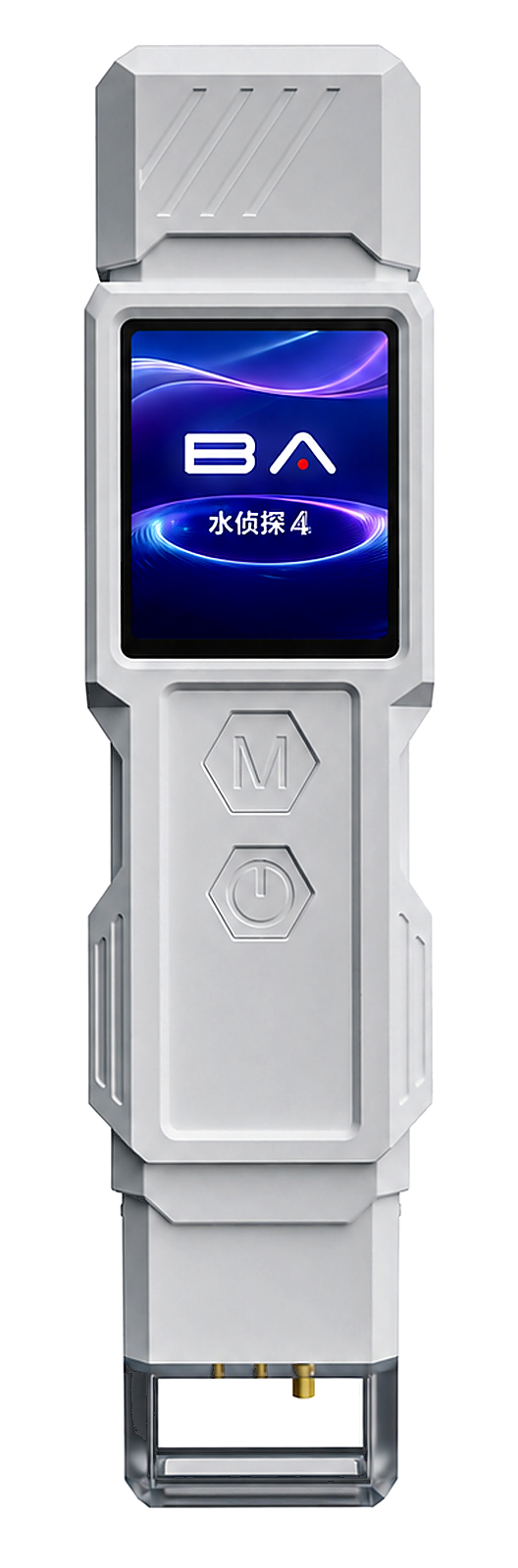
Common interferences :
- Temperature inconsistency: EC/TDS uncompensated or different compensation algorithms may cause false high or low readings;
- Air bubbles: both optical and conductivity measurements are disturbed by air bubbles;
- Probe contamination: residual previous water sample or cleaning agent;
- Container adsorption: some plastic containers may adsorb or release trace organic substances;
- Sampling time: after water passes through a filter element during discontinued use, early water samples may consist mainly of water remaining inside the filter housing, which differs from stagnant water in the piping.
Do not interpret : readings must not be interpreted as "lead not exceeding the standard," "bacteria meeting the standard," "nitrate safe," etc. Any conclusion about a specific contaminant requires laboratory methods [2][5].
5. When to retest, stop use, or refer to a laboratory
Retest conditions:
- If an indicator deviates greatly from the baseline after the first measurement and shows a downward trend after flushing for 1–2 minutes: continue flushing and retest every 1 minutes;
- If the TDS/EC deviation is still not stable, or UV254/turbidity has not returned near the baseline: extend flushing or replace the filter element;
- If the user reports abnormal taste or odor, retest and record even if the indicators are close to the baseline.
Conditions for discontinuing use:
- After flushing for 5 minutes, color, turbidity or sediment is still visibly present, or a distinct odor is detected;
- Turbidity >5 NTU and does not decrease with flushing (engineering reference threshold, to be confirmed by the local authority/laboratory);
- UV254 increases by >0.05 cm⁻¹ relative to the baseline, or TOC rises significantly and cannot be explained;
- Obvious biofilm, slime or corrosion appears on the device.
Conditions for referral to a laboratory:
- Need to identify lead, arsenic, copper, nitrates, total bacterial count, total coliforms, Legionella, Pseudomonas aeruginosa, viruses or parasites, etc.;
- Involves drinking water contact material compliance, water purifier hygiene licensing or export certification;
- Users experience suspected health incidents or complaints involve legal liability;
- Pet water fountains or aquaculture scenarios require proof of specific water quality standards.
When transferring to a laboratory, accredited methods should be used: e.g., ISO 9308 series or local equivalent methods for total coliforms, ICP-MS for lead/copper, plate count method for total colony count, etc. Specific parameters and methods are to be determined by a locally qualified laboratory.
6. Record sheet and action checklist
The following table is an engineering record template; thresholds are for screening reference only and do not constitute legal limits.
| Item | Record Content | Reference action (engineering recommendation) |
|---|---|---|
| Water source baseline | Temperature, TDS, EC, turbidity, UV254, TOC | Measure before each test with the same water source |
| Stagnant water T0 | First segment 50–100 mL nine parameters | Compare with baseline, calculate deviation % |
| Rinse T30/T60/T120/T300 | Nine indicators at each time point | Observe the downward trend |
| TDS/EC deviation | Percentage relative to baseline | If >20%, continue rinsing; retest after 2 times |
| Turbidity | NTU value | If >5 NTU and not decreasing, stop use |
| UV254/TOC | Difference relative to baseline | If significantly elevated, check tubing and filter element |
| Sensory | Color, odor, sediment, biofilm | If any abnormality is found, stop using immediately |
Action checklist:
- Confirm the water source baseline, and record the ambient temperature and the duration of disuse;
- Take a stagnant water sample without pre-flushing;
- Flush in stages and measure, keeping each stage's duration consistent;
- Compare the relative changes in each parameter to decide whether to continue flushing;
- Based on the results, choose to retest, stop using, or send to a laboratory;
- Save the data and notes for after-sales traceability, firmware threshold calibration, or design improvement.
7. FAQ
Q: Can Water Detective 4 detect bacteria, viruses, or parasites? A: No. It provides screening signals such as turbidity, UV254, and TOC, but it cannot identify the type or quantity of microorganisms. Microbiological risk must be confirmed using locally recognized culture methods, molecular methods, or microscopy.
Q: Does high TDS mean the water is unsafe? A: Not necessarily. TDS is the total amount of dissolved solids; high TDS may simply mean more minerals and is not necessarily harmful. However, if TDS rises suddenly after a period of disuse, it may indicate evaporative concentration, release from the filter cartridge, or a plumbing issue; it is recommended to compare with the baseline and flush before retesting. By regulation, TDS is often a sensory indicator, not a health limit [4].
Q: How long must a device be out of service before this procedure should be used for an inspection? A: In general, if the device has been out of service for more than 48–72 hours, it is recommended to at least flush it before use; if out of service for more than 1 weeks, a complete measurement is recommended; if out of service for more than 3 months, or if odor/discoloration occurs, it is recommended to replace the filter cartridge or send it for testing.
Q: Can this procedure replace a third-party test report? A: No. This procedure is intended for R&D debugging, after-sales screening and user education, and cannot serve as compliance testing, a sanitary permit or legal evidence. When conclusions about specific contaminants are required, testing must be sent to a qualified laboratory.
Q: What is the relationship between the built-in TDS/conductivity sensor and the handheld Water Detective 4? A: The two have similar principles, but their ranges, accuracy, temperature compensation and probe structures may differ. The built-in sensor in an appliance is suitable for daily trends and filter-cartridge reminders, while Water Detective 4 is suitable for on-site multi-parameter checks and validation during development. When designing thresholds, actual comparison data should be used as the basis and cannot be copied directly.
8. Reference sources
- World Health Organization. Guidelines for drinking-water quality: fourth edition incorporating the first addendum. Geneva: WHO; 2017. https://www.who.int/publications/i/item/9789241549950
- U.S. EPA. National Secondary Drinking Water Regulations. https://www.epa.gov/sdwa/secondary-drinking-water-standards-guidance-nuisance-chemicals (accessed 2025).
- U.S. Geological Survey. Water Science School: Conductivity and Water Quality. https://www.usgs.gov/special-topics/water-science-school/science/conductivity-and-water-quality (accessed 2025).
- Centers for Disease Control and Prevention. Private Well Testing. https://www.cdc.gov/healthywater/drinking/private/wells/testing.html (accessed 2025).
- World Health Organization. Water safety in buildings. Geneva: WHO; 2011. https://www.who.int/publications/i/item/9789241548106
Regional applicability note: The above references are mainly international guidelines and official U.S. materials. Specific limits, test items and pass/fail determinations should be based on the requirements of local drinking water regulators, health departments or certification bodies. Users in China may refer to GB 5749-2022, the Standards for Drinking Water Quality, and the sanitary specifications for water-related products; users in the EU may refer to the EU Drinking Water Directive (EU) 2020/2184; markets such as Japan and South Korea should follow local regulations.