
Intended users and decision questions
This article is mainly intended for brand owners, product managers, embedded engineers, hardware R&D staff and OEM customers of smart small appliances such as water purifiers, water dispensers, smart cups and pet water fountains that involve maternal and infant scenarios, and is also suitable for the content and customer service teams of these brands serving pregnant households. The core question is not "can this portable device detect lead, arsenic or bacteria", but "how can screening indicators be used to communicate risk without causing excessive panic or false reassurance".
| Role | Key decision question | How this article can help |
|---|---|---|
| Brand owner / Product manager | Can the promotional page state "can detect water quality safety"? Which parameter should the filter replacement reminder be based on? | Clarify the boundary between screening and confirmation, and provide user-facing expression templates |
| Embedded / Hardware engineer | Which readings are affected by temperature, bubbles and window contamination? How should anomaly prompts be designed? | Provide key points on sampling and interference control, and explain that the display logic should not output "pass" |
| OEM / ODM customers | When integrating the portable detection module into a water cup or water dispenser, how do you verify consistency and drift? | Provide a general verification approach; it does not replace specific project testing |
| Expectant families | What should be done when tap water TDS is high, turbidity suddenly rises, or the water purifier output becomes cloudy? | Provide a retest and referral-to-laboratory decision path |
Water sample / device / scenario boundaries
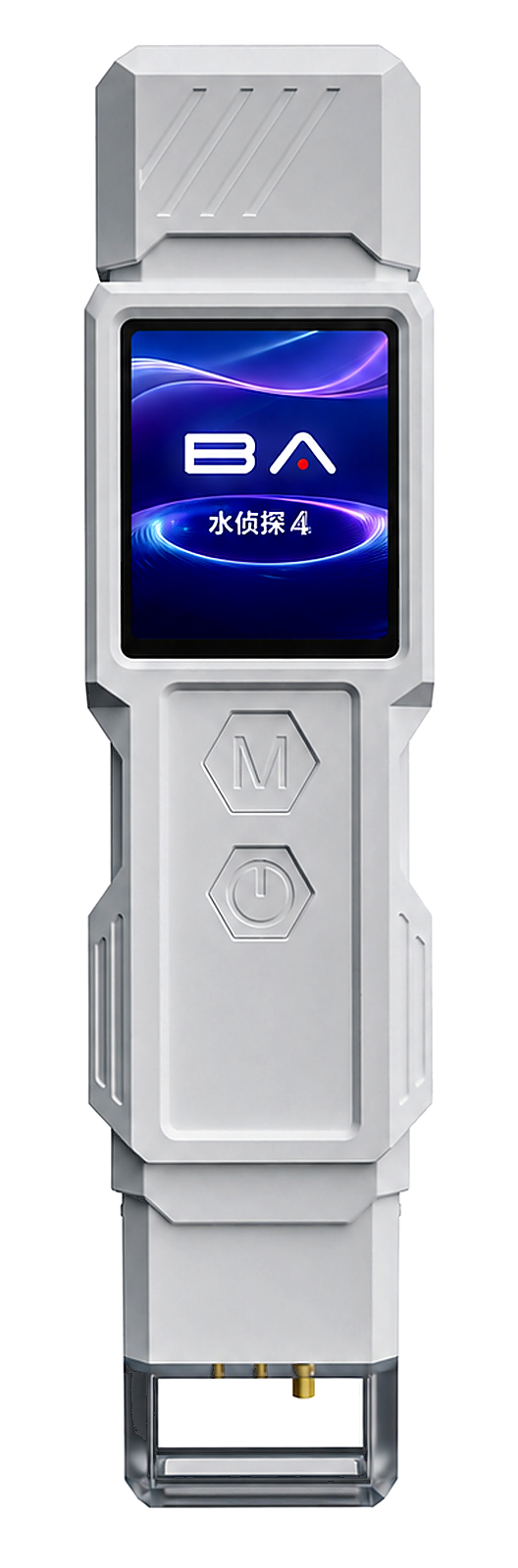
The AtomBit Water Detective 4 is positioned as a personal/household portable multi-parameter water quality tester, integrating nine indicators—TOC, COD, UV254, TDS, EC, turbidity, hardness, salinity and temperature—into one rapid detection platform. These indicators fall into three categories: comprehensive organic indicators (TOC, COD, UV254), inorganic mineral salts and physical indicators (TDS, EC, salinity, hardness, temperature), and particulate indicators (turbidity). They are suitable for baseline comparison of the same water source, rapid comparison between different water samples, and trend observation of water purifier inlet and outlet effects; they are not suitable as identification of specific pollutants or as proof of health safety.
Measurable and suitable for screening:
- TOC / COD / UV254: total organic matter, trends related to chemical oxygen demand, and relative signals of UV-absorbing organic matter; can compare the removal trends of organic load by different water sources or water purifiers.
- TDS / EC / salinity: total dissolved ions, conductivity, and salinity estimate; can be used to determine whether reverse osmosis membranes or ion exchange have clearly failed.
- Turbidity: scattering caused by suspended particulate matter; used to detect sudden cloudiness of a water sample, indicating a possible increase in the risk of particulate matter or microorganisms.
- Hardness: approximate load of divalent ions such as calcium and magnesium; affects taste and heating scale, and needs to be considered together with user preference and product maintenance.
- Temperature: compensation of sensor readings and recording conditions.
Typical contaminants that cannot be detected and must be confirmed by referral to a laboratory or a dedicated method:
- Inorganic/metalloid contaminants such as lead, arsenic, nitrate/nitrite and fluoride;
- Specific organic contaminants such as pesticides, antibiotics, endocrine disruptors and disinfection by-products;
- Microbiological indicators such as bacteria, viruses, parasites and Legionella;
- Parameters for aquatic environments or specific processes, such as dissolved oxygen and ammonia nitrogen.
If a pregnant household suspects any of the above risks, conclusions should not be drawn from screening readings; samples should be submitted for testing according to the requirements of the local water supply department, public health agency or accredited laboratory.
Applicable water sample boundaries: Low-turbidity water samples with no obvious oil contamination and no large amounts of suspended matter, such as household tap water, direct drinking water from water purifiers, bottled/barreled water, brewing water and water from pet drinking fountains. If the water sample is colored, blackened, contains sediment or shows obvious biofilm, stop using it first and contact a professional organization; portable device readings can only serve as on-site assistance and cannot replace pretreatment or laboratory analysis.
Reproducible sampling and measurement steps
The following steps apply to trend observation of household drinking water using the Water Detective 4. The goal is to obtain records that can be compared with earlier or later data, not to issue a result report.
- Prepare containers and equipment
Use a clean glass or food-grade plastic container with no odor and no detergent residue, and first rinse it 2–3 times with the water sample to be tested. Gently wipe the probe optical window and electrode surface with a clean soft cloth to avoid fingerprints, water stains or dried residue.
- Run water before sampling
If the sampling point is a faucet, run the water for 5–10 seconds first to avoid stagnant water in the pipe affecting the baseline. If it is a water purifier, discard the initial water according to the product instructions and collect the mid-stream water. Record the sampling point, date and time.
- Measurement and stabilization
Fully immerse the probe in the water sample, ensuring both the electrode and the optical window are covered by water, and shake gently to remove air bubbles. Wait for the reading to stabilize. Temperature affects conductivity and TDS readings; it is recommended to measure when the water sample temperature is close to the ambient temperature. If the water temperature differs greatly, record the temperature and refer to the device's temperature-compensated result, but do not rely on absolute accuracy at extreme water temperatures.
- Batch sampling and replicates
Pour out the water sample, take a new sample, and repeat the measurement 2–3 times. Record the range or median of each parameter rather than a single point value. If the three readings differ greatly, check for container contamination, air bubbles, window fouling or electrode drift, then measure again.
- Records and trend management
Use the record table template below to record the date, time, sampling point, water temperature, TDS, EC, turbidity, TOC, COD, UV254, hardness, salinity and any abnormal phenomena. It is recommended to measure once a week or every two weeks at a fixed time to establish your own baseline for the household water source.
Failure modes and branches:
- If the optical window fogs up or the probe surface has scaling, wipe it dry with a soft cloth before measuring; high-hardness water samples may leave white scaling after long-term use and require regular cleaning.
- If small air bubbles in the water sample cause the turbidity reading to jump, let it stand for a moment or gently tap the container to remove the bubbles.
- If the water sample is left for a long time after sampling, it may absorb CO₂ from the air, causing changes in conductivity/hardness-related trends, so measure as soon as possible after sampling.
- If the same container is used to measure different water sources, it must be thoroughly rinsed and dried to avoid cross-contamination.
How to interpret results and common interferences
Below is what each screening indicator "can answer and cannot answer," to avoid misreading trend signals as pollutant identification.
| Screening indicator | Questions it can answer | Questions it cannot answer | Common interferences |
|---|---|---|---|
| TDS / EC / salinity | Is the total dissolved ion content changing significantly? Is the reverse osmosis membrane clearly failing? | Is lead, arsenic or nitrate present? Is the water microbiologically safe? | Incomplete temperature compensation, electrode contamination, air bubbles, container residue |
| Turbidity | Has the water sample suddenly become turbid? Is the particulate load rising? | What are the particles? Do they contain pathogens? | Air bubbles, dirty windows and strongly colored water samples may interfere with scattering |
| TOC / COD / UV254 | Is the trend in total organic matter or oxidizable organic matter changing? How do different water samples rank in organic load? | Does it contain specific pesticides, disinfection by-products or microcystins? | Prolonged storage, organic contamination of the container, fogging of the optical window |
| Hardness | Is the load of divalent ions such as calcium and magnesium too high, affecting taste or causing scaling? | Does it meet the mineral intake needs of pregnant women? Is it safe? | Residue in the sampling container, temperature effects, interference from other ions in the water sample |
| Temperature | Are the sensor readings taken under suitable measurement conditions? How should refrigerator or hot-water dispenser water be understood? | No direct relationship with health risk | The measurement probe has not fully reached thermal equilibrium |
Correct the four common misconceptions one by one
- Misconception: "TDS is synonymous with water quality safety." Correction: TDS only reflects the total amount of dissolved solids and cannot indicate whether pathogenic bacteria, toxic heavy metals or pesticides are present; WHO does not list TDS as a health hazard indicator and uses it more for evaluating taste and potability.
- Misconception: "Low turbidity means no pathogens." Correction: Low turbidity is one of the important conditions for good drinking water, but some pathogens may still be present at low turbidity; conversely, a sudden increase in turbidity must be treated with great caution.
- Misconception: "UV254 or TOC can detect specific pesticide residues." Correction: They provide signals on total organic matter or the tendency toward aromatic organic matter; they cannot identify specific compounds, nor can they conclude whether pesticides exceed limits.
- Misconception: "As long as the instrument displays normal readings, pregnant women can relax completely." Correction: Portable instruments are for trend observation and cannot replace compliance testing; when a water source has specific risks, laboratory confirmation should be obtained.
Interpretation principles:
- A single reading has no inherent "pass/fail" threshold; there is only a trend compared with its own baseline. For example, TDS rising from 50 mg/L to 150 mg/L may indicate that the reverse osmosis membrane needs maintenance, but it does not mean the water has suddenly become toxic.
- A sudden increase in turbidity accompanied by a water outage, heavy rain, or restoration of supply after repairs should be regarded as a condition indicating increased microbial risk; microbial testing must be arranged or the water temporarily avoided.
- A rising TOC/UV254 trend may indicate an increased organic load, but it cannot determine whether specific harmful organic compounds are present; a marked drop in the ratio of water purifier influent vs. effluent can indicate that the activated carbon or organic filtration unit is approaching the end of its service life.
- High hardness is not in itself equivalent to being unsafe, but it may affect taste for pregnant women, the preparation of infant formula or scaling in beverages, and it also affects the maintenance interval of heaters.
When to retest, stop using, or send to a laboratory
The following is a decision branch intended for routine household screening; it does not constitute medical or legal advice.
- Single abnormal reading
If a parameter deviates from the household baseline by more than 30% (or the product-defined trend threshold), first check whether sampling was correct, whether the container is contaminated, and whether the probe is clean. Retest once with a freshly collected water sample. If the retest returns to normal, record this abnormality and continue observing; if it remains abnormal, proceed to step 2.
- Sudden increase in turbidity or change in color or odor
Stop direct drinking immediately; households with pregnant women should prioritize using an alternative safe water source and contact the local water supply department or a certified laboratory to test microbial indicators. Do not assume the water is safe merely because the TOC/UV254 reading has not changed much.
- No significant difference between water purifier effluent and influent parameters
First confirm that the sampling point is correct (for example, whether the initial run of water was drained), then check the filter life and the device operating status. If the inlet TDS is 200 mg/L and the outlet TDS has long been close to 200 while the filter has reached the end of its life, replace the filter first, then retest using the same steps. If there is still no improvement after replacement, contact the manufacturer or stop using it.
- Diarrhea, vomiting or other discomfort in a pregnant family member
Do not rely on portable readings to judge water quality; seek medical care immediately and report to the local public health authority; at the same time, retain the possible water sample for subsequent laboratory analysis.
- Suspected specific contaminant
If conditions at the user's location include old lead-containing water pipes, the pesticide application season, agricultural activity around a well, or flooding after rain, write down the suspected target clearly and directly arrange laboratory testing for lead, arsenic, nitrate, pesticides or microorganisms. Portable devices cannot rule out or confirm these risks.
Record sheet / action checklist
Example record sheet (may be used as a template for households or the product's built-in app)
| Date and time | Sampling point | Water temperature (°C) | TDS (mg/L) | EC (μS/cm) | Turbidity | TOC | COD | UV254 | Hardness | Salinity | Abnormal phenomenon | Operator | Follow-up action | | --- | --- | --- | --- | --- | --- | --- | --- | --- | --- | --- | --- | --- | --- | | Example: 2025-04-01 08:00 | Kitchen water purifier outlet | 22 | 45 | 90 | Low | 0.8 | 1.2 | 0.010 | Medium | 0.1 | None | User A | Continue monitoring |
Action checklist
- [ ] Before each measurement, rinse the container with the water to be tested and wipe the probe window.
- [ ] Record continuously for at least 4 weeks to establish the household water source's own baseline.
- [ ] When a reading is abnormal, first check sampling and cleaning, then retest once.
- [ ] If turbidity rises suddenly or there is an odor, stop using the water immediately and arrange testing for microorganisms/specific contaminants.
- [ ] Do not share or promote screenshots of portable device readings as "proof of water safety."
- [ ] Regularly review your local water utility's annual report or water quality disclosures, and combine portable screening with official data.
- [ ] For OEMs/brands, set the product UI to show "abnormal alert" rather than "safe/compliant," and guide users to understand what screening means.
Integration and verification tips for brands and OEMs
If the portable multispectral detection solution represented by Water Detective 4 is integrated into a smart water bottle, household water purifier or water dispenser, the following engineering aspects require additional attention:
- Sampling chamber and flow path design: Avoid old water in dead volume diluting the new water sample; the optical window and conductivity/TDS electrodes should be positioned so readings update promptly after flushing. Design automatic flushing or prompt the user to run the water for a while first.
- Temperature compensation and sensor layout: Conductivity/TDS typically varies with temperature; during integration, place the temperature probe as close as possible to the conductivity electrodes, and the compensation algorithm must cover the operating temperature range claimed for the product. Extremely hot or ice water should not be treated as compliant measurement conditions.
- Optical window anti-fouling: UV254, turbidity and TOC-related optical measurements are sensitive to window cleanliness. When integrated into a water dispenser, the window should be easy to remove for cleaning or have an automatic flushing structure.
- Calibration and drift: Before the product leaves the factory, it is recommended to calibrate and verify batch consistency using known conductivity standard solutions, formazin turbidity standard solutions, etc.; for long-term use, set calibration reminders or automatic baseline correction.
- Display and algorithm: The internal algorithm can output trend arrows, filter life estimates and abnormal alerts, but should not output absolute conclusions such as "water is safe" or "no harmful substances detected." Interface copy should guide users to "retest or contact local authorities when readings change significantly."
- Verification approach: In addition to standard solution calibration, periodically collect comparative samples against certified laboratory methods; the purpose is to assess trend consistency between screening indicators and specific laboratory indicators, not to replace compliance testing with household readings.
These are general design recommendations and do not constitute AtomBit's commitment to the performance or certification of any specific project.
FAQ
Q1: Can Water Detective 4 detect lead, arsenic, nitrate or bacteria? No. This personal/household portable detector measures TOC, COD, UV254, TDS, EC, turbidity, hardness, salinity and temperature, which are comprehensive screening indicators. Lead, arsenic, nitrate, bacteria, viruses and the like must be confirmed using laboratory or dedicated methods in accordance with local requirements.
Q2: A pregnant woman's household has a high TDS reading—should water use be stopped immediately? TDS represents the total amount of dissolved ions and is not equivalent to toxic content. High TDS may affect taste or indicate a need for reverse-osmosis membrane maintenance, but it does not mean the water is unsafe. First compare with your own baseline, observe the trend, and take into account notices published by the local water supply authority; if harmful substances are suspected, arrange laboratory testing.
Q3: Turbidity has risen suddenly but TOC/UV254 has not changed much—is it safe to drink? No. A sudden rise in turbidity may signal an increased risk from particulates or microorganisms, and portable screening cannot rule out pathogens. Households with a pregnant woman should temporarily switch to a safe water source and arrange microbiological testing.
Q4: If product marketing says it "confirms the water quality is compliant," does that fit within the device's limits? No. Portable screening devices cannot replace compliance testing, and absolute expressions such as "safe/compliant" should not be used. Brands should clearly state that it is a screening, trend and comparison tool.
Q5: Which parameters can filter replacement reminders be based on? They can be based on trends in TDS, conductivity, UV254, TOC and the like compared with the user's baseline; however, the specific thresholds need to be determined according to the purifier type, filter life testing and local water quality characteristics, and cannot rely on a single universal value. It is recommended that manufacturers set them by combining laboratory verification with the user's actual water quality data.
References
- World Health Organization. Guidelines for drinking-water quality: fourth edition incorporating the first and second addenda. Geneva: World Health Organization; 2022. https://www.who.int/publications/i/item/9789240045064
- U.S. Geological Survey. Total Dissolved Solids (TDS). https://www.usgs.gov/special-topics/water-science-school/science/total-dissolved-solids-and-water
- U.S. Environmental Protection Agency. National Primary Drinking Water Regulations. https://www.epa.gov/ground-water-and-drinking-water/national-primary-drinking-water-regulations
- Centers for Disease Control and Prevention. Water Contamination and Diseases. https://www.cdc.gov/healthywater/drinking/contamination.html
- State Administration for Market Regulation, Standardization Administration of China. Standards for Drinking Water Quality (GB 5749-2022). National Standards Information Public Service Platform query entry.
Regional applicability statement: Drinking water limits, monitoring indicators and testing methods differ from country to country and region to region. The internationally applicable references cited in this article are used to explain screening concepts; specific determinations should be based on the local water supply authority, health supervision agency or an accredited laboratory. Users in China may refer to GB 5749-2022 and local regulations for secondary water supply; users in the United States may refer to the US EPA National Primary Drinking Water Regulations and state-level rules; for other regions, please consult the local drinking water regulatory authority.