
1. Why a daily screening decision framework is needed
Tap water must pass through complex pipe networks and secondary water supply facilities on its way from the treatment plant to the user's tap. Even if it meets standards when leaving the plant, water quality may change after reaching the household due to aging pipes, contamination of storage facilities, failure of water purification equipment and other reasons. For smart water appliances such as water purifiers, water dispensers, coffee machines and smart cups, continuous water quality monitoring not only gives users peace of mind, but also optimizes filter life management, triggers maintenance reminders and reduces after-sales costs.
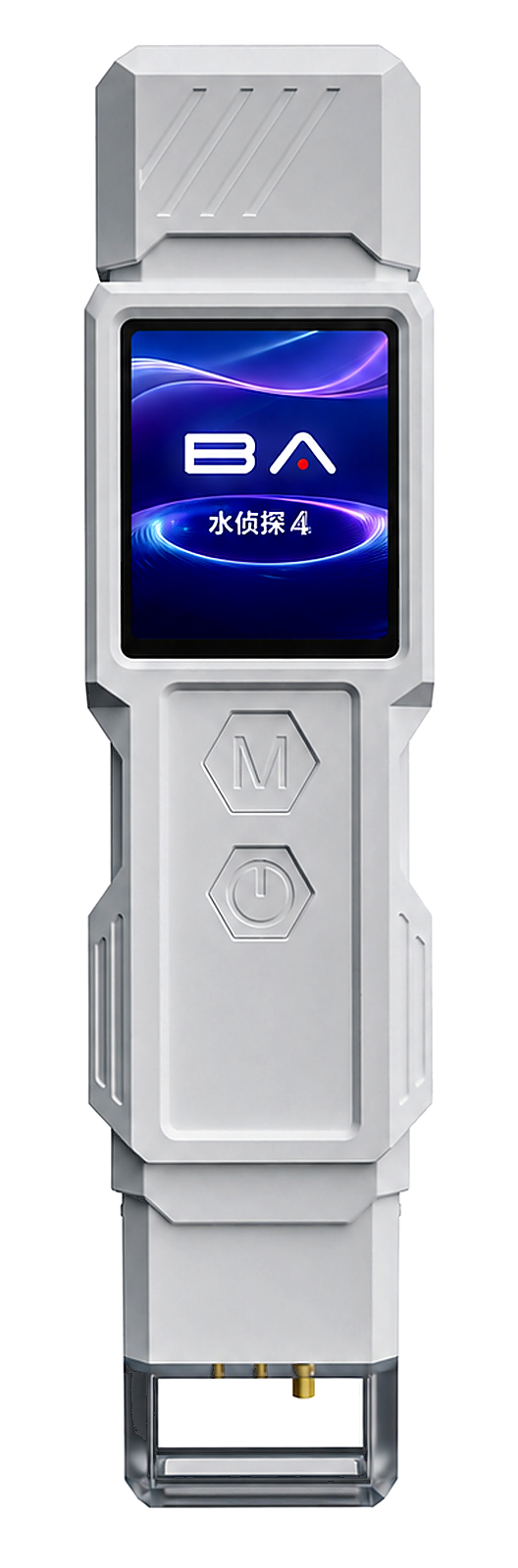
However, readings from sensors in the home or built into equipment are not equivalent to laboratory compliance testing. Water Detective 4 (Water Detective 4) integrates nine indicators: TOC, COD, UV254, TDS, conductivity, turbidity, hardness, salinity and temperature. It is suitable as a daily screening tool for establishing baselines, comparing trends and detecting anomalies. This article provides a decision framework to help product managers, embedded engineers, hardware R&D and OEM customers understand how to turn screening data into actionable judgments, while clarifying which risks must be referred to a laboratory or local authority for confirmation.
2. Intended users and decision questions
2.1 Intended users
- Product managers and hardware R&D teams of smart water appliance brands such as water purifiers, water dispensers and coffee machines;
- Embedded engineers responsible for filter life algorithms, sensor integration and after-sales diagnostics;
- Field service personnel and OEM/ODM customers;
- End users who want to understand the boundaries of daily household water quality screening.
2.2 Core decision questions
日常筛查需要回答四个问题:
- 自来水到户后是否发生明显变化?
- 净水器对 TDS、浊度、有机物等指标的去除效果是否下降?
- 滤芯是否需要提前更换?
- 何时需要停止使用并寻求实验室检测?
2.3 筛查与鉴定的边界
水侦探4 测量的指标均为非特异性综合参数,用于筛查、比较和趋势观察。它不能鉴定铅、砷、硝酸盐、农药、细菌、病毒、寄生虫等特定污染物。若用户或产品需要确认这些风险,必须采用当地主管部门认可的实验室或专用方法。家庭仪器读数不得作为饮用安全、宠物健康或养殖合规证明。
3. 水样、设备与场景边界
3.1 水样边界
主要适用水样包括:
- 市政自来水到户(经过家庭管道);
- 经过净水器、饮水机、咖啡机等设备处理后的出水;
- On-site comparison of bottled and barreled water.
Can be cautiously extended to non-centralized water supplies such as private well water and mountain spring water, but note that the risk of microbial and specific contaminant exposure is higher and the screening indicators are limited. Not recommended for industrial wastewater, sewage, or water samples with high color or extremely high turbidity, to avoid exceeding the sensor range or contaminating the probe.
3.2 Device boundary
Uses of the Water Detective 4's nine indicators in home scenarios:
- Compare changes in the same water source over time;
- Compare the removal rate between water purifier inlet and outlet;
- Observe abnormal fluctuations to help manage filter cartridge life;
- Provide a basis for rapid troubleshooting during on-site service.
Must not be used for:
- Directly determining drinking water safety;
- Detecting specific chemical pollutants or microorganisms;
- Replacing laboratory analysis or regulatory compliance testing.
3.3 场景边界
适用于家庭日常筛查、设备内置检测、售后上门服务、现场快速排查。不适用于法规符合性证明、疾病诊断、宠物健康或养殖合规证明。
3.4 集成边界
将水侦探4 或同类多参数传感器集成到智能水家电中,需要解决以下工程问题:
- 采样腔设计:避免死体积、气泡积聚,确保流速稳定;
- 温度补偿:电导率/TDS 读数受温度影响显著,需在固件中实现补偿;
- 光学窗口维护:防止结垢、颗粒附着影响 UV254 和浊度测量;
- 多参数校准与一致性:量产时需进行多点校准,保证不同设备间读数可比。
4. 可复现的采样与测量步骤
4.1 建立基线
连续 7 天,每天固定时间(如早晨第一次用水前)采样测量,记录所有参数。使用同一容器、同一测量位置、同一仪器。基线数据用于判断后续变化的显著性。
4.2 采样步骤
- Prepare a clean container: Rinse the container with the water sample to be tested 2–3 times to avoid detergent residue. Use glass or food-grade plastic containers whenever possible.
- Flush the tap/water intake: Open the tap and let the water run for 30 seconds to 2 minutes to flush out stagnant water in the pipes. For water purifier output, first drain a small initial volume of water (about 200 mL) before sampling.
- Collect the water sample: Take about 100–200 mL of the mid-stream sample and avoid touching the inner wall of the container, which could cause contamination.
- Settle to remove bubbles: Gently swirl to mix or let stand for 10–15 seconds; avoid vigorous shaking, which generates bubbles.
- Measure: Fully immerse the probe, keep it still, and wait for the reading to stabilize (generally 10–30 seconds; refer to the device instructions for details).
- Repeat the measurement: Measure each water sample 2–3 times and take the median or average to reduce random error.
- Record: Record the date, time, water source type, water temperature, all parameters, and the appearance and odor of the water.
4.3 Measurement condition control
- Temperature compensation: Conductivity/TDS readings vary with temperature. Use the device's built-in temperature compensation or record the temperature during measurement; when comparing different water samples, measure at the same temperature whenever possible (for example, 20–25 °C). If the same temperature cannot be achieved, use the device's temperature compensation function, but still be aware of compensation error.
- Optical measurement (UV254, turbidity): Avoid direct strong light on the probe window, avoid bubbles adhering to it, and gently swirl if necessary to dislodge bubbles.
- Probe cleaning: Rinse the probe with distilled or deionized water before and after measurement, and periodically wipe the optical window with a soft cloth.
4.4 Failure modes
- Reading drift or instability: electrode not sufficiently wetted, bubbles, temperature not stabilized, probe contamination.
- Abnormally high or low: container residue, stagnant water at the measurement location, instrument not calibrated.
- Abnormal jumps in optical values: large particles or bubbles in the water sample, or ambient light interference.
5. How to interpret the results and common interferences
5.1 Indicator interpretation (screening perspective)
| Indicator | Significance for household screening | Reference points of concern/interferences |
|---|---|---|
| TDS | Total dissolved solids, used to compare RO/nanofiltration desalination effectiveness and as a rough indicator of taste | High TDS is not necessarily unsafe; WHO states that TDS>1000 mg/L may affect taste; EPA secondary standard limit 500 mg/L (aesthetic) |
| Electrical conductivity (EC) | Positively correlated with TDS, reflecting ion concentration | Significantly affected by temperature and requires compensation; values at different temperatures cannot be compared directly |
| Salinity | Dissolved salt content, related to TDS/EC | Household fresh water is usually very low; changes can indicate RO membrane breakthrough or source water changes |
| Hardness | Calcium and magnesium ions, affecting scaling and taste | USGS: <60 mg/L soft water, 61–120 mg/L moderately hard, 121–180 mg/L hard, >180 mg/L very hard; China national standard limit 450 mg/L (as CaCO3) |
| Turbidity | Particulates/colloids, indicating filtration effectiveness and sensory quality | WHO recommends drinking water turbidity <1 NTU (small supplies <5 NTU); EPA primary standard: 95% of samples ≤0.3 NTU, single sample <1 NTU; household screening focuses on sudden trend changes |
| TOC | Total organic carbon, a comprehensive indicator of organic pollution load | Not an identification of specific pollutants; can be used to compare organic matter removal rates of water purifiers; no household safety limit |
| COD | Chemical oxygen demand, oxidizable organic matter | Complementary to TOC, but of limited significance in household screening; focus on relative changes |
| UV254 | 254 nm absorbance, indicator of aromatic organics/natural organic matter | Related to disinfection by-product precursors, but screening only; can compare changes in source water and treated water |
| Temperature | Water temperature affects readings and microbial growth | Record it to compensate and identify seasonal changes |
Note: The above reference values come from public water source standards or guidelines and are provided to aid understanding; they are not compliance thresholds for household instruments.
5.2 Common Interferences and How to Handle Them
- Temperature: Uncompensated or inaccurately compensated temperature causes EC/TDS deviations of 5–10% or even more. Response: Record the temperature, use the device's built-in compensation, and keep the temperature consistent when comparing.
- Bubbles: Bubbles attached to the optical window or electrode cause fluctuations in turbidity, UV254, and EC readings. Response: Let it stand to let bubbles dissipate, and gently swirl the probe.
- Probe contamination/scaling: After long-term use, deposits on the electrode surface cause reading drift. Response: Clean with dilute acid or a dedicated cleaning solution as recommended by the manufacturer, then rinse with deionized water.
- Container contamination: Residual detergent, organic matter, or salts. Response: Rinse thoroughly with the water sample to be tested, or use a disposable residue-free container.
- Instrument drift: Sensor aging or calibration failure. Response: Periodically verify with a standard conductivity solution (such as a calibration solution of known conductivity), and calibrate according to the manufacturer's instructions.
- Ambient light: Strong light may interfere with optical measurements. Response: Measure indoors or under conditions that avoid direct sunlight.
6. When to retest, stop using, or refer to a laboratory
6.1 Establish Action Thresholds (Examples, Not Regulatory)
- Baseline: The median ± standard deviation (or interquartile range) of the same water source over consecutive 7 days.
- Retest conditions : if any indicator deviates from baseline by >30% or exceeds local aesthetic limits (e.g., TDS>500 mg/L, turbidity>1 NTU, hardness>450 mg/L), first clean the probe and resample for a retest.
- Refer to laboratory conditions :
- If still abnormal after retest, and accompanied by obvious changes in water color, odor, or taste;
- Sudden turbidity, sediment, or abnormal color;
- After heavy rain, flooding, pipe repair, or pipe rupture;
- Family members develop gastrointestinal symptoms, etc.;
- When specific contaminants (lead, arsenic, nitrate, bacteria, viruses, etc.) need to be confirmed.
- Stop use : when obvious hygiene risk signals appear (such as sewage backflow or pipe network damage), drinking should be stopped immediately, emergency measures such as bottled water or boiling (if targeting microorganisms) should be used, and the water utility/health department should be contacted.
6.2 Threshold design recommendations for smart water appliances
- Do not directly use regulatory limits as alarm lines, because regulations target water plant effluent, and household delivery is affected by secondary water supply; it is recommended to use the relative rate of change of an individual baseline (such as 20–30%) combined with device capabilities.
- Filter life management: monitor the TDS removal rate of water purifier outlet versus inlet (for RO membranes), turbidity, and TOC/UV254 removal rate; when the removal rate drops significantly (e.g., RO desalination rate <90%, depending on membrane specifications) or outlet indicators approach those of the inlet, prompt filter replacement.
- Avoid single-point false alarms: use moving averages and a mechanism requiring confirmation of consecutive multiple abnormal measurements.
7. Record sheet and action checklist
7.1 Routine Screening Record Form fields
| Field | Example |
|---|---|
| Date/Time | 2025-04-08 08:00 |
| Water Source Type | Municipal tap water / RO permeate |
| Water temperature (°C) | 18.5 |
| TDS (mg/L) | 120 |
| EC (µS/cm) | 250 |
| Turbidity (NTU) | 0.5 |
| TOC (mg/L) | 1.2 |
| COD (mg/L) | 2.0 |
| UV254 (m⁻¹) | 3.5 |
| Hardness (mg/L CaCO3) | 80 |
| Salinity (psu/ppt) | 0.0 |
| Note | First glass of water in the morning; no abnormal odor |
Note: The unit is subject to the actual reading displayed by the device.
7.2 Action checklist
- [ ] Rinse the probe and check for air bubbles before each measurement.
- [ ] Verify once a week with a standard conductivity solution (if available).
- [ ] Clean the optical window and electrodes once a month.
- [ ] In case of continuous abnormalities (>30% deviation), retest first, then contact the water utility.
- [ ] If you have doubts about the water source, send a sample to a laboratory for testing of specific parameters.
- [ ] Smart water appliance products: ensure firmware temperature compensation is enabled and thresholds are based on the baseline.
8. Engineering considerations and integration
- Sampling flow path: When integrating a detection module into a water purifier/water dispenser, a bypass or flow cell should be designed to ensure a stable flow rate and no air bubble accumulation. The sensor should be located after the filter cartridge, or at both positions before/after it, to calculate the removal rate.
- Temperature compensation: EC/TDS requires temperature compensation. It is recommended to implement linear compensation in firmware (typical temperature coefficient around 2%/°C, but actual calibration must be based on electrode and solution characteristics and cannot be copied directly). At the same time, the measured temperature is used as a reference for optical and hardness compensation.
- Calibration strategy: Mass production requires multi-point calibration and consistency screening; after shipment, users are supported with simple verification; sensor drift compensation should be considered.
- Data filtering: After acquiring raw data, use median filtering or moving average (e.g., 5 points) to reduce bubbles and transient interference.
- Fusion with filter cartridge algorithm: Use the rate of change of TDS/conductivity, increases in turbidity, and changes in TOC/UV254 as feature inputs for filter cartridge life prediction, combined with flow meter data (if available).
9. FAQ
Q1: Can Water Detective4 detect lead, arsenic or nitrate?
A: No. This device measures TOC, COD, UV254, TDS, conductivity, turbidity, hardness, salinity and temperature, all of which are non-specific screening indicators. Lead, arsenic, nitrate and similar substances must be confirmed using laboratory methods such as atomic absorption spectroscopy, ICP-MS or ion chromatography. If you are concerned about these contaminants, send samples to a qualified local laboratory.
Q2: Is higher TDS less safe?
A: Not necessarily. TDS reflects the total amount of dissolved solids, mainly composed of common ions such as calcium, magnesium, sodium, potassium and bicarbonate. High TDS may affect taste and cause scaling, but it does not directly mean harmful. For example, some mineral waters have high TDS but meet drinking water standards. Household screening should focus on whether TDS changes abruptly relative to baseline, rather than on a single value.
Q3: How to use Water Detective4 to determine whether an RO membrane has failed?
A: Measure the TDS/conductivity of the water purifier inlet and outlet simultaneously, and calculate the salt rejection rate = (inlet conductivity - outlet conductivity) / inlet conductivity × 100%. A new membrane is usually >90% (depending on membrane specifications and operating conditions). If the salt rejection rate continues to decline to an unacceptable level, combined with flow and taste, it indicates membrane replacement. Note that this calculation is an estimate based on conductivity, not an exact salt passage rate, and temperature must be compensated.
Q4: The measurement results are inconsistent with laboratory testing; which is accurate?
A: Laboratory methods target specific contaminants and offer lower detection limits and higher accuracy. The metrics of Water Detective 4 are comprehensive and may be subject to interference. The two cannot be directly equated. Trend comparisons should use the same device and method.
Q5: How often should calibration be performed?
A: Follow the manufacturer's instructions. Generally, if used frequently, verify weekly with a standard conductivity solution; for the optical part, follow the device prompts. If readings drift significantly or abnormal values appear, clean and verify first, then consider calibration.
Q6: Can routine household screening replace regular laboratory testing?
A: No. Household screening is suitable for high-frequency trend observation and anomaly alerts, but it cannot detect microorganisms, specific chemical contaminants, radioactive substances, etc. For private well water, the CDC recommends testing for bacteria and nitrate at least annually; for municipal water, refer to the annual water quality report from your local supplier and decide whether additional testing is needed based on your own plumbing conditions.
10. References and regional applicability
- World Health Organization. Guidelines for drinking-water quality: fourth edition incorporating the first and second addenda. Geneva: World Health Organization; 2022. https://www.who.int/publications/i/item/9789240045064
- USGS. Hardness of Water. U.S. Geological Survey. https://www.usgs.gov/special-topics/water-science-school/science/hardness-water
- US EPA. National Secondary Drinking Water Regulations. https://www.epa.gov/sdwa/secondary-drinking-water-standards-guidance-nuisance-chemicals
- US EPA. Drinking Water Regulations: Turbidity. https://www.epa.gov/dwreginfo/drinking-water-regulations (please refer to the current page on the EPA official website)
- CDC. Private Well Testing. Centers for Disease Control and Prevention. https://www.cdc.gov/healthywater/drinking/private/wells/testing.html
- National Standard of the People's Republic of China GB 5749-2022 "Standards for Drinking Water Quality", issued by the State Administration for Market Regulation and the Standardization Administration of China.
Regional applicability: The limits cited in this article are mainly from WHO, US EPA, and China's GB 5749-2022. Different countries/regions may have different regulatory limits and testing methods for drinking water. Household screening should not be used directly for compliance determination. Actual product integration or user guidance should refer to the local regulations and competent authority requirements of the product's sales location.