
Intended users and decision questions
This article is written for people engaged in outdoor hiking, camping, trail running, field work, emergency water collection, or concerned about changes in wild water sources, and it also applies to assessing what a portable water-quality test pen can and cannot do in the scenario of streams after heavy rain. The core decision question is: after heavy rain, when collecting water from a mountain stream, under what circumstances can it only be used as non-drinking water or requires enhanced treatment? How can readings from a portable multi-parameter test pen help judgment rather than create a false sense of security?
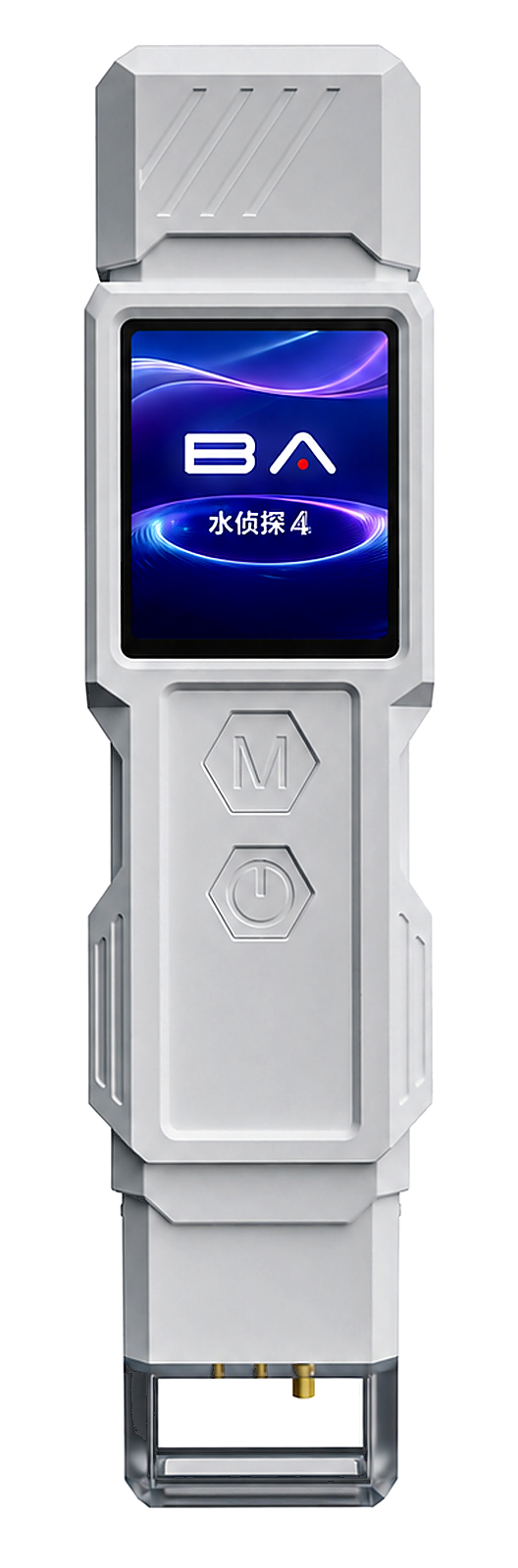
It should be stated first: this article is not a laboratory test report and cannot give a "directly drinkable" conclusion. The nine parameters provided by Water Detective 4 — TOC, COD, UV254, TDS, conductivity, turbidity, hardness, salinity, and temperature — are intended for on-site screening, trend observation, and comparison before and after filtration. Any conclusion about drinking-water safety, microbial risk, and specific chemical contaminants needs to be confirmed by laboratory methods recognized by the local competent authority.
Changes in Stream Water Quality After Heavy Rain and Common Misconceptions
Heavy rain changes the hydraulic conditions of a stream: surface runoff carries soil particles, decaying plants, animal feces, road sediments, and agricultural or garden chemicals into the water. The following misconceptions often lead to incorrect water-collection decisions:
- If it is clear, it is safe. After heavy rain, short-term high turbidity may already have occurred upstream, but after the water sample stands and sediment settles, it looks clear; dissolved pollutants, microorganisms, some pesticides, and nitrates cannot be judged by the naked eye.
- If TDS or conductivity is normal, it means the water is drinkable. TDS and conductivity mainly reflect the total amount of dissolved salts and ionizable substances; they cannot indicate bacteria, viruses, or parasites, nor can they identify specific pollutants such as lead, arsenic, nitrate, nitrite, or pesticides.
- If TOC/COD/UV254 readings are low, there is no organic-matter risk. These parameters reflect the total amount of organic matter or aromatic structural characteristics, but they cannot identify specific organic pollutants, nor do they directly correspond to any health limit. A low reading does not mean there are no trace pesticides or disinfection by-product precursors.
- After filtration, it is definitely safe to drink directly. Physical filtration can reduce turbidity and may also reduce some bacteria and parasites, but the removal of viruses and dissolved pollutants depends on the filter pore size, material, and condition; filtration cannot replace disinfection.
- Mountain springs or streams are inherently cleaner than tap water. During heavy rain, streams are greatly affected by surface runoff, water quality changes rapidly, and the risk rises significantly.
- Multi-parameter devices can replace water-quality test reports. Portable devices can only perform on-site screening and cannot serve as a basis for compliance or health-risk determination.
Metric boundaries of Water Detective 4
Water Detective 4 integrates nine metrics in one rapid testing platform, suitable for on-site screening, before-and-after comparison of water purifier performance, and daily trend observation. The on-site significance of each metric is as follows:
| Indicator | Significance for on-site screening | What it cannot tell |
|---|---|---|
| Turbidity | Amount of suspended particles, which indirectly affects disinfection efficacy and visual appearance | Cannot distinguish particle types, cannot directly measure microorganisms |
| TDS / Conductivity | Total dissolved solids, changes in ionic strength | Cannot identify whether specific ions exceed limits |
| Salinity | Level of dissolved salts | Cannot determine suitability for drinking or agricultural use |
| Hardness | Approximate level of hardness ions such as calcium and magnesium | Only affects taste and scaling, does not directly indicate health risk |
| TOC | Total organic carbon, reflecting changes in organic pollution load | Cannot identify specific organic substances or toxicity |
| COD | Chemical oxygen demand, reflecting the total amount of oxidizable substances | Cannot distinguish between natural organic matter and pollutants |
| UV254 | Absorbance at specific wavelengths, commonly used for trends in natural organic matter and disinfection by-product precursors | Cannot quantify specific pollutants or health risks |
| Temperature | Affects sensor readings and microbial activity | Not a pollutant indicator |
Must be repeatedly emphasized: Water Detective 4 cannot detect lead, arsenic, nitrate, nitrite, ammonia nitrogen, pesticides, bacteria, viruses, parasites, dissolved oxygen or other target substances. For these risks, confirmation must be obtained using the laboratory or dedicated methods required locally. No reading in this article should be interpreted as proof of "safe to drink," "healthy for pets" or "compliant for aquaculture."
On-site sampling and measurement steps (reproducible)
The following steps are used to obtain relatively stable, comparable on-site screening data. If samples are to be sent to a laboratory afterward, the laboratory will provide dedicated sampling containers and methods; household containers should not be used.
Preparation
- Check that the device has sufficient battery power and that the optical window is free of water stains, fingerprints or scratches; gently wipe it with a clean soft cloth.
- Prepare a food-grade sampling bottle or a clean water bottle, rinse it with the stream water to be tested 3 times, discarding the water after each rinse.
- Record the sampling date, time, location, weather, and the number of hours since the most recent heavy rainfall.
Select the sampling point
- Avoid the bank, stagnant-water areas, algae accumulation areas, animal watering points, or downstream of obvious pollution sources.
- Choose a spot with uniform flow velocity and moderate water depth, and sample 10–20 cm below the water surface, avoiding stirring up bottom sediment.
- If the current is very fast, you may stand on the downstream side and let the sampling bottle mouth collect facing upstream.
- If the water level is too high or it is unsafe to enter the water, use a long-handled scoop or a tethered sampling bottle; do not risk wading.
Measurement order
- First measure temperature: immerse the device probe in the water, wait for the reading to stabilize, and record it.
- Measure turbidity: gently invert to mix the water sample 2–3 times, and measure immediately to prevent particles from settling.
- Measure TDS, conductivity, salinity, and hardness: use the same water sample, perform temperature compensation according to the device prompts, and record the stable readings.
- Measure TOC, COD, UV254: confirm there are no bubbles on the optical window, rinse the measuring cell as required by the device, and wait for the reading to stabilize.
- Repeat each indicator at least 3 times and take the median or mean; if repeatability is poor, check whether air bubbles or window contamination have been introduced.
Common failure modes
- Air bubbles adhering to the optical window or probe: causes reading jumps; tap gently to dislodge them.
- High turbidity exceeding the linear range: results may read low; dilute and re-measure and record the dilution factor, but dilution introduces error.
- Sample left standing too long: particles settle, and turbidity and some organic-matter readings will decrease; mix well and measure immediately.
- Temperature not stabilized: affects temperature-sensitive parameters such as TDS/EC; wait for stabilization.
- Low temperature or humid environments affect battery and device response; keep dry.
- Direct sunlight on the sample cell or probe: may cause optical reading drift or rapid temperature changes; operate in shade.
Engineering perspective: field consistency and verification
- Conductivity varies markedly with temperature; portable devices usually have automatic temperature compensation or correction at 25 °C; if the device does not support compensation, compare at similar temperatures and note this in the record.
- Cleaning of the optical window directly affects TOC, COD, UV254 and turbidity. In the field, grease, sediment and condensation commonly interfere; clean with a soft lens cloth and a little clean water, and do not touch the window with your fingers.
- Commercially available bottled purified water can be used as a blank verification: the reading should be close to 0 or the blank value specified in the product manual; if the blank reading is clearly abnormal, stop using the device.
- Do not directly compare absolute readings between different devices. Trend comparisons should use the same device, the same operating habits, and the same sampling location.
How to interpret results and common interferences
In field scenarios, readings should first be compared with the baseline of the same water source before a heavy rain, or with before/after filtration or treatment, rather than directly applying some absolute value. If there is no baseline, at least record the trend of change over consecutive days or hours. For example, take a sample immediately upon arriving at camp as a local reference point for subsequent comparisons.
| Indicator change | Possible field explanation | Interference and limitations |
|---|---|---|
| Turbidity significantly increased | Runoff carries sediment and organic particles, and microbial risk may increase | Bubbles, algae, and strong light may interfere with optical readings |
| TDS/EC increased | Dissolved salts are washed into the water body, possibly road salt or soil minerals | Temperature changes and probe contamination can affect readings |
| TOC/COD/UV254 elevated | Organic load increased, such as from decaying vegetation, soil organic matter, or farmland runoff | High turbidity may cause optical interference; turbidity must be considered in the assessment. |
| Hardness/salinity change | Geological sources or anthropogenic discharges alter the ionic composition. | Neither is an indicator of health risk. |
| Temperature changes | Rainfall, temperature or mixing in shallow water. | Records are used for compensation, not for standalone judgment. |
Important interference: After heavy rain, bubbles increase in the water. When measuring TOC, COD, UV254 and turbidity by optical methods, bubbles can cause readings to be falsely high. In addition, strong direct sunlight on the sample cell, contamination on the probe surface, and detergent residue in the sample container can all cause deviations. Therefore, repeated measurements and comparison with blank water (bottled purified water) help to detect equipment anomalies.
Interpretation boundaries: Do not attempt to convert TOC, COD or UV254 readings into "a certain pesticide concentration" or "bacterial count"; this is not valid. Any health-related judgment, such as "whether it is drinkable", requires testing of microbiological indicators and specific chemical indicators.
When to retest, stop using, or send to a laboratory
Retest recommendations
- If water continues to be drawn from the same stream, it is recommended to retest key indicators such as turbidity, TDS/EC and TOC/COD every day or every half day, and to record the trends.
- After heavy rain stops, runoff may lag; it is recommended to increase sampling frequency 24–48 hours later to observe whether the indicators fall back.
Circumstances for stopping use or raising the treatment level
- Risk sources are found upstream, such as animal carcasses, feces, septic tank overflows, farmland fertilization or pesticide spraying, or road construction.
- Abnormal water color, unusual odor, oil film or foam on the water surface.
- Turbidity readings remain persistently high (for example, above 5 NTU; refer to WHO guidance on drinking-water acceptability and disinfection efficiency) and do not decrease even after filtration.
- Multiple indicators (turbidity, TOC/COD/UV254, TDS/EC) are simultaneously and significantly above the local baseline, with no explanation.
- If this water source is the only option, at minimum a combination of "pre-sedimentation/filtration + disinfection" should be used, and an effective method such as boiling, ultraviolet light or chemical disinfectants should be selected according to local health guidelines; disinfection must not be omitted.
Trigger conditions for referral to laboratory confirmation
- Plans to use this water source long term or supply drinking water to multiple people;
- Any suspected gastrointestinal symptoms related to drinking water;
- Need to determine whether drinking-water standards are met;
- Need to investigate specific contaminants such as nitrate, nitrite, pesticides, heavy metals and microorganisms.
At this point, contact the local CDC, public health department or a certified laboratory, collect samples in the required dedicated sampling containers, and state the purpose of testing. Portable device data can serve as supporting clues and cannot replace a laboratory report.
记录表/行动清单
It is recommended to record the following fields in the field to facilitate comparison and subsequent decisions. The example data below is for illustrating the record format only and does not represent measured values.
| Field | Example |
|---|---|
| Date/Time | 2026-04-12 08:30 |
| Location/water source | Upstream of a certain mountain stream 200 m |
| Weather/time since rainfall | Overcast, time since end of heavy rain 18 h |
| Temperature | 12.3 °C |
| Turbidity | 8.2 NTU |
| TDS | 86 mg/L |
| Conductivity | 172 µS/cm |
| Salinity | 0.08 ppt |
| Hardness | 62 mg/L CaCO₃ |
| TOC | 3.1 mg/L |
| COD | 5.6 mg/L |
| UV254 | 0.142 cm⁻¹ |
| Operation notes | Rinse with sample water 3 times before sampling; no bubbles on the optical window |
| Action | Turbidity is higher than the pre-storm baseline; after collecting water, filter and boil it |
Action checklist
- Inspect and clean the equipment, and prepare the sampling containers.
- Record the weather, time since rainfall, and the surrounding environment of the water source.
- Measure temperature, turbidity, TDS/EC/salinity/hardness, and TOC/COD/UV254 in order.
- Repeat 3 times and record the median.
- Compare with yesterday's baseline or the pre-storm baseline to determine whether there is a significant deviation.
- If turbidity is above 5 NTU or multiple indicators are abnormal, raise the treatment level: filtration + disinfection.
- If a hazard source or suspected case appears, stop water intake and send samples to the laboratory.
- All readings are for screening only and are not for health certification.
FAQ
Q: Can Water Detective 4 detect bacteria or viruses? A: No. It can only measure surrogate indicators such as turbidity, TOC, and COD, UV254 and cannot identify microorganisms. Drinking water must be boiled or treated with a validated disinfection method.
Q: What TDS reading counts as "safe"? A: TDS has no health-based safety threshold; it mainly affects taste. WHO describes TDS above about 1200 mg/L as a possibly unacceptable taste level, but that does not mean values below it are automatically safe; microorganisms and specific chemicals must be tested separately.
Q: If turbidity drops after filtration, is the water safe to drink directly? A: Not necessarily. Filtration may reduce turbidity and some organic matter, but viruses and dissolved contaminants may still be present. After filtration, continue to boil the water or use other effective disinfection methods.
Q: Is the device suitable for long-term monitoring in streams after heavy rain? A: Portable devices are suitable for on-site trend screening, but attention must be paid to battery level, optical window cleanliness, temperature stability, and regular calibration. For long-term continuous monitoring, use fixed online equipment and maintain it according to local requirements.
References
- World Health Organization. Guidelines for drinking-water quality: fourth edition incorporating the first and second addenda. Geneva: World Health Organization; 2022. Notes on turbidity and total dissolved solids in the acceptability section.
- U.S. Geological Survey. Turbidity and Water. Accessed in 2026.https://www.usgs.gov/special-topics/water-science-school/science/turbidity-and-water
- U.S. Centers for Disease Control and Prevention. Making Water Safe in an Emergency. Accessed in 2026.https://www.cdc.gov/healthywater/emergency/making-water-safe.html
- U.S. Environmental Protection Agency. Method 415.3: Determination of Total Organic Carbon and Specific UV Absorbance at 254 nm in Source Water and Drinking Water. This document is used to explain the technical background of UV254/TOC in source water monitoring.
Regional applicability statement
The WHO, USGS, CDC, and EPA materials cited in this article are mainly intended to provide general technical principles and background. The actual selection of drinking water sources, testing standards, and disinfection requirements should be based on local authority regulations. Users in China should consult the local Center for Disease Control and Prevention or health supervision department; users in North America should refer to the U.S. EPA or Canadian provincial guidelines; users in the EU should refer to the EU Drinking Water Directive and member state implementation regulations. Regulations on outdoor water collection may differ by region, and some nature reserves or water source areas may prohibit water collection or have special rules; confirm before traveling.