
Introduction: A trustworthy starting point is admitting the device is not a laboratory
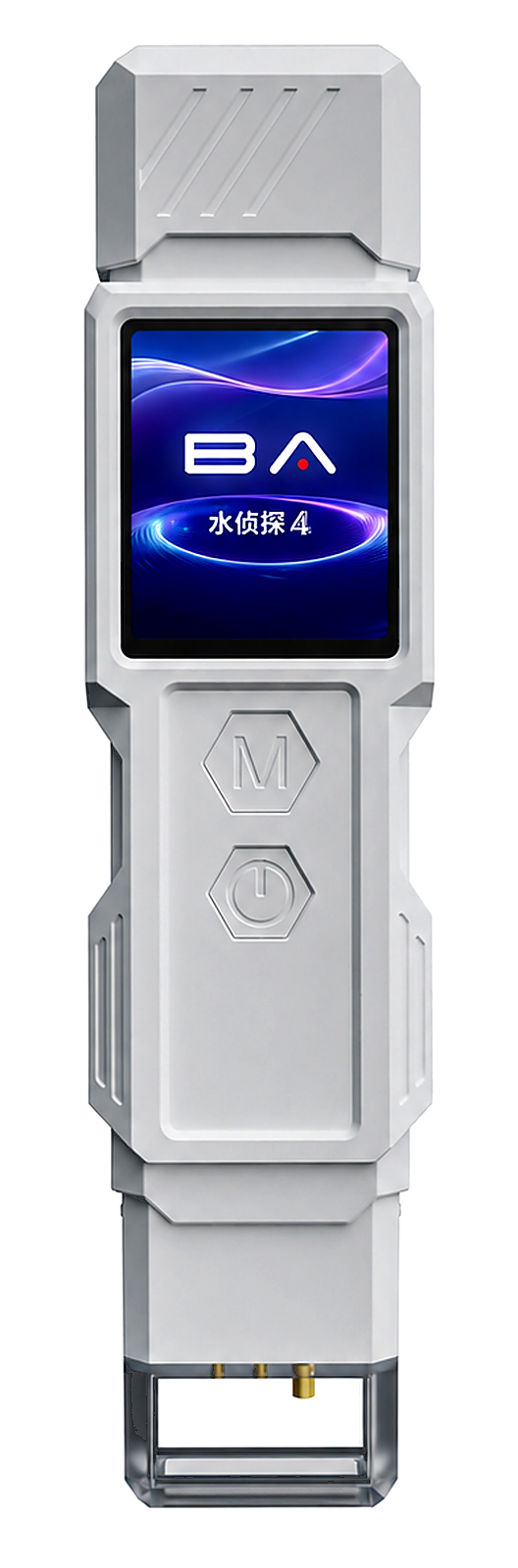
Portable water quality testing devices easily slip into two errors: either they copy laboratory-report-style data directly onto the screen, causing users to mistake TDS or conductivity for a safety conclusion, or they oversimplify complex measurements into a red/green light, causing users to treat a "green light" as a compliance endorsement. A trustworthy user experience continuously communicates the device's capability boundaries to users during power-on, sampling, cleaning, repeated measurement, result display, and after-sales instructions, while turning sensor error, temperature effects, and operational deviation into clear guidance. This article is intended for brand owners, product managers, embedded engineers, hardware R&D teams, and OEM customers of smart small appliances such as water purifiers, water dispensers, coffee machines, smart water bottles, and pet water fountains. It discusses how to design trustworthy experiences based on conductivity/TDS chips, probes, and optional optical water quality sensing. The AtomBit Water Detective series of portable multi-parameter testing pens is a productized reference for this approach: they are intended for domestic water, on-site screening, water purification services, aquaculture testing, and similar scenarios, providing rapid multi-parameter testing, but they explicitly do not replace laboratory testing required by regulations. Understanding this boundary is the starting point for designing a trustworthy experience.
1. Power-on experience: Make self-test a "visible preparation"
Engineering problem: Conductivity measurement is significantly affected by temperature. A dry probe, surface contamination, or bubbles can distort the first set of readings. If the device directly displays "0 ppm" or immediately starts measuring after power-on, users will likely treat abnormal values as real results.
Design method: During power-on, the following self-checks should be completed and presented to the user in simple language:
- Read the temperature sensor and wait for the temperature to stabilize; if conditions are not met, prompt "Please wait for the water sample to return to room temperature" or "Temperature out of range."
- Check whether the probe/optical window is immersed in the water sample or is dry; when dry, prompt "Please immerse the probe in water."
- If the device supports recording the last cleaning status, it can prompt at power-on: "Cleaning the probe is recommended after the last measurement."
- Display a "ready" status rather than implying "calibration complete" or "accuracy qualified." Only after automatic calibration or standard solution verification has actually been completed may the corresponding information be displayed.
Implementation steps: Power on -> read temperature -> determine temperature range -> read probe contact status -> enter the measurement standby screen. Firmware must reserve a sensor calibration curve for temperature compensation; the compensation curve should be provided by the conductivity/TDS chip or probe supplier and written to non-volatile memory. If the complete device also integrates an optical detection channel, the power-on self-test must also check whether the optical window has a water film or obstruction, to avoid abnormal optical readings after measurement starts.
2. Sampling and rinsing: Use interaction to reduce operational error
Engineering problem: Cross-contamination, container residue, bubbles, and insufficient immersion depth are the most common user errors in portable water quality testing. For the same cup of water, if a previous high-concentration sample was measured and the device was not cleaned, subsequent measurements will read high; if bubbles adhere to the probe surface, conductivity readings will be noticeably low; if immersion is insufficient, optical readings may be disturbed by stray light.
Design method: Actively guide the user through interaction rather than placing all responsibility on the user.
- Clearly define the minimum immersion line or liquid level requirement, add visible markings on the probe housing, and provide illustrations in the accompanying manual.
- Prompt "Rinse the probe and container 2-3 times with the water sample to be tested" and avoid using detergent or paper towels to wipe the electrodes.
- During measurement, the device can determine whether bubbles or insufficient immersion are present based on electrode contact status, sudden measurement value changes, or abnormal optical signals, and immediately prompt "Bubbles detected, please swirl gently and measure again."
- For before/after water purifier comparison scenarios, sampling under the same water temperature and the same container type is recommended to reduce systematic deviation.
Implementation steps: The user flow can be designed as: power-on self-test -> rinse -> sample -> immerse -> wait for stabilization -> read. On the hardware side, the probe structure should be as smooth as possible, avoiding deep grooves and sharp angles; sufficient water flow channels should be retained around the conductivity electrodes to help bubbles escape. For integrated devices such as coffee machines or water dispensers, sampling guidance can be transformed into automatic water intake, automatic rinsing, and automatic draining logic, but bubbles and temperature still need to be monitored.
3. Cleaning and maintenance: Keep the device trustworthy
Engineering problem: Scaling, oil, or dried residue on the surface of conductivity electrodes changes the cell constant; scale, fingerprints, or scratches on the optical window directly affect optical parameters such as TOC/COD/UV254. If users do not clean the device for a long time, chronic drift will occur, but users may not notice it.
Design method: Turn cleaning from a "recommendation" into a closed loop in which the device participates.
- Based on measurement count, interval time, or detected abnormal drift, actively remind: "Please clean the probe window and measure again."
- Provide a "Cleaning Guide" entry on the result display page, telling users to use only clean water and a soft cloth, and to avoid alcohol, dish soap, or hard objects that may scratch.
- After-sales instructions should clearly state storage conditions: dry, protected from light, and avoid leaving the probe immersed in pure water or strong electrolyte solutions for long periods.
Implementation steps: Firmware can set a cleaning reminder counter; after each measurement, if the deviation between two adjacent results exceeds a set range or the optical signal is abnormal, trigger the prompt "Please clean and re-measure." A conservative cleaning reminder threshold can be preset in production and later optimized through user feedback and repair data. Note: Cleaning reminders cannot replace calibration, but they can significantly reduce erroneous results caused by contamination.
4. Repeated measurement and result stability: Make "a single number" more trustworthy
Engineering problem: A single measurement is easily affected by temperature fluctuations, stirring, bubbles, uneven mixing, and sensor noise. If the result the user sees on the screen is taken directly from the first sample, repeatability will be poor, thereby undermining trust.
Design method: The device should automatically perform multiple samplings and stability judgment internally, rather than requiring the user to press buttons multiple times.
- Read continuously several times, and lock and display the result when the deviation is less than a preset threshold.
- If stabilization cannot be achieved within a short time, prompt "Measurement unstable, please check whether there are bubbles on the probe or rinse again."
- A "stable value" or "average of the most recent N measurements" can be displayed to avoid showing a flickering last digit.
Implementation steps: Set a sliding window in firmware, and dynamically determine the number of samples according to the sensor noise level. After sampling is complete, display the stable value, and optionally include the temperature reading so the user knows the measurement conditions. For scenarios comparing before/after water purifier effects, it is recommended to display the difference between the two stable values and the temperature, making it easier for users to understand the change.
The following table gives display strategies for different scenarios:
| Scenario | Display strategy | Prompt focus |
|---|---|---|
| Rapid screening | Single stable value + reference range | "Results are for trend reference and do not replace laboratory testing." |
| Before/after water purifier comparison | Display two sets of stable values and the difference side by side | "Sampling at the same water temperature is recommended to reduce temperature effects." |
| Filter trend tracking | Trend curve of the most recent N measurements | "Trend changes may indicate the filter is nearing replacement; judgment should be combined with flow/time." |
5. Result display and interpretation: Translate engineering data into user language
Engineering problem: Parameters such as TDS, EC, and temperature are indirect indicators and cannot be directly equated with "safe" or "qualified." If the interface uses red/green lights or terms such as "safe to drink/not safe to drink," it creates compliance risk.
Design method: The result page should contain four types of information:
- Values and units, such as TDS, EC, and temperature.
- Measurement condition markers, such as "temperature compensated" or "not compensated."
- Reference ranges or trends, using "low/medium/high" or percentiles, avoiding absolute conclusions.
- Disclaimer: "This result is for rapid screening and does not replace laboratory testing" and "for trend comparison only."
Implementation steps: On smart terminals or device screens, when using color, avoid directly mapping red/green to "unqualified/qualified." Blue/gray can be used to indicate measurement completion, and amber to indicate attention is needed. For water purifier filter management, TDS/EC trends can be combined with filter life reminders: when the outlet water conductivity/TDS rises significantly compared with the last value or the initial value, prompt "Check the filter is recommended"; however, it must be stated that TDS cannot reflect filter failure modes such as microorganisms, residual chlorine, or heavy metals, and filter replacement decisions should comprehensively consider flow, time, and water quality changes.
6. Prompts and after-sales instructions: Error messages must also be trustworthy
Engineering problem: Error codes such as "E01" and "Err" are meaningless to users and may cause panic or incorrect operation; overly colloquial prompts may also appear unprofessional. If after-sales service only says "Please contact customer service," user confidence will decline.
Design method: Prompts are divided into three layers: what happened, what the user can do, and under what circumstances after-sales service is needed.
- Example 1: "The probe is dry. Please immerse the probe in water and try again. If it still shows dry, please contact after-sales service."
- Example 2: "Temperature out of range. Please wait for the water sample to return to room temperature. If the prompt still appears when the ambient temperature is normal, please contact after-sales service."
- Example 3: "Measurement unstable. Please check whether there are bubbles on the probe, swirl gently, and measure again. If instability persists, cleaning or calibration may be needed."
Implementation steps: Maintain firmware error codes and user prompts separately; every error code must have user-visible text and an additional "More Help" link. The after-sales manual should clearly state: cleaning steps, storage method, when factory calibration is needed, and which situations are not covered by warranty. Do not promise unrealistic "calibration-free" or "permanent accuracy," to avoid after-sales disputes.
7. Selection and integration: From portable devices to smart small appliances
Engineering problem: Household water purifiers, water dispensers, coffee machines, smart water bottles, pet water fountains, and other devices have different requirements for water quality detection modules. Portable testing pens can accept manual rinsing, waiting, and observation by users; embedded modules require long-term maintenance-free operation, automatic sampling, automatic temperature compensation, and lower power consumption.
Selection method: First determine the target water sample and key parameters. If only dissolved solids and temperature changes are of concern, a conductivity/TDS interface ASIC plus a pair of electrodes is sufficient; if organic trend, turbidity, or more parameters are needed, an optical detection channel can be evaluated, but this increases the difficulty of window cleaning, light source life, and stray light handling.
The decision process can be simplified as:
- List the parameters that must be detected: TDS/EC/temperature; optional TOC/COD/UV254, turbidity, hardness, salinity, etc.
- Confirm the water sample temperature range, conductivity range, usage frequency, and life target.
- Choose a conductivity/TDS interface ASIC or a discrete analog front end. ASICs are suitable for complete devices with large volume, limited space, and a desire to reduce debugging; key evaluation points include measurement range, whether temperature compensation is built in, digital interface, and power consumption.
- Choose the probe structure: electrode material, spacing, anti-bubble design, and ease of cleaning; confirm the minimum immersion depth and flow rate requirements.
- If optical detection is introduced, evaluate the light source/detector, window material, automatic or manual cleaning cycle, and calibration method.
- Verify complete-device error and drift during the prototype stage before deciding whether to move to mass production.
Cost and mass production verification: Conductivity/TDS ASICs can usually reduce BOM and calibration complexity, but probe consistency remains key. The production line needs standard conductivity solutions or standard resistors for calibration/verification, and should sample-check repeatability and temperature compensation. Do not omit batch calibration of the temperature sensor, otherwise different complete devices may read different results in the same water.
The multi-parameter portable testing pens in the Water Detective series provide a reference for product definition: they integrate TOC, COD, UV254, TDS, EC, turbidity, hardness, salinity, and temperature into one rapid testing platform, suitable for households, service personnel, and on-site screening. However, this does not mean smart small appliances must replicate all parameters; the parameters with the most trend significance should be selected according to actual usage scenarios, and long-term stability must be ensured.
8. Verification methods: Let trustworthiness be proven by testing
Engineering problem: User experience design cannot remain at the interface level; engineering testing must prove that the device can still provide stable, interpretable results under conditions users may encounter.
Verification content is recommended to include:
- Repeatability test: Measure the same water sample 10 times continuously, record the mean, standard deviation, and maximum deviation; determine the "stable display" threshold.
- Temperature effect test: Use standard conductivity solutions at multiple temperature points to verify the reading deviation after temperature compensation.
- Cross-contamination test: Measure high-concentration and low-concentration samples alternately, and observe recovery time and residual effects.
- Bubble/Non-Immersed Test: Artificially create bubbles and shallow immersion to verify whether the device can correctly provide alerts.
- User Test: Have users independently complete power-on, sampling and reading without training, and record the misoperation rate and their understanding of error prompts.
- Long-Term Drift Test: Conduct aging tests based on usage counts or intervals to determine cleaning reminder and calibration recommendation cycles.
Implementation Steps: During development, establish an internal test protocol and record the deviation distribution rather than reporting only the best values. During mass production, perform online calibration or sampling verification for key parameters such as temperature compensation. For smart connected devices, it is recommended to observe stability and prompt reach rates in real-world use from anonymous diagnostic data collected with user consent, while complying with privacy regulations.
9. Limitations: Clearly state what cannot be done
Portable or embedded water-quality testing devices must clearly state the following limitations to prevent misuse by users or brand owners:
- Conductivity/TDS cannot detect microorganisms, viruses, most organic matter, heavy metals, pesticides, etc. TDS mainly reflects the total amount of dissolved solids, not the "total amount of pollutants."
- Optical parameters such as TOC, COD, UV254, and turbidity can provide organic-matter-related trends, but they are screening methods affected by bubbles, color, turbidity, window contamination, etc., and cannot replace laboratory analytical methods.
- Measurement results from portable devices are affected by sampling, temperature, cleaning, probe aging, and other factors, and are not suitable as a basis for compliance or legal purposes.
- For filter life management, TDS/EC trends can only serve as one auxiliary reminder and cannot alone determine whether a filter has failed, especially activated carbon, antibacterial, or heavy-metal-removal filters.
In product instructions, App interfaces, and after-sales materials, terms such as "screening," "trend," and "device feedback" should be used, avoiding expressions such as "test passed," "safety certified," and "laboratory grade."
FAQ
Q: Can a portable TDS test pen directly determine whether tap water is drinkable?
A: No. TDS only reflects the total amount of dissolved solids and cannot detect bacteria, viruses, heavy metals, pesticides, etc. Portable devices are suitable for comparing water purifier performance, routine water sample screening, and trend tracking, and do not replace regulatory laboratory testing.
Q: Why do two measurements of the same cup of water give different results?
A: It may be due to temperature changes, attached bubbles, insufficient rinsing, probe position, or container residue. It is recommended to rinse with the water sample to be tested 2–3 times, let it stand, then repeat the measurement and take a stable value; if instability persists, clean the probe and try again.
Q: What scenarios is the Water Detective series suitable for?
A: According to AtomBit product information, the Water Detective series is aimed at scenarios such as domestic water, on-site screening, water purification services, and aquaculture testing, providing a portable rapid testing process that can be operated without large laboratory equipment; it is suitable for households, service personnel, and on-site screening. It cannot replace laboratory testing required by regulations.
Q: How can TDS/EC data be used for water purifier filter life management?
A: The trend of TDS/EC changes in the outlet water can be monitored, and when the trend clearly deviates from the initial baseline, a reminder to check the filter can be given. However, filter life is also affected by flow rate, time, raw water quality, and filter type; TDS/EC can only serve as an auxiliary reference and cannot alone determine whether a filter has failed.
Q: Does the device need regular calibration?
A: The calibration or cleaning cycle should be determined based on the sensor's drift characteristics and frequency of use. Portable testing devices usually require regular cleaning and, when necessary, factory calibration; embedded modules should be designed with internal temperature compensation and abnormal drift alerts, and after-sales instructions should tell users when maintenance is needed. The specific cycle should be determined through validation data rather than simply promising "permanently calibration-free."