
Key consultation points on using soft water or purified water for pet drinking water: a step-by-step guide
Many cat, dog and bird owners ask: can pets drink soft water or purified water long-term? Is water from a water softener or RO purification system safe for pets? How can a portable water-quality test pen support everyday judgment? This article uses the AtomBit Water Detective 4 portable water-quality test pen as a screening tool and provides a reproducible step-by-step guide to help pet owners, pet drinking fountain brands and product managers establish a clear baseline for observing water quality. It must be emphasized that a portable test pen is intended for screening, comparison and trend observation; it cannot replace laboratory analysis, nor can it directly prove that drinking water is safe for pet health.
I. Intended users and decision questions
This article applies to daily drinking water management for cats, dogs, birds and other pets in household settings, including:
- Households considering using a water softener or RO purification system for their pets;
- Users who already use water treatment equipment and want to periodically verify changes in the output water;
- Pet drinking fountain brands or product managers who want to understand the practical boundaries of portable test pens on the user side;
- OEM/ODM customers planning to integrate sensors such as conductivity/TDS and temperature into pet drinking water equipment.
The questions requiring decisions include:
- Should soft water or purified water be used long-term for pet drinking water?
- How can a portable test pen distinguish between changes in water source, filter failure and incidental contamination?
- Under what circumstances must the current water be discontinued and sent for laboratory testing?
- How should data be recorded to form a traceable trend?
This guide does not answer veterinary or toxicological questions such as "what water is absolutely safe for pets." Any specific conclusions concerning pet health should be made in consultation with a licensed veterinarian and in light of local drinking water quality reports and regulatory requirements.
II. Boundaries of water samples/equipment/scenarios
Applicable water samples
The following common pet drinking water sources can be measured:
- Municipal tap water (as a baseline)
- Water softener output (ion-exchange softened water)
- RO purification system output
- Bottled water/barreled water
- Circulating water that has been standing for some time in a pet drinking fountain
Device boundaries
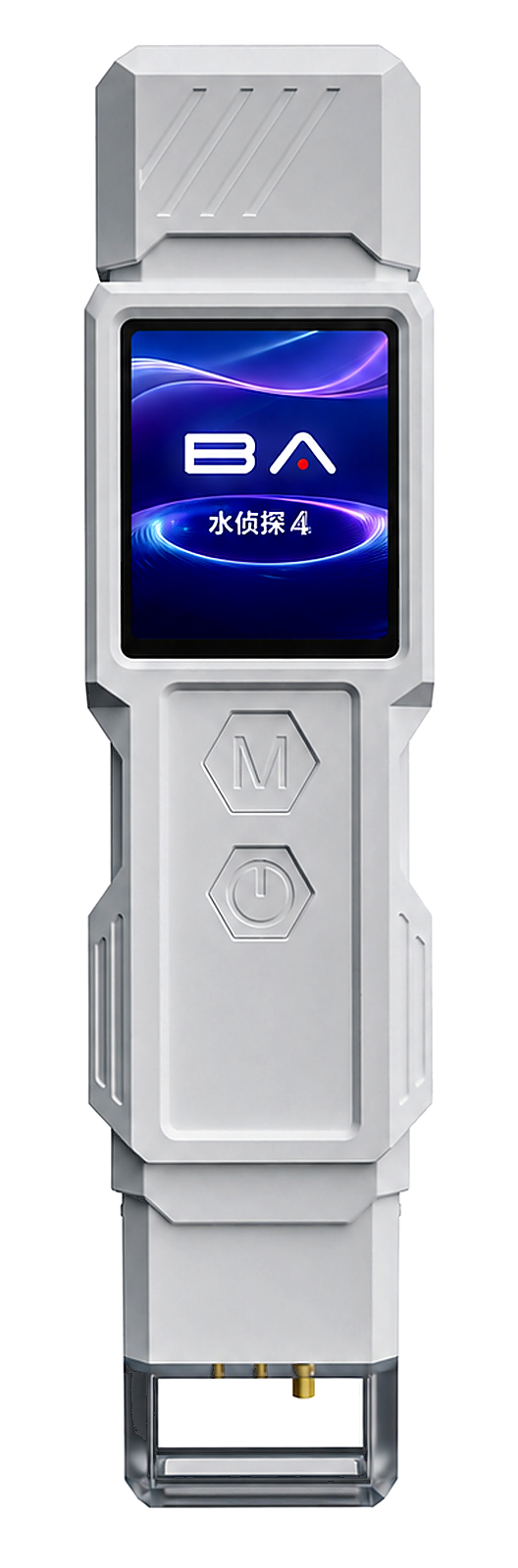
The AtomBit Water Detective 4 is a personal/household portable multi-parameter water quality tester that integrates nine indicators: TOC, COD, UV254, TDS, EC, turbidity, hardness, salinity and temperature. Its design goals are rapid on-site screening, comparison of raw water and product water, equipment maintenance reminders and long-term trend observation. It is a screening device, not a laboratory analytical instrument.
Important: this device cannot detect specific contaminants such as lead, arsenic, nitrate, nitrite, pesticides, bacteria, viruses, parasites, dissolved oxygen or ammonia nitrogen. If these risks are a concern, a qualified laboratory must be commissioned, in accordance with local requirements, to confirm them using dedicated methods.
Scenario boundaries
Suitable for:
- Routine water quality observation of household pet water fountains;
- Before-and-after effect comparison for water purifier/water softener installation;
- Auxiliary judgment for water dispenser filter replacement reminders;
- Preliminary screening when a pet's drinking behavior is abnormal.
Not suitable for:
- Compliance testing of industrial wastewater, municipal sewage treatment or environmental water bodies;
- Use as a basis for pet health diagnosis;
- Proving that a water source meets any regulatory limit.
III. Reproducible sampling and measurement steps
3.1 Preparation and sampling
- Prepare a clean container free of residue. PET or glass containers are preferred; rinse 2–3 times with the water sample to be tested and discard the rinse water.
- If measuring water in a pet water fountain, let the fountain run for a few minutes first, then drain about 10–15 seconds of stagnant water from the outlet (adjust the specific time according to the fountain's tubing length) before collecting a fresh water sample.
- If comparing before and after a water purifier, collect raw water (inlet) and product water (outlet) separately, and make sure the two samples are close to room temperature to avoid temperature differences affecting readings.
- Record the sampling date, time, water source type, filter usage time (if any), and recent changes in the pet's drinking or health.
3.2 Measuring with the Water Detective 4
- Check whether the tester pen's probe is clean. According to the product instructions, rinse the probe with pure water and gently wipe it dry, avoiding direct hand contact with the optical window or electrodes.
- Pour the water sample into a clean measuring container, fully immerse the tester pen's sensing area, and shake or stir gently to expel air bubbles.
- Let it stand for a moment and wait for the reading to stabilize. Once stable, record each parameter: TOC, COD, UV254, TDS, EC, turbidity, hardness, salinity and temperature.
- Repeat the measurement 2–3 times on the same water sample and take the average. If the deviation among the three readings is too large (for example, TDS differs by more than 10%), check whether the probe is contaminated, whether there are air bubbles, whether the sample is uniform, or resample.
- After measurement, rinse the probe with pure water and let it dry before storage.
3.3 Common failure modes and how to avoid them
- Bubble attachment: causes fluctuations in optical and electrochemical readings. Stir gently and let the sample stand before taking a reading.
- Unstable temperature: TDS/EC/salinity readings are affected by temperature. Record the water temperature and measure at room temperature where possible; avoid cold water straight from the refrigerator or freshly heated water.
- Water sample left standing too long: circulating water in a pet fountain may change due to contact with air, pet saliva or food residue. Ideally measure immediately after sampling, or record how long the sample has stood.
- Probe residue: if the probe is not rinsed clean after measuring a high-concentration sample, it will contaminate the next measurement. Always rinse with pure water and wipe dry.
- Excessive turbidity: particles interfere with the optical channel and may cause abnormal readings for UV254, TOC and similar parameters. If the sample is visibly turbid, record the turbidity value and interpret other optical parameters with caution.
- Strong light or direct sunlight: may affect optical measurements; operate under stable indoor lighting where possible.
IV. How to interpret results and common interferences
4.1 Screening purpose of each parameter
The table below lists the screening significance of the parameters measurable by Water Detective 4 in the context of pet drinking water. All interpretations are intended only for comparison, trend observation and anomaly alerts, not for qualitative or quantitative risk assessment.
| Parameter | Screening purpose | Interpretation and cautions |
|---|---|---|
| TDS / EC / salinity | Total dissolved solids and ionic strength | Soft water or RO purified water is usually noticeably lower than tap water. A sudden increase may indicate filter failure, release from softening resin or a change in water source. However, TDS itself does not distinguish between beneficial minerals and harmful substances. |
| Hardness | Estimated total of hardness ions such as calcium and magnesium | Water softeners or RO systems can reduce hardness. However, birds may be more sensitive to certain minerals, and whether the water is suitable for long-term drinking should be discussed with a veterinarian. Hardness values from test pens are mostly estimates and cannot replace laboratory titration. |
| Turbidity | Suspended particles | Higher turbidity may affect palatability and indicate particulate contamination or a medium for microbial growth, but it cannot determine whether pathogens are present. |
| TOC / COD / UV254 | Composite organic indicators | Used to compare raw water and filtered water and to observe the filter's trend in removing organics. If TOC/UV254 in filtered water keeps rising, it may indicate filter saturation or an increased organic load in the feed water. However, this cannot support conclusions that pesticides, bacteria or specific organic pollutants are present. |
| Temperature | Physical parameters | Affect pets' drinking preference and the conditions for microbial proliferation. Excessively high water temperature in a fountain may promote biofilm formation and should be managed together with cleaning frequency. |
4.2 Screening and judgment of soft water and pure water
- Soft water: Hardness readings are usually low, and TDS/EC may vary depending on the softening method. Sodium-type ion exchange softening reduces calcium and magnesium but increases sodium, so TDS may change little while hardness drops markedly. If you find that hardness has decreased but TDS has not decreased accordingly, first confirm the softening method rather than directly assuming the water quality is better.
- Pure water: The product water of an RO pure water machine usually has very low TDS/EC and hardness close to very low. However, low TDS does not mean all harmful substances have been removed, nor does it mean the water is necessarily better for pets. Long-term consumption of pure water may reduce the minerals pets obtain from drinking water, which may have an impact especially when pet food is unbalanced. Whether mineral supplementation is needed should be assessed by a veterinarian in conjunction with the diet.
- Birds: Birds may be more sensitive to changes in water quality, especially certain minerals or metals. However, the specific risks need to be judged by an avian veterinarian or a professional laboratory. Test pens cannot measure these specific substances.
4.3 Common interference and misreading
- Temperature effect: TDS/EC/salinity readings change with temperature. Data from different dates should be compared at similar temperatures.
- Detergent residue: If detergent remains in containers or on probes, it will markedly change TDS/EC and organic matter readings. Be sure to rinse thoroughly.
- Natural organic matter: In some areas, tap water has a relatively high content of natural organic matter, and the UV254/TOC baseline is elevated; this does not indicate contamination, and a local baseline should be established.
- Sodium in softened water: Ion exchange softening increases sodium ions, and TDS may rise rather than fall. If you focus only on TDS, you may misjudge the softening effect. Hardness and salinity data should be considered together.
- Biofilm or algae: If a water dispenser has not been cleaned for a long time, biofilm or algae may appear in the circulating water, and turbidity and TOC may increase. This is a maintenance issue; the equipment needs to be cleaned, rather than focusing only on the water quality itself.
V. When to retest, stop use, or refer to a laboratory
Retest frequency
It is recommended to measure the water in the pet water dispenser with Water Detective 4 at least once a week and keep records. The retest frequency should be increased in the following situations:
- After replacing the water purifier filter cartridge or the water softener resin;
- After thoroughly cleaning the water dispenser;
- When the pet shows abnormalities such as reduced drinking, vomiting, diarrhea, or poor spirits;
- When the water source changes (for example, switching from tap water to well water, or changing the brand of bottled water);
- When seasonal changes cause the water temperature to rise markedly.
Stopping use and troubleshooting causes
If any of the following situations occurs, it is recommended to suspend letting pets drink that water source and investigate the cause:
- The water sample shows obvious odor, abnormal color, turbidity, sediment, algae, or a floating film;
- The test pen reading suddenly rises greatly compared with the local baseline (for example, TDS/EC or turbidity doubles and remains high on retest) and cannot be explained by filter cartridge life or insufficient cleaning;
- The pet shows persistent vomiting, diarrhea, refusal to drink, or other abnormalities, and water is suspected to be related;
- Biofilm, mold, or insects are found inside the water dispenser.
At this point, do not judge "toxic" based on the test pen reading alone; instead, stop using the water and consult a veterinarian, while collecting parallel water samples for laboratory submission.
Clear situations requiring referral to laboratory testing
The following indicators or risks cannot be judged from Water Detective 4 and must be sent to a qualified laboratory:
- Heavy metals such as lead, arsenic, cadmium and chromium;
- Inorganic pollutants such as nitrate, nitrite, ammonia nitrogen and fluoride;
- Total bacterial count, coliform bacteria, viruses and parasites (such as Cryptosporidium and Giardia);
- Specific organic pollutants such as pesticides, herbicides and volatile organic compounds;
- Other parameters affecting water quality, such as dissolved oxygen.
Locally permitted pollutant limits and testing methods vary by region; consult your local public health department or environmental regulatory agency and choose a certified laboratory.
VI. Record sheet/action checklist
Example record sheet
It is recommended to record the following for each measurement; a trend chart is more meaningful than a single reading.
| Date | Water sample source | Temperature (°C) | TDS/EC | Hardness | Turbidity | TOC/COD/UV254 | Remarks/Action |
|---|---|---|---|---|---|---|---|
| 2025-01-01 | Tap water | 22 | Recorded value | Recorded value | Recorded value | Recorded value | Baseline |
| 2025-01-01 | RO product water | 22 | Recorded value | Recorded value | Recorded value | Recorded value | Filter cartridge has been used for 30 days |
| 2025-01-08 | Water dispenser circulating water | 24 | Recorded value | Recorded value | Recorded value | Recorded value | Clean and change water |
(Note: The "recorded values" in the table are illustrative; record the actual readings in practice.)
Action checklist
- [ ] Measure at least once a week and keep a history log.
- [ ] Before use, rinse the container with the water sample, and rinse the probe with pure water and wipe it dry.
- [ ] Record water temperature during measurement, and avoid direct sunlight and air bubbles.
- [ ] When indicators such as TDS/EC, turbidity and TOC deviate significantly from the baseline, first retest to confirm, then check the water dispenser, filter cartridge and water source.
- [ ] If you notice abnormal odor, abnormal color, turbidity or abnormal behavior in pets, stop using the water and consult a veterinarian.
- [ ] If heavy metals, nitrates, bacteria, etc. are suspected, immediately send samples to a qualified laboratory for testing.
- [ ] Do not use readings from portable test pens as proof of pet health or compliance.
FAQ
Q: Can the Water Detective 4 detect bacteria or viruses? A: No. The Water Detective 4 measures screening parameters such as turbidity, composite organic indicators (TOC/COD/UV254) and conductivity/TDS; it cannot identify bacteria, viruses or parasites. Such risks must be confirmed using laboratory microbiological culture, PCR or immunological methods.
Q: Is RO pure water with very low TDS safe enough? A: TDS only indicates total dissolved solids; low TDS does not mean the absence of trace harmful substances, nor does it necessarily mean the water is better for pets. Pure water may reduce the minerals pets obtain from drinking water. Whether long-term consumption is appropriate depends on the pet's diet and health status, and a veterinarian must be consulted.
Q: How can the output water of a water softener and an RO pure water machine be compared using a test pen? A: You can separately measure the TDS/EC, hardness, turbidity, etc. of the raw water (influent) and the produced water (effluent), and record the filter cartridge usage time. If the produced water TDS/EC gradually rises and hardness rebounds, this may indicate declining membrane or resin performance and the need for maintenance. However, the specific replacement cycle should follow the equipment manufacturer's recommendations.
Q: If a portable test pen reading is stable, is it necessarily accurate? A: A stable reading only indicates good measurement repeatability, not absolute accuracy. Portable devices are subject to interference from temperature, air bubbles, turbidity, probe contamination, etc., and have not been compared against laboratory methods. Any critical decision should be combined with laboratory testing and veterinary advice.
References
- AtomBit. Water Detective 4 Personal/Household Portable Water Quality Test Pen Product Description (internal database material, 2025).
- World Health Organization. Guidelines for drinking-water quality: fourth edition incorporating the first addendum. Geneva: World Health Organization; 2017. This guideline treats parameters such as TDS as aesthetic or operational issues rather than health-based guideline values; please refer to the latest edition for specific limits.
- U.S. Geological Survey. Hardness of Water. USGS Water Science School. Provides general background and classification of water hardness, which can be used to understand hardness readings.
- Centers for Disease Control and Prevention. Water Quality and Testing. Provides general recommendations for household water quality testing and sampling.
Regional applicability statement: The general screening process in this article does not replace local drinking water quality standards, pet health regulations or veterinary advice. Tap water quality, certification requirements for water purification equipment, and pet drinking water management practices may differ by region; please defer to local authorities and practicing veterinarians.