
# Microbial risk and the boundaries of portable screening: correcting common misconceptions
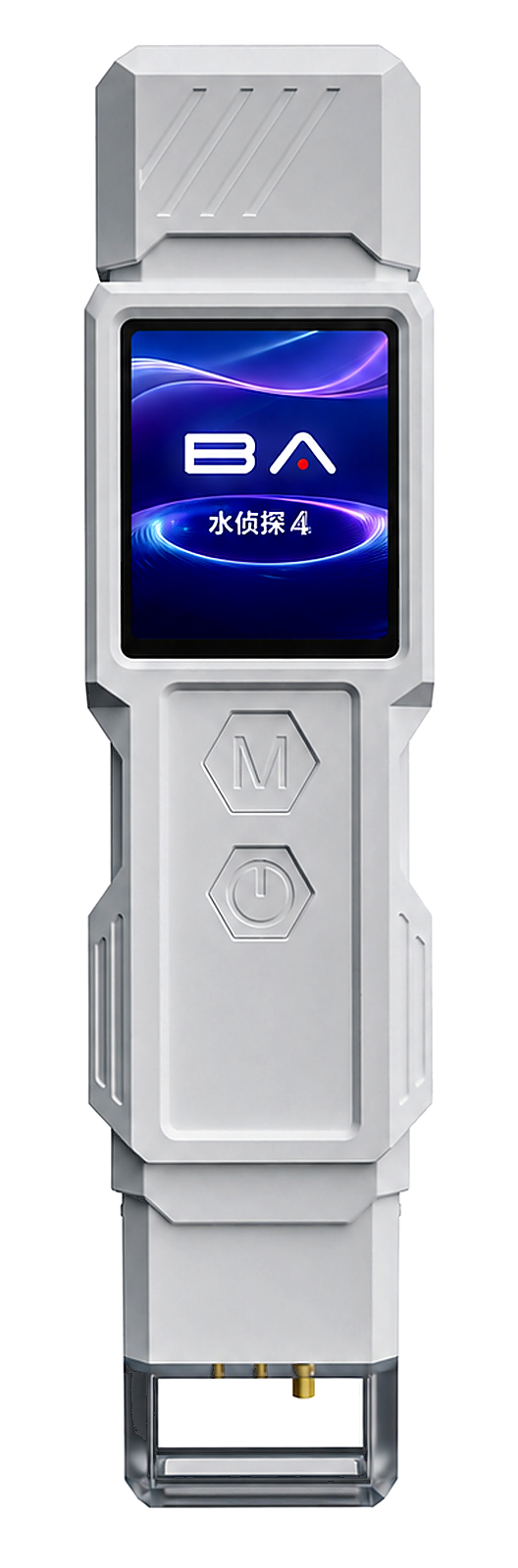
Infants' immune systems are not yet mature, and parents are highly sensitive to the risks of bacteria, viruses and parasites in drinking water. Portable water test pens (such as AtomBit Water Detective 4) can quickly read multiple indicators, but a common misleading practice in the market is to interpret portable parameters as "microbiological testing." For infant and maternal drinking-water scenarios, this article clarifies which indicators can be screened on site and which cannot replace laboratory microbiological testing, and provides reproducible operating steps, common interferences and action boundaries.
1. Applicable users and decision questions
The intended audience includes: infant and maternal families using water purifiers, water dispensers, smart cups and similar devices; product managers, embedded engineers and hardware R&D staff for water purifiers and small infant/maternal appliances who need to understand how to correctly present portable test data in product interfaces; and water purification equipment service personnel.
Core decision questions:
- Does the water from the household water purifier, the water used to mix formula, or the water infants drink directly require microbiological testing?
- Can portable parameters serve as a substitute judgment for "microbiological safety"?
- Under what circumstances should water be boiled, the filter replaced, or a sample sent to a laboratory?
It must be clear: portable parameters are for screening and trend observation, not microbial identification. TOC, COD and UV254 are total organic matter and optical surrogate indicators; they do not represent pathogen counts. Elevated turbidity may indicate particulate matter, but it cannot confirm bacteria or viruses.
2. Water samples, equipment, and scenario boundaries
Water sample types include: municipal tap water, water purifier effluent, bottled water, barreled water, community direct drinking water stations, well water, etc. In infant and maternal scenarios, prioritize testing the final water used to mix formula, the cold and hot water outlets of water dispensers, and the first cup of water after replacing the filter in a water purifier.
Device boundaries: Water Detective 4 provides rapid portable testing, including TOC, COD, UV254, turbidity, TDS, conductivity, salinity, hardness and temperature. These parameters reflect screening information on physical, chemical and organic load, and do not include microbial culture or molecular detection capability. They cannot be used to test bacteria, viruses, parasites, dissolved oxygen, ammonia nitrogen, nitrite or nitrate, specific heavy metals, etc.
Scope boundaries:
- Suitable for: daily trend observation, before-and-after filter comparison, screening differences in output water across different water sources or devices, and as an aid for filter replacement reminders.
- Not suitable for: determining whether water meets microbiological standards for direct drinking by infants and young children; confirming pathogens after a suspected water contamination event; assessing drinking water safety for immunodeficient infants and young children.
For anything involving pathogens, nitrate, lead, arsenic, pesticides or other specific contaminants, confirmation is required according to local authority or laboratory testing methods.
3. Reproducible sampling and measurement procedure
Taking Water Detective 4 as an example, household users or service personnel can refer to the following steps.
P reparation : Use a clean sampling bottle with no detergent residue, and rinse it 2–3 times with the water sample to be tested; before sampling, let the tap run steadily for 10–15 seconds and collect the mid-stream water.
Measurement order: First measure temperature, then conductivity/TDS/salinity, then turbidity, UV254, TOC/COD, hardness, etc. (follow the manual for the specific order). Avoid leaving the water sample standing too long, which may cause particle settling or gas exchange.
Recording: Take readings at the same water temperature or record the temperature; take the average of 3 consecutive readings, and record the time, water source and filter status.
Special attention: Bubbles can interfere with optical readings (turbidity, UV254, TOC/COD), so gently swirl or let the sample stand to release air; the electrode must be fully immersed with no bubbles. Portable readings are only for mutual comparison on the same device under the same conditions; absolute values from different brands and models cannot be directly compared, especially optical parameters.
4. How to interpret results and common interferences
Taking the maternal and infant scenario as an example:
- TDS/EC: Reflects the total dissolved solids and cannot reflect microorganisms. Low TDS does not mean sterile, and high TDS is not necessarily pathogenic, but it may affect taste and equipment scaling. The same applies to hardness.
- Turbidity: High turbidity may be related to particulate matter, biofilm shedding, etc., but low turbidity cannot prove the absence of pathogens; some viruses can still be present in low-turbidity water. High turbidity can serve as an indication that further investigation is needed.
- TOC/COD/UV254: reflects the organic load, originating from natural organic matter or certain synthetic organic compounds; it is not a direct count of bacteria or viruses. An elevation may indicate organic contamination of the water source or piping, but cannot distinguish the source.
- Temperature: affects measurement stability and the survival/reproduction of microorganisms, but is not a safety indicator.
Common interferences: contaminated sampling containers, fingers touching the probe, water samples left standing too long, sensor drift caused by temperature changes; bubbles, particle settling, and ambient light interfering with the optical channel; air-water mixing in the water right after a water purifier filter is replaced, causing unstable readings; uncompensated temperature differences between different water sources may cause conductivity/TDS reading deviations.
Any elevation or abnormality cannot be directly interpreted as "there are bacteria/viruses" or "unsafe"; rather, it should trigger further action—retesting, comparison, boiling, or sending samples for laboratory testing.
5. When to retest, stop use, or refer to a laboratory
- If a portable indicator is clearly elevated relative to the daily baseline (for example, turbidity or TOC/COD suddenly rises, or conductivity/TDS is abnormal), first rule out sampling and operational interference, and retest 3 times using the same procedure.
- If results remain abnormal after retesting, and the water source is well water, old piping, after heavy rain, after water supply is restored following an outage, or an infant shows gastrointestinal symptoms, direct drinking should be stopped, and boiling disinfection should be performed (WHO recommends bringing water to a rolling boil and maintaining it for 1 minutes; longer at high altitudes) or other reliable disinfection measures should be adopted, and the local health department or a laboratory should be contacted for microbiological testing.
- For immunocompromised infants, premature infants, or cases requiring strictly sterile water as advised by a physician, whether to use the water should not be decided solely on portable parameters; boiled then cooled water or certified infant-specific water should be used directly, following the pediatrician's advice.
- Water purifier management: if the portable indicators of the purifier's output water deteriorate, this may indicate filter breakthrough, membrane damage, or biofilm in the piping; contact the supplier, replace the filter and flush according to the instructions, and if retesting remains abnormal, stop using it and send samples for testing.
"Stop using" does not mean merely that a portable reading exceeds a certain threshold; it refers to conservative handling when an abnormal trend is combined with a high-risk scenario.
6. Record sheet and action checklist
It is recommended that household users or service personnel keep continuous records in order to identify trends.
| Item | Record Content | Remarks |
|---|---|---|
| Date/Time | For example 2025-01-01 07:30 | Record the actual measurement time |
| Water source/equipment | e.g., kitchen water purifier outlet | Note equipment model and filter status |
| Temperature | Record readings | Temperature affects other parameters |
| TDS/EC/salinity | Record the measured value | Used for trend comparison |
| Turbidity/TOC/COD/UV254 | Record the measured value | Optical metrics require avoiding bubbles |
| Abnormality assessment | Compare with personal baseline | Not a safety threshold |
| Action | Continue use/retest/boil/send for testing | Combined with high-risk scenarios |
Action checklist:
- Measure at a fixed time each day or week, preferably before water use, to ensure comparability.
- If an abnormality is found, first rule out bubbles, container contamination and temperature changes, then retest 3 times.
- If the abnormality persists or is accompanied by turbidity, odor or infant discomfort, stop drinking directly, boil the water and contact a laboratory.
- For all specific contamination risks involving pathogens, nitrates, heavy metals, pesticides, etc., do not draw conclusions from portable data; testing by a qualified laboratory is required.
7. Common FAQ
Q: Can the Water Detective 4 detect bacteria? A: No. It provides screening readings for TOC, COD, UV254, turbidity, TDS, conductivity, salinity, hardness and temperature for trend observation and before/after comparison; it does not include microbial culture or molecular detection capabilities. Bacteria, viruses and parasites must be confirmed using laboratory methods.
Q: If TDS is very low, is the water definitely safe for a baby to drink? A: Low TDS only indicates that there are few dissolved substances; it does not prove the absence of pathogens. Microbiological safety must be ensured through disinfection measures such as boiling or through laboratory microbiological testing.
Q: Does an increase in turbidity mean there are bacteria? A: An increase in turbidity indicates an increase in particulate matter or colloids in the water, which may come from pipe disturbance, biofilm detachment or filter element problems, but bacteria/viruses cannot be judged on this basis. Other indicators and on-site conditions must be considered, and samples should be sent for testing if necessary.
Q: Can a portable instrument serve as a reminder to replace water purifier filter elements? A: It can be used as an auxiliary trend reference. For example, when conductivity/TDS or optical indicators change significantly, it indicates a change in equipment performance, but the specific filter element life and replacement criteria should be based on the manufacturer's instructions and verification of microorganisms/specific contaminants.
Q: How can I determine whether a water sample is suitable for infant consumption? A: The most reliable approach is to follow local health department recommendations: boil tap water and then cool it to a suitable temperature; if using a water purifier, choose terminal equipment certified for microbial removal and maintain it according to the instructions; in any uncertain situation, consult a pediatrician or the relevant testing organization.
8. Reference sources
- World Health Organization. Guidelines for drinking-water quality: fourth edition incorporating the first addendum. Geneva: WHO; 2017. https://www.who.int/publications/i/item/9789241549950
- USGS. Turbidity and Water. U.S. Geological Survey Water Science School. https://www.usgs.gov/special-topics/water-science-school/science/turbidity-and-water
- CDC. Making Water Safe in an Emergency. Centers for Disease Control and Prevention. https://www.cdc.gov/healthywater/emergency/making-water-safe.html
- USEPA. Emergency Disinfection of Drinking Water. https://www.epa.gov/ground-water-and-drinking-water/emergency-disinfection-drinking-water
Regional applicability: The above materials are global/US official recommendations; specific microbiological limits, sampling methods and enforcement requirements vary by country/region. Users in mainland China should also refer to the Standards for Drinking Water Quality GB 5749 and local health department regulations; portable instruments are not intended for enforcement testing.
9. Product integration boundaries and engineering notes
For product development teams working on water purifiers, water dispensers, smart cups and similar products: the UI and documentation should clearly state that the Water Detective 4 provides "screening/trend" data, and wording such as "sterilization testing" or "microbiological compliance" should be avoided. Temperature compensation algorithms need to be verified across the actual water quality range; optical channels need anti-bubble and stray-light design; during mass-production validation of OEM/ODM products, compare against standard water samples and laboratory methods to establish your own product baseline, and do not directly copy readings from other products.