
1. Who this content is for and what problem it solves
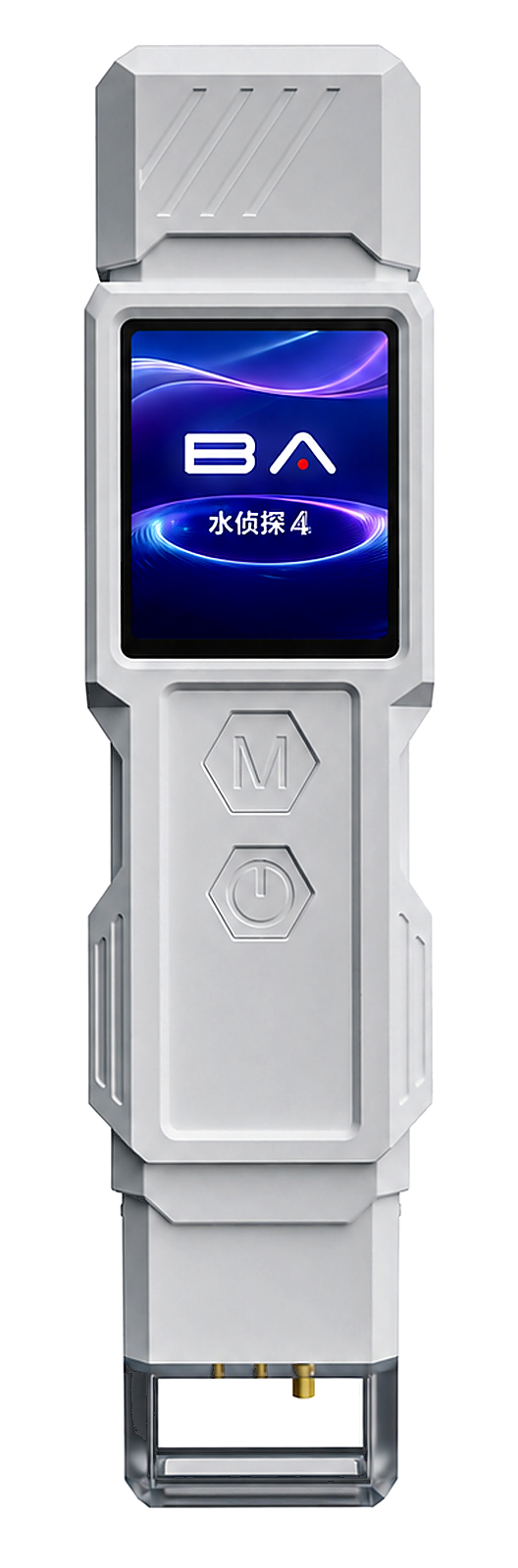
In after-sales scenarios for small household appliances such as water purifiers, water dispensers, coffee machines, smart cups and pet water dispensers, service engineers, product managers, hardware R&D and OEM customers often need to show users that the equipment is \"working effectively.\" Portable water quality test pens, such as the AtomBit Water Detective 4, provide nine rapid screening indicators — TOC, COD, UV254, turbidity, TDS, conductivity, salinity, hardness and temperature — and can provide a comparison between raw water and purified water within a few minutes.
However, the biggest risk in on-site demonstrations is not the instrument itself, but interpreting \"screening readings\" as \"proof of water quality safety.\" The goal of this article is to help after-sales teams and integrators establish a demonstration method that does not mislead users: clarify what the instrument can and cannot do, how to sample and retest, how to explain differences to users, and when it is necessary to recommend laboratory testing.
The applicable audience includes: water purifier brand after-sales service personnel, commissioning personnel for embedded water quality sensors in water dispensers/coffee machines, product managers for smart cups/pet water dispensers, and hardware R&D and OEM/ODM integration engineers. Decision questions usually include:
- How can it be confirmed after installation that the equipment is reducing the target parameters?
- Is the filter cartridge replacement reminder reasonable?
- When users complain that \"water quality has deteriorated,\" how can portable equipment be used for rapid troubleshooting?
- When cloud readings of smart hardware are abnormal, how can they be rechecked on site?
- How can users be told that portable readings cannot prove microbiological or heavy metal safety?
This article by default addresses drinking water and household appliance scenarios; it does not cover industrial wastewater, municipal sewage or environmental monitoring.
2. First, draw the boundary: what the Water Detective 4 can do and cannot do
Water Detective 4 is a portable multi-parameter screening platform. The official product description emphasizes "aimed at household water use, water purifier effect comparison and daily water sample screening". The integrated indicators include:
- TOC (total organic carbon)
- COD (chemical oxygen demand, usually estimated by spectroscopic method)
- UV254 (254 nm UV absorbance, as an organic matter indicator)
- Turbidity
- TDS (total dissolved solids)
- Conductivity (EC)
- Salinity
- Hardness
- Temperature
These parameters are suitable for answering three types of engineering questions:
- Whether the equipment is working : for example, the TDS/conductivity removal trend of the RO membrane, and the reduction of turbidity and UV-absorbing organic matter by activated carbon/ultrafiltration.
- Whether the filter cartridge is nearing the end of its replacement cycle: judged by a reduced difference between raw water and purified water, or by a rebound in the indicator on the purified-water side.
- Consistency among multiple devices: during OEM integration, use the same test pen to compare different devices on the same water sample.
However, the Water Detective4cannot replace laboratory identification of specific contaminants. It cannot measure:
- Heavy metals such as lead, arsenic, mercury, cadmium and chromium
- Specific inorganic ions such as nitrate, nitrite, ammonia nitrogen and phosphate
- Specific organic substances such as pesticides, herbicides, antibiotics and endocrine disruptors
- Microbiological indicators such as bacteria, viruses, parasites and algae
- Disinfection-related parameters such as dissolved oxygen, residual chlorine and ozone
If users explicitly worry about the above risks, or if the results are needed for commercial promotion, bidding or legal purposes, confirmation must be obtained using appropriate laboratory or dedicated methods as required locally. Household instrument readings must not be written as proof of drinking safety, pet health or aquaculture compliance.
3. Target audiences and decision questions for on-site demonstrations
After-sales on-site demonstrations usually occur in the following scenarios:
- Installation acceptance: after a new water purifier/water dispenser is installed, show the user the difference between raw water and purified water.
- Filter replacement reminder: The user has doubts about consumable life and needs proof that "it really is time to replace it now."
- Complaint handling: The user reports unusual odor, color, scale or a change in taste in the water.
- Smart hardware integration testing: When a smart device with TDS/conductivity sensing shows APP readings inconsistent with an on-site test pen.
- Pet water dispenser/smart cup sampling inspection: Sampling inspection of sensor consistency during mass production or after-sales demonstrations.
Before the demonstration, the user's real concerns must be clarified. If the user is worried about "bacteria in the water" while the after-sales staff merely take a TDS pen reading and tell them "the water is fine," that is misleading. The correct approach is: first record the phenomena the user describes, then decide which screening indicators can provide reference and which issues require sampling and laboratory testing.
The goal of the demonstration is not to deliver a "pass/fail" conclusion, but to provide trend comparison and device status feedback.
4. Sampling and measurement steps: a reproducible method
The most error-prone part of on-site measurement is consistency in sampling and operation. The following steps can be repeated and minimize human error.
4.1 Preparation
- Confirm that the Water Detective 4 is clean, with no fingerprints or water droplets on the optical window.
- Prepare 2–3 clean containers (it is recommended to rinse them 3 times with the water sample to be tested).
- Prepare a record sheet containing at least the time, sampling point, temperature, all readings and the operator.
- Measure indoors or in a shaded area whenever possible, and avoid direct sunlight on the optical window.
4.2 Selecting sampling points
- Raw water: take water directly from a tap or from before the device's water inlet.
- Purified water: take the actual output from the purifier outlet, water dispenser spout, coffee machine outlet, or smart cup/pet water fountain.
- If there are multiple filter stages, you can sample at an intermediate stage (the device must have a reserved port).
- Also take parallel samples: take at least two cups at each sampling point and measure them separately.
4.3 Measurement order and key points
- Rinsing: rinse the test pen sensor and optical window with the water sample to be measured 2–3 times to avoid interference from the previous residue.
- Temperature: measure and record the temperature first. Temperature affects conductivity, TDS and optical signals, so subsequent comparisons should be made at similar temperatures or with the device's built-in temperature compensation. Note: temperature compensation is a mathematical correction and cannot eliminate all errors.
- Turbidity: gently shake the water sample to avoid settling, then measure according to the instrument instructions. If the sample has obvious bubbles, let it stand for a moment or gently tap the container wall to remove them.
- Conductivity/TDS/Salinity: if turbidity is high, it is recommended to let the sample stand or filter it before measuring to avoid particles interfering with the electrode. During measurement, make sure the electrode is fully immersed and the container is non-conductive.
- Hardness: if Water Detective 4 provides an estimated hardness value, remember that it is an estimate based on conductivity or ionic equivalence and is not the same as a laboratory EDTA titration or ICP-MS result.
- TOC/COD/UV254: These parameters usually rely on optical measurement. Make sure the water sample fills the optical cell, with no bubbles, and with minimal ambient light interference. If the water sample is very dark in color or very high in turbidity, the optical reading may be distorted.
- Repeat: measure at least 2–3 times at each sampling point, with an interval of 30 seconds, and take the stable value or the median. If consecutive readings drift, record the drift range and possible causes.
Failure modes:
- Measuring in sunlight causes abnormal optical parameters.
- Hand warmth is transferred to the test pen, causing the temperature reading to be too high.
- Detergent residue in the container or residual water sample from the previous use.
- Leaving the water sample for a long time after collection allows dissolved gases to escape or microbial activity to change the water quality.
- Measuring directly with freshly boiled hot water may damage the sensor or exceed the temperature compensation range.
5. How to interpret the results: the key is the “difference”, not the “absolute value”
A common mistake is to look only at the absolute value on the purified water side and then tell the user “TDS 10, very good”. Without a raw water comparison, this value has limited meaning. The correct approach is:
- Compare raw water and purified water: raw water TDS 200 mg/L, purified water TDS 15 mg/L, indicating that the RO membrane is removing dissolved salts; raw water turbidity 5 NTU, purified water 0.5 NTU, indicating that filtration is reducing particulate matter.
- Compare different times: new filter element vs. filter element after 6 months of use, whether TOC/COD/UV254 on the purified water side rises again.
- Compare multiple devices : for the same raw water, whether the difference in the treated-water-side indicators between devices A and B is within an acceptable range.
Key points for explaining specific parameters :
- TDS/conductivity/salinity : mainly reflects the total amount of dissolved ions. For devices with desalination capability such as RO and nanofiltration, removal rate is the core indicator; for activated carbon, ultrafiltration, ceramic filter elements and the like, TDS may remain essentially unchanged, in which case attention should be paid to turbidity and TOC/UV254.
- Hardness : if the reading is high, users may complain about scale, but hardness itself usually does not directly constitute a health risk (WHO has not set a health-based guideline value for hardness). It should be explained as a "scale tendency" rather than a "harmful substance".
- Turbidity : low turbidity indicates few particles, but it does not mean sterile. Some pathogens may still be present in low-turbidity water.
- TOC/COD/UV254: represents the total amount of organic matter or UV-absorbing substances; it cannot indicate which specific organic matter is present, and still less can it be equated with pesticides or heavy metals.
- Temperature : affects conductivity; record the temperature during measurement. If temperature compensation is available, state that the reading is after automatic compensation; if not, water samples at different temperatures cannot be directly compared.
Common interferences :
- Bubbles adhering to the electrodes or optical windows.
- High turbidity causing optical parameters to saturate.
- Extremely low or extremely high temperatures exceeding the compensation range.
- The water sample contains large amounts of grease, surfactants or strongly colored substances.
- The test pen has not been calibrated for a long time or the probe is contaminated.
misconception correction example :
- A reading of "0" does not mean it is absolutely safe.
- Low TDS does not mean there are no bacteria.
- An elevated TOC does not mean there are definitely pesticides.
- Low turbidity does not mean there are no parasites.
- One normal measurement does not mean the device is stable over the long term.
6. Correction of common misconceptions
The table below summarizes the most frequent errors and corrections from after-sales demonstrations.
| Common misconception | Correct practice / explanation |
|---|---|
| Treating a portable reading as a "certificate of compliance" | It can only be used for screening, comparison and trend observation, and cannot replace laboratory identification of specific pollutants. |
| Only measuring purified water, not raw water | Without raw water comparison, it is impossible to judge whether the equipment is removing the target parameter. |
| Using TDS to evaluate all water purifiers | TDS mainly reflects dissolved salts and is meaningful for RO; for equipment such as activated carbon and ultrafiltration, attention should be paid to turbidity, TOC/UV254. |
| Assuming TOC/COD can measure specific pesticides or heavy metals | Total organic matter indicators cannot provide qualitative identification; laboratory methods such as GC-MS and ICP-MS must be used. |
| Ignoring the influence of temperature | Temperature affects conductivity and optical signals; temperature must be recorded and compensation used or temperature conditions unified. |
| Not rinsing before measurement | Residual water sample or cleaning agent will contaminate the reading; rinse with the water sample to be tested 2–3 times. |
| Treating hardness readings as precise calcium and magnesium values | Portable hardness measurements are mostly estimates and cannot be used for nutritional or health conclusions; laboratory confirmation is required. |
| Assuming low turbidity means sterile | Low turbidity is unrelated to microbiological safety; bacteria/viruses require dedicated testing. |
| Drawing conclusions from a single measurement | Repeat measurements multiple times, observe trends, and judge in combination with equipment operating status. |
| Measuring hot water directly with a test pen | Exceeding the temperature range may damage the sensor or cause errors; wait until it reaches room temperature or confirm the device's permissible range. |
7. When to retest, stop using, or refer to a laboratory
On-site demonstrations are not a one-time action. Retesting should be arranged in the following situations:
- After initial installation, measure once on the same day and once the next day to confirm device stability.
- After replacing the filter element, measure immediately and again 24 hours later.
- When users complain of odor, color, sediment, or changes in taste.
- When smart device cloud readings jump or are inconsistent with on-site test pens.
- When sampling inspection of devices from the same batch finds differences exceeding the acceptable range.
Situations requiring the device to be taken out of service and further inspected :
- TDS/conductivity, turbidity or TOC on the treated-water side is noticeably higher than that of the raw water (backflow or filter element damage).
- Treated-water-side readings rise rapidly with usage time and exceed the brand's internal preset threshold.
- The device leaks, has odors or discoloration, or users report discomfort after drinking.
- Test pen readings are extremely unstable and repeatable results cannot be obtained.
Situations that must be referred to a laboratory :
- The user explicitly cares about lead, arsenic, nitrate, bacteria, viruses, parasites, disinfection by-products or pesticides.
- A formal test report is required for commercial promotion, bidding, legal or compliance purposes.
- Portable device readings are abnormal, but the cause cannot be explained using on-site methods.
- The user belongs to a sensitive group (infants and young children, pregnant women, immunocompromised individuals) and has safety concerns about water quality.
- Local regulations require periodic third-party testing.
When sending samples to a laboratory, retain at least 500 mL of water sample in a dedicated sterile/uncontaminated container, choose the preservation method according to the test items (e.g., acidify for heavy metals, refrigerate for microbiological samples), and send for testing as soon as possible. Do not use ordinary mineral water bottles to hold microbiological samples.
8. Record sheets and action checklist
Recommended record fields:
- Date, time, location, device serial number/model
- Filter type, days in use or volume of water treated
- Raw water/treated water sampling point
- Temperature, turbidity, TDS, conductivity, salinity, hardness, TOC, COD, UV254
- Duplicate sample readings, mean or median
- Operator, remarks (e.g., bubbles, lighting, container type)
Example record sheet:
| Item | Raw water | Purified water | Remarks |
|---|---|---|---|
| Temperature | 22.5 ℃ | 22.1 ℃ | Indoors, away from direct sunlight |
| Turbidity | 3.2 NTU | 0.4 NTU | Leave standing on the purified water side for 1 minutes |
| TDS | 180 mg/L | 12 mg/L | Converted from conductivity, with automatic compensation |
| TOC | 1.8 mg/L | 0.4 mg/L | 光学测量,无气泡 |
| UV254 | 0.045 cm⁻¹ | 0.008 cm⁻¹ | 无颜色干扰 |
| Hardness | 85 mg/L CaCO₃ | 5 mg/L CaCO₃ | 估算值 |
以上数值仅为示例,不代表任何产品的实际检测范围。
现场行动清单:
- [ ] 校准/清洁检测笔,确认电量充足
- [ ] 用待测水样润洗容器和传感器
- [ ] 先测原水,再测净水
- [ ] Repeat the measurement for each point at least 2 times
- [ ] Record all raw readings, not just "pass"
- [ ] Explain "relative difference" and "screening boundaries" to the user
- [ ] If an anomaly is found, mark the sample and recommend laboratory re-testing
- [ ] Sync the data to the R&D/quality team for filter-life algorithm optimization
Brief Q&A:
Q1: Can the Water Detective4 detect bacteria? A: No. It has no microbiological detection capability. If you are concerned about bacteria, you must send samples to a microbiology laboratory.
Q2: Is lower TDS always better? A: No. TDS reflects the total amount of dissolved solids; if it is too low, it may affect taste, and it does not indicate microbiological conditions.
Q3: Can an on-site demonstration replace a third-party test report? A: No. Any external promotion or compliance use requires a report from an accredited laboratory.
Q4: Why do two consecutive measurements of the same cup of water give different readings? A: It may be due to bubbles, temperature changes, particle settling, or the sensor not being stable. Wait until it stabilizes, then take the median.
Q5: Can filter replacement reminders rely only on a portable test pen? A: No. A portable test pen provides a trend reference; filter life should also be based on water throughput, time, and equipment operating parameters.
9. Conclusion
The value of on-site demonstrations for water purifier after-sales lies in "letting data speak," but only on the premise that the data is correctly collected and interpreted. Portable detectors such as the Water Detective 4 are suitable for raw water/purified water comparisons, equipment status feedback and trend observation, not for issuing safety certifications. After-sales teams and integrators should always distinguish between "screening indicators" and "identification of specific contaminants," and proactively recommend laboratory confirmation when users are concerned about health risks or compliance requirements.
Only by maintaining this boundary can on-site demonstrations truly build user trust while avoiding legal and reputational risks for the brand due to misleading promotion.
References
- World Health Organization. Guidelines for drinking-water quality: fourth edition incorporating the first addendum. Geneva: WHO; 2017. https://www.who.int/publications/i/item/9789241549950
- United States Geological Survey. Hardness of Water. https://www.usgs.gov/special-topics/water-science-school/science/hardness-water
- United States Environmental Protection Agency. Secondary Drinking Water Standards: Guidance for Nuisance Chemicals. https://www.epa.gov/sdwa/secondary-drinking-water-standards-guidance-nuisance-chemicals
The above reference sources support boundary statements such as "TDS/hardness limits are generally not set as mandatory limits based on health," "turbidity as a sensory/indicator parameter," and "portable readings need to be considered together with local regulations." Specific limits, test methods and compliance requirements vary by region; please defer to the local public health authority or laboratory opinion.