
Intended users and decision questions
In the after-sales service of water purifiers, water dispensers, coffee machines, smart water bottles, pet water dispensers and other smart small appliances, on-site water quality testing demonstrations are becoming a standard service. After-sales personnel often carry a portable water quality test pen and compare "raw water" and "purified water" in front of users to try to prove the device is effective. But many demonstrations carry a serious misconception: equating the screening readings of a portable device directly with "water safety" or "compliant filter cartridge."
This article is aimed at brand after-sales teams, product managers, embedded engineers, hardware R&D and OEM customers. The core decision question is: how to use a personal/household portable multi-parameter water quality tester such as the Water Detective 4 to conduct a meaningful comparison demonstration in a user's home or at a service site, without misleading users and without crossing compliance red lines.
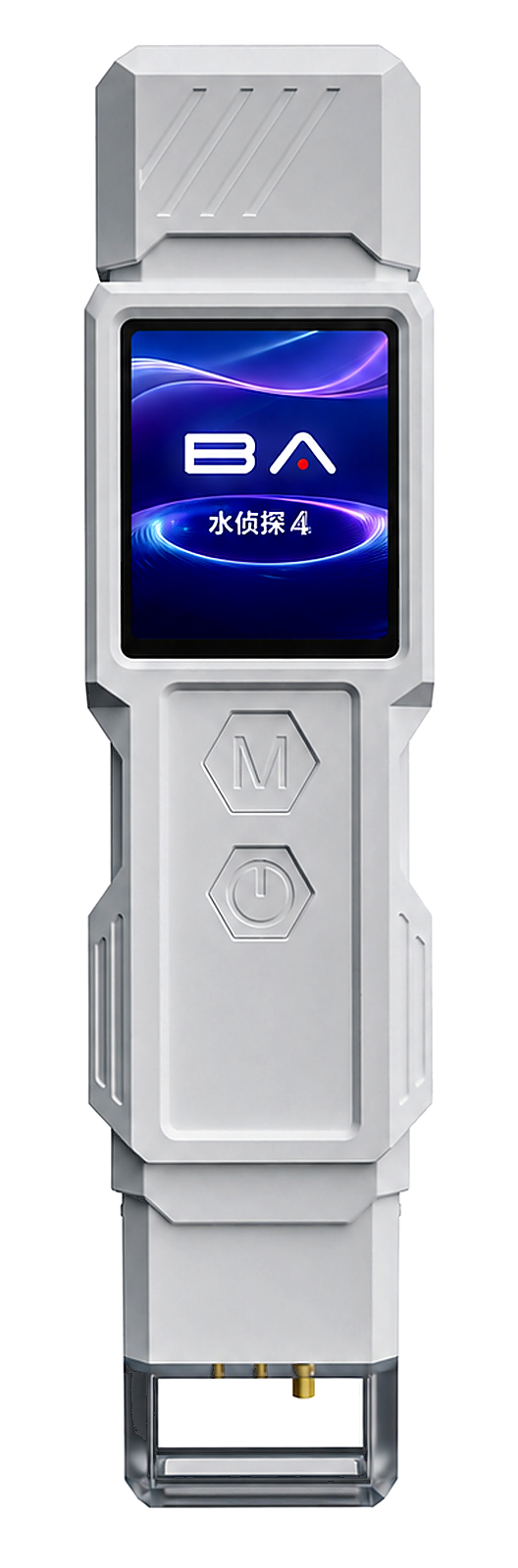
The Water Detective 4 integrates nine organic and inorganic indicators in one rapid testing platform: TOC, COD, UV254, TDS, EC, turbidity, hardness, salinity and temperature. It is suitable for household water, water purifier performance comparison and routine water sample screening, but it does not have laboratory analysis capability. Therefore, the goal of an after-sales demonstration should be:
- let users intuitively see the parameter changes between inlet and outlet water;
- explain the physical meaning of key parameter changes;
- guide users to maintain the filter cartridge according to procedure;
- identify possible device abnormalities (such as membrane damage or an expired filter cartridge);
- clearly inform users which risks must be confirmed by a laboratory.
Any statement beyond screening and trend observation, such as "the measured TDS is very low, which means the water is very clean and safe to drink directly," is unprofessional and potentially illegal. Different countries and regions have strict regulations on drinking water compliance claims, and after-sales messaging must avoid health conclusions.
Water sample/device/scenario boundaries
Testable samples and application scenarios
Water Detective 4 is suitable for domestic water-related samples, including:
- Municipal tap water
- Water purifier inlet and outlet water
- Bottled water and barreled water
- Outlet water from direct drinking water dispensers and pipeline drinking water machines
- Coffee machine water tank water
- Circulating water in pet drinking fountains
- Drinking water in smart water bottles
It is not suitable for industrial wastewater, municipal sewage, river and lake monitoring, or large-scale water treatment engineering projects. If the source water in an after-sales scenario is well water, mountain spring water, harvested rainwater, or another non-municipal water source, first understand the water source background and potential contamination risks; safety advice must not be given based solely on readings from a portable device.
Screening indicators vs. identification of specific contaminants
A strict distinction must be made between "screening," "comparison," "trend observation," and "laboratory identification." Among the nine parameters measurable by Water Detective 4:
- TDS and electrical conductivity (EC) reflect the total amount of dissolved ions but cannot indicate which specific ions are present;
- Hardness mainly reflects calcium and magnesium ions, but does not distinguish the ratio of calcium to magnesium;
- Turbidity reflects the total amount of suspended particulate matter, but cannot identify the composition of the particles;
- TOC, COD and UV254 are surrogate indicators of organic load and cannot identify the specific types or toxicity of organic substances;
- Salinity is a rough estimate of total dissolved salts and cannot replace individual tests for sodium, chloride and other specific ions;
- Temperature is an auxiliary compensation parameter and is not itself a pollutant indicator.
Therefore, the device cannot measure lead, arsenic, nitrate, nitrite, pesticides, bacteria, viruses, parasites, dissolved oxygen, ammonia nitrogen, etc. These risks must be confirmed using appropriate laboratory or dedicated methods in accordance with local requirements. For example, the WHO Guidelines for Drinking-water Quality provide health-based guideline values for microbial and chemical indicators, but readings from portable devices cannot be used to determine compliance with these guideline values.
Boundaries of different water purification technologies
After-sales demonstrations need to understand the effects of different water purification technologies on parameters:
- RO reverse osmosis: can substantially reduce TDS, conductivity, hardness and salinity, while also removing most organic matter (TOC/UV254 decrease); the TDS of the outlet water is usually far lower than that of the raw water.
- Ultrafiltration: mainly removes particulate matter, bacteria and some large-molecule organic matter, and has almost no removal effect on dissolved ions, so TDS and conductivity change very little; turbidity may decrease significantly.
- Activated carbon: mainly adsorbs residual chlorine and some organic matter and improves taste, with minimal effect on TDS; TOC/UV254 may decrease, but the effect depends on the type of carbon and its service life.
- Water softener/scale-inhibiting filter cartridge: may reduce hardness, but TDS does not necessarily decrease (because sodium ions may be used to exchange for calcium and magnesium, and the total ion concentration remains unchanged or decreases slightly).
Before the demonstration, confirm the type of water purifier, so that users do not mistakenly assume that all water purifiers will reduce TDS. If the TDS does not change during a demonstration of an ultrafiltration machine, it cannot be said that the device is ineffective.
Physical relationship between temperature and conductivity/TDS
Conductivity increases as temperature rises, by approximately 2% per °C. Therefore, a portable test pen must have temperature compensation built in. Water Detective 4 has built-in temperature measurement and uses it for automatic compensation, but the compensation algorithms of different instruments (linear or nonlinear) may cause minor differences. During an on-site demonstration, let the water sample stand until it is close to room temperature, to avoid reading drift caused by freshly dispensed hot water or ice water. For OEM integration design, the conductivity/TDS interface ASIC and the probe need to match the response time of the temperature sensor, and reasonable compensation must be implemented in the firmware; otherwise, the device may give an incorrect TDS under hot-water conditions.
Reproducible sampling and measurement steps
The following steps should be strictly followed in every after-sales demonstration to reduce human error and ensure data traceability.
1. Preparation and cleaning
- Confirm that the Water Detective 4 has sufficient battery power and that the probe (conductivity electrode and optical window) is clean and free of stains.
- Prepare two clean sampling cups (made of polypropylene or glass; avoid paper cups, because paper cups may release organic substances that interfere with TOC/UV254).
- Rinse the sampling cup and the probe with the water sample to be tested 2–3 times, using about 20–30 mL of water each time, to remove residue.
- If detergent-containing water or high-hardness water was measured last time, first rinse the probe with deionized water or purified water, then rinse it with the water sample to be tested.
2. Sampling
- Use clean containers to separately collect raw water (water purifier inlet water) and water purifier outlet water, at least 100 mL each.
- For direct drinking water dispensers or pipeline machines, first dispense water for 10–15 seconds to flush out water retained in the pipe, then take the sample.
- For coffee machine water tanks or pet water dispensers, take the current water sample directly, but record the water temperature status.
- Immediately after sampling, put the lid on the cup or cover it with cling film to avoid dust and gas exchange.
3. Let it stand to stabilize.
- Let all water samples stand for 5–10 minutes so that the temperature stabilizes and bubbles dissipate. Bubbles interfere with optical measurements (turbidity, UV254, TOC, COD) and with conductivity measurement—bubbles adhering to the electrode surface reduce the effective contact area, causing low conductivity; bubbles entering the optical path cause falsely high turbidity readings.
- If the difference between the water sample temperature and room temperature exceeds ±2°C, the standing time should be extended appropriately.
- Before measurement, gently tap the wall of the sampling cup to help residual bubbles rise to the surface.
4. Measurement order and repeats
- Measure the raw water first and record the reading; then measure the water purifier outlet water and record the reading. For each measurement, ensure the probe is fully immersed in the water and that there are no bubbles in the optical window.
- For each water sample, it is recommended to take 2 measurements and use the average. If the difference between two measurements exceeds the repeatability range given in the instrument manual, check the procedure (e.g., probe not cleaned, water sample not mixed evenly).
- During measurement, keep the instrument vertical or at the angle specified in the manual, and avoid the probe touching the bottom of the cup, which would affect flow.
- Also record the water sample temperature at the time of measurement for later analysis.
5. Cleaning and maintenance
- Before measuring the next water sample, rinse the probe with deionized water or purified water and shake it dry to avoid cross-contamination.
- If stains are found on the optical window, gently wipe it with a soft cloth; the conductivity electrode can be cleaned with a cotton swab dipped in deionized water.
- After the demonstration, rinse the probe with clean water, dry it, and then store it.
How to interpret results and common interferences
Principles for interpreting parameters
- TDS/Conductivity (EC) : TDS is estimated from conductivity; its unit is usually mg/L, and the conductivity unit is μS/cm. Municipal tap water commonly has a TDS of tens to several hundred mg/L, and the TDS of RO purifier output water usually drops significantly (for example, from 300 to 20 mg/L). However, TDS itself does not directly represent a health risk. The U.S. EPA lists TDS as a secondary contaminant; the recommended limit of 500 mg/L is mainly based on taste, not a mandatory health standard. During a demonstration, you can say: "TDS dropped by 85%, indicating that the RO membrane is working normally in removing dissolved salts," but you must not say "low TDS = healthier" or "high TDS is harmful." For ultrafiltration machines, unchanged TDS is normal, and it is necessary to explain to users that ultrafiltration does not desalinate.
- Hardness : mainly reflects the total amount of calcium and magnesium ions, often expressed as mg/L CaCO₃. High hardness may cause scale, affecting taste and causing equipment scaling. WHO has not set a health-based guideline value for hardness, but points out that excessively low hardness may be corrosive to pipe networks. After-sales demonstrations can be used to explain the effect of water softeners or anti-scale filter cartridges, but note that different technical approaches differ (for example, ion-exchange softening introduces sodium, and TDS may remain unchanged). Hardness levels must not be directly linked to health.
- Turbidity : reflects suspended particulate matter in water, in NTU. WHO recommends that for effective disinfection, turbidity should be below 1 NTU (preferably below 0.5 NTU). The turbidity of purifier output water should be close to or lower than that of the raw water. If the output water turbidity rises abnormally, it may indicate filter cartridge damage, seal failure or activated carbon shedding, and further inspection is needed. However, low turbidity does not mean there are no microorganisms, because viruses and some bacteria may not cause noticeable turbidity.
- TOC/COD/UV254: all three are surrogate indicators of organic load, not identification of specific pollutants. TOC means total organic carbon, COD means chemical oxygen demand, and UV254 means absorbance at 254 nm ultraviolet, which is related to aromatic organic compounds. These parameters are used to compare the organic matter removal trend between inlet and outlet water. For example, activated carbon filter cartridges adsorb some organic matter, and the TOC/UV254 of the output water may decrease; however, if the inlet water itself is already very low, an insignificant change in the output water is also normal. TOC/COD/UV254 readings must never be directly equated with "no pesticides, no antibiotics, no disinfection by-products." These specific organic compounds require laboratory methods such as liquid chromatography and mass spectrometry.
- Salinity : for freshwater samples, salinity is usually extremely low (at the ‰ level or lower). If the purifier inlet water is brackish water or water from coastal areas, the salinity indicator can help assess the RO desalination effect. However, salinity is not equal to the concentration of specific ions and cannot be used to determine whether specific substances such as sodium or chloride exceed standards.
Common interferences and failure modes
The most common abnormal readings in after-sales demonstrations usually come from operational interference rather than the water sample itself:
- Bubbles : if there are bubbles in the optical window, the turbidity, UV254, TOC and COD readings may be abnormally high; bubbles on the electrode surface cause low conductivity. Gently tap the sampling cup or let it stand to remove bubbles.
- Unstable temperature : hot or ice water causes conductivity compensation deviation and TDS reading drift. For example, 50°C water just drawn from a water heater, if not left to stand, may cause conductivity compensation to overshoot or undershoot, producing false readings.
- Probe contamination : grease, detergent or high-hardness water residue from the previous water sample can contaminate the probe and cause an incorrect next reading. It must be rinsed with deionized water, and the optical window should be gently wiped with a soft cloth if necessary.
- Sampling container contamination : Using cups that contain wetting agents or residual detergent introduces organic contamination and affects TOC/UV254. Use clean glass or polypropylene containers and avoid paper cups.
- Sample left too long : If a water sample is left for more than 30 minutes after collection, microbial activity or gas exchange may change TOC, pH, conductivity, etc. Measure as soon as possible, generally within 15 minutes.
- Electromagnetic interference : Strong electromagnetic fields (such as near microwave ovens or high-power motors) may affect conductivity measurement; keep away from interference sources.
- Differences in readings between instruments : Portable test pens from different brands or models may show systematic deviations due to differences in electrode constants, temperature compensation algorithms and optical designs. For on-site demonstrations, always use the same pen for before-and-after comparisons and avoid mixing instruments. If the user compares with another pen and an inconsistency appears, explain the instrument differences.
When to retest, stop using, or send to a laboratory
Retest conditions
- When key parameters such as outlet TDS, conductivity and turbidity change abnormally relative to the previous record or the raw water (for example, a sudden rise in TDS or an increase in turbidity), repeat the measurement 3 times to rule out operating error.
- If parameters do not improve as expected after replacing the filter cartridge, re-measure and check whether installation is correct, whether the tubing leaks, or whether the filter cartridge is expired.
- If the user is concerned about a specific contaminant (such as lead, bacteria or pesticides), even if the portable device reading is normal, recommend laboratory testing rather than using the portable device to dismiss the risk.
Situations for stopping use and referring to a laboratory
- If the outlet water shows obvious color, odor, turbidity or sediment, and the turbidity or TOC reading is significantly abnormal, advise the user to suspend drinking and contact the local water supply department or a laboratory for confirmation.
- If the water source is non-municipal supply such as well water or lake water, and the portable device indicates abnormally high TDS or conductivity, or the user reports gastrointestinal symptoms, a laboratory must be engaged for full microbiological and chemical analysis.
- If a pet water fountain or smart water cup shows abnormal readings and pet health may be involved, advise the user to consult a veterinarian and conduct targeted testing.
- If the user requests a "potability certificate" or "compliance report", you must clearly state that the portable device does not have this capability; testing and reporting must be performed by a qualified laboratory in accordance with local standards.
记录表/行动清单
售后演示应填写标准化记录表,便于追溯和趋势分析。以下为推荐字段:
| Field | Description |
|---|---|
| Date/Time | 精确到分钟 |
| 地点/设备编号 | 用户地址或设备序列号 |
| 水样类型 | 原水、净水器出水、瓶装水、水箱水等 |
| 水样温度 | 每次测量时记录 |
| TDS (mg/L) | 原水与出水分别记录,并标注仪器型号 |
| 电导率 (μS/cm) | Same as above |
| Turbidity (NTU) | Same as above |
| TOC/COD/UV254 | Record in the instrument's displayed units, and note that it is a screening value |
| Hardness/Salinity | Same as above |
| Operating anomalies | Air bubbles, temperature fluctuations, cleaning issues, etc. |
| Conclusions and recommendations | Describe only the trend of change; do not write "safe/compliant" |
| Whether a laboratory is needed | If recommended, state the reason |
Action checklist (printed or electronic, for after-sales personnel to check off item by item):
- [ ] Confirm that the water sample container and probe have been rinsed clean
- [ ] Let both the raw water and the outlet water stand for 5–10 minutes, with a temperature difference of ≤2°C
- [ ] Measure each water sample 2 times and record the average value
- [ ] Use the same test pen for all comparisons
- [ ] Do not directly link readings to health standards
- [ ] If the user asks about a specific contaminant, clearly state that laboratory testing is required
- [ ] Fill in the record form and have the user confirm it
For OEM customers or brand owners, the above record form can be integrated into the after-sales App or equipment maintenance system, automatically synchronizing the device's built-in sensor data with handheld instrument readings to form a complete filter life management record.
FAQ
Q1: The TDS measured by Water Detective 4 is very low. Does that mean the water is very safe? A: No. TDS only reflects the total amount of dissolved ions; low TDS does not mean the absence of bacteria, viruses, pesticides, heavy metals or disinfection by-products. A safety conclusion must be drawn after laboratory testing in accordance with local drinking water standards.
Q2: Can after-sales personnel use TOC/COD/UV254 readings to determine filter life? A: They can help observe trends, but cannot be used alone as the basis for determining life. Filter replacement also depends on flow rate, cumulative treated water volume, time, microbial contamination risk, etc., and should be combined with manufacturer recommendations and operating data.
Q3: During an on-site demonstration, why do two readings of the same water sample differ? A: It may be due to temperature changes, bubbles, probe contamination or insufficient mixing of the water sample. Retest according to the standard procedure; if the difference continuously exceeds the repeatability stated in the manual, send it for repair or calibration.
Q4: Can this instrument be used to test whether well water or mountain spring water is suitable for drinking? A: It can only provide preliminary screening and cannot determine the safety of microorganisms and specific chemicals. Well water and mountain spring water should be sent to a laboratory for full-panel testing.
Q5: When OEM customers integrate such sensors, how can they avoid misleading users in after-sales demonstrations? A: The device UI should clearly indicate "screening value, not laboratory testing," and users should be restricted from using the readings for compliance or health claims; the firmware should perform temperature compensation and flag abnormal values; after-sales training should emphasize the explanatory wording.
Q6: What should I do if the device's built-in TDS sensor readings do not match the handheld Water Detective 4 readings? A: The two may differ due to differences in flow-path position, temperature compensation algorithm, and probe aging. Before an after-sales demonstration, the built-in sensor should first be calibrated or compared against the handheld instrument to confirm the difference is within an acceptable range. If the difference is too large, check whether the built-in sensor is scaled or has failed, rather than immediately concluding that one side is wrong.
References
- World Health Organization. Guidelines for drinking-water quality: fourth edition incorporating the first and second addenda. Geneva: WHO; 2022. https://www.who.int/publications/i/item/9789240045064
- United States Environmental Protection Agency. Secondary Drinking Water Standards: Guidance for Nuisance Chemicals. EPA. https://www.epa.gov/sdwa/secondary-drinking-water-standards-guidance-nuisance-chemicals
- United States Geological Survey. Conductivity and Water Quality. USGS Water Science School. https://www.usgs.gov/special-topics/water-science-school/science/conductivity-and-water-quality
- United States Geological Survey. Turbidity and Water Quality. USGS Water Science School. https://www.usgs.gov/special-topics/water-science-school/science/turbidity-and-water-quality
- Centers for Disease Control and Prevention. Water Quality and Testing. CDC. https://www.cdc.gov/healthywater/drinking/public/water_quality.html
(Note: The above sources are used to explain the meaning of general water quality parameters and screening boundaries, and do not constitute certification of the specific performance of Water Detective 4. For specific ranges, accuracy, and operating details, refer to the product manual.)
Regional applicability statement
The WHO, US EPA, USGS, and CDC materials cited in this article are international or U.S. general guidance. Drinking water regulatory limits, filter life determination, and after-sales demonstration practices may differ by country and region; for example, the European Union, China, Japan, and Australia each have their own standards. Brands and after-sales teams should prioritize local regulations and competent authority requirements. All statements in the text such as "requires laboratory confirmation" and "requires confirmation by the local competent authority" are mandatory and must not be omitted.