
Intended users and decision questions
This checklist addresses two types of readers: first, brands, product managers, embedded engineers, hardware developers and OEM customers planning to integrate portable water quality test pens into water purifiers, water dispensers, coffee machines, smart cups and pet water fountains; second, personnel using Water Detective 4 for rapid screening in homes, after-sales service or on-site service. For the first group, the core question is "how to turn screening readings into acceptable filter reminders, displayed values or alarm logic without letting users misread them as laboratory reports"; for the second group, the core question is "when are the numbers I measure trustworthy, when are they only a trend, and when must they be sent to a laboratory".
Three types of decisions that need to be distinguished in OEM/ODM evaluation:
- Product-level verification: before mass production, the complete unit must be confirmed for consistency across multiple units, temperature compensation, probe installation position, water flow conditions and long-term drift.
- User-level calibration verification: use simple, reproducible steps to determine whether the device is still within its working range, rather than performing laboratory calibration.
- Exit/escalation path: when readings are used for health claims, compliance, efficacy claims or in the event of a dispute, testing must be completed by a qualified laboratory in accordance with local regulations.
The following verification steps do not replace factory calibration of the product, nor do they replace laboratory quality control; they address "how to detect obvious anomalies, how to reduce misjudgment, and how to manage screening data".
Water samples, equipment and scenario boundaries
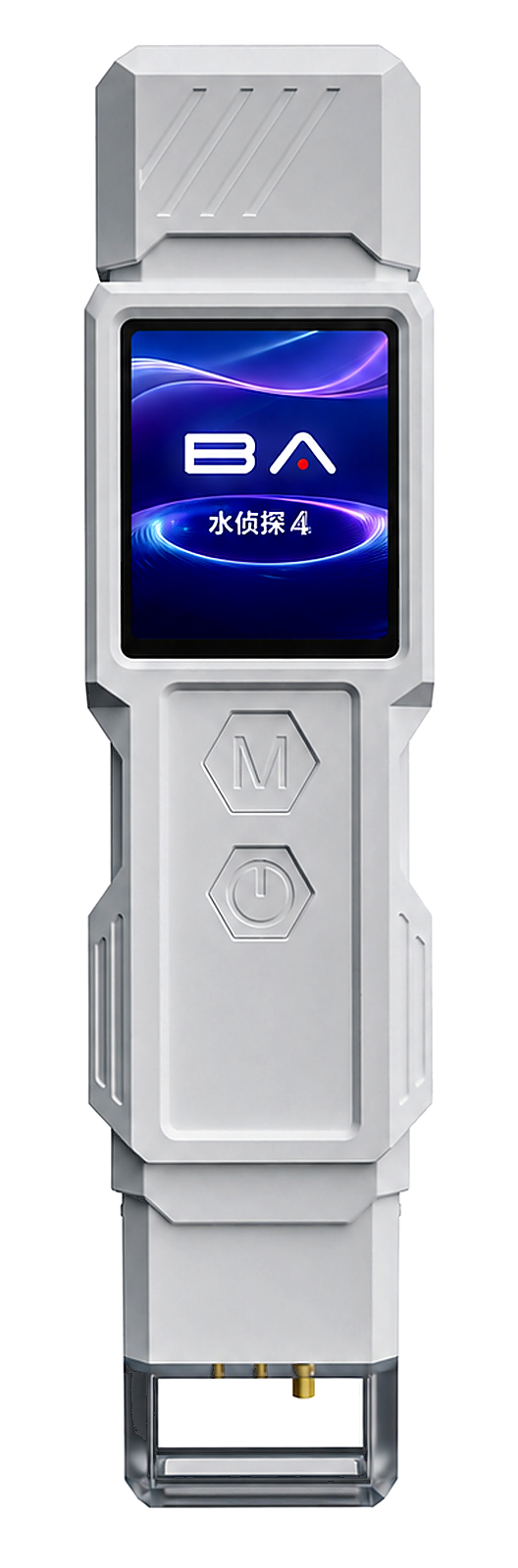
Water Detective 4 is a portable multi-parameter test pen for household water, water purifier effectiveness comparison and routine water sample screening. On a single rapid testing platform, it can read multiple indicators including TOC, COD, UV254, TDS (total dissolved solids), EC (electrical conductivity), turbidity, hardness, salinity and temperature. It is suitable for rapid comparison, trend observation and device feedback, but cannot replace laboratory analysis.
Testable water samples include: municipal tap water, outlet water treated by water purifiers/membrane filtration/activated carbon, boiled and cooled water, bottled water, water in coffee machine tanks, and water in pet water fountains. Usage boundaries:
- All readings are screening/comparison/trend values, not concentrations of specific contaminants.
- It cannot measure lead, arsenic, nitrate, nitrite, ammonia nitrogen, pesticides, disinfection by-products, bacteria, viruses, parasites or dissolved oxygen.
- Where the above risks or any health-related determination is involved, confirmation must be carried out using appropriate laboratory or dedicated methods in accordance with local requirements.
- Readings from a household test pen must not be used as proof of drinking safety, proof of pet health or proof of farming compliance.
If a water sample shows abnormal color, obvious odor, sediment, an oil film or suspected microbial contamination, stop screening after recording and contact the local health/water authority or a laboratory. The device is not suitable for industrial wastewater, municipal sewage, river monitoring or verification of large-scale water treatment projects; in these scenarios, professional online/laboratory instruments should be used and the corresponding standards followed.
Reproducible sampling and measurement steps
- Device self-check and cleaning
Check the battery level, probe condition and optical window according to the instructions. Rinse the probe with deionized or distilled water, then rinse it with the water sample to be tested. Do not wipe the probe with paper towels or hard objects, to prevent scratches and residual fibers.
- Sampling container
Use a clean container that leaves no residue and does not react with the components of the water sample to be tested. First rinse the container with the water sample to be tested 2–3 times, then take the formal sample. Measure as soon as possible after sampling; leaving it too long will allow carbon dioxide to dissolve, particles to settle or microbial activity to change the readings.
- Temperature recording and compensation
Record the water temperature and ambient temperature. If the test pen has automatic temperature compensation, confirm that the compensation function is enabled; when comparing different batches, if the temperature difference is large, let the water sample come close to room temperature before measuring. Temperature has a marked effect on EC/TDS readings, and comparisons without recorded temperature have no engineering significance.
- Immersion and air removal
Immerse the probe fully in the water sample, avoiding contact with the bottom and walls of the cup. Stir slowly or shake gently to remove air bubbles, and wait for the reading to stabilize. Do not measure in a position where strong light shines directly on the probe, to avoid optical interference.
- Repeated readings
Measure the same water sample at least 3 times, recording each reading and the temperature. If the 3 readings fluctuate beyond the expected range (based on the device manual and day-to-day experience), first check for bubbles, probe contamination and temperature changes; if it is still abnormal, re-measure.
- Parallel samples and comparison
When used for whole-device verification, it is recommended to divide the same water sample into 3 portions and measure each portion independently 3 times; at the same time, send the water sample for testing according to the local laboratory method. When comparing laboratory results with device readings, you must pay attention to differences in the indicator definition: the laboratory reports the concentration of a specific item, while the test pen reports a composite/substitute indicator, and the two cannot be directly equated.
- Maintenance after measurement
After measurement is complete, rinse the probe with deionized water, shake it dry or gently blot external water droplets with a lint-free cloth, and store it according to the manual. Do not soak it in the water sample or cleaning solution for a long time.
How to interpret results and common interferences
The table below gives the screening uses, what cannot be inferred, and common interferences for each indicator.
| Indicator | Screening/comparison use | Cannot infer | Common interferences and notes |
|---|---|---|---|
| TDS / EC / salinity | Comparison of raw water and water purifier outlet water, RO membrane desalination trend, reference for total mineral content of brewing water | Whether specific pollutants such as heavy metals, nitrates and bacteria exceed standards | Temperature, probe contamination, bubbles, and conversion factors vary from water to water |
| Hardness | Scale tendency, taste reference, water softener performance trend | Health risks of water quality safety | Temperature, other ions in the water sample, differences in test methods |
| Turbidity | Particle/colloid changes, comparison before and after filtration | Microbial risk, source of particulate matter | Bubbles, settling time, optical window contamination, ambient light |
| TOC / COD | Total organic matter trend, rough screening of activated carbon filter adsorption performance | Specific organic compound types, toxicity, potability | Sample holding time, container residue, matrix differences |
| UV254 | Relative changes in aromatic/unsaturated organic compounds, raw water/product water comparison | Concentration of specific organic compounds, disinfection by-product formation potential | Turbidity interference, optical window contamination, temperature |
| Temperature | Ambient/water temperature logging, temperature compensation status | Direct judgment of other water quality indicators | Temperature difference before and after measurement, equipment and environment equilibration |
Reading interpretation principles:
- A single-point reading is only used to determine whether "this measurement is stable and whether it is abnormal compared with historical water samples of the same type".
- Trend judgment requires fixed measurement conditions: the same location, the same temperature range, the same container cleaning method, and the same operator.
- For any change exceeding the expected range, first rule out operational error through re-measurement and blank/control water samples, then consider whether to send it to the laboratory.
Common failure modes: the probe is not fully immersed, bubbles adhere, an unrinsed container is used, the water sample is left too long before measurement, direct ambient light, the device has not been used for a long time and has not been cleaned, or expired or incorrect standard solutions are used.
When to retest, stop using, or send to a laboratory
retest
- A single reading clearly deviates from historical values;
- The device is restarted after being idle for a long time;
- After replacing the battery/probe or updating the device software or hardware;
- When the operating environment temperature or humidity changes significantly;
- When the water sample pretreatment or sampling location changes.
Stop using it or contact the supplier for calibration/repair
- The probe is cracked, detached or has water ingress;
- Display errors, unresponsive buttons, readings that do not change, or readings outside the measurement range that cannot be recovered;
- The error remains too large after cleaning/calibration according to the instructions;
- The device has suffered mechanical damage such as being dropped, crushed or immersed in water.
Refer to a laboratory When specific items such as lead, arsenic, nitrate, nitrite, ammonia nitrogen, pesticides, bacteria, viruses, parasites or dissolved oxygen need to be tested; when health-related complaints, abnormal water samples or abnormal pet drinking water intake occur; when a formal report is needed for product claims, compliance, litigation or arbitration; or when required by local regulations. In any of these situations, contact a qualified local laboratory and collect, preserve and submit samples according to the laboratory's requirements. Readings from a household test pen cannot be used to delay medical or veterinary treatment.
Record sheets and action checklist
It is recommended to keep a record of each check to facilitate tracing the source of drift and misjudgment. The record table may use the following format:
| Field | Entry content |
|---|---|
| Date/Time | YYYY-MM-DD HH:MM |
| Water sample source | e.g., municipal tap water / RO permeate / after activated carbon / coffee machine water tank |
| Ambient temperature / water temperature | Record the measured value |
| Temperature compensation | Enabled/not enabled, device model and firmware version |
| Repeated readings | Value 1, value 2, value 3; report using the median |
| Probe status | Clean/contaminated/bubbles/scratches, etc. |
| Historical baseline | Previous normal range for the same type of water sample or the last reading |
| Decision | Normal/retest/stop using/send to laboratory |
Action checklist:
- Before verification: confirm the device has been maintained according to the instructions, and prepare clean containers and record sheets.
- During verification: sample, measure temperature and repeat measurements following fixed steps; do not change containers or operating methods midway.
- After verification: rinse the probe, record anomalies, and perform parallel samples or blank validation if necessary.
- When anomalies occur: first rule out bubbles, contamination and temperature deviation, then retest; if still abnormal, suspend use and consult the supplier or send to laboratory.
Calibration and validation in whole-device integration
When integrating Water Detective 4 or a similar detection module into a whole device, it is not recommended to directly use the test pen readings as health conclusions visible to end users. Engineering teams are advised to validate in the following dimensions:
- Installation position: whether the probe is placed in a flowing water path or a static water chamber directly affects reading stability and response time. The whole device needs to test the effects of different flow rates, stagnant water after shutdown, and pipeline residue on TDS/EC and turbidity.
- Temperature compensation: confirm that the temperature compensation curve of the detection module matches the actual water temperature range of the whole device; if the whole-device firmware performs secondary compensation, the original temperature and pre-compensation readings must be retained for traceability.
- Filter reminder strategy: TDS/EC or UV254/TOC changes can serve as trend inputs for filter replacement, but a certain threshold should not be written as "heavy metals have been removed" or "water has met standards." Prompts should use clearly bounded expressions such as "Please check the filter" and "Please contact after-sales for laboratory testing."
- Calibration and sampling inspection: during mass production, multi-unit consistency testing is recommended, sampling the reading distribution of the same standard water sample; retain the calibration coefficients and serial numbers of each device to support after-sales traceability.
- User verification mode: a simple user verification function can be provided, for example using a fixed standard solution or known water sample to detect whether there is drift; when out of range, prompt the user to contact customer service or return the device for calibration, rather than letting the user adjust it themselves.
All device ranges, accuracy, calibration intervals and interface parameters are subject to the official AtomBit specifications, datasheets or technical descriptions confirmed with an FAE. This article does not provide specific values, because they may differ across batches, firmware and versions.
FAQ
Q1: Can readings from a household water-quality test pen prove that water is safe? No. Readings from the Water Detective 4 are intended for screening, comparison and trend observation; they cannot prove that a specific contaminant is within limits or that the water is safe to drink. When proof is required, laboratory methods that comply with local regulations must be used.
Q2: Why do repeated TDS/EC measurements of the same cup of water vary? Common causes include temperature drift, air bubbles, probe contamination, the water sample being left standing too long, residue in the container, and different measurement depths. First clean the probe, remove air bubbles and keep the temperature stable, then repeat 3 times and take the median.
Q3: How large is the effect of temperature on measurements? Temperature affects ion mobility and conductivity, with a pronounced effect on EC/TDS. Before use, confirm the temperature-compensation status and record the temperature; readings at different temperatures cannot be compared directly.
Q4: Does the Water Detective 4 require users to calibrate it themselves? Generally, users do not need to perform laboratory-grade calibration. The device is calibrated at the factory, and users should follow the instructions for routine cleaning and simple checks. If a clear offset or damage is found, stop using the device and contact the supplier.
Q5: Can the test pen measure bacteria or heavy metals? No. It measures composite/surrogate indicators such as TOC, COD, UV254, turbidity, TDS, EC, hardness, salinity and temperature. Bacteria, viruses, lead, arsenic, nitrate and similar must be tested by a laboratory or with dedicated methods.
Q6: How often should household users send samples to a laboratory? There is no uniform frequency. If used for filter management and daily trends, screen as needed; if specific contamination is suspected, health abnormalities occur, the appearance/odor of the water changes, or a compliance report is required, send a sample to a laboratory immediately. For testing frequency, consult your local health/water authority or a laboratory.
References
- World Health Organization. Guidelines for drinking-water quality: fourth edition incorporating the first and second addenda. Geneva: World Health Organization; 2022. https://www.who.int/publications/i/item/9789240045064 — used for the general principles of drinking-water quality acceptability and composite indicators; it does not provide specific device limits.
- United States Environmental Protection Agency. Secondary Drinking Water Standards: Guidance for Nuisance Chemicals. https://www.epa.gov/sdwa/secondary-drinking-water-standards-guidance-nuisance-chemicals — in the U.S. EPA secondary standards, the TDS value of 500 mg/L is a recommended value and applies only to the United States; for other countries/regions, consult local standards.
- National Standard of the People's Republic of China. GB 5749-2022 Standards for drinking water quality. State Administration for Market Regulation, Standardization Administration of China, 2022. — China's drinking water standard; for specific limits, refer to the latest text issued by the competent authority.
- U.S. Geological Survey. Water Science School: Specific Conductance. https://www.usgs.gov/special-topics/water-science-school/science/specific-conductance — used for understanding the relationship between conductivity and ion concentration.
- Weishaar, J. L., Aiken, G. R., Bergamaschi, B. A., Fram, M. S., Fujii, R., & Mopper, K. (2003). Evaluation of Specific Ultraviolet Absorbance as an Indicator of the Chemical Composition and Reactivity of Dissolved Organic Carbon. Environmental Science & Technology, 37(20), 4702-4708. https://doi.org/10.1021/es030360x — supports UV254 as a surrogate indicator of the composition and reactivity of dissolved organic matter.
Regional applicability: The above standards and methods have regional differences. Users in China should preferentially refer to GB 5749-2022 and the requirements issued by local health commissions/water authorities; users in other regions should consult their local drinking-water regulators or WHO guidelines. Any scenario involving health or product claims must be confirmed by a locally qualified laboratory.