
Intended users and decision questions
RV road-trip users, especially those with common layouts featuring separate gray water tanks and fresh water tanks in Class B and Class C motorhomes and towable trailers. Users frequently face three specific decisions: First, after the gray water tank overflows or emits odors, can the fresh water system still be used for drinking, cooking, and washing? Second, without laboratory conditions and relying only on a portable test pen, how can one determine whether gray water has already entered the fresh water system through plumbing, vents, or fill ports? Third, which reading changes are merely water quality fluctuations, and which changes require immediately stopping water use, draining and disinfecting, and seeking professional testing?
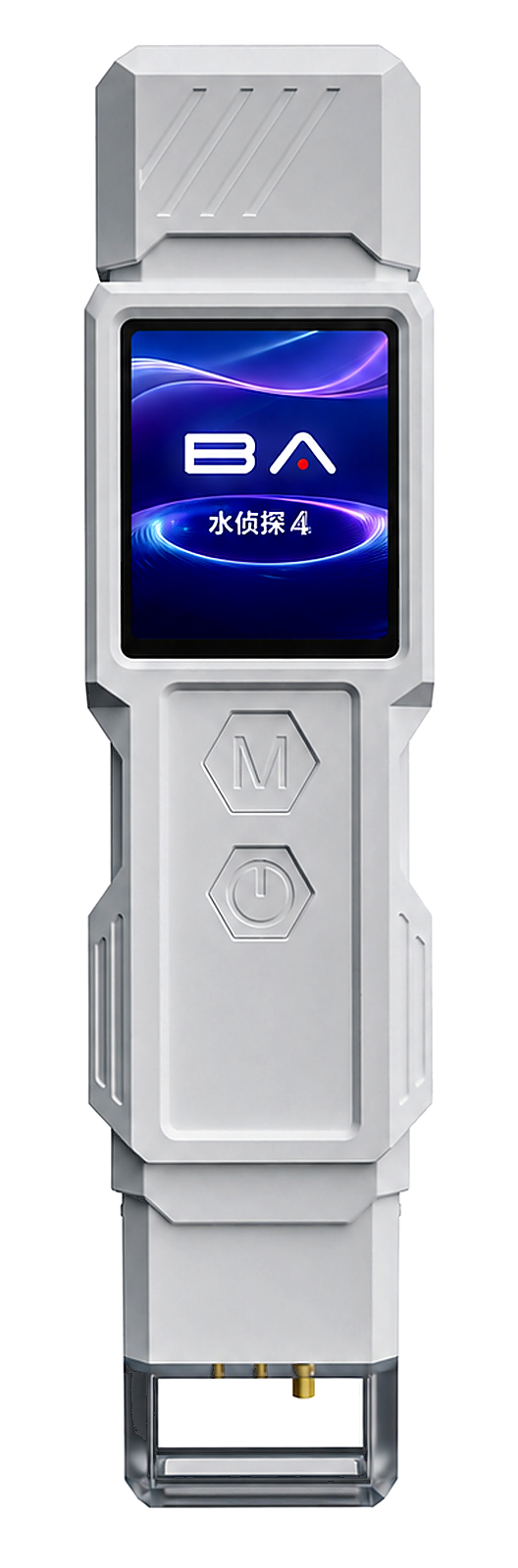
This article uses the AtomBit Water Detective 4 portable multi-parameter test pen as an example to provide a reproducible screening workflow. The device measures TOC, COD, UV254, turbidity, TDS, conductivity, salinity, hardness, and temperature. It is suitable for rapid on-site comparison and trend observation, but it is by no means a compliance testing instrument.
Water samples, equipment and scenario boundaries
Water samples: fresh water tank fill water (baseline), point-of-use outlet water (such as the kitchen cold water tap), and gray water tank sample (used only to understand typical gray water characteristics and for comparison, not as a direct basis for determining mixing). Samples should be measured as soon as possible after collection, no more than 30 minutes at room temperature.
Equipment: Water Detective 4, all nine indicators are screening or composite parameters and cannot report the concentration of any specific pollutant. In particular, TOC, COD, and UV254 reflect the comprehensive level of organic matter or surrogate trends, turbidity reflects suspended particles, TDS, conductivity, and salinity reflect dissolved inorganic salts, hardness reflects the trend of divalent ions such as calcium and magnesium, and temperature is used for compensation and anomaly judgment. Water Detective 4 integrates optical and conductivity/TDS measurement in a single test pen, suitable for on-site screening; refer to the device manual for the specific temperature compensation method.
Scope boundaries: Suitable for risk management of RV domestic water systems, verification of effectiveness after cleaning and disinfection, and monitoring of baseline changes after filling with different water sources. Not suitable for determining whether drinking water meets the legal standards of any country or region; not suitable for compliance monitoring of industrial wastewater, municipal sewage, or environmental water discharge; nor suitable for medical or veterinary health diagnosis.
Correcting Common Misconceptions
Misconception 1: Gray water tanks and fresh water tanks are completely independent and will not cross-contaminate
The belief that gray water tanks and fresh water tanks are physically isolated, and that as long as the fresh water tank has a lid there will be no problem. In reality, RV chassis layouts are compact, and gray water tank overflow pipes and vent pipes may be routed near fill ports; if drain valves are not closed or seals age, gray water may be siphoned or splashed; some older RVs use the same vent pipe or are incorrectly connected. The correct approach is to check the valves after each gray water tank emptying, regularly inspect seals and plumbing crossing points, and not assume that "physical isolation equals absolute safety."
Misconception 2: Rising TDS means gray water has mixed in
Rising TDS or conductivity may indeed mean increased dissolved salts, but detergents, toothpaste, food residue, and other substances in gray water do not necessarily significantly change TDS, while mineral water, softening salt, descalers, and disinfectant tablets in the fresh water tank may also raise TDS. TDS alone cannot distinguish the source. It should be judged together with turbidity, UV254/TOC trends, odor, and color. For example, if TDS rises together with a clear increase in turbidity and a rise in UV254, the likelihood of cross-contamination increases; if only TDS rises while turbidity remains stable, it is more likely a change in water source or residual cleaning agent.
Misconception 3: Low turbidity equals microbiological safety
Low turbidity only means fewer suspended particles; it does not mean there are no bacteria, viruses or parasites. Many pathogenic microorganisms can survive in clear water. In addition, greywater turbidity may drop after settling or filtration, but dissolved organic matter can still remain. Therefore, turbidity cannot serve as a microbiological safety indicator for drinking water. It must be clear: a portable test pen cannot measure microorganisms.
Misconception 4: Rising conductivity/salinity means seawater or fecal contamination
In RV use environments, rising conductivity and salinity are more commonly caused by winter road de-icing salt entering the fresh water tank, sodium ions released by softening resin in water purification filter cartridges, or detergent residue. If there is no seaside filling or seawater backflow, it should not be directly attributed to seawater. Judgment needs to combine the usage scenario, water filling source and recent cleaning records.
Misconception 5: One-time chlorination or disinfectant tablet treatment makes it permanently safe
Many people believe that putting disinfectant tablets into the fresh water tank can solve all cross-contamination. Disinfection can reduce some microbiological risks, but it cannot remove dissolved chemical contaminants (such as certain detergent ingredients, heavy metals or pesticides), and chlorine-containing disinfectants may react with organic matter to form disinfection by-products, often requiring subsequent flushing. After disinfection, it must be flushed multiple times and retested; only when readings return to baseline and remain stable can use be considered resumed. Moreover, disinfection cannot replace troubleshooting of physical problems in the piping.
Misconception 6: If a portable instrument reading is below a certain limit, the water is drinkable
All portable optical and conductivity sensors only provide aggregate parameters or surrogate parameters and do not have legally recognized compliance determination capability. Even if readings such as TDS, turbidity and TOC are all within "common ranges", specific contaminants may still exceed limits. Drinking water safety needs to be based on local drinking water hygiene standards, combined with specific microbiological and chemical analyses. Portable devices are only for screening and trend management.
Reproducible sampling and measurement steps
Preparation before sampling
- Prepare two clean sampling bottles (PET or glass recommended), labeled "fresh water" and "greywater" respectively; disposable gloves; record sheet.
- Rinse the container and the test pen probe three times with the water to be tested to avoid residual interference.
- If there are stains on the surface of the test pen, wipe it with a soft cloth dipped in clean water; do not use detergent.
Sampling order and operation
- Establish a clean water baseline: after refilling with new water and before use, take a mid-stream sample of about 200 mL from the clean water tank outlet or the kitchen cold water tap. First let the water run for 10 seconds to flush out water standing in the pipe.
- Measure a clean water sample: pour about 50 mL into a clean sample cup, avoiding bubbles. Wait for the temperature to stabilize, then read the temperature, TDS/conductivity, turbidity, and UV254/TOC trends in sequence. Record the temperature; if the device supports automatic temperature compensation, confirm that it is enabled; otherwise correct the conductivity/TDS according to the manual.
- Take a comparison sample from the gray water tank (optional but recommended): take a small amount of gray water at the gray water tank drain valve, taking personal protective precautions and avoiding skin contact. The gray water sample is only for understanding gray water characteristics and must not contaminate the clean water sampling utensils.
- Multi-point measurement: if cross-contamination is suspected, sample separately from the kitchen tap and the bathroom tap to look for signs of localized contamination.
- After each measurement, rinse the probe with clean water and blot it dry with a clean paper towel.
Failure modes
- Detergent, juice, or coffee residue in the container or on the probe: causes abnormally high TOC/UV254.
- Storage for more than 30 minutes after sampling: microbial growth or settling changes turbidity and organic matter readings.
- Large numbers of bubbles in the water sample: affects optical turbidity/UV254; allow it to stand or gently tap the cup wall to remove bubbles.
- Temperature not stable during measurement: conductivity/TDS readings drift; comparison should be made at the same temperature.
- Gray water sample poured directly into the clean water sampling cup: artificial cross-contamination.
- Measuring optical parameters under direct sunlight: UV254/TOC may be affected by strong light interference; operate indoors or in shade.
How to interpret results and common interferences
Baseline first, rather than fixed thresholds
Compare the current clean water sample with its own baseline, rather than with example ranges in product instructions or "safe values" circulating online. Clean water background values vary greatly across different water sources, regions and seasons. For example, one municipal tap water TDS is 120 ppm, while one mineral water refill may be 350 ppm; the two baselines are different. Only a deviation from baseline accompanied by abnormal usage scenarios is meaningful as an alert.
Combined indicator logic
- If only TDS/EC rises while turbidity and TOC trends remain stable: this may be a change in water source, softening salt, descaler, or replacement with distilled water; the likelihood of cross-contamination is low.
- If turbidity rises and TOC/UV254 rise simultaneously, but TDS changes little: organic matter may have entered, such as food residue in gray water, detergents, or biofilm shedding.
- If TDS, turbidity, and UV254/TOC all rise significantly at the same time and approach the characteristics of a gray water sample: high vigilance for cross-contamination is required; stop use immediately and inspect the piping.
- Sudden abnormal rise or fall in temperature: hot water may have mixed in or the environment may have changed; measurement error must be ruled out.
Common interferences
- Color interference: dark liquids such as tea, coffee and juice make UV254 and TOC read high, even when there is no contamination.
- Bubble interference: bubbles falsely raise turbidity readings.
- Temperature: without automatic compensation, conductivity changes with temperature at approximately 2%/°C.
- Probe carryover: the probe was not cleaned after the previous high-concentration sample, causing this measurement to read high.
- Stale sample: after standing, TOC may change due to microbial metabolism.
Example data (for illustrating trends only): a certain RV's fresh water baseline is TDS 180 ppm, turbidity 0.8 NTU, UV254 0.020 cm⁻¹; a typical gray water tank sample is TDS 640 ppm, turbidity 45 NTU, UV254 0.210 cm⁻¹. In one test, a fresh water tap sample was TDS 320 ppm, turbidity 12 NTU, UV254 0.075 cm⁻¹, so all three parameters were simultaneously close to gray water characteristics, suggesting possible cross-contamination. These values are fictitious demonstration data, not water quality limits or certification thresholds.
When to retest, stop using, or send to a laboratory
Situations where you should stop using the water immediately and switch to a safe water source
- The fresh water sample shows obvious odor, color, oil film or particulate matter;
- Multiple parameters deviate from the baseline at the same time and approach gray water sample characteristics;
- A gray water tank overflow, backflow, fill port contamination or valve misoperation occurs;
- Portable readings rise abnormally or remain unstable and cannot be explained by interference;
- Immunocompromised members, infants, pregnant women or pets drink the water.
停止使用后,应排空清水箱,用清洁剂和消毒剂按房车制造商说明进行管路清洗,再多次冲洗,并在不同时间点复测。复测读数应恢复到基线附近且稳定。
需要送实验室的情况
- 怀疑微生物污染(如粪便、呕吐物、霉味),尤其出现腹泻等健康事件;
- 需要确认特定化学污染物:铅、砷、硝酸盐、农药、有机溶剂等;
- 便携读数持续异常,但冲洗消毒后仍无法恢复;
- 该水将用于长期饮用、餐饮经营或特殊人群;
- 需要合规证明或保险理赔。
实验室检测需要根据当地法规选择有资质机构,并说明检测目的和可疑污染物。便携检测笔结果不能作为实验室报告的替代。
记录表/行动清单
以下为建议记录表,可根据房车习惯调整。
| Date and time | Sampling point | Water temperature (°C) | TDS (ppm) | 电导率 (µS/cm) | Turbidity (NTU) | UV254/TOC趋势 | 气味/颜色 | Deviation from baseline | Action |
|---|---|---|---|---|---|---|---|---|---|
| Example | Kitchen cold water | 22 | 185 | 370 | 0.9 | 0.021 | No abnormality | Slight | Continue to observe |
| Example | Kitchen cold water | 23 | 320 | 640 | 12 | 0.075 | Slight odor | Significant | Stop use, investigate, retest |
Action checklist:
- [ ] Before departure, test the fresh water baseline and record the water source used for filling;
- [ ] After each fill, retest and compare with the baseline;
- [ ] Check the drain valve and seal before and after emptying the gray water tank;
- [ ] If abnormal readings or sensory abnormalities are found, stop use immediately and switch to bottled water;
- [ ] After cleaning and disinfection, flush at least twice; take samples and retest separately at 10-minute intervals;
- [ ] Only after two consecutive normal retests may resuming use be considered, and continued observation is still required;
- [ ] If specific contaminants or health risks are involved, send samples to a laboratory immediately.
FAQ
Q: Can Water Detective 4 detect E. coli or other bacteria? A: No. It measures composite parameters such as turbidity, TOC, COD, and UV254, and cannot identify or quantify microorganisms. Fecal contamination may cause elevated turbidity and organic matter, but confirmation ultimately requires microbiological testing.
Q: After the gray water tank overflows, if the fresh water sample readings show no significant change, can it still be used? A: If the readings match the baseline and there is no odor, color, or particles, it can continue to be used, but it is recommended to check the gray water tank vent pipe and overflow outlet location as soon as possible and properly flush the fresh water lines. To be conservative, high-risk individuals may switch to bottled water.
Q: What TDS level is safe? A: Safety cannot be determined directly from a single TDS value. Background levels vary widely among water sources, and TDS reflects the total amount of dissolved salts, not whether they are harmful or harmless. Prioritize comparison with your own baseline. If a compliance determination is needed, refer to local drinking water standards or laboratory reports.
Q: How can biofilm on the inner wall of the clean water tank piping be distinguished from genuine greywater cross-contamination? A: Biofilm detachment usually causes intermittent increases in turbidity and TOC, and these may gradually decrease as the water flow scours the pipe; greywater cross-contamination usually occurs continuously and may be accompanied by specific odors and colors. Multi-point sampling and retesting before and after flushing can help with the assessment, but distinguishing the two still requires inspection of the piping.
References and Regional Applicability
- World Health Organization. Guidelines for drinking-water quality: fourth edition incorporating the first and second addenda. Geneva: WHO; 2022. https://www.who.int/publications/i/item/9789240045064
- U.S. Environmental Protection Agency. National Primary Drinking Water Regulations. https://www.epa.gov/ground-water-and-drinking-water/national-primary-drinking-water-regulations
- U.S. Geological Survey. Total Organic Carbon (TOC) and Dissolved Organic Carbon (DOC). https://www.usgs.gov/special-topics/water-science-school/science/total-organic-carbon-toc-and-dissolved-organic-carbon-doc
- Centers for Disease Control and Prevention. Water, Sanitation, and Hygiene (WASH). https://www.cdc.gov/healthywater/hygiene/index.html
- National Standard of the People's Republic of China GB 5749-2022, Standards for Drinking Water Quality. Users in China may consult their local health supervision or disease control departments about compliance testing requirements.
Regional applicability: The methods in this article apply to any RV equipped with a separate fresh water tank and grey water tank, but the specific disinfectants, plumbing materials, regulatory limits and laboratory methods may differ by country and region. Users in China should refer to GB 5749-2022 and local regulations; users in North America should refer to USEPA and state/provincial regulations; users in the EU should refer to the drinking water directive of the relevant member state. None of the screening results may be used for cross-border or legal purposes.