
1. Applicable users and decision questions
This guide is intended for appliance water-quality testing service personnel, dishwasher installation and commissioning engineers, appliance brand product managers, and end users who want to reduce dishwasher water spots, white film or scale problems. The core decision question is: when the dishwasher shows water spots or white residue, does the built-in softener need adjustment? How can a portable water-quality tester quickly screen raw water hardness and convert the reading into an actionable softener setting?
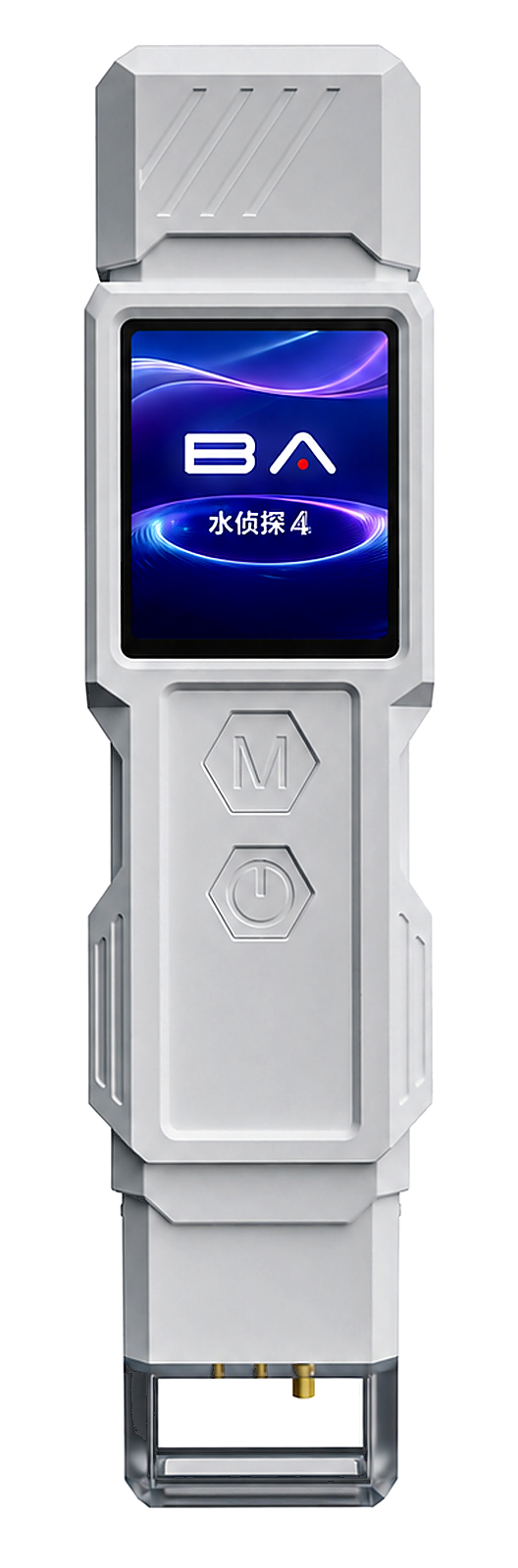
This guide uses the AtomBit Water Detective 4 (personal/household portable water-quality test pen) as an on-site screening tool. It integrates nine indicators—TOC, COD, UV254, TDS, EC, turbidity, hardness, salinity and temperature—in one rapid testing platform, making it suitable for households, service personnel and on-site screening. It must be emphasized that readings from the Water Detective 4 are for screening, comparison and trend observation; they do not constitute laboratory quantitative analysis results and cannot prove that water quality complies with any regulatory limit.
The following steps apply to:
- baseline raw water hardness assessment before installing a new dishwasher;
- troubleshooting when water spots, cloudy glassware or scaling on inner walls appear after the dishwasher has been in use for some time;
- rechecking when softener regeneration salt consumption is abnormal or the level setting is unreasonable.
Not applicable to: industrial wastewater discharge, municipal water supply compliance testing, drinking water safety certification, or identification of specific contaminants such as lead, arsenic, nitrate, pesticides, bacteria, viruses or parasites. Where these risks are involved, laboratory or dedicated methods must be used for confirmation in accordance with local requirements.
---
2. Water samples, equipment, and scenario boundaries
2.1 Clearly identify the water sample source
The measurement target is the cold water entering the dishwasher , not the circulating water inside the dishwasher, the drain water, or the softened hot water. Typical sampling points include:
- the tap (upstream of the dishwasher cold water inlet);
- At the three-way valve on the dishwasher water inlet line (close the valve before sampling);
- If the home already has a whole-house water softening system, take the softened water outlet to assess the water quality that finally enters the dishwasher.
If the dishwasher has a built-in water softener, what needs to be measured is the raw water before it enters the softener , which is used to set the hardness level of the softener. Measuring softened water can only be used to verify whether the softener is working, but the readings must be interpreted with caution (see 4.3).
2.2 Device boundaries and limitations
Water Detective 4 is a portable multi-parameter screening instrument, not a laboratory benchtop instrument. The specific detection principle, measurement range and accuracy of its hardness parameter are subject to the official AtomBit manual or calibration certificate. This article does not provide any numerical specifications that have not been officially confirmed.
For water softeners using ion-exchange resin, calcium and magnesium ions are replaced by sodium ions, and the total dissolved solids (TDS) and electrical conductivity (EC) of the water usually do not decrease significantly, and may even rise slightly due to the migration of sodium . If the instrument's hardness reading is inferred from conductivity or TDS, it may not truly reflect the hardness removal effect in softened water. Only calcium- and magnesium-selective methods (such as EDTA titration, ion chromatography or ICP-MS) can accurately confirm the residual hardness after softening. Therefore, the hardness reading of Water Detective 4 is more suitable for raw water hardness screening and long-term trend observation of the same water source, and should not be used as the sole basis for acceptance of water softener performance.
---
3. Reproducible sampling and measurement procedure
3.1 Preparation before sampling
- Use a clean polyethylene or glass bottle as the sampling container, with a capacity of at least 100 mL. Rinse it 3 times with the water sample to be tested to avoid interference from container residues.
- Open the cold water tap and let the water run at a medium flow rate for 2–3 minutes to flush out water stagnating in the pipes. If the tap is connected to a water purifier or water softener, its status must be clarified and recorded.
- The water temperature should be close to room temperature. If hot water has just been run, wait until the water temperature stabilizes to 15–30 ℃ before sampling.
3.2 Instrument preparation
- Check that the Water Detective 4 has sufficient battery power and that the probe is clean, with no visible dirt or scratches.
- Rinse the probe with deionized water or distilled water, then rinse it with the water sample to be tested.
- Power on the instrument and wait for it to complete self-check and temperature stabilization (refer to the product manual for specific times).
3.3 Measurement Procedure
- Fully immerse the probe in the water sample, avoiding contact with the bottom or walls of the container; stir gently to remove air bubbles from the probe surface.
- After the reading stabilizes, record hardness, TDS, EC, and temperature. It is recommended to take 3 consecutive measurements at intervals of 1 minutes, and calculate the average and range.
- If the range exceeds 10% of the average, check whether there are air bubbles on the probe, whether the water sample is uniform, and whether the temperature is still changing, then resample and measure again.
- After measurement, rinse the probe with deionized water and store it dry.
3.4 Optional: Measuring softened water
To verify whether the built-in water softener is working, you can sample at the dishwasher inlet or the softener outlet. However, as mentioned earlier, conductivity/TDS-type parameters may not reflect changes in hardness. A more reliable method is to observe the actual cleaning performance of the dishwasher and, if necessary, send samples to a laboratory to test the calcium and magnesium concentration after softening.
---
4. How to interpret results and common interferences
4.1 Hardness Units and Conversion
Different brands of dishwasher manuals may use different hardness units. The hardness reading of Water Detective 4 is usually expressed in mg/L CaCO₃ (calcium carbonate equivalent) or ppm, but different firmware versions may differ; please refer to the displayed unit. Common conversion relationships are as follows (based on USGS and general water chemistry constants):
| Unit | Conversion to mg/L CaCO₃ |
|---|---|
| 1 mmol/L | 100 mg/L CaCO₃ |
| 1 °dH (German degrees) | 17.8 mg/L CaCO₃ |
| 1 °f (French degrees) | 10 mg/L CaCO₃ |
| 1 °e (English degrees) | 14.3 mg/L CaCO₃ |
| 1 grain/gallon (US) | 17.1 mg/L CaCO₃ |
Note: These conversion factors are approximate values for quick on-site comparison. When setting the water softener level, the unit table given in the dishwasher's instruction manual must be followed.
4.2 Assessing water-spot risk using the USGS hardness classification
The United States Geological Survey (USGS) classifies water hardness by calcium carbonate concentration as follows:
| Calcium carbonate concentration (mg/L CaCO₃) | Hardness classification | Dishwasher water spot risk |
|---|---|---|
| 0–60 | Soft water | Low; water spots are mostly related to detergent or rinse aid |
| 61–120 | Moderately hard water | Medium; it is recommended to enable the standard setting of the water softener |
| 121–180 | Hard water | High; it is necessary to increase the water softener setting and add salt regularly |
| >180 | Very hard water | Very high; external softening or frequent regeneration may be required |
This classification is only a reference for trend assessment and does not constitute a regulatory limit. The World Health Organization (WHO) does not set a health-based guideline value for hardness in its Guidelines for Drinking-water Quality, focusing mainly on aesthetic and scaling effects.
4.3 Common interferences and failure modes
- Bubble interference : Dissolved gases in the water sample form micro-bubbles on the probe surface, causing readings to fluctuate or read low. Let the sample stand or stir it gently to remove bubbles.
- Temperature not stable : Hardness-related electrochemical or optical responses are affected by temperature; although the instrument has temperature compensation, rapid temperature changes can still introduce errors. Wait until the instrument temperature reading is stable.
- Sample aging : Leaving the sample for too long after collection allows CO₂ absorption or precipitate formation to change the hardness reading. Measure immediately, within no more than 30 minutes.
- Probe contamination : Grease, detergent residue or scale can interfere with measurement. Rinse before every measurement and clean the probe periodically according to the manual.
- Cross-contamination : Failing to rinse the probe when measuring different water samples leaves residue from the previous sample and shifts the result. Strictly follow the rinsing procedure.
- Unit confusion : Mixing mg/L CaCO₃ directly with °dH, °f or gpg may lead to incorrect softener setting. Always unify the units first before consulting the manual.
- Misjudgment of softened water : After ion-exchange softening, TDS/EC may not decrease; if the instrument's hardness is based on a conductivity model, it may show "still very hard," creating a false impression that the softener has failed. In this case, refer to the dishwasher's actual cleaning performance or send a sample to a laboratory for testing.
---
5. When to retest, stop use, or refer to a laboratory
5.1 Situations where retesting is recommended
- The water source changes (e.g., municipal supply switching, seasonal changes, well water level fluctuations);
- after a change in the type or brand of water softener regeneration salt;
- when new water spots or scaling trends appear in the dishwasher;
- After each change to the dishwasher or water softener settings, retest the raw water hardness after running 3–5 complete wash cycles.
5.2 Situations in which use of the instrument should be stopped
- the probe is physically damaged, the glass is cracked, the electrodes are corroded, or severe contamination cannot be cleaned;
- the reading drifts continuously and retesting with a standard solution (if available) exceeds tolerance;
- water enters the instrument, or there are safety hazards such as battery swelling or abnormal heating.
In these cases, stop measuring and contact AtomBit or an authorized service provider for maintenance, calibration, or replacement.
5.3 Situations requiring referral to a laboratory
- the user or customer needs to prove that water quality complies with local drinking water regulations, hygiene standards, or commercial insurance contract requirements;
- there is suspicion of specific contaminants such as lead, arsenic, nitrate, pesticides, bacteria, viruses, parasites, insufficient dissolved oxygen, ammonia nitrogen, nitrite, or nitrate;
- water spots persist and common causes such as water softener settings, rinse aid, detergent, and clogged spray arms have been ruled out, requiring precise measurement of calcium and magnesium concentrations;
- a third-party test report is needed for product certification, quality arbitration, or legal purposes.
Water Detective 4 cannot be used for compliance determination in the above scenarios. Confirmation must be performed using appropriate laboratory/dedicated methods in accordance with local requirements.
---
6. Record sheet and action checklist
6.1 Field Record Sheet Template
| Item | Record Content |
|---|---|
| Date/Time | |
| Sampling point | Tap water / whole-house softened water outlet / dishwasher inlet |
| Water sample temperature (℃) | |
| Hardness reading 1/2/3 (mg/L CaCO₃) | |
| Average hardness | |
| TDS/EC reading | |
| Dishwasher model and current softener setting | |
| Most recent salt addition date/salt type | |
| Rinse aid setting and brand | |
| Wash program/temperature | |
| Water spot observation results | None / Slight / Severe |
| Note |
6.2 Action Checklist
- Measure the hardness of the raw water and record the average value.
- Use consistent units and refer to the hardness setting table in the dishwasher manual.
- If the raw water hardness is ≤60 mg/L, you may leave the water softener level unchanged for now and first check the rinse aid and detergent dosage.
- If the hardness is 61–120 mg/L, set the water softener to the standard level or the level recommended in the manual.
- If the hardness is >120 mg/L, set the water softener to the high or highest level and ensure the salt reservoir is sufficiently filled.
- If water spots still occur at the highest setting, check: whether the spray arms are clogged, whether the heating element has scale buildup, whether the rinse aid is suitable, whether the wash program is too short or the temperature too low, and whether the salt in the reservoir has bridged or caked.
- If a whole-house water softening system is used, confirm the hardness of its outlet water before it enters the dishwasher; if the whole-house softening system fails, the dishwasher's built-in softener may not be sufficient to fully soften extremely hard water.
- If the problem persists and water spots seriously affect use, it is recommended to send samples of the raw water and the softened water to a laboratory for testing of calcium, magnesium and total hardness, so as to determine whether the softening system needs to be upgraded or the maintenance frequency adjusted.
---
7. Tips for product development and OEM integration
For product managers and hardware R&D teams planning to integrate water quality detection into dishwashers or smart water appliances, the following points are worth noting:
- Limitations of using conductivity/TDS chips for hardness estimation: Low-cost conductivity/TDS sensors are widely used for household water quality indication, but the ion exchange softening process does not significantly change total conductivity, so conductivity alone cannot reliably determine whether the water softener has failed or whether regeneration salt needs to be replenished. A dedicated calcium- and magnesium-selective electrode needs to be designed, or a multi-parameter model combining conductivity, temperature, flow rate, etc., needs to be calibrated with a large amount of laboratory data.
- Temperature compensation must be rigorous : The dishwasher inlet water temperature varies with the season and pipe location, and hardness-related chemical responses are noticeably affected by temperature. AtomBit's conductivity/TDS interface ASIC and probe solutions support temperature compensation, but in complete-system integration you must ensure the temperature sensor is close to the water-quality sensor and use a sound compensation algorithm.
- Coordination of field service tools and the user interface : The Water Detective 4 can serve as a portable tool for installation, commissioning and after-sales service, helping service personnel quickly obtain raw water hardness and guide users in making settings. During product design, hardness unit conversion and level recommendations can be provided in the App or in the unit's instructions to reduce user errors.
- Verification and mass-production requirements : Any claim of built-in detection capability must be verified through laboratory comparison, including parameters such as hardness, TDS and turbidity. In mass production, calibration and sampling inspection processes need to be established to ensure batch consistency. Unverified readings must not be used for product certification or health claims.
---
8. Frequently Asked Questions (FAQ)
Q: Can the Water Detective 4 detect bacteria, lead or pesticides in water? A: No. The Water Detective 4 provides screening/trend indicators such as TOC, COD, UV254, TDS, EC, turbidity, hardness, salinity and temperature, and cannot identify specific contaminants. Bacteria, viruses, parasites, lead, arsenic, nitrate, pesticides and the like must be confirmed using laboratory or dedicated methods in accordance with local requirements.
Q: Will the hardness displayed by the instrument be exactly the same as a laboratory test result? A: Not necessarily. The hardness reading of a portable instrument is a screening value based on a built-in model or algorithm, intended for quick comparison and trend observation. Laboratory methods (such as EDTA titration and ICP-MS) offer higher accuracy and traceability. If regulatory compliance or precise values are required, laboratory results should prevail.
Q: Why does TDS not drop after softening, or even rise slightly? A: This is a normal phenomenon of ion-exchange softening. Calcium and magnesium ions are replaced by sodium ions, and total dissolved solids remain almost unchanged or change slightly. Therefore, TDS/EC cannot be used as the sole indicator of softening effectiveness; it should be combined with hardness readings (if applicable), actual scaling conditions, or laboratory calcium and magnesium testing.
Q: How often should the dishwasher inlet water hardness be retested? A: It is recommended to retest at least once every quarter, or after a change of season, a change of water source, or water softener maintenance. If well water is used or the water source is unstable, the frequency should be increased.
Q: Are water spots always caused by high hardness? A: Not necessarily. Water spots can also be caused by insufficient or inappropriate rinse aid, excess detergent, excessively high temperature during the drying stage, etching of the glassware itself, or clogged spray arms. Use the checklist in this article to troubleshoot first, then decide whether to adjust the water softener.
---
References
- World Health Organization. Guidelines for Drinking-water Quality, 4th edition incorporating the first addendum. Geneva: WHO; 2017. No health-based guideline value is set for hardness; the main concerns are aesthetic and scaling effects. Link: https://www.who.int/publications/i/item/9789241549950
- U.S. Geological Survey. Water Hardness and Alkalinity. USGS Water Science School. Provides hardness classifications (0–60 mg/L soft water, 61–120 mg/L moderately hard water, 121–180 mg/L hard water, >180 mg/L very hard water). Link: https://www.usgs.gov/special-topics/water-science-school/science/water-hardness-and-alkalinity
- U.S. Environmental Protection Agency. Secondary Drinking Water Standards: Guidance for Nuisance Chemicals. Provides non-mandatory recommended values for TDS, pH and the like, and sets no mandatory limit for hardness. Link: https://www.epa.gov/sdwa/secondary-drinking-water-standards-guidance-nuisance-chemicals
Regional applicability statement
Dishwasher instructions in different countries and regions may use different hardness units: °dH/°f is common in Europe, grains/gallon is common in North America, and some manufacturers in China use mg/L or mmol/L. When using this guide, please give priority to the dishwasher instructions and the local water hardness classification standards. The USGS classification in this article applies to the general hardness ranges defined by the U.S. Geological Survey; softening recommendations in other countries or regions may differ. All regulatory limits and health conclusions must be based on the latest requirements of local authorities or accredited laboratories.