
Intended users and decision questions
Home fish keepers often encounter a situation where the aquarium water suddenly turns white and cloudy, looking like fog, and the fish seem less active than usual. At this point, the first question to answer is not "what medication to use" but "what exactly has increased in the water" — is it suspended particulate matter (such as substrate dust, uneaten feed crumbs, filter media debris), or biological turbidity formed by massive microbial reproduction?
The two require completely different handling: particulate turbidity usually improves by strengthening physical filtration or settling; microbial turbidity may involve heterotrophic bacteria blooms, fluctuations in the nitrification system, or even pathogen risk, and blindly changing water or dosing medication may worsen the problem. This article is intended for home aquariums, quarantine tanks and small ornamental fish culture scenarios, and provides a checklist based on a portable screening tool (using AtomBit Water Detective 4 as an example) to help you make a preliminary judgment without relying on a laboratory.
Core decision questions:
- Is the current turbidity dominated by physical, chemical or biological factors?
- Which parameter changes indicate enhanced microbial activity?
- When should you continue observing, when should you retest, and when must you send a sample to a laboratory?
Water samples, equipment and scenario boundaries
Available screening tools
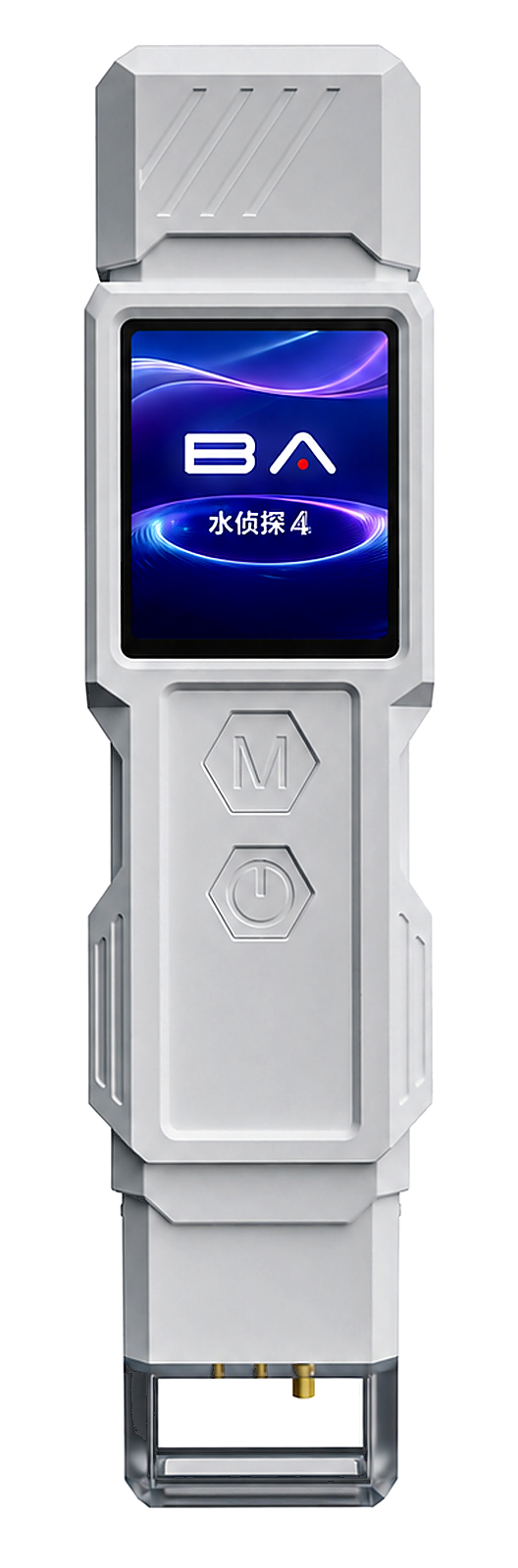
Water Detective 4 is a personal/household portable multi-parameter water quality tester that integrates nine indicators: TOC, COD, UV254, turbidity, TDS, conductivity, salinity, hardness and temperature. It is suitable for household water, comparison of water purifier performance and routine water sample screening, and can also be used for on-site rapid testing of aquarium water.
Among these parameters, those directly relevant to distinguishing turbid water include:
- Turbidity: Directly reflects the total amount of suspended particulate matter in water, but cannot identify the type of particulate matter.
- TOC (Total Organic Carbon): Indicates the total amount of organic matter in water, including dissolved and particulate organic matter. Microbial reproduction consumes organic matter, but microorganisms themselves are also part of organic carbon.
- COD (Chemical Oxygen Demand): Reflects the total amount of oxidizable substances, which in fish tanks mainly come from feed, feces, algae, etc.
- UV254: Sensitive to organic matter containing conjugated double bonds or aromatic rings, and can assist in judging humic substances.
- TDS, conductivity, salinity, hardness: Reflects the level of dissolved inorganic salts, helping to rule out interference caused by mineral fluctuations.
- Temperature: Microbial activity is closely related to temperature, and it is also the temperature compensation baseline for many water quality parameters.
Clearly state what it cannot do
Water Detective 4 is a screening and trend observation tool, and cannot be used to identify specific pollutants or microorganisms. The following items are not within the detection capability of this device and must be confirmed through appropriate laboratory methods:
- Specific chemical substances such as lead, arsenic, nitrate, nitrite, ammonia nitrogen, and pesticides;
- The types and quantities of microorganisms such as bacteria, viruses, parasites, and fungi;
- Indicators crucial to fish health, such as dissolved oxygen (DO), ammonia nitrogen, nitrite, and nitrate.
If pathogenic microorganisms or acute poisoning are suspected in the fish tank, readings can only serve as background information and cannot replace professional testing.
Applicable and Non-Applicable Scenarios
Applicable:
- Routine turbidity troubleshooting in household freshwater/marine ornamental fish tanks;
- Observation of water quality trends after setting up a new tank, cleaning filter media, or large water changes;
- Assisting in judging changes in organic load in quarantine tanks or treatment tanks;
- Comparative screening between water purifier output and the original aquarium water.
Not applicable:
- Diagnosis requiring identification of specific microorganisms (e.g., ciliates, pathogenic bacteria);
- Compliance testing or disease reports for aquaculture farms;
- Drinking water safety determination or human health risk assessment.
Reproducible sampling and measurement steps
The purpose of the following steps is to obtain comparable, repeatable data, rather than pursuing laboratory-grade accuracy. Try to perform each measurement at the same time and the same location.
1. Preparation
- Rinse the sampling container and the test pen probe with deionized water or purified water.
- Check whether the probe surface is clean and free of biofilm or salt scale. If present, gently wipe with a soft cloth.
- Bring the water sample to room temperature (or record the temperature and use the instrument's automatic temperature compensation).
- Prepare a record sheet (paper or electronic) including date, time, tank number, recent operations and readings.
2. Sampling
- Sample in the middle of the tank, away from the air stone and outlet, to avoid drawing in bottom sediment or surface foam.
- Use a clean container and take about 100–200 mL of sample.
- Do not disturb the water before sampling, to avoid artificially increasing suspended solids.
- If the tank has multiple flow layers, repeat sampling three times at the same depth and take the median value.
3. Measurement
Follow the Water Detective 4 instructions and read in sequence:
- Turbidity: measure directly and record the unit as NTU.
- TOC、COD、UV254:根据设备提示操作,通常需要等待光谱扫描完成。
- TDS、电导率、盐度、硬度:读取后记录,注意区分单位(如 ppm、μS/cm、ppt、mg/L CaCO₃)。
- 温度:记录水温,若仪器自动补偿,则无需手动修正。
每次测量之间用纯净水清洗探头,避免交叉污染。
4. 背景测量(可选但推荐)
同时测量一份“对照水样”——例如新配制的除氯自来水、RO 水或净水器出水。这有助于区分鱼缸内变化与水源本身波动。
5. 数据记录与初步观察
记录所有读数,并简单描述水体外观(如“轻微白雾”“明显颗粒悬浮”)、鱼的行为、过滤系统运行情况。
How to interpret results and common interferences
解释框架:先看浊度,再看有机指标,最后看无机背景
场景 A:浊度高,TOC、COD 也明显高于对照水
- 解释:水中存在较多有机性悬浮物,可能来自过量投喂、鱼类排泄物分解、滤材中脱落的生物膜或微生物繁殖。
- 分支:若同时观察到水体发白且静置后不沉淀,倾向微生物性浑浊;若静置 30 分钟后颗粒沉降,更可能为物理性颗粒物。
- Action: strengthen physical filtration (e.g., fine filter wool, filter bags), reduce feeding, test ammonia nitrogen/nitrite (a dedicated test kit is required), and retest after 24 hours.
Scenario B: Turbidity is high, but TOC and COD are close to those of the control water
- Explanation: Suspended particles may be mainly inorganic, such as dust from new substrate sand, calcium carbonate particles in hard-water areas, or debris from filter media.
- Branch: Check whether the substrate sand has recently been disturbed, new filter media added, or calcium-containing substances used.
- Action: Turn off the wave-making pump and let it stand for observation, and use fine filter wool to intercept particles; large water changes are unnecessary and should be avoided to prevent pH fluctuations.
Scenario C: Turbidity is normal or low, but TOC and COD keep rising
- Explanation: Organic matter is mainly in dissolved form and has not yet formed obvious turbidity. Long-term accumulation may trigger microbial blooms or algae.
- Action: Reduce feeding, increase water-change frequency, and check whether the nitrification system is sound; record the trend continuously, and if TOC rises by more than 20% per day, vigilance is required.
Scenario D: Sudden fluctuations in conductivity, TDS, and hardness
- Explanation: A water-source switch may have occurred, only top-off water was added without a water change after substantial evaporation, or mineral conditioners or medications were added.
- Action: Verify recent operations and, if necessary, adjust slowly to avoid osmotic shock.
Common interferences and failure modes
- Air bubble interference: Microbubbles introduced by air stones and filter outlets can make turbidity readings falsely high, and they look like white mist to the naked eye. Before sampling, let it stand for 5 minutes or gently tap the container wall to drive off bubbles.
- Color interference: Yellow water (such as humic acid released by driftwood) may interfere with UV254 and COD readings. If the water is noticeably yellow, the color should be recorded and the relevant interference ruled out.
- Temperature changes: Temperature affects conductivity and TDS readings, so be sure to use the temperature compensation function or perform manual correction.
- Probe contamination: After long-term use, biofilm or salt scale may adhere to the probe surface, causing reading drift. Clean regularly and verify with standard solutions.
- Sampling inconsistency: Sampling at different depths and at different times will make the data incomparable. Keep the sampling point, sampling time and container fixed.
- Overinterpreting a single reading: A single measurement can only represent an instantaneous state, so judgments should be made in combination with trends. Measure at the same time each day for at least 3 consecutive days.
When to retest, stop using, or send to a laboratory
Retest timing
- After turbidity is first detected, it is recommended to retest once each at 24 hours, 48 hours and 72 hours.
- If intervention measures are taken (such as enhancing filtration, reducing feeding or partial water changes), retest 6–12 hours after the measures to assess the trend.
- For a newly set up tank or after a major cleaning of filter media, measure every day until the parameters are stable.
Situations in which to stop using the portable test pen
- The probe is severely contaminated, damaged or cannot be calibrated;
- Readings repeatedly exceed a reasonable range (for example, pure water conductivity >100 μS/cm and cannot be explained);
- the device's water inlet is blocked, the display is abnormal, or the buttons are unresponsive;
- when a legally valid test report is required.
clear indications for referral to a laboratory
If any of the following situations occurs, stop self-screening and contact a qualified laboratory as soon as possible for microbiological or specific chemical testing:
- fish show abnormal mortality that cannot be explained by routine water-quality parameters;
- the water is turbid and accompanied by a fishy odor, a large amount of foam, or an abnormal color (such as red, green, or black);
- a specific pathogen is suspected (such as white spot disease or saprolegniasis) and needs to be confirmed;
- key indicators such as ammonia nitrogen, nitrite, nitrate, and dissolved oxygen need to be tested, but no reliable test kit is available on hand;
- the water purifier or water source has been involved in a known contamination event.
Laboratories typically perform microscopic examination, bacterial culture, PCR, or chemical analysis, which portable screening devices cannot replace.
Record sheets and action checklist
Daily/per-measurement record sheet (suggested fields)
| Date/Time | Tank/Water Sample ID | Temperature (°C) | Turbidity (NTU) | TOC | COD | UV254 | TDS | Conductivity | Salinity | Hardness | Appearance Description | Recent Actions | |---------|--------------|----------|-----------|-----|-----|-------|-----|--------|------|------|---------|--------| | Example | Main tank 1 | 25.0 | 12.3 | 2.1 | 5.0 | 0.045 | 180 | 360 | 0.2 | 120 | Slight white haze | Water change yesterday 1/3 |
(Fill in units according to the device's actual display, e.g., TOC mg/L, COD mg/L, UV254 cm⁻¹, TDS ppm, conductivity μS/cm, salinity ppt, hardness mg/L CaCO₃)
Turbidity Troubleshooting Action Checklist
- Confirm whether the tank has had recent actions: water change, filter media cleaning, adding fish, adding medication, overfeeding.
- Observe the water appearance and fish behavior: does it settle after standing? Are there too many bubbles?
- Use Water Detective 4 to measure the full set of parameters, and also measure a control water sample.
- Compare turbidity with organic indicators to determine whether the particulate matter leans inorganic or organic.
- Use temperature, conductivity, and hardness to rule out inorganic interference.
- If microbial turbidity is suspected, reduce feeding, increase dissolved oxygen (air pump), and do not perform frequent large water changes.
- Retest after 24 hours and observe the turbidity trend.
- If there is no improvement within 48–72 hours or the fish show abnormalities, send to the laboratory and test ammonia/ nitrite/microorganisms.
FAQ
Q: Can Water Detective 4 detect bacteria in a fish tank?
A: No. It measures screening indicators such as turbidity, total organic matter and inorganic salts; it cannot distinguish bacteria, viruses, parasites or other microorganisms. If a pathogenic infection is suspected, microscopic examination, culture or molecular biology testing is required.
Q: The water in my fish tank is cloudy, the turbidity reading is not high, but the fish are gasping at the surface. What is the cause?
A: Normal turbidity with fish gasping at the surface often indicates insufficient dissolved oxygen or ammonia/nitrite poisoning; these indicators are not measured by Water Detective 4. Oxygenate immediately and use dedicated test kits to measure ammonia and nitrite, and if necessary send a sample to a laboratory.
Q: Why do the TDS and conductivity I measure not match?
A: TDS is usually converted from conductivity, and different instruments may use different conversion factors (commonly 0.5–0.7). In addition, improper temperature compensation can also cause deviations. Focus on trend changes from the same device, and do not directly compare absolute values across devices.
Q: Can I use this device to replace routine testing before a water change?
A: It can only serve as an auxiliary screening. Water-change decisions also require key parameters such as ammonia, nitrite, nitrate, pH and dissolved oxygen, which need dedicated test reagents or laboratory testing.
Q: The fish tank water is cloudy but the fish are in good condition. Do I need to treat it?
A: If the fish are in normal condition and the parameters are stable, you can first observe and record the trend. Slight cloudiness may come from new filter media or tiny air bubbles and will usually clear up on its own. If it persists for more than three days or the readings worsen, troubleshoot according to the action checklist.
References and Regional Applicability
- World Health Organization. Guidelines for drinking-water quality: fourth edition incorporating the first addendum. Geneva: World Health Organization; 2017. https://www.who.int/publications/i/item/9789241549950 (For general background understanding of the general meaning of parameters such as turbidity and TDS; its limits do not directly apply to ornamental fish farming.)
- U.S. Geological Survey. Turbidity and Water. Water Science School. https://www.usgs.gov/special-topics/water-science-school/science/turbidity-and-water (Explains the physical meaning and measurement principles of turbidity, used to distinguish particulate matter from dissolved substances.)
- Centers for Disease Control and Prevention. Healthy Water: Aquariums and Fish. https://www.cdc.gov/healthywater/other/aquariums/index.html (Provides hygiene considerations for household aquarium environments; does not address specific parameter limits.)
- University of Florida IFAS Extension. Water Quality for Ornamental Fish. (For the specific version, please consult the EDIS database, article number FA-27, etc.; outdated links are not provided here.) This material applies to the interpretation of water quality parameters in freshwater ornamental fish culture.
Regional applicability note: The operating methods and parameter explanations described in this article are based on general physicochemical principles and are applicable in multiple regions. However, any judgment involving fish health, water source safety or regulatory limits must be made in consultation with local aquaculture authorities, a veterinarian or a certified laboratory. Different countries/regions have different requirements for fish medications, water quality standards and disease reporting, and the content of this article does not constitute compliance advice.