
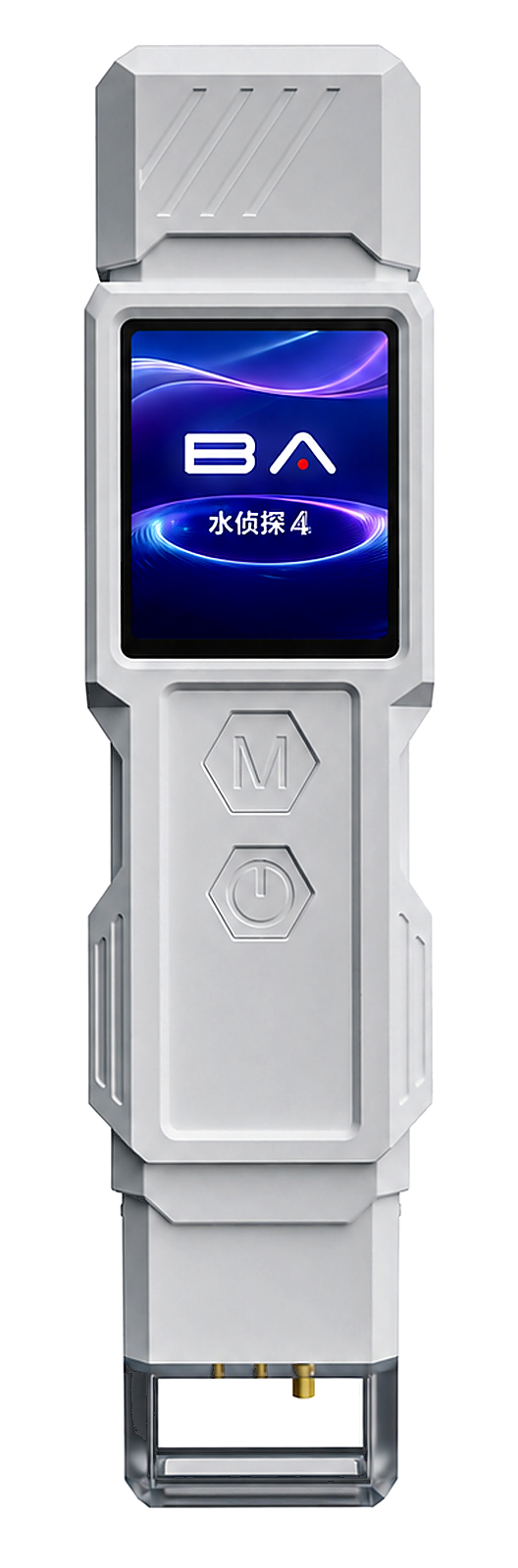
Home fish keeping often conflates two things: "treating" tap water and "testing" water quality. But dechlorination and a test pen do not solve the same class of problem. The former targets the acute harm to fish gills and the nitrifying system from residual chlorine/chloramine left by tap water treatment processes; the latter (represented by Water Detective 4) provides on-site screening of multiple physicochemical indicators, trend comparison and relative verification of the effectiveness of water purifiers/dechlorination processes. This article gives a verification checklist following actual operating steps.
I. Intended users and decision questions
For enthusiasts using tap water for water changes and comparing different water sources or verifying the effectiveness of activated carbon filter cartridges or dechlorinating agents in home aquariums, small fish ponds, quarantine tanks, breeding tanks, turtle tanks, etc. Typical decision questions include:
- Can tap water go directly into the tank? To what extent does it need to be dechlorinated?
- After dechlorination, is the water sample more suitable for the tank than the raw water?
- Before and after a water change, are there abnormal fluctuations in the tank water's conductivity, TDS, hardness, turbidity, etc.?
- When is it enough to observe trends with a portable test pen, and when must dedicated reagents be used or a laboratory consulted?
The problem 1.1 dechlorination solves
To inhibit microorganisms, tap water plants usually add chlorine or chloramine. Residual chlorine and chloramine oxidize fish gill epithelial cells, damage mucous membranes, and also inhibit or kill nitrifying bacteria, reducing ammonia nitrogen conversion capacity. Therefore, dechlorination addresses "removing or neutralizing residual oxidizing disinfectants," making the water gentler for fish and microbial communities. Common methods: aging water/aeration (effective only against free chlorine, poor against chloramine), activated carbon filtration, commercial dechlorinating agents (sodium thiosulfate, etc.; confirm whether they treat chloramine), RO/ultrafiltration, etc.
1.2 Problems that the detection pen solves
A portable pen such as Water Detective 4 solves "obtaining a set of comparable physicochemical screening parameters within minutes": TOC, COD, UV254, turbidity, TDS, conductivity, salinity, hardness, temperature. These parameters are used to: compare differences between tap water, dechlorinated water and tank water; determine whether filtration or dilution operations change things as expected; and observe long-term trends. It is not a qualitative or quantitative analyzer for a specific contaminant (such as lead, arsenic, nitrate, pesticides, bacteria, viruses, parasites, dissolved oxygen, ammonia nitrogen, nitrite).
Therefore: dechlorination is the action taken before water enters the tank; the test pen is the verification action before, during and after treatment. The two work together, but neither can replace the other.
II. Boundaries of water samples/equipment/scenarios
2.1 Which indicators can be screened, and which cannot
The nine indicators of Water Detective 4 provide the following:
- Total organic carbon (TOC), chemical oxygen demand (COD), UV254: indicates the overall level of organic matter, and can be used to compare whether the organic load decreases after filtration; however, it cannot identify specific types of organic matter, nor does it directly correspond to toxicity.
- Turbidity: indicates particulate matter/colloids and is indirectly related to microbial risk, but it is not a microbial count.
- TDS, electrical conductivity (EC), salinity, hardness: describe dissolved solids and total ion content, helping to assess source-water mixing, RO/softening effects and the degree of evaporative concentration.
- Temperature: the basis for all reading corrections and for judging fish stress.
The following items are outside the capability of this device and must be tested with dedicated test kits or in a laboratory: residual chlorine, total chlorine, chloramine, ammonia nitrogen, nitrite, nitrate, dissolved oxygen, pH, phosphate, heavy metals (lead, copper, zinc, etc.), pesticides, drug residues, total bacterial count, viruses, parasites.
If someone uses a low TDS or conductivity reading to conclude that there are "no heavy metals" or "no ammonia nitrogen", this is wrong: TDS is a total amount and cannot distinguish ion types or toxicity.
2.2 Comparison between dechlorination and test pen
| Item | Dechlorination treatment | Portable test pen screening (Water Detective 4) |
|---|---|---|
| Primary goals | Remove/neutralize residual chlorine and chloramines | Obtain multiple physicochemical screening parameters and observe trends |
| Indicators addressed | Free chlorine, total chlorine, chloramines | TOC, COD, UV254, turbidity, TDS, EC, salinity, hardness, temperature |
| Not addressed | Other contaminants | Residual chlorine, ammonia nitrogen, nitrite, dissolved oxygen, heavy metals, microorganisms, etc. |
| Method of operation | Aeration, activated carbon, dechlorinating agents, RO | Instrumental measurement after sampling |
| Purpose of results | Safety assurance before adding to the tank | Comparison, trends, process control |
| Limitations | May fail; does not address other toxic substances | Screening rather than identification; cannot prove safety on its own |
2.3 Applicability boundaries for different scenarios
- Comparison before and after routine water changes: suitable for recording trends with a test pen.
- New tank setup, fish illness, breeding, quarantine: key water quality indicators must be confirmed using laboratory methods.
- Using tap water or well water: raw water and treated water need to be recorded separately; well water may not have a residual chlorine issue, but may have hardness, iron, manganese, etc.; a test pen can be used for screening, while heavy metals require laboratory testing.
- Using RO water: TDS/conductivity should drop significantly, but minerals need to be replenished; a test pen can verify whether the RO membrane is trending toward failure.
III. Reproducible sampling and measurement steps
3.1 Preparation
- Device: Water Detective 4; charge it fully as instructed or calibrate it (if calibration is required), and make sure the measurement cell is clean with no fingerprints or water stains.
- Container: prepare 3 clean transparent plastic or glass sampling bottles. First rinse them with the water sample to be collected 2-3 times to avoid residue.
- Record sheet: prepare an electronic or paper record sheet listing time, water source, treatment method, water temperature, device readings, and remarks.
3.2 Sampling points
- Raw water sample: open the tap and let the water run for 1-2 minutes to flush out water that has been sitting in the pipes, then collect the sample to avoid collecting stale water from the pipes.
- Dechlorinated water sample: after adding the dechlorinating agent and stirring thoroughly, wait a sufficient time according to the product instructions (usually 15-30 minutes) before sampling; if using an activated carbon filter, collect the sample directly from the filter outlet and record the number of days the filter cartridge has been in use.
- Tank water sample: take one sample before the water change and one 24 hours after the water change. Take samples 10 cm below the water surface, away from airstones, the filter outlet, and areas where the substrate has been disturbed, to reduce local unevenness.
3.3 Measurement order
- First measure temperature and wait until the device temperature is stable;
- then measure turbidity, UV254, TOC, COD, TDS, EC, salinity, and hardness in sequence; before each measurement, rinse the measurement cell with pure water or deionized water, then rinse it with the water sample to be measured.
- Measure each sample repeatedly 2-3 times, take the average or median, and exclude obvious outliers.
- If readings fluctuate greatly, check for bubbles, direct sunlight, or water stains on the outer wall of the measurement cell.
3.4 重要提醒
水样采集后应在30分钟内完成检测,避免水样吸收CO2、温度变化、微生物繁殖导致读数偏移。尤其是TOC/COD/UV254,放置过久可能因生物活动改变有机物含量。
IV. Interpretation of results and common interferences
4.1 除氯前后应发生什么
- 游离氯/氯胺会与除氯剂反应,但水侦探4不测余氯,因此不能从读数直接判断余氯是否为零。需另用DPD比色法或专用传感器确认。
- TDS、EC、盐度、硬度:除氯剂(如硫代硫酸钠)可能轻微增加TDS,但通常变化不大;如果使用RO或活性炭+超滤,TDS可能下降;若使用软水树脂,硬度下降但TDS可能不变或略升。
- 浊度:活性炭过滤可能降低浊度;除氯剂一般不改变浊度。
- 有机物指标:活性炭可吸附部分有机物,TOC/COD/UV254可能下降;但如果原水有机物很高或滤芯饱和,可能没有明显变化。
4.2 常见的干扰和失败模式
- 温度补偿偏差:设备标称温度补偿,但在极低或极高水温下,电导率/TDS/盐度读数仍可能有偏差,应记录实际水温。
- 气泡:摇晃后水样中有微小气泡,会造成浊度、UV254读数偏高或跳动,需静置或轻敲排出气泡。
- 容器污染:使用洗洁精清洗后未冲洗干净,残余表面活性剂会干扰TOC/COD/UV254,建议用纯水多次冲洗并自然晾干,避免使用肥皂。
- 除氯剂干扰:某些含硫除氯剂可能干扰COD或UV254读数,应在加入除氯剂前先测原水,再测处理后水,以变化趋势而非绝对值为准。
- Water sample held too long: dissolved CO2 changes pH, microorganisms consume organic matter, causing TOC/COD to decrease, while TDS may rise due to evaporation.
- Equipment contamination or dirty optical windows: scale, fingerprints or algae residue in the measurement cell scatter the light path, causing abnormal turbidity/UV254 readings.
4.3 How to read trends rather than single points
It is recommended to establish a "triple comparison": source water, treated water and tank water, sampled and measured at the same time. Focus on relative changes:
- If the TDS/EC of dechlorinated water is close to that of the source water, it indicates the dechlorinating agent has not significantly changed the dissolved solids.
- After tank water mixes with new water from a water change, TDS/EC gradually approaches that of the source water; if tank water TDS keeps rising, it may be due to evaporative concentration or added salts.
- A continuous rise in organic-matter indicators may suggest accumulation of leftover feed and feces, requiring more frequent water changes or enhanced filtration.
V. When to retest, stop use, or refer to a laboratory
5.1 Retest timing
- Before and after each water change after switching water sources (e.g., from tap water to well water or RO water).
- The first use after changing the dechlorinating agent brand or the activated carbon filter cartridge.
- Observed fish abnormalities: gasping at the surface, rapid breathing, rubbing against tank walls, reduced appetite, increased mucus on the body surface.
- After consecutive rainy days, maintenance at the water source, or cleaning of the community water tank.
5.2 Stop use / pause adding to tank
If any of the following occurs, pause adding treated water to the tank and retest or send to a laboratory:
- Use DPD reagent to confirm free chlorine/total chlorine is still above the safe level (for the specific safe level, refer to local aquaculture/veterinary materials).
- The treated water has an odor, abnormal turbidity, an oil film, or color.
- The source water has suffered known contamination (such as yellow water after pipe repairs, or after flooding) or a local drinking-water advisory has been issued.
- The portable pen readings show unexpected drastic changes that cannot be explained by temperature or mixing ratio.
5.3 Refer to laboratory items
When the following items need to be confirmed, use locally accredited laboratories and standard analytical methods:
- Ammonia nitrogen, nitrite, nitrate: core toxicity indicators for fish farming; liquid test kits or laboratory colorimetric methods are recommended.
- Dissolved oxygen: requires a dedicated dissolved oxygen meter or titration method.
- Heavy metals: lead, copper, zinc, etc., require atomic absorption or ICP-MS, etc.
- Pesticides, drug residues, organic pollutants: require chromatography-mass spectrometry methods.
- Bacteria, viruses, parasites: require microbiological culture, PCR, or microscopy.
Laboratory reports are what can truly support conclusions such as "whether it is safe to add to the tank," "whether it is suitable for breeding," or "whether it meets a certain aquaculture standard." Portable pens are only for screening and process control and cannot replace them.
VI. Record sheet/action checklist
6.1 record sheet template
| Date and time | Water source/treatment | Water temperature ℃ | TDS ppm | EC µS/cm | Salinity | Hardness | Turbidity NTU | TOC/COD/UV254 | Remarks |
|---|---|---|---|---|---|---|---|---|---|
| 2024-01-01 09:00 | Raw water | 20 | 120 | 250 | 0.1 | 80 | 0.5 | 1.2/2.5/0.10 | Drain the pipe 2 minutes |
(Note: The units for TDS/EC, etc. are subject to the device's actual display; different brands may vary.)
6.2 Action Checklist
Before water change:
- Prepare aeration or dechlorination equipment.
- Take a raw water sample for testing and record it.
- Add dechlorinating agent in proportion or start the filter.
- Wait for the recommended time.
- Take a treated water sample for testing and record it.
- Use DPD reagent to confirm residual chlorine (if unavailable, do not judge based on a test pen alone).
- Compare whether the difference between raw water and treated water is reasonable.
- Add to the tank and observe the fish's reaction.
- 24 hours after the water change, take a water sample from the tank for testing and record the changes.
Frequently Asked Questions (FAQ)
Q: Can Water Detective 4 measure residual chlorine? A: No. Residual chlorine/total chlorine/chloramine require the DPD colorimetric method or a dedicated sensor, and must be confirmed according to local requirements.
Q: Does low TDS mean the water is very clean? A: Not necessarily. TDS only indicates the total amount of dissolved solids; it cannot distinguish beneficial minerals from toxic heavy metals, nor does it reflect ammonia nitrogen, nitrite, etc.
Q: After dechlorination, is a test pen still needed? A: Yes. Dechlorination only addresses residual oxidizing disinfectants; a test pen helps observe whether other parameters are stable, and the two are complementary.
Q: If the portable pen readings are normal, does that mean the water is safe for fish? A: It cannot be the sole basis. Fish safety also depends on ammonia nitrogen, nitrite, dissolved oxygen, pH, temperature, pathogens, etc., which require dedicated tests or a laboratory.
Q: Activated carbon can remove chlorine, so is testing still needed? A: Yes. Activated carbon filter cartridges become saturated and stop working; a test pen can help judge trends through TOC, turbidity, etc., but chlorine breakthrough still needs DPD confirmation.
References and Regional Applicability
- World Health Organization. Guidelines for drinking-water quality: fourth edition incorporating the first addendum. Geneva: WHO; 2017. https://www.who.int/publications/i/item/9789241549950
- United States Geological Survey. Water Science School: Water properties and measurements. https://www.usgs.gov/special-topic/water-science-school/science/water-properties-and-measurements
- United States Environmental Protection Agency. National Primary Drinking Water Regulations. https://www.epa.gov/ground-water-and-drinking-water/national-primary-drinking-water-regulations
- Centers for Disease Control and Prevention. Water Treatment: Chlorine and Chloramine. https://www.cdc.gov/healthywater/drinking/public/water_treatment.html
Regional applicability: The above sources provide general background and do not replace local aquaculture or drinking water regulatory requirements. Specific safety thresholds, testing methods and compliance standards should be based on the public health, aquaculture or veterinary authorities of the user's country/region. This article does not constitute health or compliance advice.