
1. Applicable users and decision questions
In outdoor adventures, hiking and camping, field operations and disaster response, water sources often raise just one question: can this water be drunk now? A portable water-quality test pen can provide multiple readings within a minute, but what it answers is not "pass/fail"; rather, it answers which indicators are clearly abnormal compared with a known reference, and whether further treatment or abandonment is needed.
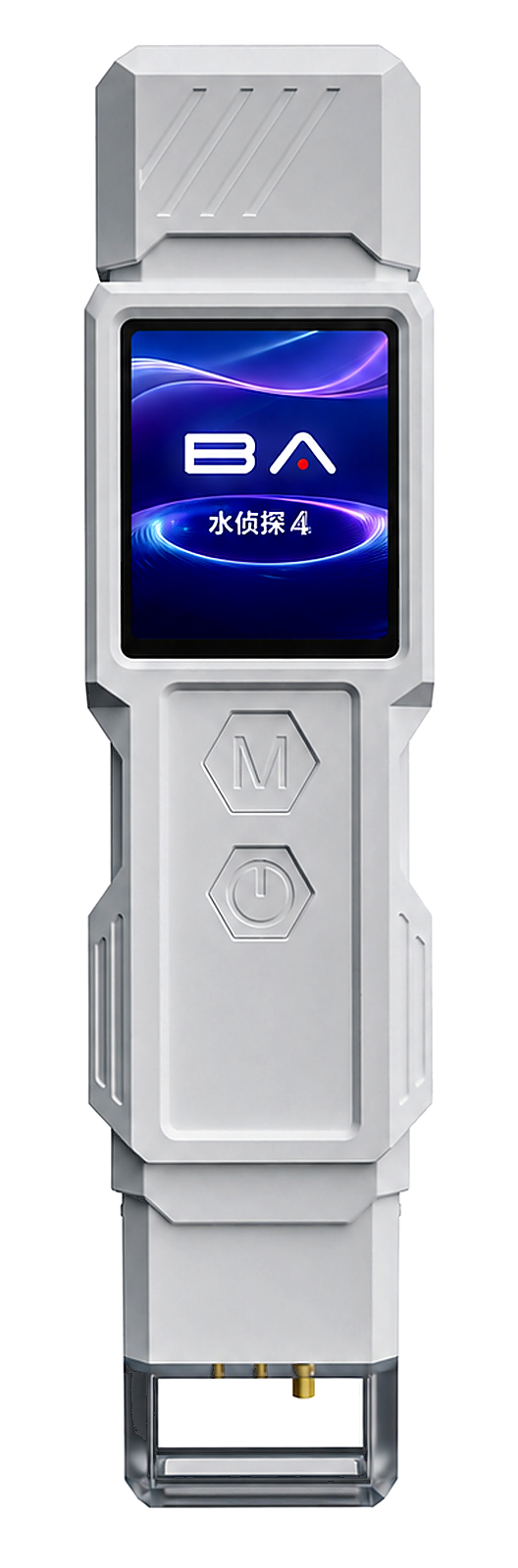
This article focuses on the nine indicators of AtomBit Water Detective 4 (personal/household portable multi-parameter water-quality test pen)—TOC, COD, UV254, turbidity, TDS, conductivity, salinity, hardness and temperature—and explains how to correctly use the readings in emergencies. Typical decision questions include:
- Can mountain springs, streams and lake water be drunk directly?
- Is there any change before and after treatment by a water purifier/filter?
- Has water quality deteriorated after rain or after an upstream disturbance?
- Under what circumstances must drinking stop and the sample be sent to a laboratory?
Core principle: portable testing is a tool for screening, comparison and trend observation, not a tool for identifying specific contaminants, and it cannot replace laboratory analysis.
2. Water samples, equipment, and scenario boundaries
Screening significance of the nine indicators of 2.1
- TOC, COD and UV254: reflect total organic matter or absorption at a specific wavelength, and can be used to compare changes in the same water source before and after filtration, upstream and downstream, and at different times, but cannot identify specific organic pollutants.
- Turbidity: reflects suspended particles and colloids; high turbidity means filtration/sedimentation is needed first, while low turbidity does not mean the absence of pathogens.
- TDS, conductivity and salinity: the three are highly correlated and reflect the total amount of dissolved ions; they do not distinguish calcium, magnesium, sodium, chloride, sulfate, heavy metals, etc.
- Hardness: reflects calcium, magnesium and other ions; mainly affects taste and scaling, and has no direct correspondence with acute health risk.
- Temperature: used for conductivity/TDS temperature compensation and as an auxiliary indicator of environmental conditions; it is not direct evidence of the presence of pathogens.
2.2 Device boundaries
Water Detective 4 is a portable rapid-testing platform that requires no laboratory conditions. Its optical window and electrodes must be kept clean; ambient temperature, water sample temperature, color, air bubbles and suspended solids all affect the readings. Do not use this device for:
- water samples that are strongly acidic or strongly alkaline, high in salinity, high in color, or contain organic solvents or oil films;
- testing that requires statutory reporting, compliance determination or litigation evidence;
- identification of specific contaminants, such as lead, arsenic, nitrate, pesticides, bacteria, viruses, parasites, dissolved oxygen, ammonia nitrogen, nitrite.
The above items require appropriate laboratory methods (such as ICP-MS, ion chromatography, culture methods, PCR, etc.) and must be performed by a qualified laboratory.
2.3 Scenario boundaries
Suitable for rapid comparison of relatively clean outdoor surface water, tap water, water purifier outlet water, bottled water, etc.; not suitable for industrial wastewater, sewage, raw water before seawater desalination, or severely polluted water bodies. In unknown water bodies, prioritize assuming a microbial risk regardless of the portable readings.
Key limitations at the sensor level of 2.4
From an engineering perspective, portable multi-parameter test pens typically use conductivity electrodes and optical windows. Conductivity readings must be temperature-compensated; otherwise they will deviate in low-temperature mountain springs or high-temperature surface water. If the optical window is covered by a water film, oil film or scratches, UV254/TOC/COD/turbidity will produce baseline drift. Therefore, before outdoor use, a control test with a known water sample or clean bottled water should be performed, and the window should be kept dry and clean before immersion in the water sample to be tested. These are not product defects but common limitations of all portable optical/electrochemical sensors.
3. Reproducible sampling and measurement procedure
Under outdoor conditions, operations must also follow a fixed procedure to make readings comparable.
- 准备与清洗:用待测水样冲洗检测笔和水样容器 2–3 次;不要用手触摸光学窗口或电极;确认窗口无雾、无划痕、无油脂。
- 选点:在流动水体中,尽量选择主流中部、水面下 10–15 cm、离岸至少 30 cm、远离底部沉积物和表面浮沫的位置。死水区、回水湾、动物饮水点下游、厕所/营地排水下游不采样。
- 采样:容器缓慢浸入,避免搅动底部;测量时检测笔浸入指定深度,静置至读数稳定。
- 读数:每个点至少测量 3 次,取中位数或平均值。先记录水温,因为电导率/TDS/盐度读数依赖温度补偿。
- 对照:同一水源采集上游对照点;对比过滤前后、煮沸前后(注意煮沸不能去除重金属/硝酸盐等)、降雨前后。
- 记录:时间、GPS 位置、天气、水温、外观(颜色/气味/漂浮物)、各参数读数、处理步骤、操作者。
4. How to interpret results and common interferences
4.1 参数解释与误区
| Parameter | 能说明什么 | Common misconception |
|---|---|---|
| Temperature | 用于补偿;水温异常可能提示污染或季节性变化 | 低温水一定安全;高温水一定危险 |
| TDS/EC/salinity | 溶解离子总量;可比较同一水源/滤芯前后 | TDS 低就可直接喝;TDS 高就有毒 |
| Turbidity | Suspended solids/colloids; high turbidity requires filtration | If clear and transparent, there are no bacteria or viruses |
| UV254/TOC/COD | Organic load; can be used for trend comparison | If the reading is low, there are no pesticides/oil; if the reading is high, it is a toxic substance |
| Hardness | Calcium and magnesium content; affects taste and scaling | Hard water can cause acute poisoning |
4.2 Common interferences and failure modes
- Temperature not stable: conductivity/TDS readings drift; wait until the water temperature and device temperature are close before reading.
- Contamination or air bubbles on the optical window: can cause turbidity, UV254, and COD/TOC to be high or fluctuating; before measurement, gently tap the test pen or stir to remove air bubbles.
- High color/high suspended solids: can interfere with optical COD/TOC/UV254; you may first let it settle and then take the supernatant for comparison, but note that filtration changes the original water sample, so the direct reading result of the original water should also be recorded.
- High-salinity matrix: may interfere with optical organic indicators; near seawater or brackish water, extra caution is required.
- Insufficient settling time: turbidity readings are unstable; allow to stand for 30 seconds to 1 minutes before measurement.
- battery low or device aging : readings drift or are abnormal; replace the battery, clean, and retest.
4.3 Interpretation principles
Portable readings can only answer: "compared with the control, which indicators are clearly elevated/lowered; whether they improve after treatment; whether the trend is worsening." They cannot answer: "whether the water contains pathogens, heavy metals or pesticides." Any health decision must combine on-site observation and laboratory confirmation.
For example: a mountain spring has a TDS of 35 ppm, and 200 m downstream it is 45 ppm; this cannot be used to conclude that the downstream water is toxic, but combined with turbidity rising from 0.3 to 2.1 NTU, it indicates that runoff is carrying in particles and dissolved substances, so direct drinking should be avoided and further treatment applied. Another example: TOC before and after water purifier filtration drops from 3.0 to 1.2 mg/L; this only shows that the organic load has decreased and does not prove that bacteria have been removed.
5. When to retest, stop use, or refer to a laboratory
5.1 signals to stop using/not drink immediately
- visible turbidity, abnormal color, oil film, foam, dead fish, algal bloom;
- smelling an odor (fecal, chemical, sulfide, rotting);
- farmland, mines, factories, livestock farms, landfills, or camp toilets upstream;
- traces of animal feces or human activity.
In these situations, even if portable readings are normal, the water must not be drunk directly.
5.2 retest conditions
- If readings exceed the daily control or show abnormal fluctuations: clean the window, replace the battery, and retest at the same location after an interval of 30 minutes;
- After rainfall or snowmelt: surface runoff may carry in contaminants; consider adding upstream/downstream controls;
- After using a water purifier/filter: if TOC/COD/turbidity do not drop noticeably before and after treatment, check whether the filter cartridge has failed.
5.3 laboratory signals
- This is the only drinkable water source, and it must be drunk;
- Pregnant women, infants and young children, the elderly, and immunocompromised people drink it;
- The water source is located downstream of mining, industrial, or agricultural areas or near historically contaminated sites;
- Abnormal situations such as after disasters, floods, or earthquakes;
- A compliance certificate or legal use is required.
The laboratory needs to select tests based on risk: microorganisms (total coliforms, Escherichia coli), heavy metals (lead, arsenic, cadmium, etc.), nitrate/nitrite, pesticides, volatile organic compounds, etc.
5.4 Limitations of retesting after treatment
Filtration/disinfection/boiling can reduce turbidity and some organic matter, but:
- It cannot remove heavy metals, nitrate, or salinity;
- Boiling cannot remove chemical contaminants;
- Disinfection effectiveness cannot be confirmed by portable devices.
Therefore, retesting after treatment can only verify whether physical/partial organic load has decreased, and cannot prove microbiological safety.
6. Emergency Record Sheet/Action Checklist
6.1 On-site Reading Record Sheet (Example)
| Time | Location/Coordinates | Water temperature (°C) | TDS/EC | Turbidity | UV254/TOC/COD | Appearance/Odor | Remarks |
|---|---|---|---|---|---|---|---|
| 08:20 | Upstream of the stream | 12 | 68 ppm / 142 µS/cm | 0.5 NTU | 0.12 cm⁻¹ / 2.1 mg/L / 1.5 mg/L | clear and odorless | reference point |
| 08:35 | downstream of the stream | 13 | 75 ppm / 157 µS/cm | 1.8 NTU | 0.19 cm⁻¹ / 3.8 mg/L / 2.4 mg/L | slightly turbid | Rainwater runoff |
(Note: The values in the table are examples only and do not represent actual measurement results.)
6.2 Action Checklist
- Observation of water source: color, odor, floating matter, animal activity, upstream land use.
- Sampling: rinse the equipment, select a water sample from the middle of the flow, and avoid the bank and bottom.
- Measurement: record the temperature, wait for stabilization, then read the nine items 3 times per point.
- Interpretation: compare with an upstream reference or historical records to determine whether it is abnormal.
- Treatment: if the water is to be drunk, at least filter + disinfect or boil it; after treatment, screen again and compare.
- Decision: for any sensory abnormality, abnormal reading or known contamination source, stop using the water and send it to a laboratory.
- Record: fill in the form and save it for subsequent trend assessment.
7. FAQ
Q: The TDS reading is very low—does that mean it can be drunk directly? A: No. TDS only reflects the total amount of dissolved ions and cannot indicate bacteria, viruses, parasites or specific chemical contaminants. Even if field water has a very low TDS, it must be filtered/disinfected before drinking.
Q: UV254 is very low—does that mean there are no pesticides or heavy metals? A: No. UV254 does not respond to many pesticides, heavy metals or nitrates. Specific contaminants require laboratory methods for confirmation.
Q: After boiling, the TOC/COD reading rises instead—is that normal? A: It may be normal. Boiling concentrates organic matter and may also produce some oxidizable substances. Portable devices cannot distinguish the cause. If the raw water has high organic contamination, it should be filtered before boiling, and long-term consumption of unconfirmed water sources should be avoided.
Q: Can it be used to test for lead and arsenic in the field? A: No. Laboratory methods such as ICP-MS, atomic absorption or atomic fluorescence are required.
Q: How can I confirm the device itself is working properly? A: Use known water samples (such as freshly opened bottled water or tap water) as a control; keep the optical window and electrodes clean; if the readings drift abnormally, clean it and retest. If it is still abnormal, stop using it and contact after-sales service.
References
- World Health Organization. Guidelines for drinking-water quality: fourth edition incorporating the first addendum. Geneva: WHO; 2017. https://www.who.int/publications/i/item/9789241549950
- Standardization Administration of China. GB 5749-2022 Standards for Drinking Water Quality. 2022. The full standard text can be queried on the official website of the Standardization Administration of China.
Regional applicability note: This article provides general on-site screening principles. Specific drinking water limits, emergency handling requirements and laboratory methods are subject to the local drinking water supervisory authority, public health agency or national standards; different countries/regions may have different definitions of "safe drinking water" and testing items. In mainland China, drinking water should comply with GB 5749-2022; in other regions, please consult the local competent authority or refer to WHO guidelines.