
Introduction
Water refill sources during RV road trips are often inconsistent: municipal tap water, campsite-owned well water, diverted mountain spring water, water stored in tanks, or water that has passed through various filtration devices. Visually clear water does not mean it lacks scaling tendency, organic matter fluctuations or turbidity changes. Using a portable multi-parameter test pen for on-site screening and recording readings from different campsites into a comparable table can help family users make more reasonable decisions about refilling, boiling, washing vegetables and filter maintenance.
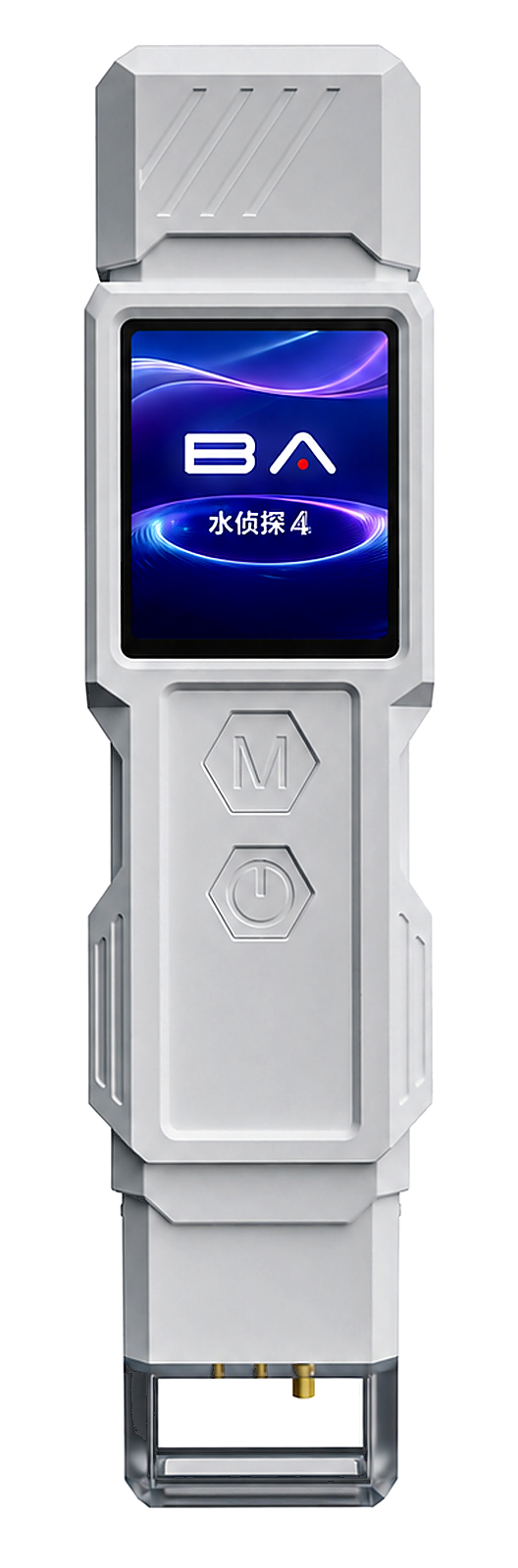
This article uses the AtomBit Water Detective 4 as an example device. It integrates nine indicators on one rapid testing platform: TOC, COD, UV254, turbidity, TDS, conductivity, salinity, hardness and temperature, making it suitable for households, service personnel and on-site screening. However, it must be emphasized: these readings are only for screening, comparison and trend observation, cannot replace laboratory analysis, and certainly cannot serve as proof of "safe to drink" or "compliant with hygiene standards."
I. Intended users and decision questions
Applicable users
- RV road-trip families: refilling at different campsites, wishing to compare the scaling tendency, taste and turbidity of water sources.
- Long-distance travelers: need to record the water source conditions at each campsite in order to judge filter life, water heater scale and drinking taste.
- Small campsite/B&B operators: quickly recheck daily fluctuations of their own water sources, but this cannot replace sending samples for testing as required.
- RV modification or water purification equipment integrators: when designing pre-filtration, softening or display solutions for end users, they need to understand the boundaries of on-site rapid screening.
Typical decision questions
- Is this campsite's water suitable for filling the RV water tank?
- How does it taste after boiling? Is it prone to scaling?
- Has the water quality changed significantly compared with the previous campsite?
- Is it necessary to install a pre-filter or water softener?
- Which abnormal readings indicate that water top-up should be stopped or a sample sent to the laboratory?
These questions can be partially answered through fixed sampling, fixed measurement and fixed record-keeping methods, but the answers can only be relative comparisons and risk indications, not compliance determinations.
II. Boundaries of water samples/equipment/scenarios
The screening implications of the nine indicators measurable by Water Detective 4 in RV campsite scenarios are as follows:
| Indicator | Screening purpose | What it cannot do |
|---|---|---|
| TOC/COD/UV254 | Compare the relative levels of organic matter in different water sources or before and after filtration | Cannot identify specific organic compounds, and cannot measure pesticides, antibiotics or disinfection by-products |
| Turbidity | Indicates particulate matter, colloids, rust or filter failure | Not a standard turbidity meter and cannot be used for compliance determinations |
| TDS/conductivity/salinity | Compare total dissolved solids and ionic strength | Cannot distinguish beneficial minerals from harmful ions |
| Hardness | Assess scaling tendency, taste, and coffee machine/water heater maintenance needs | Not equivalent to precise laboratory measurement of calcium and magnesium |
| Temperature | Used to judge reading stability and temperature compensation | Not a water quality safety indicator |
Device boundaries
Water Detective 4 does not include microbial detection functions and cannot measure bacteria, viruses, parasites, nor lead, arsenic, nitrate, nitrite, ammonia nitrogen, dissolved oxygen, pesticide residues, etc. Any suspicion of a specific contaminant must be confirmed using dedicated methods from local authorities or certified laboratories.
Scenario boundaries
- Suitable for: on-site rapid comparison at campsite faucets, RV water tanks, mountain spring diversions, before and after water purifiers, and simple filter outlets.
- Not suitable for: compliance-oriented water quality determinations, drinking safety certification, or certification that water meets standards for pet health or aquaculture.
- Different countries/regions have different regulatory limits for drinking water, campsite water supplies and water storage equipment; this article does not provide any limits.
III. Reproducible sampling and measurement steps
Preparation
- Choose a clean sampling container that does not adsorb or release organic substances, such as a new disposable food-grade PET bottle or a laboratory PP bottle. Do not use bottles that previously held beverages, dish soap or chemicals.
- Rinse the container and the test pen probe with the water sample to be tested at least 3 times.
- If the test pen was just used at a previous location, first rinse it with distilled or purified water, then rinse it with the water sample to be tested.
- Read and record the temperature. Readings such as TDS, EC and hardness are affected by temperature; direct comparison at different water temperatures will lead to misjudgment.
sampling
- First run the water for 15–30 seconds to flush out stagnant water in the pipes.
- If it is RV tank water, record the tank type, standing time, whether it passed through a pre-filter, and the last cleaning time.
- Collect about 200–500 mL of water, cap it, and avoid direct sunlight and high temperatures.
- Measure as soon as possible after sampling, preferably within 30 minutes; if short-term storage is needed, keep it cool and away from light but do not freeze it, and note the storage time in the record.
Measurement order (fixed order recommended for easy comparison between different campsites)
- Temperature: record after the reading stabilizes.
- TDS/EC/salinity: fully immerse the probe and gently shake to remove air bubbles.
- Hardness: Follow the instrument prompts and avoid touching the sensing area with your hands.
- Turbidity: After capping the sample bottle, invert it to mix, then measure immediately to avoid a falsely low reading caused by particles settling.
- UV254/TOC/COD: Wait for the reading to stabilize and avoid direct strong light on the sample cell.
Measure each water sample 2 to 3 times repeatedly, and record the median or the average. If two consecutive readings differ markedly, check the probe and air bubbles, then measure again.
records
Each record should include at least: date, time, campsite name/location, water source type (campsite tap/private well/water tank/after filtration), flushing duration, sampling container, water temperature, readings for each parameter, instrument number, battery/calibration status, operator, and sensory notes (odor, color, sediment, etc.).
IV. Interpretation of results and common interferences
TDS/EC/salinity
Reflects the total amount of dissolved ions. TDS and EC usually have an approximate conversion relationship, but the coefficient varies with water quality. When comparing campsites, high TDS may mean more minerals, a harder taste, or a greater tendency to form scale. High TDS does not mean unsafe; many natural mineral waters have high TDS but are still drinkable. Safety cannot be judged from TDS alone.
Hardness
Mainly reflects calcium and magnesium ions. High hardness readily causes scale in kettles, water heaters, coffee machines and humidifiers. With long-term use of high-hardness water in an RV water tank, scale reduces thermal efficiency and clogs filters and showerheads. If the hardness reading rises markedly from one campsite to another, it can indicate that softening or regular descaling is needed.
Turbidity
May indicate particulate matter, colloids, rust or microbial carriers. If turbidity rises suddenly, it may mean pipeline disturbance, surface water intrusion after heavy rain, or filter failure. In this case, check the pre-filter element and the pipeline. However, portable turbidity readings cannot replace standard turbidity testing, nor can they directly determine microbial risk.
UV254/TOC/COD
These three items are related to organic matter: UV254 reflects organic matter that absorbs 254 nm ultraviolet light, TOC is total organic carbon, and COD is chemical oxygen demand. In household/campsite screening, they are used to observe changes in the same water source at different times or before and after filtration, or to compare the relative organic matter levels of different campsite water sources. Elevated readings may indicate organic contamination, but cannot distinguish whether it is humic substances, plant decomposition products, or pesticides, domestic sewage, or bacterial metabolites. Specific pollutants must be identified through laboratory methods.
Common interferences
- Temperature not stable: readings drift, especially water just dispensed from a hot water tap.
- Air bubbles: bubbles at the probe cause EC/TDS to read low or fluctuate.
- Container contamination: residual detergent, beverages, or fingers touching the inner wall of the bottle mouth will introduce organic matter.
- Strong light/direct sunlight: affects optical readings.
- Static settling: failing to shake well before turbidity measurement will cause underestimation.
- Cross contamination: incomplete cleaning between different water samples.
- Sensor status: the probe is aged, contaminated, or not calibrated according to instructions.
V. When to retest, stop use, or refer to a laboratory
Situations requiring retesting
- Two consecutive parallel readings differ by more than your own acceptable range (for example ±10%, or as recommended in the instrument manual).
- Readings vary greatly among different taps at the same camp.
- After heavy rain, pipeline repairs, or a water source switch.
- Readings show an obvious trend change, but sensory qualities are normal.
- The instrument shows an abnormality that can be resolved by cleaning, calibration, or retesting.
Situations where it is recommended to stop refilling or use the water only for flushing
- Turbidity and TOC/COD/UV254 readings are significantly higher than the camp's historical records and those of nearby camps.
- The water has an obvious odor, color, oil film, foam, or sediment.
- The water source is surface water or a shallow well that is susceptible to contamination, and on-site screening readings remain abnormal.
- Gastrointestinal discomfort, rash, or other symptoms appear after use (seek medical care and report to the camp).
- The instrument readings are abnormal and cannot be resolved by cleaning or retesting; stop using that instrument.
Situations that must be referred to a laboratory
- Need to determine whether it meets drinking water standards, is safe for pets to drink, meets livestock watering needs, or meets long-term residency water supply requirements.
- The campsite water source comes from surface water, shallow wells, rainwater collection, or areas susceptible to agricultural and livestock impacts.
- Specific contaminant concerns: lead, arsenic, nitrate, nitrite, pesticides, bacteria, viruses, parasites, etc.
- Portable screening readings are normal but sensory abnormalities exist (such as odor, color, oil film).
- Need to provide compliance proof to regulatory agencies or customers.
Laboratory testing items and frequency should be selected according to local authority requirements, typically including standard methods for microorganisms, heavy metals, nitrate, pesticides, etc. Do not substitute household instrument readings for laboratory reports.
VI. Record sheet/action checklist
The following record table template is for format illustration only; example values are not measured data, and actual readings must come from the user's own instrument.
| Field | Content example | Required |
|---|---|---|
| Date and time | 2025-04-12 08:30 | Yes |
| Campsite name/location | Pine Camp Zone A Faucet | Yes |
| Water Source Type | Camp tap water (private well) | Yes |
| Discharge duration | 30 s | Yes |
| Water temperature | 18.5 °C | Yes |
| TDS | 210 mg/L | Yes |
| EC | 420 µS/cm | Yes |
| Hardness | 120 mg/L CaCO₃ | Yes |
| Turbidity | 2.1 NTU (instrument relative value) | Yes |
| UV254 | 0.045 cm⁻¹ | Yes |
| TOC | 1.8 mg/L | Yes |
| COD | 3.2 mg/L | Yes |
| Salinity | 0.02% | Optional |
| Sensory notes | Odorless, slight earthy smell | Optional |
| Operator / instrument number | WD4-0001 / Zhang | Yes |
Action checklist
- After arriving at camp, run the water for 15 to 30 seconds before sampling.
- Rinse the container and probe with the water sample to be tested to remove residue.
- Keep the measurement order fixed, and repeat 2 to 3 times to obtain a stable value.
- Compare with the previous camp or historical range to observe the trend.
- If an indicator rises significantly, first check the filter element and tubing, then retest.
- If there are health concerns or compliance is required, contact a local accredited laboratory.
- Regular maintenance of the test pen: clean the probe, calibrate according to the instructions, and record the battery status.
FAQ
Q1: Can Water Detective 4 detect bacteria? A1: No. It does not include a microbiological detection function and cannot identify bacteria, viruses, or parasites. If there is a microbiological risk, the water should be boiled or passed through a certified water purification device, and a laboratory test should be arranged.
Q2: Does low TDS mean the water is safe to drink directly? A2: No. TDS reflects only the total amount of dissolved solids; water with low TDS may still contain bacteria, viruses, pesticides, heavy metals, and other contaminants. A TDS reading must not be equated with safety.
Q3: The TDS at two campsites differs greatly—does that mean one is better? A3: Not necessarily. The difference reflects mineral content and taste/scaling tendency, and does not directly indicate health risk. The water source type, treatment method, and laboratory test results need to be considered.
Q4: Why are the measurement results unstable? A4: Common causes include unstable temperature, air bubbles, contaminated containers, light interference, sample settling, and a contaminated probe. Repeat the standard procedure and check the probe and sample cup.
Q5: Can the water in an RV tank be measured? A5: Yes, but note that water in the tank has been standing for some time. When taking a sample, first drain the water sitting in the pipes, and record the tank's cleaning and maintenance status. If the tank has not been cleaned for a long time, elevated turbidity or TOC may come from inside the tank rather than from the campsite water source.
References
- World Health Organization. Guidelines for drinking-water quality: fourth edition incorporating the first and second addenda. Geneva: World Health Organization; 2022. https://www.who.int/publications/i/item/9789240045064
- USGS Water Science School. Conductivity (Electrical Conductance) and Water Quality. https://www.usgs.gov/special-topics/water-science-school/science/conductivity-electrical-conductance-and-water-quality
- US EPA. Secondary Drinking Water Standards: Guidance for Nuisance Chemicals. https://www.epa.gov/sdwa/secondary-drinking-water-standards-guidance-nuisance-chemicals
- Centers for Disease Control and Prevention. Making Water Safe in an Emergency. https://www.cdc.gov/healthywater/emergency/making-water-safe.html
Regional applicability
The portable screening methods mentioned in this article are suitable for on-site quick comparison of water sources during RV travel and at campsites, and cannot replace the laboratory testing required by local drinking water health regulations. Different countries/regions have different regulations and limits for drinking water, campsite water supply, and tank water quality; the latest requirements of local authorities or certified laboratories should prevail.