
A coffee machine water circuit is completely different from a laboratory flow cell: the space is packed with pumps, boilers, tubing and solenoid valves, and the probe must withstand long-term exposure to alternating hot and cold conditions, steam bypass, scale and descaling agents. This article is not a general discussion of water-quality sensors; instead, it breaks the coffee machine water circuit into seven checkpoints—space, temperature, cleaning, sealing, wiring harness, flow regime and maintenance access—and provides selection and installation methods that can be used directly for hardware review. Applicable boundaries: embedded scenarios such as household/small commercial coffee machines, instant-heating water circuits and smart water appliances; whole-machine readings are used for equipment feedback and trend reminders and are not equivalent to laboratory water-quality analysis.
1. First clarify what task the probe must accomplish
Before reviewing the structure, product managers and hardware engineers must first answer:
- Do you need conductivity/TDS trends, or only water temperature?
- Is it necessary to determine whether raw water, filtered water, or the water tank has not been changed for a long time?
- Is it linked to filter life reminders or descaling reminders?
- Is dry-burn/overheat protection needed?
If only temperature control or overheat protection is needed, prioritize a stainless steel NTC temperature probe such as the F9027. If water-quality trends, filter management, or multi-water-source identification are needed, then planar ring-electrode probes such as the TFE-1-A1 or TFE-304-M6 are required; they integrate a temperature sensor and are suitable for embedded conductivity/TDS points. The two probe types cannot replace each other: the TFE series can provide both the electrode signal and same-point temperature, but cannot serve as the sole safety-protection temperature measurement point; the F9027 does not provide a conductivity/TDS signal.
2. Space and flow regime: installation position takes priority over probe model
The most common failure in a coffee machine water circuit is not the probe itself, but the wrong position. The following positions should usually be avoided:
- The lowest point or a blind end of the tubing: prone to air pockets and scale, with the electrode surface immersed in concentrated water for long periods, causing reading drift.
- Immediately adjacent to the pump outlet: much pulsation and many bubbles, causing the conductivity signal to fluctuate.
- Dead-water section upstream of the heater: hot-cold stratification and misaligned temperature compensation.
- Direct area of the steam/pressure-relief valve: temperature spikes exceed the probe's long-term safe boundary.
Prioritize a vertical or horizontal pipe section after the pump with stable flow and full-pipe operation. In a vertical pipe section, water should flow through the probe from bottom to top, with the electrode surface facing the flow direction; in a horizontal pipe section, the electrode surface should face downward or to the side to prevent bubbles from remaining on the electrode surface. If full-pipe flow cannot be ensured, add an air-collection bend or an upward venting structure; the electrode surface must not be heated while water is absent.
3. Probe form selection
The table below compares the suitability of the three probes in a coffee machine water circuit.
| Model | Probe type | Temperature sensing | Cleaning/structural features | Priority use in coffee machines |
|---|---|---|---|---|
| TFE-1-A1 | Compact planar ring electrode | Integrated temperature | Smooth and easy to clean, supports insert molding | Embedded conductivity/TDS point, suitable for small water-circuit modules |
| TFE-304-M6 | Planar ring electrode | Integrated temperature sensor | Easy-to-clean exposed electrode surface, supports overmolding | Conductivity/TDS point requiring stable mechanical integration |
| F9027 | Stainless steel NTC temperature probe | 1% high-precision NTC | IP68, one-piece stainless steel housing, multi-layer potting, resistant to long-term hot water | Directly measures water temperature or instant-heating module outlet temperature, does not measure TDS |
During selection, the probe material and the whole-machine water-circuit materials must be considered together: plastic parts must be compatible with coffee oils, descaling acids and high-temperature water; for stainless steel housings, the fit with sealing rings and retaining rings must be confirmed; IP68 alone must not be taken to mean that installation sealing is unnecessary.
4. Temperature compensation must cover the actual water-temperature range
The TFE probe's integrated temperature sensor can make temperature compensation closer to the electrode point; however, the compensation algorithm is on the host side. At minimum, the following should be verified:
- Multi-point calibration from 5°C–90°C or the product's actual water-temperature range;
- Differences in heating/cooling hysteresis;
- Deviation between the electrode-point temperature and the measurement point of an independent temperature probe.
Do not use air temperature instead of water temperature, and do not perform single-point compensation at room temperature and then use it directly under extraction conditions. If the whole machine has an instant-heating module, verify the temperature response under the four states of cold water, keep-warm, extraction and steam, and confirm that the probe will not produce irreversible drift due to local overheating.
5. Sealing and mechanical integration: overmolding is not "seal it shut and it is fine"
TFE-1-A1 supports an insert-molding structure, and TFE-304-M6 can be used for overmolding. The advantage is that the probe can be embedded directly into the water-circuit housing, reducing external sealing points; however, the following verifications must be performed after mold trials:
- Water-pressure/negative-pressure testing to confirm no leakage at the plastic-electrode interface;
- Observe whether microcracks appear after thermal shock;
- Confirm that the electrode surface is not covered by plastic and that the flow area is sufficient;
- Housing deformation must not cause the electrode surface to deviate from the intended flow channel.
F9027 has a one-piece stainless steel housing, and its IP68 structure is suitable for long-term hot-water environments, but the opening in the whole machine still requires an independent sealing ring or retaining ring. The wire end should avoid direct steam exposure, and the connector should exit downward or to the side to prevent condensed water from entering along the cable.
6. Wiring harness and EMC: determining mass-production consistency
Even if the probe position and sealing are correct, improper wiring harness handling will cause reading fluctuations:
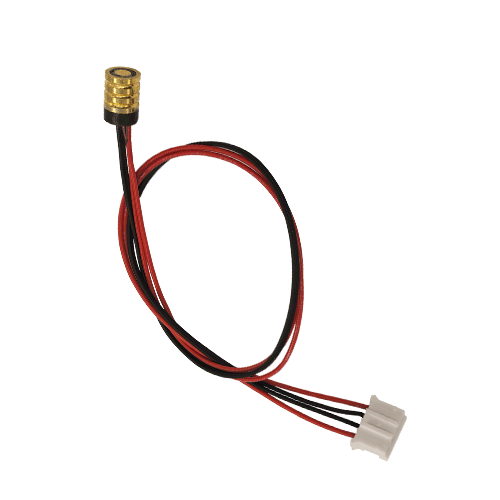
- Keep signal wires away from high-current devices such as heating tubes, pump motors and solenoid valves;
- Use twisted-pair or shielded cable, with the shield grounded at a single point on the host side;
- Reserve maintenance slack to avoid pull on the probe root;
- Route the wiring harness away from drain ports and descaling-liquid splash areas.
Embedded conductivity/TDS circuits are sensitive to inter-wire capacitance and contamination. During mass production, the wiring harness length and routing should be fixed and not changed arbitrarily between batches. In OEM/ODM integration, structure, wiring harness, interface and application calibration should be frozen simultaneously; changing the probe model or wiring harness length requires redoing whole-machine calibration and EMC verification.
7. Cleaning and maintenance access
Coffee machines require regular descaling, and the probe surface will come into contact with citric acid or dedicated descaling agents. The planar ring electrode is smooth and easy to clean, but maintenance space must still be reserved during installation:
- Provide a removable water-circuit module or maintenance cover so that users or after-sales personnel can clean the electrode surface;
- Provide flow guidance around the maintenance opening to prevent liquid from entering the wiring harness cavity;
- Do not accept solutions that require disassembling the boiler for cleaning unless explicitly intended for after-sales use only;
- The user manual should recommend cleaning with a soft cloth/cotton swab and prohibit scraping with hard objects.
8. Verification and mass-production checkpoints
During the development stage, it is recommended to perform:
- Thermal cycling: at least 100 cycles from 5°C to 95°C, observing output drift and sealing condition;
- Steam bypass: confirm the probe is not in a continuous steam zone;
- Descaling-liquid immersion: simulate the user descaling process and verify calibration recovery after completion;
- Small-batch consistency: whether reading differences among probes in the same batch are within the acceptable range for the whole machine;
- Long-term operation: 500–1000 hours or equivalent acceleration, checking scale adhesion and temperature deviation.
For external display, TDS/conductivity may only be used as equipment feedback and trend prompts, such as filter life estimation, raw-water/filtered-water switching reminders and boiler water-shortage detection; it must not be promoted as "laboratory testing" or "direct-drinking safety certification."
Limitations
- This article is based on the public product features of TFE-1-A1, TFE-304-M6 and F9027 and does not include numerical calibration data or whole-machine certification.
- Specific installation spacing, material compatibility and pressure ratings need to be combined with structural simulation and aging tests.
- This article does not cover parameters such as optical COD/TOC/UV254; if the product needs to distinguish organic matter, it should be evaluated separately.
FAQ
1. If the coffee machine only controls water temperature, is a TFE series electrode still needed?
Not necessary. When only temperature control, dry-burn protection, or brew water temperature control is required, the F9027 is more direct; only when water quality trends, filter management, or multi-source water identification are required should the TFE series be used.
2. Can the TFE probe's integrated temperature sensor replace a safety protection temperature probe?
Not recommended. The TFE's temperature signal can be used for conductivity temperature compensation and same-point determination, but critical overheat protection should use an independent, reliable temperature probe, with failure mode analysis performed.
3. How should a flat ring electrode be installed on a horizontal pipe section?
It is possible, but ensure the pipe is full and the electrode face points downward or to the side to prevent bubbles from accumulating. If the water contains a lot of gas, prioritize a vertical upward-flow section.
4. Will descaling agents damage the probe?
Soak testing must be performed based on housing/electrode material compatibility, and calibration or deviation verification must be carried out after descaling. Appearance alone is not sufficient for judgment. User handling should avoid scratching the electrode face with hard objects.
5. Can a device's displayed TDS value prove that water quality is safe?
No. Consumer device readings serve as trend indicators and for filter management; they cannot replace laboratory water quality analysis. Absolute statements such as "passed testing" or "safe for direct drinking" should not appear in promotional materials.