
# Boundaries of the relationship between cats' water taste preferences and water quality data: a step-by-step guide
"Cats' water taste preferences" is one of the most common use scenarios for pet drinking water products, but it does not have a simple positive correlation with water quality data. A portable multi-parameter water quality test pen can quickly provide TOC, COD, UV254, TDS, conductivity, turbidity, hardness, salinity and temperature. These data can help product teams understand differences between water sources, filter degradation and device operating status, but they cannot directly answer "does this cat prefer drinking this cup of water," nor can they replace laboratory analysis of specific contaminants such as bacteria, heavy metals or pesticides. This article provides a reproducible step-by-step guide to help pet water fountain, smart water bowl and water purification product brands and OEM customers use screening tools appropriately in R&D, after-sales and user communication, and avoid overinterpretation.
1 Intended users and decision questions
This article is intended for the following roles:
- Product managers at pet water fountain brands: those who want to use data to support feature definitions such as "fresh water," "effective filtration" and "improved taste";
- Embedded engineers and hardware R&D personnel: those who need to incorporate a portable tester into the product validation process and design filter life reminder algorithms;
- OEM/ODM customers: those who need to determine which indicators are suitable as factory sampling inspection or after-sales comparison tools.
Typical decision questions include:
- Can the nine screening indicators be used to predict cats' acceptance of water?
- In pet water fountain development, which laboratory tests can the Water Detective 4 replace, and which can it not replace?
- How can a measurement process be designed so that the data can be used for trend judgment rather than one-time "pass/fail" determination?
- In external communications, which claims are exaggerated or incorrect?
The default scenario in this article is R&D, validation and user-side auxiliary screening for smart small household appliances; it does not involve industrial wastewater, municipal sewage or environmental monitoring.
2 Water samples, equipment and scenario boundaries
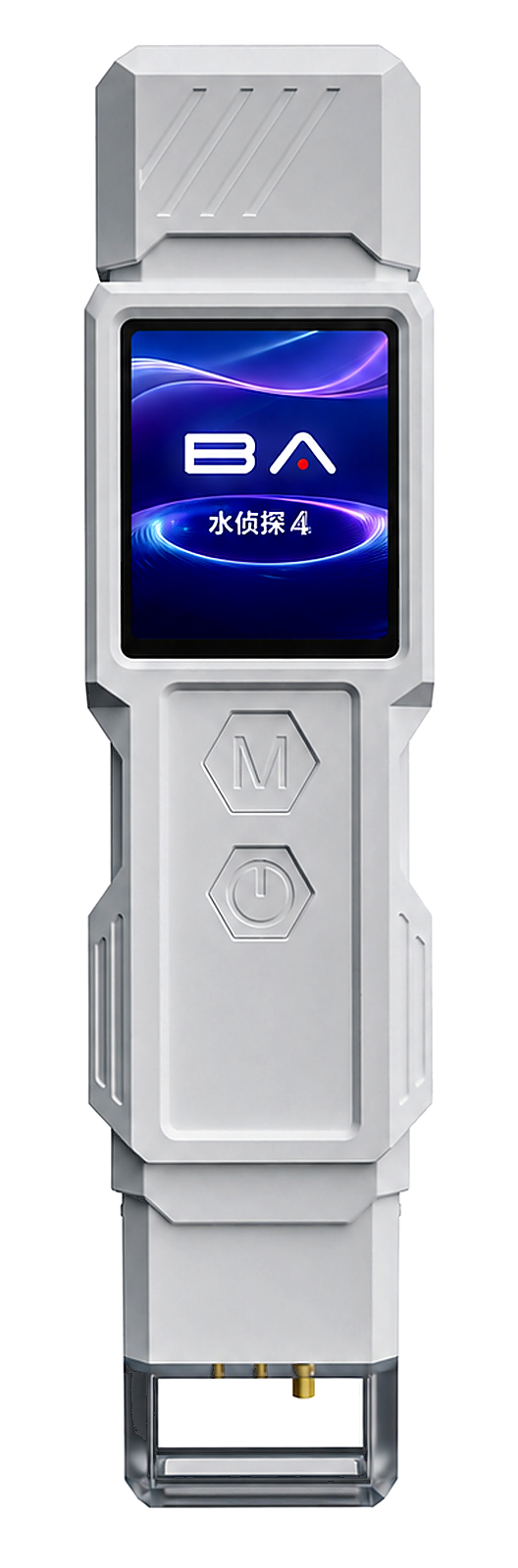
The AtomBit Water Detective 4 is a personal/household portable water-quality testing pen that integrates nine organic and inorganic indicators into one rapid testing platform: TOC, COD, UV254, TDS, electrical conductivity (EC), turbidity, hardness, salinity and temperature. Its product positioning is "on-site screening, comparison and trend observation," not quantitative laboratory analysis.
Questions it can answer include:
- Whether TDS or turbidity drops noticeably before and after a filter change on the same pet water fountain;
- The differences in total dissolved salts and total organics among different water sources (tap water, bottled water, water purifier output);
- Whether the TOC or COD trend shows an abnormal rise after a filter has been in use for some time.
Questions it cannot answer include:
- Whether the water contains lead, arsenic, nitrate, pesticides, bacteria, viruses or parasites;
- The specific concentrations of dissolved oxygen, ammonia nitrogen, nitrite or nitrate;
- Whether the water sample is "safe for cats" or "meets pet drinking water standards."
The above risks must be confirmed by a laboratory or dedicated method recognized by the local competent authority. Readings from the Water Detective 4 can only serve as screening clues.
The scope boundaries are equally important:
- Suitable for quick comparisons of household environments, water inside water dispensers, bottled water, and water dispenser output;
- Suitable for observing filter decay trends during the product development phase;
- Not suitable for pet health diagnosis, disease attribution, or regulatory compliance certification;
- Not suitable for extremely contaminated water samples (e.g., obvious odors, abnormal color, or signs of fecal contamination).
3 Reproducible sampling and measurement procedure
To make the data usable for subsequent comparisons and algorithm pre-research, the measurement procedure must be fixed. The following steps are based on the portable operating logic of Water Detective 4 and apply to pet water dispenser water samples.
3.1 Preparation
- Confirm device status: Before each measurement, check whether the probe is clean, and perform the necessary blank calibration or self-check according to the instructions. If there is scale or an oil film on the probe surface, wipe it with a soft cloth dipped in a small amount of clean water, then rinse with the water sample to be tested.
- Prepare the sampling container: Use a clean glass or food-grade plastic container, and avoid containers that may release organic substances. Before sampling, rinse the container three times with the water sample to be tested to reduce residual interference.
- Avoid contamination: Do not touch the probe or the inner wall of the container with your fingers; if the same pen is used to measure multiple water samples, the probe must be rinsed with clean water and dried between measurements.
3.2 Sampling
- Pet water dispenser: First let the device run for 2–3 minutes, then take a sample from the middle-to-upper layer to avoid drawing in hair, food residue, or filter debris from the bottom.
- Tap water: Run the water to flush the faucet for 10–15 seconds before collecting the sample.
- Bottled water: After opening the bottle, pour it directly into the prepared container; do not leave it standing for a long time.
- Water purifier output: flush according to the water purifier instructions for a sufficient time before sampling.
Use a sample volume sufficient to fully submerge the probe; generally 50–100 mL is enough.
3.3 measurement
- Let the water sample sit until it is close to room temperature (20–25℃) to avoid sharp temperature fluctuations. Temperature itself directly affects conductivity and TDS readings.
- Fully immerse the probe in the water sample and gently swirl the probe to dislodge attached air bubbles. Air bubbles can significantly interfere with EC/TDS readings.
- Wait for the reading to stabilize. Do not read turbidity while the water sample is still being stirred; however, turbidity measurement requires gently mixing the water sample first to prevent particle settling from causing underestimation.
- Record in order: temperature, TDS, EC, salinity, hardness, turbidity, TOC, COD, UV254. Read each parameter at least 2 times and take the average.
- In the record table, also write down the sampling time, water source type, filter cartridge usage duration, and the cat's recent drinking behavior (such as changes in water intake and frequency of approaching the water bowl).
3.4 common failure modes
- Air bubble attachment: when the water temperature is low or freshly drawn water contains more dissolved gas, air bubbles attach to the probe and cause momentary TDS fluctuations. Let it sit for a moment or gently swirl to remove the bubbles before reading.
- Container residue: containers that previously held juice, tea or detergent may still release organic substances even after rinsing, causing high TOC/COD. Dedicated sampling containers are recommended.
- Temperature drift: measuring immediately after taking the water sample out of the refrigerator gives low conductivity; the reading rises after standing at room temperature. Wait for the temperature to stabilize.
- Dry probe: a probe that has not been used for a long time needs to be soaked in clean water first to reactivate it, otherwise its response will be sluggish.
- Ambient light : UV254 readings are sensitive to stray light; avoid measuring in strong sunlight and shield ambient light where possible.
4 How to interpret the results and common interferences
4.1 Indirect meaning of each metric for "water taste preference"
- TDS and electrical conductivity (EC) : reflects the total amount of dissolved salts. High TDS may bring salty, bitter or metallic tastes, but cats' taste and smell sensitivity differs from that of humans, so TDS alone cannot determine whether a cat likes the water. The WHO Guidelines for Drinking-water Quality note that TDS above about 1000 mg/L may make drinking water taste poor, but this is an aesthetic recommendation based on human acceptability, not a health threshold. Generally, a TDS below 600 mg/L is acceptable in taste.
- Hardness : mainly reflects calcium and magnesium ions and affects scale and taste. High hardness may make water astringent, but there is currently no unified health-based guideline value, nor can it directly correspond to a cat's preference.
- Salinity : linked to EC/TDS and can cross-validate whether readings are reasonable. If the salinity reading is abnormally high while TDS is normal, this may indicate a sensor or temperature compensation problem.
- Turbidity : particulate matter makes water look unclear. Cats may be sensitive to visual cloudiness, but turbidity itself cannot distinguish safe particles from pathogens.
- TOC, COD, UV254 : all three reflect the total amount of organic matter. Organic matter may come from aging filter elements, biofilm shedding or water source contamination. High organic matter suggests "the water may not be fresh enough" and may produce odors, but it is not direct evidence of bacteria or specific organic pollutants.
4.2 Common interferences and judgment
- If the TDS difference measured for the same water sample at different temperatures is greater than 10%, check whether temperature compensation is working.
- If readings suddenly rise overall but the appearance of the water sample shows no change, clean the probe and recalibrate before measuring again.
- When comparing different water samples, sampling time, containers and operating technique must be kept consistent; otherwise the trend is unreliable.
- Hardness and TDS may overlap numerically, but that does not mean the data is wrong; the two come from different measurement principles and serve only as cross-references.
4.3 Relationship boundaries
These nine indicators can only provide clues as to whether water may be sensorially unpleasant to cats. For example, high turbidity or high organic matter may give the water an off odor; high TDS may alter mouthfeel. However, whether these changes actually affect a cat's drinking volume, frequency or behavior varies markedly between individuals and breeds. The product team should not directly promote instrument readings as proof that "cats prefer to drink it." The correct approach is to combine instrument data with behavioral observations (drinking duration, drinking volume, number of approaches to the bowl) to form internal product hypotheses, and then verify specific risks through third-party laboratories.
5 When to retest, stop using, or send to a laboratory
5.1 Retest conditions
Resample and retest if any of the following conditions is met:
- The reading of any indicator changes by more than ±50% compared with the last measurement, and there is no obvious change in the water source or filter status;
- The difference between two consecutive measurement results exceeds the sensor's expected repeatability (refer to the product manual);
- Within 24 hours after replacing the filter, the reading does not show the expected decrease or instead rises.
5.2 Stop use and refer to a laboratory
In the following situations, you must not rely solely on Water Detective 4 to determine whether the water is safe; stop giving the water to pets and send a sample as soon as possible to a qualified local laboratory:
- The water has an obvious off odor, color, foam or oil film;
- Feces, dirt or suspected algae are visible in the water sample;
- The pet shows abnormalities such as vomiting, diarrhea or refusal to drink, and water is suspected as the cause.
- The product needs to verify indicators such as total bacterial count, E. coli, lead, arsenic, nitrate, pesticides, viruses or parasites.
Laboratory testing items should be determined based on the suspected risks and local regulatory requirements. Sampling must use sterile containers provided by the laboratory and be submitted for testing at the specified time.
5.3 R&D verification method
- Method comparison: On a fixed water source, measure the same indicator (such as TDS or turbidity) simultaneously with the Water Detective 4 and a certified laboratory method, calculate the deviation and linear range, and confirm the screening consistency of the portable device.
- Trend baseline: During the new product development phase of pet water fountains, continuously record data over 2–4 perimeter cycles to establish typical trend bands under different filter statuses.
- Product calibration: If the readings are to be used for a filter life indication algorithm, sufficient laboratory data, flow data and user behavior data must be jointly modeled; a single sensor alone is not enough.
6 Record sheet / action checklist
6.1 Record sheet example
| Date and time | Water sample source | Temperature (℃) | TDS (ppm) | EC (µS/cm) | Hardness (ppm) | Salinity (ppm) | Turbidity (NTU) | TOC (ppm) | COD (ppm) | UV254 | Cat observations/notes |
|---|---|---|---|---|---|---|---|---|---|---|---|
| 2025-04-01 09:00 | Water dispenser outlet | 22.5 | 145 | 290 | 120 | 130 | 0.8 | 2.1 | 3.4 | 0.042 | Water intake is normal |
| 2025-04-01 14:00 | Filter in use for 7 days | 23.0 | 152 | 304 | 125 | 135 | 1.2 | 2.5 | 4.0 | 0.050 | The frequency drops slightly when a cat approaches |
6.2 Action Checklist
- [ ] Flush the probe and sampling container before measurement;
- [ ] Read after the water sample temperature has stabilized, and record the temperature;
- [ ] Measure each parameter in parallel 2 times and take the mean;
- [ ] If data is abnormal, retest first, then check the water source and filter element;
- [ ] If a health risk is involved, stop the water supply immediately and send a sample to the laboratory;
- [ ] External materials must not claim “can ensure pet drinking water safety,” “detects bacteria/heavy metals,” or “complies with pet drinking water standards”;
- [ ] The user interface should state “screening tool; results are for trend reference only and are not a test report.”
FAQ
Q: Can Water Detective 4 detect bacteria in cat water? A: No. It measures aggregate organic indicators such as TOC, COD, UV254, and cannot identify bacteria, viruses or parasites. Bacteria require culture or molecular methods, and viruses and parasites require dedicated testing.
Q: Does high TDS mean a cat will definitely refuse to drink? A: Not necessarily. High TDS may affect water taste, but individual cats differ in preference. Judgment should combine behavioral observations such as drinking volume and frequency of approaching the water bowl; screening data can only suggest that the water sample may be less than ideal.
Q: Can turbidity be used instead of bacterial testing? A: No. Turbidity reflects total particulate matter and may be indirectly related to bacterial contamination, but it cannot confirm pathogens. Microbiological safety must be confirmed by laboratory methods.
Q: How often should a pet water fountain be tested with Water Detective 4? A: During R&D, it is recommended to measure at a fixed frequency within each filter cycle, such as daily or every two days, to establish trends. In daily user settings, testing 1–2 times per week is possible, but it must be clearly stated that this is screening, not safety testing.
References
- World Health Organization. Guidelines for drinking-water quality: fourth edition incorporating the first addendum. Geneva: World Health Organization; 2017. Chapter 10: Acceptability aspects: taste, odour and appearance. https://www.who.int/publications/i/item/9789241549950
- United States Environmental Protection Agency. National Secondary Drinking Water Regulations. 40 CFR Part 143. https://www.epa.gov/sdwa/secondary-drinking-water-standards-guidance-nuisance-chemicals
Regional applicability note: The WHO guidelines and US EPA secondary standards cited in this article are used to illustrate non-mandatory aesthetic references such as taste and appearance, and do not constitute pet health or safety limits. Drinking water regulatory requirements and pet drinking water product regulations may differ by country and region; for relevant health indicators and testing methods, refer to local authorities or accredited laboratories.