
1. Applicable users and decision questions
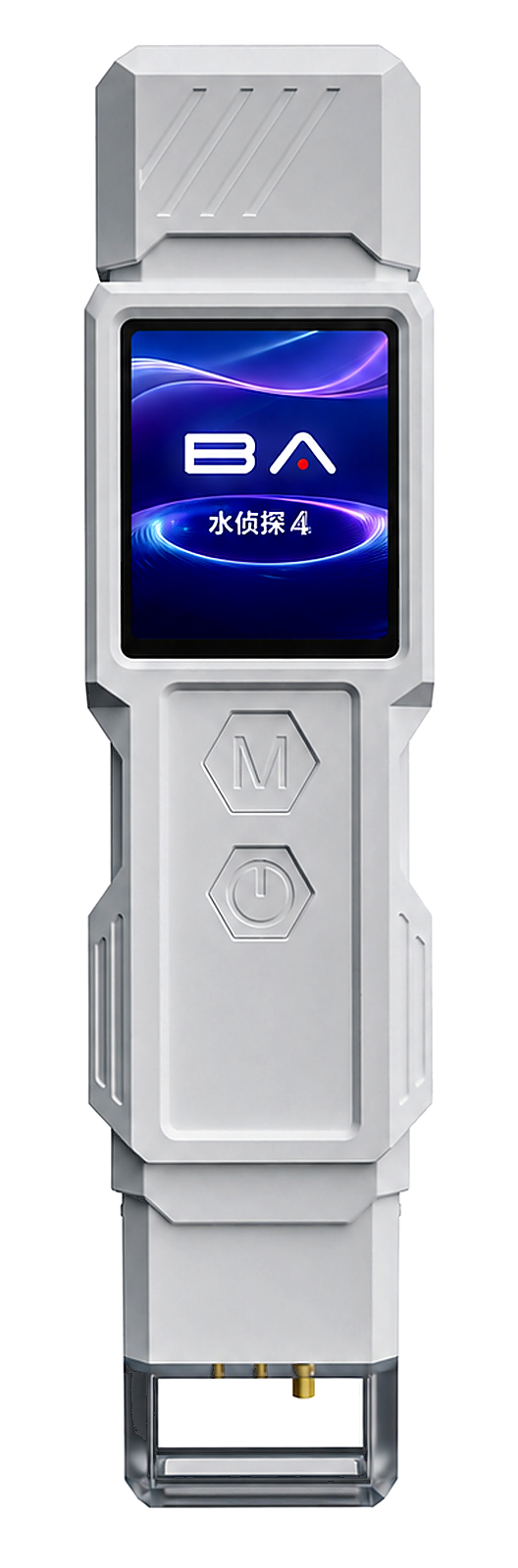
Changes in a cat's water intake are a signal many cat-owning households care about. A clear increase or decrease in water intake over a short period may be related to diet, ambient temperature, activity level, illness or a change in water source. This article provides a household screening and recording method based on the AtomBit Water Detective 4 portable water quality testing device, to help pet owners, smart pet water fountain product teams and OEM customers establish a reproducible process for comparing water sources and observing trends. The device measures TOC, COD, UV254, TDS, conductivity, turbidity, hardness, salinity and temperature, but it is intended only for screening, comparison and trend observation; it is not for identifying specific contaminants and is not a veterinary diagnosis or proof of drinking water compliance.
The decision questions include:
- Is the change in the cat's water intake occasional or persistent? Should the water source be changed or the drinking device be cleaned?
- Among household water purifiers, pet water fountains, tap water and bottled water, which indicators differ noticeably?
- In which situations should you stop relying on household screening and send samples to a laboratory or consult a veterinarian?
2. Water samples, equipment, and scenario boundaries
Screening capabilities of 2.1 Water Detective 4
According to information provided by AtomBit, Water Detective 4 is a portable multi-parameter water quality tester integrating nine indicators. It is suitable for scenarios such as domestic water, on-site screening and water purification services. In pet drinking scenarios, it can be used to:
- Compare different water sources: tap water, water purifier output, bottled water, and water in pet water fountains.
- Observe trends for the same water source over time: for example, changes after standing for several hours, and changes before and after replacing a filter cartridge.
- Record water quality fluctuations that may be related to changes in the cat's water intake.
However, it must be clear: TOC, COD, UV254, turbidity and similar parameters are screening parameters for organic matter and particulates, and cannot directly lead to the conclusion that "bacteria/viruses/parasites are present"; TDS, conductivity, salinity and hardness reflect the total amount of dissolved substances or ion concentration, and cannot identify specific contaminants such as lead, arsenic, nitrate or pesticides contained therein. If specific contaminants need to be confirmed, locally recognized laboratory methods must be used.
Suitable and unsuitable water samples for 2.2
Suitable: household tap water, water treated by household water purifiers, drinking water in pet water fountains, and drinking water that has been left standing for a short time. Unsuitable or requiring caution: water samples that are severely turbid or contain large amounts of suspended matter, industrial wastewater, surface water of unknown origin, and water samples with obvious oil films or odors. Such water samples may contaminate the probe, exceed the device's designed range, or produce unreliable readings. If the water source is suspected of severe contamination, contact the local water authority or a laboratory directly.
2.3 Scenario boundaries
- Temperature: Water Detective 4 measures water temperature, but the sensor and electronic components should be used within the ambient temperature permitted by the instructions. Do not operate in freezing or high-temperature steam environments.
- Optical window: The device contains optical measurement units (UV254, turbidity, etc.), and should be protected from scratches, fingerprints or strong ambient light interference.
- Sampling container: Use a clean container with no residue, preferably rinsed 2–3 times with the water to be tested.
- Regional differences: The baseline drinking water quality varies from place to place, and water purification equipment differs greatly among households, so absolute values from different cities or different households should not be compared directly. The method in this article is intended for relative comparison and trend recording within the same household.
3. Reproducible sampling and measurement procedure
3.1 Prepare a record sheet
It is recommended to set up a spreadsheet with fields including: date, time, sampling point, water sample temperature, TDS, EC, turbidity, TOC, COD, UV254, hardness, salinity, the cat's daily water intake, diet type, ambient temperature, and remarks. To record the cat's water intake, a graduated water bowl or smart water fountain can be used; calculate the 24-hour water addition amount minus the remaining amount, with an estimate deducting evaporation and spillage.
3.2 Sampling
- Select 3–5 routine sampling points, for example: kitchen tap water, living room water purifier outlet, pet water fountain water tray, and a water bowl left overnight.
- Use a separate clean container for each sampling point, rinse the container 2–3 times with the water to be tested, then fill the sample; the liquid level should meet the probe immersion requirements (refer to the instructions; usually the sensing area must be fully immersed).
- If the water sample has just been drawn from the pipe, run the water for 30 seconds to 1 minutes before sampling, to avoid the water sitting in the pipe affecting the result.
- Measure as soon as possible after sampling, and avoid prolonged exposure to air or significant temperature changes.
3.3 measurement
- Power on according to the Water Detective 4 manual and complete the self-check.
- Immerse the probe vertically in the water sample and gently swirl it to remove air bubbles, especially near the optical window.
- Wait for the readings to stabilize, then record all displayed indicators. Response times may differ between indicators; if water quality fluctuates greatly, wait patiently.
- Repeat the measurement on the same water sample 2–3 times and record the average. If one reading deviates noticeably more than the other two, check for air bubbles, probe contamination or temperature changes, then resample and re-measure.
- After measurement, rinse the probe with purified water and gently wipe it with a clean soft cloth to avoid residue.
3.4 cat water intake record
- Use a graduated or weighable water bowl in a fixed location, and avoid sharing it among multiple pets, which would confuse the data.
- Add water at a fixed time each day and record the amount added; at the same time the next day, weigh or read the remaining amount. Evaporation can be estimated with a blank control bowl (placed nearby but inaccessible to the pet).
- Record the diet: dry food, wet food, homemade or mixed. Wet food has a high moisture content and may reduce water intake; dry food may increase drinking needs.
- If you notice that the hourly water intake of 24 is significantly higher or lower than usual, first rule out factors such as a knocked-over water bowl, other pets drinking the water, or a sudden weather change, and then observe continuously for 3 days.
4. How to interpret results and common interferences
4.1 interpretation principles
Household screening data are only for comparison and trends, not for determining "safe" or "unsafe." For example:
- Increased TDS or conductivity: indicates an increase in the total amount of dissolved solids in the water, which may be minerals, salts, or certain inorganic substances, but cannot identify the specific substances. If it rises suddenly and significantly, it may indicate a change in the water source, piping, or water purifier status.
- Increased turbidity: indicates an increase in suspended particulate matter in the water, which may be due to pipe disturbance, filter saturation, or insufficient cleaning of the water dispenser, but does not indicate the presence of pathogens.
- Changes in TOC, COD, UV254: reflect changes in the total amount of organic matter or the spectral response of certain organic components, which may come from natural organic matter, pipe aging, or contamination, but cannot distinguish specific organic substances.
- Hardness changes: reflect the level of divalent cations such as calcium and magnesium, which usually affect scale and taste, but high hardness does not mean toxic.
4.2 Common interferences and failure modes
- Temperature not stabilized: conductivity and TDS are significantly affected by temperature. The device may have temperature compensation, but if the water sample differs greatly from room temperature, wait for thermal equilibrium before taking readings.
- Bubble adhesion: bubbles interfere with optical and conductivity measurements, causing reading drift. Gently shake the probe to release bubbles.
- Probe contamination: residual salts, oils, or organic matter from the previous measurement will contaminate the next measurement. After each measurement, rinse with purified water and wipe dry.
- Container residue: if a container cleaned with dish soap is not thoroughly rinsed, surfactants will change surface tension and optical response. It is recommended to rinse multiple times with the water to be tested.
- Strong ambient light: optical measurements such as UV254 and turbidity may be interfered with by strong light; operate in an environment shielded from direct light whenever possible.
- Recording before the reading stabilizes: some parameters respond slowly, and recording too early will cause deviation.
- Differences in water sample standing time: after the same cup of water sits for different durations, temperature changes, dissolved gas escaping, and particle settling may all alter the readings. The time between sampling and measurement should be standardized.
Interpretation of the association between 4.3 and cats' water intake
A change in a cat's water intake does not necessarily mean a water quality problem. Abnormal kidney function, diabetes, thyroid problems, urinary tract infections, dietary changes, ambient temperature, stress and other factors can all affect drinking. If water quality screening indicators are basically stable but the cat's water intake remains persistently abnormal, prioritize a veterinary examination. Conversely, if water quality indicators change markedly, first improve the water source (for example, replace the filter cartridge, clean the water fountain, or switch to bottled water) while recording the cat's response.
5. When to retest, stop use, or refer to a laboratory
5.1 Retest conditions
- After changing the water source or the water purifier filter cartridge: retest for 3 consecutive days to observe the stability of the new water source.
- After cleaning and disinfecting the pet water fountain: retest to ensure there is no detergent residue or water quality fluctuation.
- If an indicator is found to be significantly higher or lower than its historical average: retest 2–3 times under the same conditions to rule out operational error.
- After seasonal changes or prolonged time away from home: stagnant water in household pipes may affect the initial outflow; run the water first, then sample and retest.
Circumstances in which 5.2 should stop being used for household screening
- The device readings are abnormal, an error is displayed, or the probe is clearly damaged.
- The water sample temperature, turbidity, etc. clearly exceed the device's normal operating range.
- When the results are needed for legal, insurance, medical or regulatory purposes, household portable devices are not suitable.
5.3 Referral to a laboratory or consultation with a professional
If any of the following situations occurs, stop relying on screening data and contact a qualified laboratory to test specific parameters, or consult a veterinarian/local water authority:
- The cat shows clinical signs such as increased or decreased drinking accompanied by vomiting, diarrhea, lethargy, frequent urination, or blood in the urine.
- Specific contaminants such as lead, arsenic, nitrate, pesticides, bacteria, viruses, or parasites are suspected to be present in the water.
- The water source is visibly discolored, has an odor, has visible particles or foam, and the screening parameters are abnormal.
- You need to know whether the water meets local drinking water hygiene standards or pet drinking equipment compliance requirements.
- Household screening results differ severely from expectations, and repeated retests still provide no reasonable explanation.
Laboratory methods must be selected according to the target contaminant; for example, metal testing uses ICP-MS, microbiological testing uses culture or molecular methods, and nitrate/nitrite testing uses spectrophotometry or ion chromatography. Consult a locally accredited laboratory for specific parameters and limits.
6. Record sheet and action checklist
Example weekly record table for 6.1
| Date | Sampling point | Temperature (°C) | TDS | EC | Turbidity | TOC | COD | UV254 | Hardness | Salinity | Cat water intake (mL) | Remarks | |------|--------|-----------|-----|----|------|-----|-----|-------|------|------|-----------------|------| | 2025-04-01 | Water purifier outlet | 22 | 120 | 250 | 1.2 | 1.5 | 2.0 | 0.02 | 60 | 80 | 180 | None | | 2025-04-01 | Pet water fountain | 21 | 135 | 280 | 1.5 | 2.0 | 2.5 | 0.03 | 65 | 90 | 180 | Fountain cleaned |
Note: The values in the table are illustrative and are used to show the record format; they are not actual measured device data.
6.2 Action Checklist
- Daily: check the pet water fountain filter and cleanliness; record the cat's water intake and diet type.
- Weekly: perform 1 multi-source screening sessions, comparing tap water, water purifier outlet, and fountain water; record the ambient temperature.
- Monthly: summarize trends and pay attention to shifts in indicators such as TDS, turbidity and TOC.
- After changing the filter or water source: immediately measure the new water source and compare it with the old one; retest for 3 consecutive days.
- If an abnormality is found: first retest to rule out operational error, then observe whether the cat shows any health abnormalities, and contact a veterinarian and laboratory if necessary.
7. FAQ
Q: Can Water Detective 4 detect bacteria or viruses? A: No. The device measures screening indicators such as TOC, COD, UV254 and turbidity, and cannot identify microorganisms. If you are concerned about contamination by bacteria, viruses or parasites, a water sample must be collected and sent to a qualified microbiological laboratory for testing.
Q: Is lower TDS always better? A: Not necessarily. TDS reflects the total amount of dissolved solids; low TDS does not equal safer, and high TDS does not equal harmful. The key is to compare with your own historical data and observe the trend of change. Specific health effects require consideration of other indicators and laboratory testing.
Q: My cat suddenly drinks a lot of water — is it a water quality problem? A: Increased drinking can be caused by many reasons, including illness, dietary changes, ambient temperature and more. A change in water quality is only one possible factor. It is recommended to first record water quality trends while consulting a veterinarian as soon as possible; do not rely solely on water quality screening for judgment.
Q: Can I use Water Detective 4 to test the lead content in water? A: No. The device does not provide identification of specific metal elements. Lead, arsenic, copper and others require laboratory methods such as atomic absorption and ICP-MS. If heavy metal contamination is suspected, contact a local certified laboratory.
Q: Why do two readings of the same cup of water differ? A: Common reasons include unstable temperature, attached air bubbles, an insufficiently cleaned probe, container residue, strong light interference, and readings that have not yet stabilized. Please retest after eliminating interference according to section 4.2 of this article.
Reference sources and regional applicability statement
- World Health Organization. Guidelines for drinking-water quality: fourth edition incorporating the first addendum. Geneva: WHO; 2017. https://www.who.int/publications/i/item/9789241549950
Note: This article cites the guideline to provide general background for understanding drinking water quality parameters; it is not intended to set pet drinking water safety limits or device compliance thresholds.
- United States Geological Survey. Total Dissolved Solids and Water Quality. https://www.usgs.gov/special-topics/water-science-school/science/total-dissolved-solids-and-water-quality
Note: Intended to explain the meaning and sources of TDS; does not constitute health advice.
- United States Environmental Protection Agency. National Primary Drinking Water Regulations. https://www.epa.gov/ground-water-and-drinking-water/national-primary-drinking-water-regulations
Note: Compliance testing for specific contaminants (such as lead, nitrate, and microorganisms) requires certified methods; household portable devices cannot replace them.
- A cat's normal water intake and health issues: values vary considerably by region, breed and diet, so this article does not provide specific figures. Please consult a locally licensed veterinarian or refer to the latest recommendations from authoritative veterinary organizations (such as the Cornell Feline Health Center, the International Society of Feline Medicine, etc.).
Regional applicability: The household screening and recording methods described in this article apply to most household drinking water scenarios, but drinking water standards, laboratory accreditation requirements and veterinary medical recommendations differ between countries and regions. Where specific contaminant limits, compliance testing or veterinary health diagnosis are involved, follow the guidance of local authorities and licensed veterinarians.