
Choosing which water source to use when camping often determines the safety and experience of the trip. Campground tap water appears to have been treated, and natural water sources appear naturally clean, but their contamination profiles and risk pathways are not the same. This article provides a decision framework based on portable multi-parameter testing and on-site condition assessment to help outdoor enthusiasts, trip leaders and RV users make more rational water-source choices when laboratory reports are not immediately available.
I. Intended users and decision questions
This article applies to self-drive camping, hiking water replenishment, RV water replenishment, field activity leaders, outdoor education organizations, and teams that need to assess water sources at temporary camps. The core decision question is: in the absence of laboratory data, how can the risk priorities of campground tap water and natural water sources be compared, and how can a decision be made to "use directly," "use after treatment," "abandon use," or "send to a laboratory for confirmation."
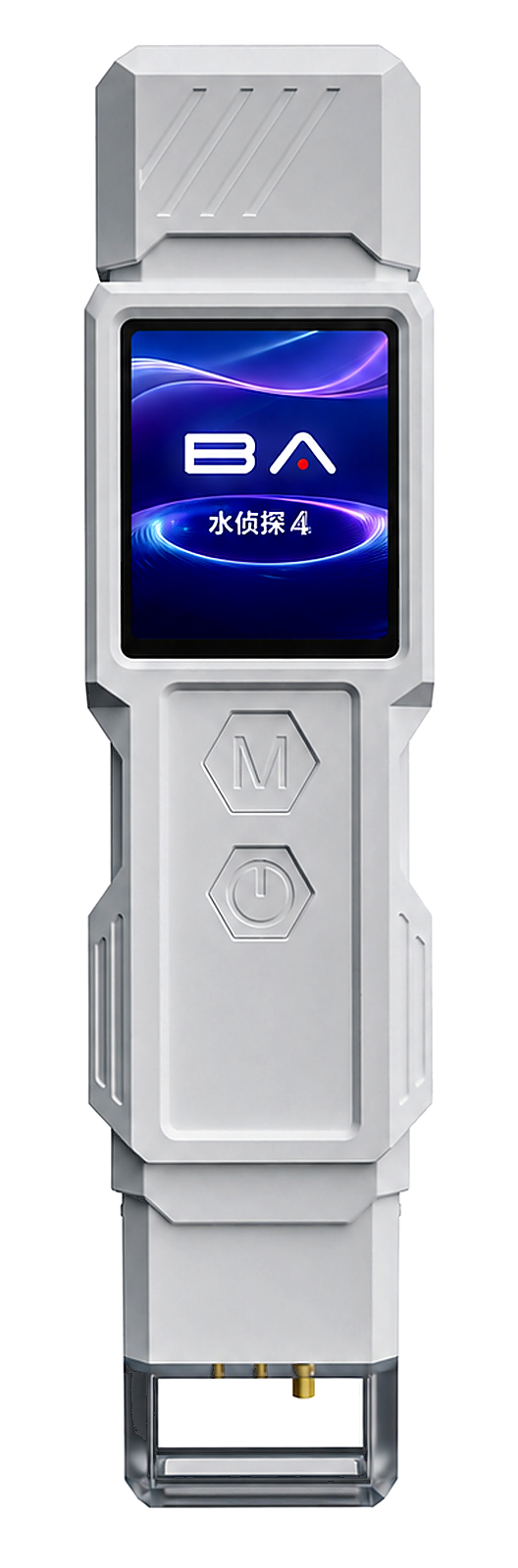
The role of portable equipment must be clearly defined here. Water Detective 4 can measure nine indicators on site: TOC, COD, UV254, turbidity, TDS, conductivity, salinity, hardness and temperature. It is suitable for screening, comparison and trend observation, but it cannot provide a drinking-water compliance conclusion, nor can it replace laboratory analysis. The framework in this article is built around this boundary.
II. Water samples, equipment and scenario boundaries
Typical risk characteristics of the two types of water sources 2.1
Campground tap water may come from municipal networks, private wells, storage tanks or mountain-spring diversion systems. Its risk points are usually not the raw water itself but the transmission and distribution stages: aging pipe networks, storage facilities that are not cleaned regularly, contaminated taps, insufficient disinfection or abnormal disinfectant residuals. Tap water quality is usually relatively stable, but sudden contamination may occur after heavy rain, after maintenance of the camp water-supply facilities, or at seasonal restart.
Natural water sources include streams, rivers, lakes and springs. They are heavily affected by rainfall, snowmelt, wildlife activity, human activity and upstream agricultural non-point sources. Typical risks are microbial contamination, sediment particles, natural organic matter and possible chemical contaminants. Water quality in natural water sources fluctuates significantly more than tap water; especially within 24–48 hours after heavy rain, runoff can markedly change water composition.
What Water Detective 4 can and cannot do 2.2
What it can do:
- Quickly measure TOC, COD, UV254, turbidity, TDS, conductivity, salinity, hardness and temperature;
- Perform relative comparisons of the same location at different times or of different water sources;
- Identify abnormal changes in particulate matter, dissolved solids, and organic load.
What it cannot do:
- It cannot measure specific contaminants such as lead, arsenic, nitrate/nitrite, pesticides, bacteria, viruses, parasites, dissolved oxygen, or ammonia nitrogen;
- It cannot directly determine "safe to drink" or "meets a given drinking water standard";
- Readings cannot replace certified laboratory methods, especially not for microbiological and specific chemical contaminant testing.
Therefore, if the user uses Water Detective 4 to compare campsite tap water and a natural water source, the conclusion can only be "at the screening level, whose reading is closer to your personal baseline or whose variation is smaller," not "which one is definitely safe."
2.3 Scenario boundaries and hardware integration perspective
Water Detective 4 integrates a conductivity/TDS probe, temperature compensation, and an optical channel into a single portable platform, allowing the parameters to cross-check each other on the same time base. From a product logic perspective, this is better suited for on-site preliminary screening than a single TDS pen or a single turbidity meter, because combining multiple parameters can reduce misjudgment caused by an abnormal single reading. However, integration also means that probe contamination, bubble adhesion, or ambient light interference may affect multiple channels, and users must perform cleaning, stabilization, and repeated measurement in sequence.
For teams hoping to embed similar detection capabilities into outdoor gear, water purification cups, or RV water systems, the parameter set of Water Detective 4 can serve as a product definition reference; however, embedded outdoor products also need to address low power consumption, temperature compensation accuracy, anti-fog and anti-fouling optical windows, data logging, and calibration reminders. These fall within the scope of product engineering, not tasks that on-site users need to complete.
Scenarios suitable for this framework: outdoor preliminary screening, comparison between water sources, trend observation, and before/after treatment effect comparison. Unsuitable scenarios: judging safety based solely on portable readings after heavy rain or flooding, suspected chemical contamination incidents, or pursuing an "instrument pass" despite odors or local warnings.
III. Reproducible sampling and measurement steps
3.1 Preparation before sampling
Use a clean, residue-free sampling bottle or cup; it is recommended to first rinse 3 times with the water sample to be tested. Do not let hands touch the inner wall of the bottle mouth or the probe optical window. Record the sampling point coordinates, weather, recent precipitation, water temperature, appearance, and odor. Check the device's battery level and probe cleanliness according to the instructions, and if necessary rinse with pure water and wipe dry.
3.2 Tap water sampling
- First let the tap water run for 1–2 minutes to flush out stagnant water in the pipe and reduce interference from the pipe wall and tap outlet;
- If the contamination of the tap itself needs to be assessed, separately collect an "initial sample before flushing" and a "sample after flushing for 2 minutes" for comparison;
- Avoid sampling directly from connecting hoses, filter outlets, or water purifier outlets; sample from the main pipeline outlet as much as possible;
- Cap immediately after sampling to prevent particles and microorganisms in the air from falling in.
3.3 Natural water source sampling
- Prefer flowing water; for still lakes or ponds, avoid shoreline foam, algae accumulation areas, and animal drinking spots;
- The sampling point is located 10–20 cm below the water surface, avoiding floating matter on the surface and sediment at the bottom;
- If using a sampling bottle, extend it into the water against the direction of flow and let the water flow in slowly;
- Within 24–48 hours after rain, runoff will significantly change water quality; when sampling at this time, record the "after rain" condition and compare it with the usual baseline;
- Take at least 2 parallel samples from the same water source; if tributaries flow in or there is obvious activity upstream, sample separately.
3.4 Measurement procedure
- Perform power-on self-test and blank verification according to the Water Detective 4 manual; the specific calibration and quality control procedures are subject to the supplied manual, which usually includes checking the background with deionized water or a standard conductivity solution;
- Immerse the probe in the water sample to the recommended depth and gently swirl it to dislodge air bubbles;
- Wait for the reading to stabilize. Different parameters stabilize at different rates; temperature is usually the fastest, while optical parameters such as TOC, COD and UV254 require longer;
- Measure each sample at least 2–3 times, take the median and record it;
- Before measuring the next water sample, rinse the probe with pure water to avoid cross-contamination;
- After measurement is complete, clean and dry the probe and store it properly.
3.5 failure modes and branches
- Reading drift: the probe has not stabilized sufficiently, temperature has not equilibrated, or bubbles are attached. Re-clean, let it stand, then measure again.
- Abnormally high turbidity: common in natural water sources after rain or when bottom sediment is stirred up; let the sample stand and observe first, and do not draw conclusions immediately.
- TOC, COD and UV254 rise together but turbidity is low: this may be dissolved natural organic matter such as humic substances, or it may be anthropogenic organic pollution, and further laboratory confirmation is needed.
- Only TDS/EC is elevated while other indicators are normal: this may be due to geological background salinity or the influence of road de-icing salt; it is not necessarily harmful, but it cannot be determined.
- All parameters close to personal baseline: microbial contamination cannot be ruled out either, because the device does not measure bacteria, viruses or parasites.
IV. Interpretation of results and common interferences
4.1 Interpretation principle: screening and comparison only, not a compliance determination
The most reliable approach is to establish a personal baseline. Before departure, use the same Water Detective 4 to measure tap water at home or reliable bottled water, and record the stable readings of each parameter. After arriving at the campsite, measure the tap water and the natural water source separately, and compare them with the personal baseline and with each other. If the turbidity, TOC, COD or UV254 of a water source is significantly higher than the baseline or the other water source, that water source should be suspected first, but this does not mean it is "out of limits," let alone that it is "prohibited from use."
4.2 Screening significance and misconceptions of each parameter
- TDS, conductivity, salinity: reflect the total amount of dissolved ions and do not represent organic pollution or microbiological safety. Natural mineral water may have high TDS but does not necessarily pose an acute risk. Abnormal increases require attention to industrial or agricultural ion pollution.
- Turbidity: reflects particulate matter. High turbidity itself affects taste, and more importantly it can interfere with disinfection efficacy and may indicate surface runoff or disturbance, but it cannot directly represent the number of microorganisms.
- TOC, COD, UV254: indicators of organic pollution load. In natural water bodies, humic substances and leaf degradation products will raise these readings and are not necessarily anthropogenic pollution; however, if they are clearly different from upstream or abnormal together with turbidity, further investigation is needed.
- Hardness: calcium and magnesium ions, mainly affects taste and scaling, and does not directly represent safety.
- Temperature: affects the compensation of other parameters and the microbial growth rate; low temperature does not mean sterile.
4.3 Common interferences
- Temperature: temperature changes will change conductivity; although the device has temperature compensation, the sample still needs to reach thermal equilibrium with the probe.
- Bubbles and particles: bubbles attached to the optical window or electrode will cause reading fluctuations.
- Sample container: using an unclean container or one with residue will introduce organic matter or ions.
- Ambient light: strong light may affect optical measurements; avoid operating in direct sunlight.
- Natural organic matter: humic substances raise UV254/TOC readings, potentially masking or causing false judgment of anthropogenic contamination.
- Interference of high turbidity with optical detection: particle scattering may affect optical parameters such as UV254; before measurement, allow the sample to settle or use filtration, but filtration changes the representativeness of the water sample and must be noted in the record.
4.4 decision branches
- Readings of both water sources are close to the personal baseline: it may be considered that "no obvious anomaly was found at the screening level," but disinfection as recommended locally, such as boiling, filtration or chemical disinfection, is still required before drinking.
- Natural water source readings are significantly higher than tap water: prioritize tap water, but tap water may also have microbial contamination and still requires treatment.
- Tap water readings are significantly higher than the personal baseline: this may indicate a problem with the distribution network or storage facilities; it is recommended to stop direct drinking and refer to a laboratory for confirmation.
- Any water source shows abnormal appearance, odor, turbidity or extremely abnormal readings: immediately stop using that water source and refer to a laboratory.
V. When to retest, stop use, or refer to a laboratory
5.1 Retest conditions
For the same water source, retest as much as possible at different times, such as morning, midday and evening, or after different weather conditions, especially after rain, after snowmelt or after maintenance of camp water supply facilities. When device readings approach the boundary of the personal baseline or fluctuate greatly, increase parallel samples and repeat measurements. When switching water source types, such as from tap water to stream water, a new comparison must be established.
5.2 Conditions for stopping use
Stop using the water source if any of the following occurs:
- The water sample appearance is abnormal, such as turbidity, abnormal color, an oil film or odor;
- The local public health department issues a water source warning or a "do not drink" notice;
- Readings show unexplained drastic changes, for example TOC, COD, UV254 far above the historical baseline;
- Animal carcasses, feces, garbage or chemical spills found near the water source;
- If any user develops symptoms such as diarrhea or vomiting related to drinking water, stop immediately and seek medical attention.
5.3 transfer to laboratory conditions
Laboratory testing is recommended in the following situations:
- Plans for an extended stay, or supplying water to infants, young children, the elderly or immunocompromised people;
- When specific items such as lead, arsenic, nitrate, pesticides, bacteria, viruses or parasites need to be confirmed;
- Device screening shows abnormalities or results do not match expectations;
- Scenarios requiring compliance certificates, such as commercial activities, formal water supply for campsites or food processing.
Laboratory items should use locally recognized methods, such as microbiological testing, ICP-MS, ion chromatography, etc.; the specific items and methods should be confirmed by the local laboratory.
VI. Record sheet and action checklist
6.1 Example on-site record sheet
| Field | Example |
|---|---|
| Date/Time | 2025-07-14 08:30 |
| Location/coordinates | A stream on the north side of a campsite |
| Water Source Type | Natural water source - flowing stream water |
| Weather / recent rainfall | Clear, no rain in the past 24 hours |
| Appearance/Odor | Clear, odorless |
| Water temperature | 14 °C |
| TDS | 45 mg/L |
| EC | 90 µS/cm |
| Turbidity | 0.8 NTU |
| TOC | 1.2 mg/L |
| COD | 2.1 mg/L |
| UV254 | 0.045 cm⁻¹ |
| Hardness | 30 mg/L |
| Salinity | 0.0 ppt |
| Median reading / number of repetitions | Take the median of 3 readings |
| Note | Close to personal baseline |
Note: The above values are examples only and do not come from product specifications or test results; actual readings are subject to the device display and calibration.
6.2 Action Checklist
- When choosing a water source, first learn about the camp's water supply source and water treatment methods.
- For any outdoor water source, first perform a visual and odor inspection.
- Use Water Detective 4 for baseline comparison and multi-point sampling.
- Based on the readings, decide whether to "continue comparison," "use after treatment," or "discard."
- Regardless of the readings, use appropriate treatment such as boiling, filtration or disinfection before drinking outdoors.
- Record key readings to facilitate later re-testing and comparison.
- If abnormalities or health incidents occur, stop using the water and contact a laboratory or local health department.
FAQ
Q1: Can Water Detective 4 detect bacteria? A: No. It does not include a microbiological detection function. Bacteria, viruses and parasites require confirmation by laboratory methods.
Q2: Does low TDS mean the water is safe? A: No. Low TDS only means there are few dissolved solids; it cannot reflect specific risks such as microorganisms, heavy metals or pesticides.
Q3: Is tap water at a campsite always safer than a natural water source? A: Not necessarily. Tap water may be subject to secondary contamination from storage facilities or pipe networks. You should compare the screening readings of the two water sources and judge in combination with local water supply information.
Q4: If all test results are normal, can I drink it directly? A: It is not recommended to conclude "potable" based solely on readings from a portable device. Outdoor water sources should be boiled or treated with reliable filtration and disinfection methods before drinking.
Q5: How do I establish a "personal baseline"? A: Before traveling, use the same device to measure tap water at home or reliable bottled water, and record the stable readings of each parameter as a reference for later comparison.
References
- World Health Organization. Guidelines for drinking-water quality: fourth edition incorporating the first and second addenda. Geneva: WHO; 2022. https://www.who.int/publications/i/item/9789241549950
- U.S. Centers for Disease Control and Prevention. Making Water Safe in an Emergency. Atlanta, GA: CDC; 2022. https://www.cdc.gov/healthywater/emergency/making-water-safe.html
- U.S. Geological Survey. Water Science School: Water Properties. Reston, VA: USGS. https://www.usgs.gov/special-topics/water-science-school
- AtomBit. Water Detective 4 product page/technical documentation. (For confirming product functional boundaries only; does not constitute a testing performance claim)
Regional applicability note: The screening methods described in this article apply to most outdoor scenarios, but specific water quality standards, laboratory methods, disinfection requirements and "potable" determinations vary by country or region. Users should follow the requirements of the authorities where the campsite is located, and contact a local laboratory for confirmation when necessary.