
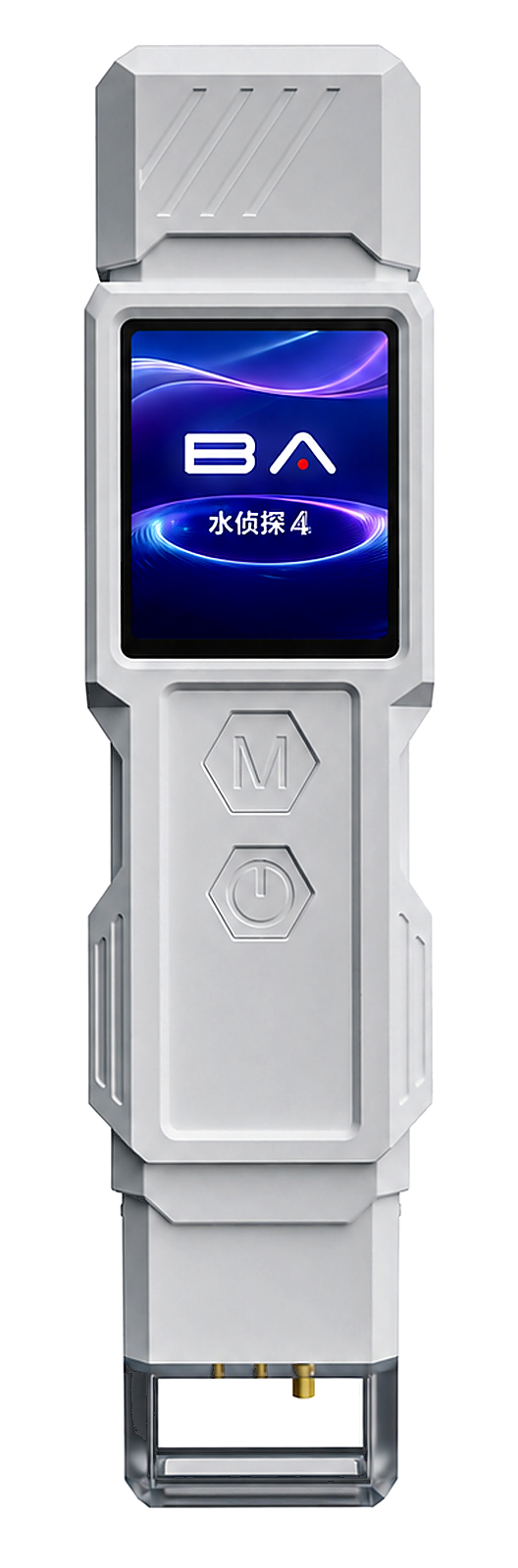
Household drinking-water treatment is often simplified to "just boil it", "install a water purifier" or "store it for later use", but the boundaries of the three approaches are completely different. This article is intended for brand owners, product managers, embedded engineers, hardware R&D staff and OEM customers of smart small appliances such as water purifiers, water dispensers, coffee machines, smart cups and pet water fountains, and also applies to household users who need to quickly assess trends in water samples. The article uses the AtomBit Water Detective 4 portable test pen as a screening tool; its nine parameters — TOC, COD, UV254, turbidity, TDS, conductivity, salinity, hardness and temperature — are used for comparison, trend observation and device feedback, are not equivalent to laboratory identification, and cannot directly prove drinking-water safety or compliance.
I. Intended users and decision questions
Applicable audiences include but are not limited to:
- Product managers developing smart water appliances with water-quality display, filter-life reminders and heating/filtration mode switching;
- Embedded engineers who need to select conductivity/TDS probes, temperature compensation, display logic and mass-production validation;
- Service personnel who want to use portable devices for on-site screening and to compare raw water with water purifier output;
- Household users who want to understand changes in their home water quality and whether their water purifier is working effectively.
There are three main types of core decision questions:
- Which treatment method should be used? Boiling can inactivate most pathogenic microorganisms but cannot remove dissolved heavy metals, nitrates or some organic substances; filtration must distinguish between different mechanisms such as activated carbon, ultrafiltration and reverse osmosis, which differ greatly in their effect on TDS and hardness; water storage itself does not purify water and can only prevent secondary contamination.
- How can treatment effectiveness be judged? In the absence of a professional laboratory, the nine parameters of the Water Detective 4 can serve as screening indicators before and after treatment and during storage, to observe trends, but cannot provide a "pass/fail" conclusion.
- When is referral to a laboratory needed? When screening values show persistent anomalies, obvious fluctuations, or involve risks of microorganisms or specific contaminants, confirmation must be obtained from a qualified laboratory in accordance with local requirements.
These decisions must be based on a strict distinction between "screening" and "confirmation." Screening is rapid, low-cost, and intended for comparison and trend indication; confirmation is the laboratory quantification or qualitative detection of specific contaminants using certified methods. Household instrument readings cannot be used for regulatory compliance statements, pet health certificates, or aquaculture compliance evidence.
II. Mechanisms and limits of boiling, filtration, and water storage
2.1 Boiling
Boiling is the most commonly used household means of controlling microbial risk. Both the World Health Organization and the US CDC state that bringing water to a rolling boil and continuing for 1~3 minutes (longer at high altitude) can effectively inactivate pathogens such as bacteria, viruses, and parasites. This is the clear boundary of boiling's advantage.
However, boiling does not change the total amount of dissolved solids in the water. On the contrary, because evaporation reduces the water volume, indicators such as TDS, conductivity, salinity, and hardness may rise slightly. Boiling also cannot remove lead, arsenic, nitrate, nitrite, pesticides, or most organic contaminants. Some volatile organic compounds may partially escape during open boiling, but this depends on the specific substance and ventilation conditions and cannot be relied upon as a purification method. If the water becomes cloudy after boiling, this is usually hardness substances such as calcium and magnesium precipitating scale due to heating; this is a physical change and does not mean contaminants have increased.
2.2 Filtration
The effectiveness of filtration depends on the filter cartridge type:
- Activated carbon: mainly adsorbs residual chlorine and some organic contaminants and improves taste; contributes very little to TDS, hardness, or salinity;
- Ultrafiltration/microfiltration: can retain particulate matter, some bacteria, and parasites, but cannot remove dissolved ions or most viruses;
- Reverse osmosis: can remove the vast majority of dissolved solids, including TDS, hardness, salinity, and many inorganic ions, but the product water may taste somewhat "empty," and the membrane and pretreatment require regular replacement.
With Water Detective 4, you can observe trends before and after filtration: if TDS/conductivity drops significantly, it usually means the membrane or ion-exchange cartridge is working; if only UV254 or TOC drops while TDS remains unchanged, it may mainly be activated carbon adsorbing organic matter; if all parameters show almost no change, check whether the cartridge is saturated, whether there is bypass leakage, or whether installation is incorrect. However, this judgment is only a trend inference and cannot identify which specific contaminant was removed.
2.3 Water storage
Storing water itself cannot purify water; its scope of action is preventing secondary contamination and ensuring water is available in emergencies. Improper water storage may introduce new risks: unclean containers, poor sealing, and elevated light and temperature promote microbial growth and algae growth, and long-term use of plastic containers may release organic compounds.
For screening, if turbidity, UV254, TOC, or COD rises noticeably after storage, this may signal biofilm or organic release, and the container needs cleaning or a laboratory microbiological test. However, Water Detective 4 cannot directly measure total bacterial count, coliforms, viruses, or parasites; these must be confirmed by laboratory methods.
III. Boundaries of Water Samples, Equipment, and Scenarios
The applicable boundaries of Water Detective 4 are household domestic water, comparison of water purifier effectiveness, and on-site screening of daily water samples. It is not suitable for industrial wastewater, municipal sewage, environmental monitoring, or acceptance of large water treatment projects. Device readings cannot serve as evidence of compliance with any regulation.
When using it, note:
- The water sample temperature should be close to room temperature; the device's built-in temperature sensor is used to compensate conductivity/TDS, but the device and water sample must reach thermal equilibrium before reading;
- Avoid direct sunlight or strong light interfering with the optical window; bubbles significantly affect turbidity and UV254;
- Sampling containers must be clean and rinsed 2~3 times with the water sample to be tested to avoid detergent residue;
- The device's optical window must be kept clean; if necessary, wipe gently with a soft cloth, but do not scratch it.
In smart small appliance integration scenarios, if AtomBit's conductivity/TDS interface ASIC or matching probes are used, attention should be paid to the temperature compensation curve, probe constant calibration, and long-term drift verification. The portable Water Detective 4 can serve as a prototype validation tool during development, but the final product must complete independent testing and certification according to the regulations of the target market.
IV. Reproducible Sampling and Measurement Steps
General steps for three typical scenarios are given below. All readings should be recorded after the device has stabilized; for each water sample, measuring 2~3 times and taking the median is recommended to avoid occasional interference.
Scenario A: Tap water vs. filtered water comparison
- Prepare two clean containers, labeled "raw water" and "filtered water".
- Rinse each container with its corresponding water sample 2 times, and discard the rinse water.
- Take approximately 100 mL of water sample for each, avoiding the initial water right after opening the tap as much as possible; let it run for 30 seconds before sampling.
- Immerse the Water Detective 4 in the raw water, ensuring the electrode and optical window are fully submerged, swirl gently to remove air bubbles, and record the nine parameters after the reading stabilizes.
- Rinse the test pen with clean water and blot it dry with a lint-free cloth, then measure the filtered water sample.
- Compare the temperature difference and ensure the two temperatures are close; otherwise, conductivity/TDS compensation may introduce bias.
Failure mode: not letting the water run may cause stagnant water in the pipes to affect the representativeness of the raw water; the TDS of the filtered water may be abnormally high or low right after the purifier starts; failure to clean the test pen may cause cross-contamination.
Scenario B: Before and after boiling
- Take 500 mL of tap water from the same source and divide it into two clean containers: label one cup "raw water" and place the other in a stainless steel or glass kettle.
- First measure and record the nine parameters of the raw water.
- Heat the other cup to boiling and keep it boiling for 1 minutes (in high-altitude areas, extend according to local health department recommendations), then remove from the heat and let it cool naturally to near room temperature.
- Use a test pen to measure the cooled "boiled water." Note: if scale is attached to the kettle wall, do not stir before measuring; take the supernatant instead. If you want to understand the effect of scale, you may separately take a water sample from the bottom of the kettle for comparison.
- Compare TDS, hardness, turbidity, etc.: TDS may rise slightly, hardness may change slightly due to scale precipitation, and turbidity may increase.
failure mode : leaving the container open during cooling allows particles in the air to fall in; incomplete boiling; measuring when the water sample temperature is too high can damage the device or cause errors.
Scenario C: water storage container 0/24/48 hour trend
- Use a water storage container of the same material and specification, rinse it with the water to be tested, then fill it with water.
- Measure and record the nine parameters as a baseline immediately after filling.
- Store the container in the same environment as actual use (protected from light, temperature, whether covered).
- Take samples and measure after 24 hours and 48 hours respectively. Do not shake vigorously before sampling; take water from the middle of the container.
- Observe the trends of turbidity, UV254, TOC, and COD. If they rise significantly, suspect microbial or organic matter release; clean the container and consider laboratory testing.
failure mode : inconsistent sampling methods at different time points; the container was not cleaned thoroughly; temperature changes cause conductivity readings to fluctuate.
V. Interpretation of results and common interference
Among the nine parameters, temperature is fundamental and is used to compensate conductivity/TDS. TDS and conductivity are highly correlated and reflect the total amount of dissolved solids, but cannot distinguish whether they are good or bad. Hardness mainly reflects calcium and magnesium ions; high hardness leads to scale, but is not itself a direct indicator of health risk assessment. Turbidity reflects particulate matter; high turbidity interferes with disinfection effectiveness and also affects sensory perception. UV254, TOC, and COD are surrogate indicators of natural organic matter and some artificial organic matter; high values indicate that total organic matter may be high, but specific compounds cannot be identified. Salinity reflects the total amount of dissolved salts and is usually low in household drinking water.
Common interferences include:
- Air bubbles: adhesion to the optical window causes abnormally high turbidity and UV254 readings; gently swirl to remove them before measurement.
- Insufficient temperature equilibration: even with temperature compensation, rapidly measuring hot and cold water may produce deviations; wait 1~2 minutes.
- Cross-contamination: if the test pen is not thoroughly cleaned when measuring different water samples, residue from the previous sample may carry over into the next sample.
- Color: the color of dissolved organic matter in natural water interferes with UV254; confirm by dilution or laboratory methods.
- Long standing time: leaving a collected water sample standing too long causes changes in dissolved gases, particle settling, or microbial activity; measure as soon as possible.
For trend interpretation, focus on "relative changes" rather than a single absolute value. For example, after three months of use of a water purifier, the raw water TDS is 200 mg/L, and the purified water TDS rises from 20 mg/L at initial installation to 80 mg/L, indicating that the reverse osmosis membrane may be starting to degrade and replacement should be prepared. However, the specific replacement threshold should refer to the filter manufacturer's recommendations and be combined with local raw water quality and laboratory verification.
VI. When to retest, stop using, or send to a laboratory
If any of the following occurs, retest and consider stopping use of the relevant water source or equipment, and contact the local public health department or a qualified laboratory:
- After storage, two or more of turbidity, UV254, TOC, and COD rise significantly within 48 hours (for example, an increase exceeding the baseline by 50%; the specific threshold must be determined based on local water quality background and laboratory recommendations);
- Turbidity rises abnormally after boiling and is accompanied by off-odors, suggesting the possible presence of unexpected particles or organic matter;
- The TDS of the water purifier outlet suddenly rises or fluctuates sharply, which may indicate a damaged filter element, seal failure, or contaminated inlet water;
- Someone in the household, or a pet, shows gastrointestinal symptoms and you suspect they are related to drinking water.
It must be emphasized that the Water Detective 4 cannot detect specific contaminants such as microorganisms, lead, arsenic, nitrate or pesticides. If the household water source may be contaminated by these substances, or if local drinking-water safety warnings have been issued, stop using untreated water immediately and follow local guidance to use bottled water, boil the water, or send samples to a laboratory for testing. Screening data must not be used as a basis for lifting a warning.
7. Record sheet and action checklist
It is recommended to set up a simple electronic or paper record sheet, recording each measurement in a row:
| Date and time | Water sample type | Temperature (°C) | TDS (mg/L) | Conductivity (µS/cm) | Hardness (in device units) | Turbidity (NTU) | UV254 | TOC (in device units) | COD (in device units) | Salinity (in device units) | Operation and notes |
|---|---|---|---|---|---|---|---|---|---|---|---|
| 2025-01-01 09:00 | Tap water raw water | 23.5 | 180 | 350 | — | 0.5 | — | — | — | — | Sample 30 seconds after discharge |
Note: Units and display methods may differ between models or firmware versions; refer to the product manual for details.
Action checklist:
- [ ] Measure raw water and key outlet points at least once a week, and record trends;
- [ ] Retest after each filter replacement to confirm outlet parameters return to the expected range;
- [ ] If water is stored for more than 24 hours and used for drinking, add observation of turbidity and organic indicators;
- [ ] When an anomaly is found, retest first to rule out operational error, then compare with historical data;
- [ ] For health, safety or compliance needs, immediately refer to a laboratory and follow local regulations.
VIII. FAQ
Q: Can the Water Detective 4 measure bacteria? A: No. The device measures physicochemical surrogate parameters such as turbidity, UV254, TOC, etc., and cannot directly detect bacteria, viruses, parasites or total coliforms. Microbial risks require confirmation by laboratory methods.
Q: Will TDS decrease after boiling? A: No. Boiling cannot remove dissolved solids; instead, evaporation and concentration may cause TDS to rise slightly. If TDS drops significantly after boiling, it may be a sampling or device error and requires retesting.
Q: Is it normal that TDS remains unchanged after filtration by an activated carbon water purifier? A: Yes, it is normal. Activated carbon mainly adsorbs residual chlorine and some organic matter, and its ability to remove dissolved ions is limited. If TDS remains unchanged but UV254 or TOC decreases, it indicates that the activated carbon may be performing an adsorption function.
Q: How often should stored water be tested? A: There is no globally unified standard. In general, it is recommended that household stored water not exceed 24~48 hours, and the container should be clean, covered, and protected from light. If it exceeds 24 hours and is intended for drinking, portable devices can be used to observe trends in turbidity and organic matter; for microbiological safety, consult the local health department.
Q: Can the Water Detective 4 be used to determine whether water is safe to drink? A: No. Screening results can only indicate trends in certain physicochemical parameters; they cannot replace laboratory testing for microorganisms and specific contaminants, and cannot serve as proof of safe drinking water.
IX. References and Regional Applicability
- World Health Organization. Guidelines for drinking-water quality: fourth edition incorporating the first addendum. Geneva: WHO; 2017. Link: https://www.who.int/publications/i/item/9789241549950 (boiling and microbiological risks, general guidance on water quality parameters)
- U.S. Geological Survey. Hardness of Water. USGS Water Science School. Link: https://www.usgs.gov/special-topics/water-science-school/science/hardness-water (hardness classification and effects of calcium and magnesium)
- U.S. Environmental Protection Agency. Secondary Drinking Water Standards: Guidance for Nuisance Chemicals. Link: https://www.epa.gov/sdwa/secondary-drinking-water-standards-guidance-nuisance-chemicals (reference for sensory/technical indicators such as TDS and turbidity)
- U.S. Centers for Disease Control and Prevention. Making Water Safe in an Emergency. Link: https://www.cdc.gov/healthywater/emergency/making-water-safe.html (boiling time and microbial inactivation)
Regional applicability: The above content is based on general physicochemical principles and recommendations from authoritative institutions, but specific regulatory limits, filter replacement intervals, safe storage time limits, and high-altitude boiling times may vary by country or region. When household drinking water treatment involves health and safety, the requirements of local water resource management departments, public health agencies, or laboratories must be followed. The screening data from this device does not constitute a compliance or safety determination.