
1. Applicable users and decision questions
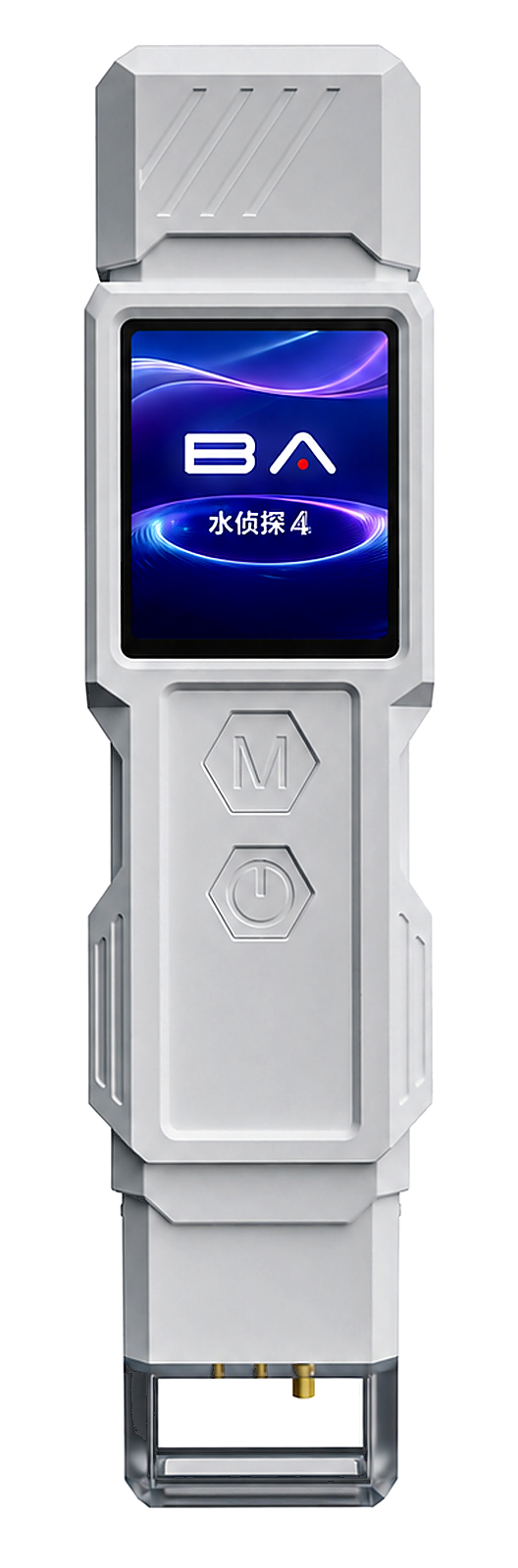
Bird drinking water additives (vitamins, electrolytes, probiotics, acidifiers, herbs, etc.) change the conductivity, organic matter and turbidity of water. The nine indicators of the Water Detective 4 — TOC, COD, UV254, TDS, EC, turbidity, hardness, salinity and temperature — are suitable for on-site "before vs after addition" screening, but the device cannot characterize additive ingredients, let alone replace veterinary diagnosis. This article applies to the following decisions:
- Does the additive cause an abnormal rise in ion load (EC/TDS)?
- Does the additive cause organic matter accumulation or continuously rising turbidity inside the drinker?
- Do the filter, pump and tubing of the pet water fountain face a risk of scale or sediment due to the additive?
- When should the additive be discontinued and a laboratory confirmation of specific contaminants be arranged?
Not applicable: judging whether an additive achieves efficacy, whether it complies with veterinary drug regulations, or confirming specific risks such as lead, arsenic, nitrate, pesticides, bacteria, viruses, parasites or ammonia nitrogen. Such risks must be tested by a locally accredited laboratory using standard methods.
2. Water sample/device/scenario boundaries
The Water Detective 4 is a portable multi-parameter screening instrument; all readings are for comparison and trend observation, not a compliance determination device. The boundaries of each parameter are as follows:
- TOC/COD/UV254: reflects only the trend of organic load or aromatic organic matter; it does not distinguish specific organic compounds and cannot identify additive types.
- TDS/EC/salinity: reflects the total amount of ions; it does not distinguish specific ions such as calcium, magnesium, sodium, lead or copper.
- Turbidity: reflects particle scattering and does not distinguish bacteria, bubbles, insoluble additives or inorganic precipitates.
- Hardness: mainly reflects the scaling tendency caused by calcium and magnesium, and is not directly associated with health risks.
- Temperature: used for compensation and stability assessment, not a safety indicator.
This device is suitable for clean water or lightly additive-containing solutions; additives with high color, high turbidity, strong alkalinity or strong acidity may exceed the optical window. In household pet drinking water scenarios, it is suitable for "before addition vs after addition 24 hours" comparisons. For additives of unknown composition or if abnormalities occur in a flock, stop use immediately and consult a veterinarian.
3. Reproducible sampling and measurement procedure
- Prepare three water samples: a blank control (same water source, no additive), an immediate additive sample (added according to the instructions, mixed and left to stand for 5 minutes), and an 24-hour standing sample (simulating the actual drinker).
- Clean the probe: rinse with deionized water or purified water, and if necessary gently wipe the optical window with a soft cloth; avoid touching it with fingers.
- Measurement order: measure in the order blank, immediate, 24-hour sample, taking 2 to 3 stable readings per sample.
- Record temperature: if the temperature changes by more than ±3°C, note that this may affect EC/TDS readings.
- Control containers: use inert containers (glass or food-grade PP); avoid metal containers that release ions.
- Avoid optical interference: avoid direct sunlight during measurement, and record the effect of ambient light on optical parameters.
Branch cases:
- If the additive causes turbidity to exceed approximately 10 NTU (please refer to the device range note), dilute first before measuring and record the dilution factor; dilution will reduce conductivity and organic matter readings, so interpret with caution.
- If the EC reading exceeds the device range, dilute the sample proportionally with deionized water, but note that the true TOC/COD of the original solution cannot be back-calculated after dilution (non-proportional).
- If the sample has color (e.g., vitamin B12 light red), UV254 may be subject to color interference; note "color interference, UV254 for trend only".
4. How to interpret results and common interferences
Interpretation principle: use the blank sample as the baseline and compare the relative change after addition. It is recommended to watch three risk signals:
| Parameter | Typical screening use | Common misleading/interference |
|---|---|---|
| EC/TDS | Additive ion load | Evaporative concentration, container residue, temperature drift |
| TOC/COD | Organic matter accumulation trend | Cleaning agent residue, additive's own color, microbial metabolites |
| Turbidity | Insoluble matter/precipitation trend | Bubbles, colored additives, filter cartridge shedding particles |
| Hardness | Scale risk | Hardness fluctuations in the water source itself, and precipitation caused by pH changes |
Common interferences and handling:
- Bubbles : After ultrasonic cleaning or shaking, bubbles affect optics and turbidity; let stand to eliminate them.
- Temperature : Affects EC; temperature should be recorded, and direct comparison across different temperatures is not recommended.
- Container residue : Residual cleaning agent may increase TDS/organics; rinse three times with the water sample to be tested before use.
- Evaporation concentration : TDS/EC rising after standing for 24 hours may be due to evaporation rather than additive release; cover to reduce evaporation.
- Detergent/disinfectant residue : May cause elevated TOC; this needs to be distinguished.
5. When to retest, stop use, or refer to a laboratory
- Retest : TOC/COD continues to rise after 24 hours, EC drift exceeds an acceptable change, or the additive batch is changed.
- Stop use and consult a veterinarian : Birds show reduced drinking, lethargy, or abnormal droppings; or water quality readings show an abnormally large change compared with the blank that cannot be explained by additive composition.
- Refer to a laboratory : When specific risks such as lead, arsenic, nitrate, pesticides, bacteria, viruses, parasites, dissolved oxygen, ammonia nitrogen, or nitrite need to be confirmed. Water Detective 4 does not test for these; compliant samples must be collected according to local requirements and sent to a qualified laboratory.
Decision tree text : After addition, if EC increases by <10% and TOC/COD shows no obvious change → continue monitoring; if EC increases by >30% or turbidity continues to rise → dilute/replace the additive/consult a veterinarian; if birds show abnormalities → stop use and do not draw conclusions based on device readings.
6. Record sheet/action checklist
It is recommended to save the following record sheet for each test:
| Date/time | Water sample ID | Additive batch/dose | Temperature (°C) | TDS (ppm) | EC (µS/cm) | TOC/COD/UV254 (device units) | Turbidity (NTU) | Hardness | Salinity | Remarks |
|---|---|---|---|---|---|---|---|---|---|---|
| Example | Blank | None | 25 | 120 | 240 | 0.8/1.0/0.02 | 0.5 | 60 | 0.1 | Baseline |
Action checklist:
- [ ] Clean the probe and rinse with deionized water
- [ ] Prepare three water samples: blank, immediate, and 24 hours
- [ ] Measure and record temperature in sequence
- [ ] Compare EC/TDS, TOC/COD, and turbidity changes against the blank
- [ ] If readings are abnormal, use the birds' condition to decide whether to retest, discontinue use, or send to the laboratory
- [ ] Save trend records for reference by the veterinarian or water-quality engineer
7. For pet water fountains/OEM integration: selection and validation of Water Detective 4
For pet water fountain, smart cup and smart small appliance brands and their OEM customers, Water Detective 4 can serve as a water quality trend feedback module during product development, used to evaluate filter life prompts and water quality change alarms after additive dosing. During integration, note the following:
- Probe installation: Ensure the probe is in sufficient water flow, avoid bubble accumulation, and clean regularly.
- Firmware algorithm : A moving average is recommended to prevent single-point noise from triggering false alarms.
- Limitations: Cannot replace bacterial culture or specific contaminant sensors; the user interface should clearly state "screening value, not a safety determination."
- Mass production validation: Use standard conductivity solutions (such as KCl standard solution) to verify EC consistency; use repeatable organic matter spiking to verify TOC/COD trends (trend only, not absolute COD).
- Veterinary combination: Embed in the product the logic of "record 24h trends, and prompt users to consult a veterinarian when abnormal."
8. FAQ
Q1: Can Water Detective 4 detect E. coli in bird drinking water? A: No. It does not detect bacteria and only provides indirect indicators such as turbidity. Bacterial confirmation requires plate culture or molecular methods.
Q2: Does a very low reading mean the water is safe? A: No. Low TDS does not mean absence of pathogens or low-toxicity organic matter; drinking water safety requires comprehensive testing.
Q3: Additives raise TDS; can birds still drink it? A: A veterinarian must judge. The device can only indicate ion load changes.
Q4: Can it be used for regulatory compliance? A: No. Household/on-site screening only.
Q5: Why does temperature affect EC? A: Ion mobility changes with temperature; the device has built-in temperature compensation, but extreme temperatures should still be noted.
References and Regional Applicability
- World Health Organization. Guidelines for drinking-water quality: fourth edition incorporating the first and second addenda. Geneva: WHO; 2022. https://www.who.int/publications/i/item/9789240045064
- US EPA. National Primary Drinking Water Regulations. https://www.epa.gov/ground-water-and-drinking-water/national-primary-drinking-water-regulations (used to explain that lead/arsenic, etc. require laboratory confirmation)
- CDC. Healthy Water: Community Water Treatment. https://www.cdc.gov/healthywater/drinking/public/water_treatment.html (explains drinking-water treatment and testing)
- USGS. Hardness of Water. https://www.usgs.gov/special-topics/water-science-school/science/hardness-water
Regional applicability: the methods in this article apply to any region where Water Detective 4 is used, but regulatory limits and laboratory requirements should be governed by local authorities; where additive safety dosing is involved, a licensed veterinarian must be consulted.