
1. Applicable users and decision questions
This guide is aimed at scenarios in household aquariums, ornamental fish holding, and quarantine tanks where tools need to be reused between quarantine tanks and main tanks. Typical tools include nets, siphon tubes, filter accessories, buckets, decorations, plant tweezers, thermometers and heater housings. The core decision is not "whether to wash", but: when disinfection is mandatory, how to choose a disinfection method, to what extent rinsing is sufficient for release, and which readings can only serve as trend screening rather than safety proof.
It must be made clear: the Water Detective 4 readings in this article are only used for water sample screening, comparison and trend observation, and are not used to identify specific contaminants. Any judgment involving lead, arsenic, nitrate, pesticides, bacteria, viruses, parasites, dissolved oxygen, ammonia nitrogen, nitrite or nitrate must be confirmed using appropriate laboratory methods or dedicated test kits according to local requirements. Household instrument readings cannot be written as proof of drinking safety, pet health or farming compliance.
2. Water samples, equipment, and scenario boundaries
The type of tool determines the cleaning and disinfection method. Glass, stainless steel, food-grade plastic, silicone, ceramic decorations and others have different tolerances. Porous filter media, biological filter sponges and the interior of air stones easily harbor organic matter and biofilm, making cleaning difficult; sometimes replacement is more reliable than disinfection. Disinfectants may be adsorbed by silicone and slowly released if not thoroughly rinsed, so silicone tools require longer rinsing and drying times.
High-risk scenarios include: sharing tools between the quarantine tank for newly purchased fish and the main tank, reusing tools after treating sick fish, sharing between marine and freshwater tanks, and tool transfer between fish from different sources (such as different aquarium shops). Low-risk scenarios, such as routine maintenance of the same tank, usually only require mechanical cleaning and air drying, without disinfection every time, but tools should not be mixed with high-risk tanks.
The choice of disinfectant must comply with local regulations and product labels. Common methods include chlorine bleach, hydrogen peroxide, quaternary ammonium salts, high-temperature boiling or steam treatment. This guide does not give specific dilution concentrations because different product forms, available chlorine content and material compatibility vary greatly; specific values should be found in local aquatic veterinary extension materials, product labels or supplier instructions.
3. Step-by-step operating guide
Step 0: On-site preparation and physical isolation
Assign tools of different colors to each fish tank or risk level, or label the tools. For example, use blue for the main tank, yellow for the quarantine tank, and red for the sick-fish tank. Prepare at least two clean buckets: one for washing solution and one for final rinse water. Wear waterproof gloves to avoid skin contact with disinfectants and biofilm. Cover the work surface with a disposable plastic sheet to prevent cross-contamination.
Step 1: Mechanical cleaning to remove organic load
First use clean water and a soft brush to remove visible feces, food residue, algae and biofilm. Organic matter consumes a large amount of disinfectant and reduces its efficacy. Disassemble removable parts and use a brush to reach into crevices, joints, suction cups and the interior of lumens. Do not use the same sponge or brush to clean tools of different risk levels. After mechanical cleaning, perform a visual inspection; tools with remaining dirt should be cleaned again rather than proceeding directly to disinfection.
Step 2: Select a disinfection method and verify material compatibility
Choose a disinfection plan according to the material of the equipment. Glass and stainless steel can withstand higher temperatures, while plastic and silicone must avoid high-temperature deformation. Chlorine-based bleaches are corrosive to most metals and carry a risk of adsorbed residue on silicone. Hydrogen peroxide or quaternary ammonium compounds may be gentler on certain plastics, but rinsing still cannot be omitted. High-temperature boiling suits small heat-resistant tools but cannot handle large buckets and filter housings.
Specific dilution ratios and contact times must follow local authorities, aquaculture veterinary extension materials, or product labels. Do not judge disinfectant concentration based on color, odor, or household water-quality pen readings. It is recommended to use each dilution immediately after preparation to avoid loss of efficacy from prolonged storage.
Step 3: Soak to disinfect and maintain contact time
Fully immerse the cleaned equipment in freshly prepared disinfectant solution, eliminate air bubbles, and ensure all internal cavities and holes are filled with liquid. Soaking time should be strictly timed; do not take items out midway. When ambient temperature is low, extend the time or adjust the concentration according to the disinfectant instructions; excessively high temperatures may damage plastics and should be kept within the product's permitted range. Gentle agitation during disinfection can help the disinfectant contact all surfaces.
Step 4: Rinse thoroughly and perform trend screening
Rinsing is key to preventing chemical residues from entering the aquarium. Rinse repeatedly with running water at least three times, or sequentially soak in multiple clean buckets with water changes. Replace with fresh water after each rinse to avoid carrying high-concentration residue back onto the tools. Water Detective 4 can be used for trend screening of the rinse water, measuring TDS, conductivity, and turbidity.
The recommended procedure is: take the same clean water source (such as local tap water or RO water) as background, and separately measure the background water, the first rinse water, and the final rinse water. Record the TDS/conductivity readings. If the final rinse water reading is still significantly higher than the background and declines only slowly, this suggests ionic residue may remain, and rinsing should continue or the water source should be changed. A reading close to the background and stable for two consecutive measurements can serve as an on-site auxiliary judgment that the "rinse trend is sufficient."
It must be emphasized: TDS/conductivity only shows the trend of total ionic strength in water; it cannot identify residual substances, nor can it prove the absence of bacteria, viruses, or parasites. Disinfectant residues may contain non-ionic components, or concentrations may be below instrument resolution yet still pose biological risk. Before releasing equipment for use, if the scenario risk is high, it is recommended to additionally use test strips specific to that disinfectant or laboratory testing for confirmation.
Step 5: Drying and sorted storage
After rinsing, air-dry naturally or dry with heat. Drying can reduce survival of bacteria and fungi but cannot achieve sterilization. Cleaned and dried tools should be placed in dedicated sealed bags or boxes, stored separately from undisinfected tools. Do not wipe with a damp cloth, to avoid secondary contamination. Internal cavities such as siphon hoses should be hung to drain, and stored only after confirming there is no standing water.
4. The role of Water Detective 4 in disinfection of aquarium equipment
Water Detective 4 can measure TOC, COD, UV254, turbidity, TDS, conductivity, salinity, hardness and temperature. In this scenario, its reasonable uses are:
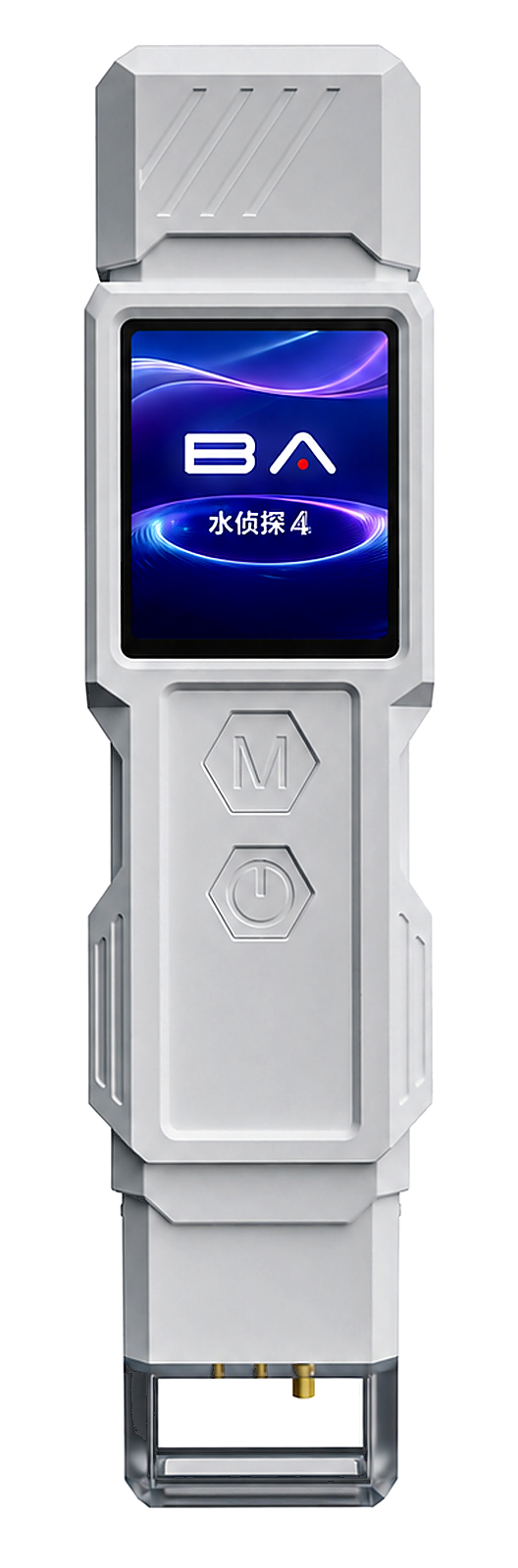
- Compare whether the conductivity/TDS of the rinse water after different rinsing steps is close to the clean water source background, to help determine whether rinsing has already removed most ionic residue.
- Observe the turbidity trend of the rinse water; turbidity will be elevated when mechanical cleaning is incomplete.
- Compare the background differences of different water sources (tap water, RO water, filtered water) to select the background water.
- Make a relative comparison of the UV254/TOC trends across multiple rinses of the same tool, to screen for possible organic residue.
But it cannot: measure lead, arsenic, nitrate, pesticides, bacteria, viruses, parasites, dissolved oxygen, ammonia nitrogen, nitrite or nitrate; nor can it directly give a conclusion that disinfection is qualified or that it is safe to put into a fish tank. Users cannot use a TDS reading in place of confirming disinfectant concentration, and cannot use a decrease in turbidity to prove the absence of pathogens.
A practical judgment example: if the conductivity of the final rinse water is more than 30% higher than the background water and does not decrease, do not release the utensil for use yet; check whether foam or bleach odor is still present, or whether the internal cavities of the utensil have not been rinsed clean. If no obvious difference can be read, that only indicates the ionic trend is not prominent; it does not mean absolute safety.
5. Common interference and failure modes
- Temperature interference: conductivity changes with temperature. Before measurement, let the water sample come close to room temperature and record the temperature; if the Water Detective 4 has temperature compensation, enable it according to the manual.
- TDS is a converted value: TDS is usually converted from conductivity multiplied by an empirical coefficient and cannot distinguish ion types. Disinfectant residue, tap water hardness and salinity all contribute to the reading.
- Turbidity and TOC/UV254 interference: fine bubbles, sediment and suspended matter in water affect optical readings; UV254 reflects only certain organic substances and UV-absorbing substances and does not represent overall contamination.
- Organic load: when cleaning is incomplete, biofilm and organic matter consume disinfectant, leading to disinfection failure.
- Insufficient concentration and contact time: Arbitrary dilution, expired disinfectants, and insufficient contact time at low temperatures are common causes of failure.
- Incomplete rinsing: Silicone, internal cavities of filter media, and suction cup grooves easily retain residue and require repeated squeezing and soaking.
- Cross-contamination pathways: Using the same bucket for wastewater first and rinse water afterward, using the same sponge to wipe two tanks, and touching different equipment with wet hands will all undo the disinfection.
- Insufficient drying: Moist environments promote microbial survival, especially inside pipettes and filter tubes.
6. When to retest, stop using, or refer to a laboratory
If any of the following situations occurs, stop using the equipment and retest or send it for testing:
- The conductivity/TDS of the final rinse water is more than 30% higher than the background water for two consecutive tests and does not decrease, suggesting chemical residue.
- The rinse water has an obvious bleach or disinfectant odor, foam, or color change.
- The fish show unexplained symptoms such as mass mortality, abnormal swimming, fin hyperemia, external parasites, or gill rot.
- Filter media need to be replaced, or sensitive subjects such as diseased fish tanks or saltwater invertebrates need to be handled.
- There are mandatory requirements for the safety of equipment after disinfection (such as commercial display or cross-regional transport).
The above situations require laboratory testing for ammonia nitrogen, nitrite, nitrate, residual chlorine, specific pathogens, and other items. Water Detective 4 cannot be used for conformity assessment of these items. Laboratory methods and sampling requirements shall follow local authority or aquatic veterinarian recommendations.
7. Record sheet and action checklist
It is recommended to fill in the following table for each high-risk disinfection operation:
| Item | Content |
|---|---|
| Date/Time | Record the operation time |
| Equipment name | Net scoop/sludge suction pipe/water bucket/filter media, etc. |
| Source tank | Main tank/quarantine tank/sick fish tank |
| Mechanical cleaning | Completed/Not completed |
| Disinfectant name and dilution | Fill in according to the label |
| Contact time | minutes |
| number of rinses | times |
| background water TDS/EC | reading |
| final rinse water TDS/EC | reading |
| reading trend | close to background/still elevated |
| release decision | release/continue rinsing/decommission and send for testing |
Action checklist:
- Use different colored tools for the main tank, quarantine tank and sick-fish tank; never mix them.
- Before new fish enter the tank, observe them in the quarantine tank first; quarantine tools are kept separate.
- Keep seawater and freshwater tools separate to avoid cross-contamination of salinity and microorganisms.
- After each use, clean mechanically first, then decide whether to disinfect based on risk.
- Prepare disinfectants such as bleach fresh according to the label and record the contact time.
- After rinsing, use the Water Detective 4 for trend screening and record the results.
- For any abnormal reading or fish symptom, stop release and refer to the laboratory.
8. Frequently Asked Questions (FAQ)
Q1: Can the Water Detective 4 detect whether there are bacteria or parasites in a fish tank? A: No. It can only measure TOC, COD, UV254, turbidity, TDS, conductivity, salinity, hardness and temperature, for screening and trend comparison. Bacteria, viruses and parasites require laboratory microbiology or microscopic examination.
Q2: After bleach disinfection, how long should rinsing last to count as clean? A: There is no universal fixed time. Rinse according to the disinfectant label and local veterinary advice, and use the Water Detective 4 to observe whether the conductivity/TDS of the final rinse water is close to the background of the clean water source. Readings that are close and stable can serve as a supporting trend, but in high-risk scenarios a dedicated test strip or laboratory confirmation of residue is still required.
Q3: Can the same net be used between multiple freshwater tanks? A: Not recommended. Especially between tanks with fish from different sources or health status, the risk of cross-contamination is high. If reuse is unavoidable, follow the steps in this article: mechanical cleaning, disinfection, thorough rinsing and drying, and keep records. It is best to have a separate set for each tank.
Q4: Does a high TDS reading mean disinfectant residue exceeds the limit? A: Not necessarily. A rise in TDS may come from the background hardness of tap water, salts, scale or dissolved cleaning agents, and cannot be attributed to any one substance. It only indicates the overall ion trend; specific residues require dedicated testing.
Q5: After disinfecting equipment, if the TDS reading is the same as the background, is it safe? A: No. TDS is a screening indicator and cannot reflect the absence of pathogens, parasite eggs or non-ionic organic residues. A safety conclusion requires combining the cleaning and disinfection method, contact time and appropriate verification methods.
References
- WHO. Guidelines for drinking-water quality: fourth edition incorporating the first addendum. Geneva: World Health Organization; 2017. ISBN 978-92-4-154995-0. (Used to explain water quality safety and disinfection principles; does not directly give disinfection concentrations for fish tank equipment.)
- USGS Water Science School. Electrical Conductivity and Water Quality. Accessed 2025. https://www.usgs.gov/special-topics/water-science-school/science/electrical-conductivity-and-water-quality (Used to explain the relationship between conductivity and temperature and dissolved ions.)
- Specific disinfectant concentrations, contact times and material compatibility: consult local aquatic veterinary extension materials, product labels or supplier instructions; this guide does not provide unverified fixed values.
- Ammonia nitrogen, nitrite, nitrate, residual chlorine, microorganisms and parasites, etc.: must be confirmed using dedicated test kits or laboratory methods in accordance with local requirements.
Regional applicability statement
This guide provides a general operational framework for cleaning and disinfecting household aquarium equipment and does not replace any national or regional regulations on veterinary, public health or chemical use. The dilution, discharge and post-use waste liquid disposal of chlorine-containing disinfectants should follow local regulations. For valuable species, large-scale aquaculture or commercial displays, please consult a local aquatic veterinarian or competent authority.