
In aquaculture, ammonia nitrogen and nitrite are the two main nitrogenous metabolic wastes that cause stress, disease and even death in fish. Daily management often uses portable multi-parameter water quality test pens for rapid screening, but it must be clearly understood that indicators such as TOC, COD, UV254, turbidity, TDS, conductivity, salinity, hardness and temperature in such devices cannot directly provide ammonia nitrogen or nitrite concentrations. Taking AtomBit Water Detective 4 as an example, this article explains how to combine portable screening with dedicated testing to form an ammonia nitrogen/nitrite management plan that is executable on commercial aquaculture sites.
1. Applicable users and decision questions
This article is intended for technicians engaged in commercial fish farming, recirculating aquaculture, fry workshops, holding ponds, and aquaculture water quality testing services. Typical decision questions include:
- During daily inspections, which parameters are screened with portable devices, and which parameters must be confirmed with dedicated methods?
- When should water samples be sent to a laboratory?
- How can total ammonia nitrogen be converted to the more toxic non-ionized ammonia based on pH and temperature?
- When nitrite is elevated, how should measures such as salt addition, water exchange and feeding suspension be prioritized?
- How can a record sheet be established that is traceable and usable for audits or insurance claims?
The decision principle is: portable screening is used to detect trends and compare changes in the same water body at different times or locations; compliance judgments for ammonia nitrogen and nitrite, medication/water exchange decisions, and pre-harvest acceptance must be based on the results of dedicated methods (colorimetric method, ion-selective electrode, or laboratory spectrophotometry).
2. Water samples, equipment, and scenario boundaries
Screening role of 2.1 Water Detective 4
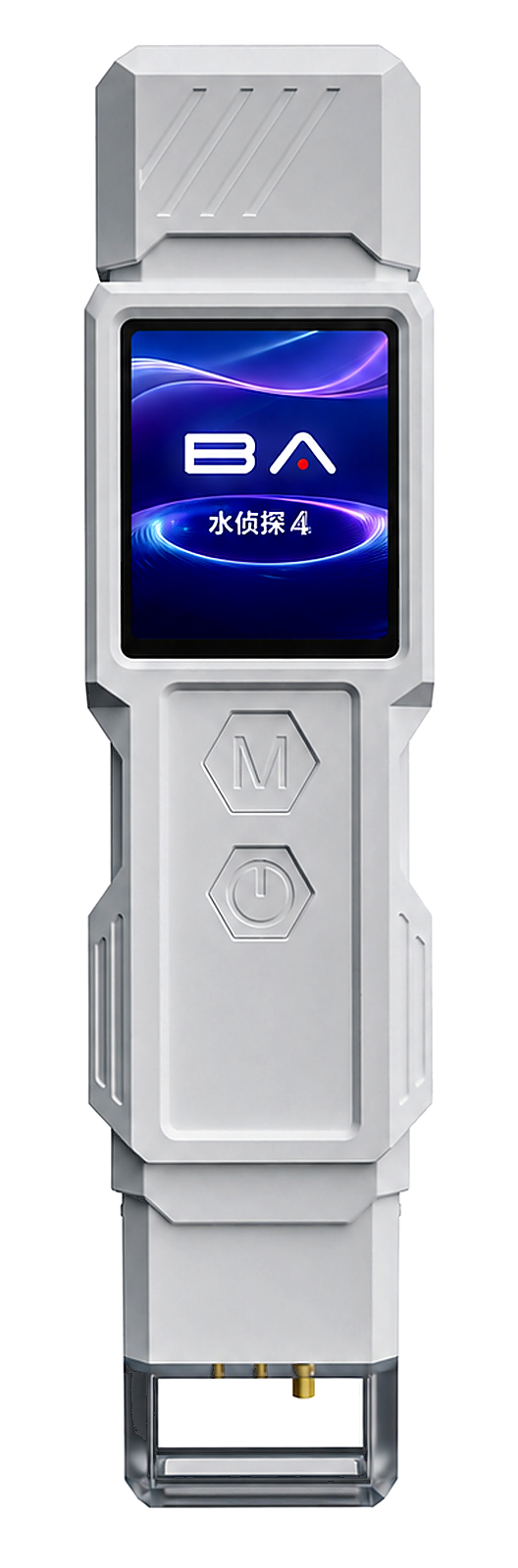
Water Detective 4 integrates nine indicators: TOC, COD, UV254, turbidity, TDS, conductivity, salinity, hardness and temperature. It is suitable for quickly obtaining organic matter background, total ion content and physical status on aquaculture sites. Its value lies in:
- TOC / COD / UV254:Reflects the total amount of organic matter in the water and the relative level of aromatic/unsaturated organic matter. When leftover bait, feces and dead algae increase, these values usually rise, which can indicate that the source of ammonia nitrogen/nitrite (organic nitrogen mineralization) is increasing.
- Turbidity:high turbidity affects the readings of colorimetric detection and also reduces the signal reliability of UV/visible light probes.
- TDS / conductivity / salinity:helps determine the ionic strength of the water body. Nitrite toxicity is related to chloride concentration; the tolerance threshold for nitrite is higher in seawater or salted freshwater.
- Hardness / temperature:hardness affects fish osmoregulation and certain chemical equilibria; temperature directly changes the dissociation ratio of ammonia in water and affects fish metabolic rate.
None of these indicators can directly report ammonia nitrogen or nitrite concentration. Any claim that a portable multi-parameter device can directly measure ammonia nitrogen, nitrite, nitrate, or dissolved oxygen does not conform to the current technical boundaries of AtomBit products.
2.2 Dedicated detection methods for ammonia nitrogen/nitrite
The following methods can be used for confirmation at commercial aquaculture sites:
| Method | Suitable scenarios | Advantages | Limitations |
|---|---|---|---|
| Colorimetric reagent kits (such as Nessler reagent, salicylic acid method) | On-site rapid screening, routine inspections | Simple to operate, low cost | Interference from turbidity, color and chloride ions; limited accuracy |
| Portable spectrophotometer | On-site testing requiring relatively high repeatability | Good quantification, data can be recorded | Requires regular calibration; reagents have a shelf life |
| Ammonia/nitrite ion-selective electrode | Online monitoring or continuous recording | Fast response, easy to integrate | Requires frequent calibration; affected by interfering ions |
| Laboratory spectrophotometry/flow injection analysis | Disputes, acceptance, compliance reporting | High precision, traceable | Delay in sample delivery; samples may change |
Whichever dedicated method is chosen, it should be verified before use with a locally qualified standard solution or by spike recovery. Unverified field readings cannot be used as a basis for aquaculture compliance or insurance claims.
2.3 Scenario boundaries
- Freshwater vs. seawater/brackish water: Ammonia toxicity is sensitive to pH; nitrite toxicity drops markedly in water with high chloride. Nitrite still needs to be monitored in seawater aquaculture, but the risk thresholds differ.
- Recirculating systems vs. earthen ponds: In recirculating systems, a biofilter failure quickly accumulates ammonia/nitrite and requires more frequent monitoring; earthen ponds are strongly affected by algae, sediment and weather, so screening indicators fluctuate over a wider range.
- Hatchery units vs. grow-out ponds: Fry are more sensitive to ammonia and nitrite, so testing frequency should be increased and high-precision methods should be preferred.
3. Reproducible sampling and measurement procedure
3.1 Preparation before sampling
- Prepare clean sampling bottles free of ammonia/nitrite residue (polyethylene or glass, rinsed with the water sample to be tested 3 times before use).
- If submitting samples to a laboratory, use the preservative provided by the laboratory or refrigerate as required.
- Record the sampling time, location, water depth, weather, and recent feeding and water exchange.
3.2 On-site measurement sequence
- Temperature: Read directly with a calibrated thermometer or the Water Detective 4, to 0.1°C.
- pH: Must be measured separately with a well-calibrated pH meter or high-precision test strips. The Water Detective 4 does not provide pH, and pH is the core parameter for converting ammonia toxicity.
- Turbidity/optical screening: If using Water Detective 4, immerse the probe at least 20 cm below the water surface, avoiding air bubbles and direct strong light; move it vertically and slowly to obtain a stable reading. If turbidity is too high (visibly turbid), record it first, and consider filtration or centrifugation during colorimetric testing.
- Dedicated ammonia nitrogen/nitrite sampling: Collect water samples at the same location, avoiding surface foam and bottom sediment disturbance. If colorimetric testing is required, follow the reagent kit instructions and time the reading to the second.
- Laboratory submission samples: Package separately to avoid cross-contamination with on-site reagents. If samples need transport, keep them refrigerated at 4°C and deliver within 24 hours.
3.3 Sampling locations
- Pond: collect at least three points—upwind, downwind and near the aerator—and record them as a mixture or separately.
- Recirculating water system: sample at the biofilter outlet, the middle of the culture tank and the return water inlet.
- Hatchery workshop: sample each tank separately to avoid cross-contamination.
4. Result interpretation and common interferences
4.1 Ammonia nitrogen: total ammonia nitrogen, un-ionized ammonia and temperature/pH conversion
Ammonia nitrogen in water is expressed as total ammonia nitrogen (TAN = NH₃ + NH₄⁺). Toxicity mainly comes from un-ionized ammonia (NH₃), whose proportion increases as pH and temperature rise. The classic equilibrium calculation (Emerson et al., 1975) shows that as pH rises from 7.0 to 9.0, the proportion of un-ionized ammonia can increase by two orders of magnitude. Therefore, reporting only total ammonia nitrogen without giving pH and temperature makes it impossible to assess the actual risk.
Commercial aquaculture can refer to the US EPA freshwater ammonia nitrogen criteria (US EPA, 2013), which provides a set of tables that vary with pH and temperature. Generally, the long-term exposure limit for un-ionized ammonia (NH₃-N) is on the order of 0.02 mg/L, and short-term peaks should not exceed 0.05 mg/L, but the specific values must be checked against the EPA tables or local authority regulations. For example: if the measured total ammonia nitrogen is 1.0 mg/L, pH=8.2, and water temperature 25°C, the un-ionized ammonia proportion is approximately 6–8%, so the un-ionized ammonia is approximately 0.06–0.08 mg/L, which has exceeded the chronic safe range for many fish and requires immediate intervention.
Common interferences :
- Colorimetric methods are affected by sample turbidity and color, causing readings to be too high or too low; re-measure after filtration or dilution.
- If samples are left too long after collection, microorganisms will convert ammonia nitrogen and change the results; measure on site immediately or fix the sample.
- Some disinfectants (such as chloramine) interfere with Nessler's reagent and cause false positives.
4.2 Nitrite: toxicity and chloride protection
After nitrite enters a fish's body, it oxidizes hemoglobin to methemoglobin, reducing oxygen-carrying capacity and causing brown blood disease or even suffocation. The review by Lewis and Morris (1986) noted that chloride can competitively inhibit the uptake of nitrite through the gills, so the toxicity of nitrite in water with high chloride is greatly reduced.
Common warning values for freshwater aquaculture: start paying attention when nitrite nitrogen (NO₂-N) exceeds 0.1 mg/L, and take action when it exceeds 0.3 mg/L; for seawater or salted freshwater (chloride > 100 mg/L), this can be relaxed to 0.5–1.0 mg/L, but differences between species are large. Specific thresholds should be combined with local extension agencies or species trial data.
Common interferences :
- Colorimetric methods (such as diazo coupling) are subject to interference from strong oxidants and certain metal ions; when iron and copper are high, results may be low.
- Nitrite is unstable in samples and should be measured as soon as possible; filtration can reduce particulate matter but may adsorb nitrite, so operations must be consistent.
- Temperature affects the rate of reagent color development, so operations should be carried out at the same temperature according to the instructions.
4.3 Correlation between screening indicators and nitrogen-containing pollutants
TOC, COD, and UV254 from Water Detective 4 can provide trends in organic load. If these indicators rise suddenly while turbidity also increases, it often means accumulation of leftover feed or feces, and ammonia nitrogen and nitrite may rise within the next 24–48 hours. At this time, the frequency of dedicated testing should be increased rather than relying only on portable screening as a substitute.
5. When to retest, stop use, or refer to a laboratory
5.1 Situations requiring immediate retesting
- Readings from dedicated test kits or electrodes are close to or exceed the warning value.
- Fish show abnormalities such as gasping at the surface, crowding at the edges, slow swimming, reduced feeding, or dark red gills.
- Just after a large water change, disinfection, probiotic use, or a feed change.
- Water Detective 4 shows TOC/COD/UV254 rising significantly within 24 hours, or turbidity and conductivity changing sharply.
Retest requirements: same point, same depth, same time (if possible), and also retest pH and temperature. If results still exceed limits, initiate emergency measures.
5.2 when on-site readings are discontinued and testing moves to the laboratory
- Preparing to harvest or sell fish, or undergoing a third-party audit, requiring a compliance report.
- On-site data contradict fish status (e.g., fish are clearly poisoned but readings are not high), suggesting interference or method failure.
- Readings from different methods or different personnel differ by more than 20%.
- When the source of ammonia nitrogen needs to be distinguished (e.g., water source pollution, excessive feed protein, filter collapse), the laboratory can also analyze nitrate, BOD, total Kjeldahl nitrogen, etc.
5.3 Emergency action priorities
- Stop or reduce feeding: reduce nitrogen input.
- Increase aeration: promote nitrification while alleviating hypoxia caused by nitrite.
- Water change: change water in stages according to water source quality and salinity matching, avoiding sudden water quality changes.
- When nitrite is too high, salt can be added: sodium chloride or calcium chloride raises the chloride ion concentration; note the salinity tolerance range of different varieties.
- When ammonia nitrogen is high, adsorbents such as zeolite may be used with caution, but they cannot replace water changes and biological filter remediation.
The above emergency measures cannot replace the diagnosis of a professional veterinarian or aquaculture technician.
6. Record sheet and action checklist
6.1 Example daily inspection log
| Parameter | Measurement tool | Frequency | Warning range (freshwater, to be confirmed locally) | Action trigger |
|---|---|---|---|---|
| Temperature | Water Detective 4 / thermometer | Daily | Species suitable range ±2°C | If exceeded, check for heating/cooling faults |
| pH | 校准 pH 计 | Daily | 6.8–8.6(视品种) | 日变化 >0.5 或超出范围 |
| Turbidity | Water Detective 4 | Daily | 持续 >50 NTU 或快速上升 | 检查过滤、排污 |
| TDS / EC | Water Detective 4 | Daily | 偏离基线 ±15% | 检查水源、蒸发浓缩 |
| TOC / COD / UV254 | Water Detective 4 | 每日或隔日 | 相对基线升高 30% | 增加氨氮/亚硝酸盐检测频率 |
| Total ammonia nitrogen (TAN) | Dedicated colorimetric method/electrode | Fry daily; adult fish every 2–3 days | Combine with pH and temperature to check non-ionized ammonia | Non-ionized ammonia >0.02 mg/L, take action |
| Nitrite (NO₂-N) | Dedicated colorimetric method/electrode | Fry daily; adult fish every 2–3 days | Freshwater >0.1 mg/L, monitor; >0.3 mg/L, act | Change water, add salt, increase aeration |
| Dissolved oxygen | Dissolved oxygen meter | Daily in the early morning and afternoon | Below 4 mg/L | Aeration and feed reduction |
Note: Dissolved oxygen must be measured with a dedicated dissolved oxygen meter; Water Detective 4 does not provide dissolved oxygen measurement. Warning ranges must be adjusted by local technical departments according to species, salinity, temperature and production stage.
6.2 Weekly/monthly verification checklist
- Calibrate all on-site testing equipment (pH meter, dedicated spectrophotometer, electrodes).
- Verify the batch validity of colorimetric kits or test strips with standard solutions.
- Send 1–2 water samples to the laboratory for comparison with on-site methods.
- Check record sheet completeness and confirm that abnormal events have retest and action records.
- Evaluate biofilter performance (e.g., in recirculating water systems); backwash or replace media if necessary.
7 Frequently Asked Questions (FAQ)
Q1: Can Water Detective 4 measure ammonia nitrogen or nitrite? No. The TOC, COD, UV254, turbidity and other indicators of Water Detective 4 are used to screen trends in organic matter and particulate matter and cannot quantify ammonia nitrogen, nitrite, nitrate or dissolved oxygen. Dedicated methods must be used separately.
Q2: Why must pH and temperature be recorded at the same time? Because the toxicity of ammonia nitrogen depends on the proportion of non-ionized ammonia, which is determined by pH and temperature. Recording only total ammonia nitrogen will underestimate the risk under high temperature and high pH.
Q3: Is adding salt useful when nitrite exceeds the limit? In freshwater or low-salinity water, increasing chloride ions (such as sodium chloride) can competitively inhibit nitrite uptake and reduce toxicity. However, the amount of salt added must be slowly adjusted according to the salt tolerance of the species and water quality; do not add large amounts of salt blindly.
Q4: What should be done if on-site test strips and laboratory results differ greatly? First check whether the test strips have expired or absorbed moisture and whether the operation time is accurate. If the discrepancy persists, the laboratory method should prevail, and the frequency of sample submission should be temporarily increased.
Q5: Can TOC trends from Water Detective 4 alone be used to judge ammonia nitrogen risk? can be used for early warning, but it cannot replace dedicated ammonia nitrogen measurement. A rise in TOC indicates increased organic load, but whether ammonia nitrogen also rises depends on factors such as nitrification efficiency and water exchange rate.
References
- Emerson, K., Russo, R. C., Lund, R. E., & Thurston, R. V. (1975). Aqueous ammonia equilibrium calculations: Effect of pH and temperature. Journal of the Fisheries Research Board of Canada, 32(12), 2379–2383. DOI:10.1139/f75-274. Used to explain the effect of pH and temperature on the proportion of un-ionized ammonia.
- US EPA. (2013). Aquatic Life Ambient Water Quality Criteria for Ammonia – Freshwater. EPA-820-R-13-001. U.S. Environmental Protection Agency, Office of Water. Provides an ammonia-nitrogen criteria framework; specific values must be looked up in tables.
- Lewis, W. M., & Morris, D. P. (1986). Toxicity of nitrite to fish: A review. Transactions of the American Fisheries Society, 115(2), 183–195. DOI:10.1577/1548-8659(1986)115<183:TONTF>2.0.CO;2. Used to explain the mechanism of nitrite toxicity and the protective effect of chloride ions.
- Aquaculture water discharge and water quality management requirements issued by the local fisheries/environmental protection authority or aquatic technology extension agency; specific limits are subject to the local documents currently in force.
Regional applicability note: the EPA criteria cited in this article apply to U.S. freshwater bodies, and the studies by Emerson et al. and Lewis & Morris are international peer-reviewed literature. Commercial farms in China should determine final action thresholds based on the local Fisheries Water Quality Standard, the cultured species and local regulatory requirements.