
Intended users and decision questions
Keepers of home aquariums (freshwater, marine and brackish tanks), garden fish ponds and indoor breeding tanks, as well as beginners who are just starting to establish a nitrification system, cannot avoid three core nitrogenous indicators: ammonia (NH₃/NH₄⁺), nitrite (NO₂⁻) and nitrate (NO₃⁻). These three are directly linked to gill damage in fish, reduced blood oxygen-carrying capacity and long-term chronic poisoning, but many fish keepers have systematic misconceptions when using testing tools:
- Treating readings from a general-purpose "water quality test pen" or "TDS pen" as ammonia/nitrite/nitrate concentrations;
- Assuming that as long as TDS or conductivity is normal, the nitrogen cycle must be healthy;
- Ignoring sampling methods, reagent shelf life, reading time, temperature and pH interference, leading to incorrect judgments;
- Not distinguishing screening-type tools from dedicated colorimetric/titration tests, nor distinguishing on-site rapid judgment from laboratory confirmation.
This article is organized around "what testing is needed for ammonia, nitrite and nitrate," clarifies the applicable scenarios of different tools, provides reproducible operating steps, result interpretation, common interferences, decision conditions for retesting/stopping use/referring to a laboratory, and includes a record table and action checklist. The article does not replace veterinary or water quality laboratory opinions and is intended only for daily husbandry management and risk screening.
Water sample/device/scenario boundaries
The Role of the General-Purpose Multi-Parameter Screening Pen
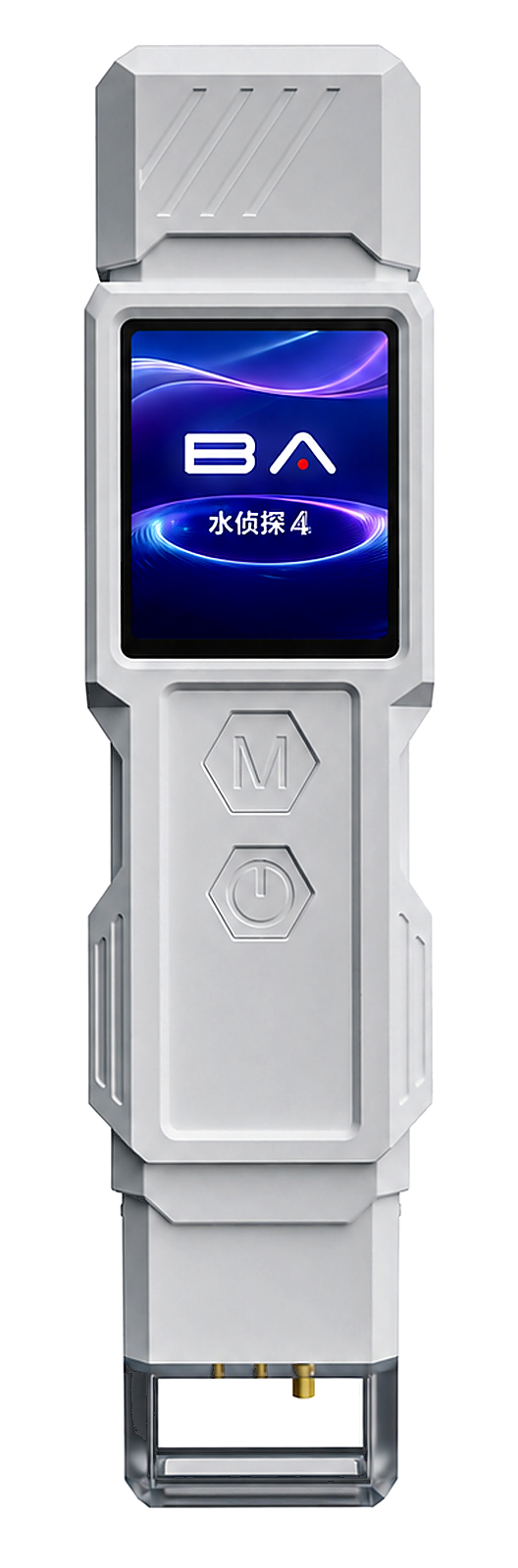
The AtomBit Water Detective 4 (personal/household portable water quality test pen) can measure nine indicators in one rapid testing platform: TOC, COD, UV254, turbidity, TDS, conductivity, salinity, hardness and temperature. The device is suitable for household water, comparing water purifier performance, daily water sample screening and rapid on-site observation, but it does not have the ability to measure ammonia, nitrite or nitrate.
In fish-keeping scenarios, the Water Detective 4 can be used to:
- Monitor the basic ionic background of source water or tank water, such as total dissolved solids (TDS), conductivity, hardness and salinity;
- Observe organic pollution trends (TOC, COD, UV254, turbidity) to help assess changes in organic load from leftover feed, feces, decaying plants, etc.;
- Compare water quality trends before and after water changes and before and after adjustments to the filtration system;
- Investigate osmotic stress caused by sharp fluctuations in hardness and salinity.
However, it must be clear: TOC/COD are total organic matter indicators and cannot reflect the specific concentrations of ammonia nitrogen, nitrite or nitrate. Increased turbidity may be caused by suspended particles, algae or bacteria, and does not equal increased nitrite. Normal conductivity or TDS readings do not mean the nitrification system is complete or has not collapsed; high TDS does not necessarily mean high nitrate—it may be hardness ions or salinity. Therefore, when the three nitrogen-cycle indicators are involved, dedicated test methods must be used, and Water Detective 4 or other general-purpose pens must not be used as a substitute.
Classification of test methods for ammonia/nitrite/nitrate
The nitrogen indicator test methods commonly used in home fish keeping can be divided into three categories:
- Liquid colorimetric test reagents: the most commonly used, based on a color reaction and read against a color chart. Available as single-parameter (e.g., ammonia only) or multi-parameter combinations. Sensitivity and accuracy vary by brand and reagent formulation, and instructions must be followed strictly.
- Dry test strips: simple to use, but with lower resolution and easily affected by humidity, light, immersion time and color-reading delay; suitable for rapid rough screening, not for precise decisions.
- Electronic ion-selective electrodes or laboratory methods: such as ammonia gas-sensing electrodes, ion chromatography, spectrophotometry, etc., requiring professional equipment, calibration and maintenance, usually used by laboratories. Rarely available in home settings.
Different methods have systematic biases: for example, test strips may not be sensitive enough for low nitrite concentrations; liquid reagents for ammonia testing are greatly affected by pH and temperature, requiring simultaneous pH and temperature measurement to correct the free ammonia (NH₃) proportion; nitrate testing usually requires vigorous shaking of the reagent bottle and sample bottle for the reduction reaction to complete, otherwise readings will be low.
Applicable boundaries and legal statement
The measurement steps and reference ranges described in this article are for daily aquaculture management reference only and cannot serve as proof for drinking water safety, aquaculture discharge compliance, pet health diagnosis or any regulatory purpose. In cases involving mass fish deaths, suspected poisoning, drinking water source contamination or determination of regulatory limits, samples should be sent to a qualified laboratory for testing according to local standard methods. Different countries/regions have different limits and test methods for ammonia, nitrite and nitrate, and the requirements of local authorities or laboratories shall prevail.
Reproducible sampling and measurement steps
The following steps use liquid colorimetric test reagents as an example to provide a standardized procedure suitable for home aquariums. Dry test strips may follow the same concept, but their accuracy is limited; recheck critical decisions.
Sampling container and pretreatment
- Use a clean plastic or glass container with no residue. Avoid containers that have held chemicals, detergents or nitrogen-containing substances.
- Before sampling, rinse the container and lid with the water sample to be tested at least 2 to 3 times.
- The sampling point should avoid the direct flow from the filter outlet; choose a location with uniform water flow in the tank. If the water body has multiple layers, sample from the middle to upper layer. For fish ponds, stay away from areas with dense bubbles from the aerator.
- Test as soon as possible after sampling to avoid microbial activity in the sample changing the ammonia/nitrite concentration. If testing cannot be done immediately, refrigerate at 4℃ and complete within 24 hours, but testing on the same day is best.
- The water temperature during testing should be close to the actual temperature in the tank; if the reagent instructions specify temperature requirements (e.g., 20 to 25℃), record the actual temperature and consider correction.
Key operating points for liquid colorimetric test reagents (using ammonia as an example)
- Rinse the test bottle with the water sample to be tested 2 times and discard the rinse solution.
- Accurately measure the specified volume (usually 5 mL) of water sample into the test bottle, avoiding touching the inner wall of the bottle mouth with your fingers.
- Add the reagents dropwise in the order specified by the instructions. Note: dropper tips from different manufacturers have different orifice diameters, so must be held vertically to keep each drop volume consistent; do not let the dropper tip touch the water sample or bottle wall.
- Tighten the cap and shake or invert to mix as required by the instructions. Ammonia tests usually require only gentle shaking, while nitrate tests often require vigorous shaking for 30 to 60 seconds to promote the reduction reaction.
- Let stand for the specified color-development time (commonly 3–5 minutes; varies by brand). Under natural or white light, place the test vial on the white background of the color comparison card and observe the color vertically from above. Avoid direct sunlight and colored lighting.
- When reading, if the color falls between two color grades, take the midpoint value and record it, noting the possible deviation.
Additional precautions for nitrite and nitrate
- Nitrite test: color development is usually fast, but the reading must be taken immediately after the specified time; if left too long, the color will continue to deepen or fade.
- Nitrate test: most liquid reagents contain a metal reducing agent (such as zinc or cadmium) and require vigorous shaking to ensure nitrate is reduced to nitrite before color development. Insufficient shaking is a common error that leads to low readings. If the test reagent contains suspended particles, after shaking it must be left to stand until the particles settle before color comparison, but do not exceed the time specified in the instructions.
- If using dry test strips: after dipping into the water sample, do not shake off excess liquid; compare immediately with the color chart after the number of seconds specified in the instructions, avoiding direct strong light. Test strips are prone to moisture after opening; discard them if the color patches change color or clump.
Data recording
For each measurement, record at least: date, time, tank number, sample source (main tank/quarantine tank/water source), water temperature, pH, ammonia reading, nitrite reading, nitrate reading, test reagent brand and lot number (or opening date), and operator notes. You may also record screening data such as TOC/COD/turbidity/TDS from the Water Detective 4 to help judge changes in organic load, but do not mix it into the nitrogen cycle indicators.
How to interpret results and common interferences
Ammonia (NH₃/NH₄⁺)
Ammonia exists in water in two forms: ionized ammonium (NH₄⁺) and free ammonia (NH₃), the latter being highly toxic to fish. Total ammonia nitrogen (TAN) test reagents usually measure the sum of both. The proportion of free ammonia increases significantly with rising pH and temperature: at pH 7.0 and 25℃, free ammonia accounts for about 0.6%, while at pH 8.5 and 30℃ it can exceed 10%. Therefore, looking only at the total ammonia reading is not enough; pH and temperature must be combined to assess toxicity risk.
Recommendations for home fish keeping (not regulatory limits): in freshwater tanks, total ammonia nitrogen should be as close to 0 mg/L as possible, and any detectable ammonia should prompt immediate action. If pH > 8.0, even a total ammonia of 0.25 mg/L may be dangerous due to elevated free ammonia; marine tanks require stricter limits. Common interferences:
- Tap water disinfected with chloramine may contain chloramine; using an ammonia test reagent directly may produce an "ammonia" reading, but it is actually chloramine decomposition or interference. The water sample should first be treated with a dechlorinating agent such as sodium thiosulfate before testing.
- Some water conditioners (such as ammonia-locking agents) bind ammonia, rendering it temporarily non-toxic to fish, but test kits may still show total ammonia present. In this case, judge based on fish behavior and water-change records, not on the reading alone.
- Expired test kits, contaminated dropper bottles, or detergent residue in sampling containers can cause false positives or false negatives.
Nitrite (NO₂⁻)
Nitrite enters the blood through the fish's gills, oxidizing hemoglobin to methemoglobin, reducing oxygen-carrying capacity and causing "brown blood disease." Both freshwater and saltwater tanks should keep nitrite undetectable (< 0.1 mg/L or below the test kit's minimum detection limit). High nitrite is common in new tanks where the nitrifying system is not yet established, after filter damage, overfeeding, or medication treatment. Interfering factors:
- If a nitrate test kit does not reduce completely, some nitrate may be misread as nitrite, but the direction of error is usually identifiable.
- Some algaecides, antibiotics, or water treatment products may interfere with the color reaction.
- Insufficiently cleaned test vials with residual nitrite standard solution or high-concentration samples can cause cross-contamination.
Nitrate (NO₃⁻)
Nitrate is the end product of nitrification and is relatively low in toxicity, but long-term high concentrations can inhibit growth, reduce fertility and trigger algae blooms. For freshwater tanks, nitrate is generally recommended to be < 20~50 mg/L (tolerance varies by fish species); for saltwater coral tanks it should be < 5~10 mg/L. Nitrate readings are affected by the following factors:
- Insufficient shaking of the test kit or inadequate standing time results in a lighter color;
- Faded color cards or off-color light sources cause misreading;
- High chloride concentrations in water (saltwater tanks) may inhibit color development; use a saltwater-specific test kit or calibrate according to the instructions;
- Nitrate can be reduced to nitrogen gas by denitrifying bacteria in anaerobic zones, so readings at different sampling points in the same tank (deep in the substrate vs. the upper layer) may differ.
Interpretation boundaries of Water Detective 4 screening data
When using Water Detective 4 to observe tank water, rises in TOC, COD, UV254 and turbidity usually indicate increased organic load (such as leftover food, feces, dead fish, plant decay), which may indirectly strengthen ammonification, but it does not directly mean that ammonia or nitrite concentrations will necessarily rise. The correct approach is: when abnormal rises in organic indicators are found, add dedicated tests for ammonia, nitrite and nitrate, and make a comprehensive judgment together with fish behavior and feeding management. Sharp changes in TDS/conductivity/hardness may cause osmotic stress, but likewise have nothing to do with nitrogen compound toxicity. Never treat the screening pen's "water quality score" or "safe" label as proof of nitrogen cycle health.
When to retest, stop using, or send to a laboratory
Conditions for immediate action
If any of the following occurs, stop routine husbandry operations and retest immediately, with a partial water change if necessary:
- The ammonia (total ammonia) reading exceeds the test kit's lowest detection limit, and fish show gasping at the surface, rapid breathing, reddened gills, abnormal swimming, or complete loss of appetite;
- The nitrite reading is ≥ 0.25 mg/L (freshwater) or ≥ 0.1 mg/L (seawater), and fish show darkened body color, brownish gills, or loss of equilibrium;
- The nitrate reading rises suddenly and substantially (e.g., from 20 mg/L to above 80 mg/L), accompanied by algal blooms, dense green water color, or chronic wasting in fish;
- A large number of fish die simultaneously or show the same neurological symptoms (spinning, convulsions), and this cannot be explained by common causes such as temperature, dissolved oxygen, or fighting.
Recommended retest frequency
- During the establishment of the nitrifying system in a new tank (usually 4–8 weeks): test ammonia and nitrite daily or every other day until both ammonia and nitrite are undetectable for 3 consecutive days, then switch to routine monitoring.
- Mature tank: test nitrate once a week, and ammonia and nitrite once a month; if there have recently been events such as a tank tear-down, filter replacement, medication, mass fish introduction, or fish deaths, resume daily testing for at least one week.
- Treatment or quarantine tank: test ammonia daily (especially after antibiotic use, since the nitrifying system may be suppressed).
Conditions for discontinuing use of test tools
- If the test reagent shows precipitation, discoloration, caking, is past its shelf life, or the bottle seal is damaged, stop using it immediately and replace it with a new lot number.
- Replace the color chart if it has absorbed moisture and faded, or replace the test bottle if it is severely scratched, affecting color judgment.
- If consecutive readings deviate from a laboratory or reliable reference method by more than 30% and operational error has been ruled out, discontinue use of that brand or lot and recalibrate your understanding.
Situations requiring laboratory confirmation
- When high-value fish are involved, mass mortality occurs, or poisoning is suspected, and legal or insurance evidence is needed;
- When it is necessary to distinguish the isotopic sources or specific forms of ammonia, nitrite, and nitrate (such as free ammonia vs total ammonia, or true concentration under salinity interference);
- When the water source may contain complex contamination such as herbicides, heavy metals, or pesticides that home test kits cannot cover, and professional analysis such as GC-MS, ICP-MS, or ion chromatography is required;
- When a compliance report must be issued, such as for farm discharges, testing before release into public waters, or import/export quarantine.
When submitting samples to a laboratory, collect at least 250 mL of water sample in a laboratory-provided or clean sterile container, avoid air bubbles, transport refrigerated, and deliver within 24 hours. Record the sampling time, tank temperature, pH, recent medication, and water change details so the laboratory can interpret the results.
记录表/行动清单
Daily record sheet (example fields)
| Date | Time | Tank/Pond ID | Water temperature (°C) | pH | Total ammonia (mg/L) | Nitrite (mg/L) | Nitrate (mg/L) | Water Detective 4 TOC/COD/Turbidity/TDS | Notes (water change/feeding/medication/fish condition) |
|---|---|---|---|---|---|---|---|---|---|
| 2025-01-15 | 09:00 | Main tank | 25.5 | 7.8 | 0.00 | 0.00 | 15 | TOC 1.2 / Turbidity 0.5 NTU / TDS 320 ppm | Water changed yesterday 20% |
| 2025-01-15 | 09:00 | Quarantine tank | 26.0 | 8.0 | 0.25 | 0.10 | 5 | TOC 2.4 / Turbidity 1.0 NTU / TDS 280 ppm | Day 3 since new fish were added to the tank, mild surface gasping |
> Note: The values in the table are format examples only and do not represent any actual measurement results or recommended limits.
Exception Handling Action Checklist
- Stop feeding or reduce to 1/3 to prevent further increase in ammonia nitrogen.
- Immediately test ammonia, nitrite and nitrate; if possible, also measure pH and temperature at the same time.
- If ammonia or nitrite exceeds the limit, immediately change 25%–50% of the water, using new water that has been aged or dechlorinated, with a temperature difference from the original tank of no more than 2℃.
- Check the filtration system: when cleaning or replacing mechanical filter pads, do not replace biological filter media at the same time; suspend use of UV sterilizers or ozone generators (which may damage nitrifying bacteria).
- Add nitrifying bacteria preparations (if from a reputable brand), but do not arbitrarily add chemical ammonia-locking agents as the sole measure, to avoid masking the problem.
- Observe fish behavior and record the time symptoms appear and changes; if symptoms do not improve or worsen 2 hours after the water change, consider transferring to a laboratory or contacting an aquatic veterinarian.
- Increase retesting frequency to 2 times per day until ammonia and nitrite are undetectable for 3 consecutive days.
- If the Water Detective 4 also shows abnormally elevated TOC/COD/turbidity, strengthen physical filtration and water changes, and investigate organic pollution sources such as dead fish and decaying plants.
Summary of Key Points for Correcting Common Misconceptions
- Misconception: Normal TDS/conductivity means the water is non-toxic. Correction: TDS reflects total dissolved solids and has no direct conversion relationship with ammonia, nitrite or nitrate concentrations.
- Misconception: A general-purpose water testing pen can measure ammonia nitrogen. Correction: Current household portable multi-parameter pens (such as the Water Detective 4) do not include ammonia, nitrite or nitrate sensors; dedicated test reagents or laboratory methods must be used.
- Myth: Test strips are as accurate as liquid reagents.Correction: Liquid reagents generally offer better resolution and repeatability; test strips are suitable for rapid rough screening and must not be the sole basis for water-change or medication decisions.
- Myth: As long as nitrate is not high, ammonia and nitrite are safe.Correction: When the nitrification system collapses, ammonia and nitrite may rise sharply while nitrate has not yet accumulated; the three must be monitored together.
- Myth: Freshwater test kits can be used in saltwater tanks.Correction: The high salinity and high chloride ion content of saltwater interfere with some color reactions; use test kits designed specifically for saltwater or labeled as suitable for both saltwater and freshwater, and calibrate according to the instructions.
- Myth: One passing test means everything is fine.Correction: Nitrogen-cycle indicators change dynamically and are affected by feeding, biomass, filtration efficiency, water-change frequency and temperature; regular retesting and trend recording are essential.
FAQ
Q: Can the Water Detective 4 measure ammonia? A: No. The Water Detective 4 measures TOC, COD, UV254, turbidity, TDS, conductivity, salinity, hardness and temperature, and does not include ammonia, nitrite or nitrate sensors. It can be used for trend screening of organic contamination and basic ion background observation, but it cannot replace dedicated nitrogen-indicator tests.
Q: After setting up a new tank, how long do I need to test for ammonia and nitrite? A: From the time fish are added or feeding begins, test ammonia and nitrite at least once daily until both are undetectable for 3 consecutive days, after which switch to routine weekly or monthly monitoring. If large water changes, filter-media cleaning or medication use occur during this period, resume daily testing.
Q: What happens if I do not shake long enough when testing nitrate? A: It leads to incomplete nitrate reduction, pale color development and low readings, which may make you mistakenly believe nitrate levels are safe. Be sure to shake vigorously for the specified time (usually 30–60 seconds) as required by the instructions, and let it stand for the specified time before comparing colors.
Q: How much does pH affect ammonia toxicity? A: The higher the pH, the greater the proportion of free ammonia in total ammonia and the stronger the toxicity. For example, at pH 7.0 a total ammonia of 1.0 mg/L may be relatively safe, but at pH 8.5 the same total ammonia may already be lethal. Therefore, when testing ammonia, pH and temperature must be measured at the same time, and a free-ammonia conversion table should be consulted (specific values need to be confirmed by a local professional source).
Q: If the Water Detective 4 shows a sudden increase in TOC or turbidity but I have no ammonia test kit, what should I do? A: Immediately perform a 25%–50% water change, reduce feeding, and purchase or borrow an ammonia/nitrite test kit as soon as possible for confirmation. Do not wait until readings are completely normal before acting; elevated organic load is often accompanied by enhanced ammonification, and the risk must not be ignored.
References
- Francis-Floyd, R., Watson, C., Petty, D., & Pouder, D. B. (2009). Ammonia in Aquatic Systems. University of Florida IFAS Extension, FA16. https://edis.ifas.ufl.edu/publication/FA031 (readers must verify the link themselves)
- Tucker, C. S. (1993). Nitrite in Fish Ponds. Mississippi State University Extension Service. (Searchable as Southern Regional Aquaculture Center publication No. 462)
- USGS Water Science School. (2018). Nitrogen and Water. U.S. Geological Survey. https://www.usgs.gov/special-topics/water-science-school/science/nitrogen-and-water (link needs verification)
- EPA. (2023). Nutrient Pollution: The Problem. United States Environmental Protection Agency. https://www.epa.gov/nutrientpollution/problem (link to be verified; for background understanding only, not an aquarium limit)
Regional Applicability Statement: The non-regulatory reference ranges above are mainly based on North American temperate home aquarium keeping practices; different climates, fish species, water sources and local regulatory requirements may differ. Actual limits, standard testing methods and emergency treatment thresholds should be based on information published by local aquaculture extension services, veterinarians or competent authorities. This article does not constitute legal, medical or compliance advice.